 English
 Italiano
 Español
 Français
 Deutsch
 Português
 Русский
 Български
Zirconium Veneers
Dental Veneers in Istanbul · From €130
Smile at your phone camera. Colour, shape or gaps: which one bothers you first?
Your answer points to the right veneer, because composite, E.max, laminate and zirconium solve different problems. Composite starts at €130 per tooth and glass-ceramic at €200, with the number of teeth agreed from your photos before you fly. Most patients stay five nights; pick-up, translation and a year of follow-up are free.
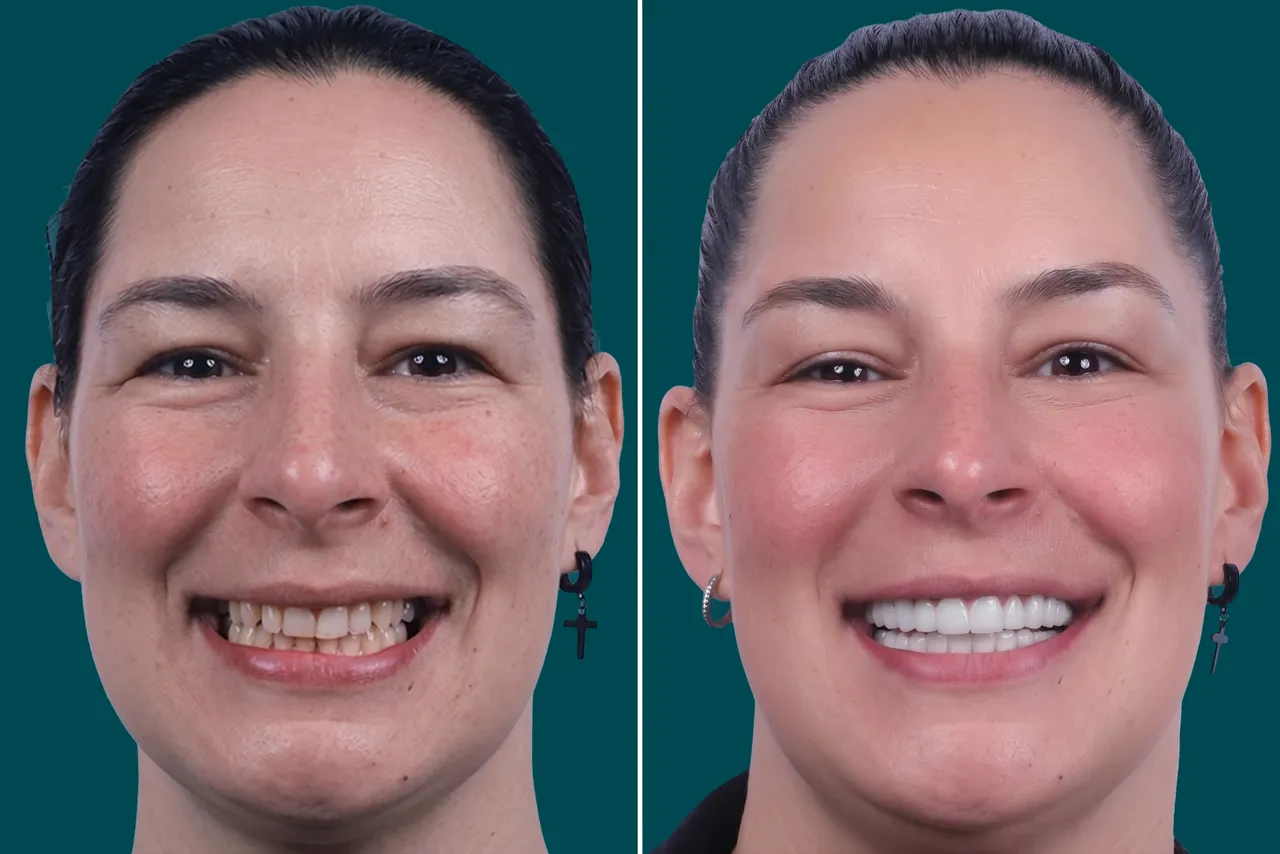
These dental veneers before and after cases include composite, E.max, laminate, porcelain and zirconium work. Judge edge shape and shade against the patient's face rather than a catalogue white, since every smile is designed individually.
-1-1280x854.webp?v=mumjxy41)
Dental Veneers
-1280x854.webp?v=mumjz2wf)
Porcelain Veneers
-1280x854.webp?v=mumk07r2)
Laminate Veneers
Subtle or bright, composite or ceramic? Hear veneer patients explain how they settled on material, shade and the number of teeth their smile really needed.
Natural Clinic brings several specialist fields together under one roof: hair transplantation, dentistry, facial, body and breast aesthetics, bariatric surgery and reconstructive treatments. Cross-disciplinary medical teams, multilingual coordination and internationally recognised safety standards carry each patient from consultation and treatment planning through to recovery and aftercare.
Advanced treatments across multiple medical specialties
Experienced specialists working across disciplines
Consultation, treatment, recovery and aftercare coordinated under one roof
Large-scale medical infrastructure in Istanbul
Veneers are sold as one treatment and priced as one, but the material changes almost everything: how much enamel comes off, how long it lasts, what it can hide and what it costs. Each has its own page below. A dentist tells you which of your teeth actually need one — free, before you travel.
.webp?v=mtgx2dka)
The classic
Thin ceramic shells bonded to the front of the tooth, made in a laboratory rather than built up in the mouth. The reference point every other veneer material is judged against: colour that does not change, a surface that does not stain, and a bond to enamel that has thirty years of clinical data behind it.
Discoloured, chipped, worn or slightly misaligned front teeth with healthy enamel.
One visit, 5–7 days in Istanbul, with temporaries in between.
Lithium disilicate
Pressed or milled from lithium disilicate, E.max is the strongest of the translucent ceramics — around 400 MPa, roughly three times feldspathic porcelain, while still letting light through the way enamel does. It is what we reach for when a veneer has to be both thin and durable.
Front teeth where translucency decides the result, and where a thinner shell is wanted.
One visit, 5–7 days in Istanbul.
Minimal preparation
Ultra-thin shells, around 0.3 to 0.5 mm, designed so that little or no enamel has to be removed. The trade is honest: less tooth is touched, but the shell cannot hide a dark tooth underneath, and there is less room to change the shape. Best suited to teeth that are already close: a decent shade, a small correction in form.
Teeth of good colour and position, where the goal is refinement rather than transformation.
One visit, 5–7 days in Istanbul.
Same appointment
Resin applied directly to the tooth, shaped by hand and polished in the chair — no laboratory stage and no waiting. Cheaper and quicker than ceramic, and repairable when something chips; the trade is that composite stains over time and does not hold its polish as long.
Smaller corrections, younger patients, and anyone who wants a reversible first step.
One visit, usually 1–2 days in Istanbul.
Maximum opacity
A zirconia-based shell, chosen when strength or masking matters more than translucency: a tooth darkened by root canal treatment, an old metal restoration showing through, or a patient who grinds. Less light passes through than E.max, which is exactly why it hides what is underneath.
Dark or root-treated teeth, heavy bite forces, and cases where an older restoration must be masked.
One visit, 5–7 days in Istanbul.
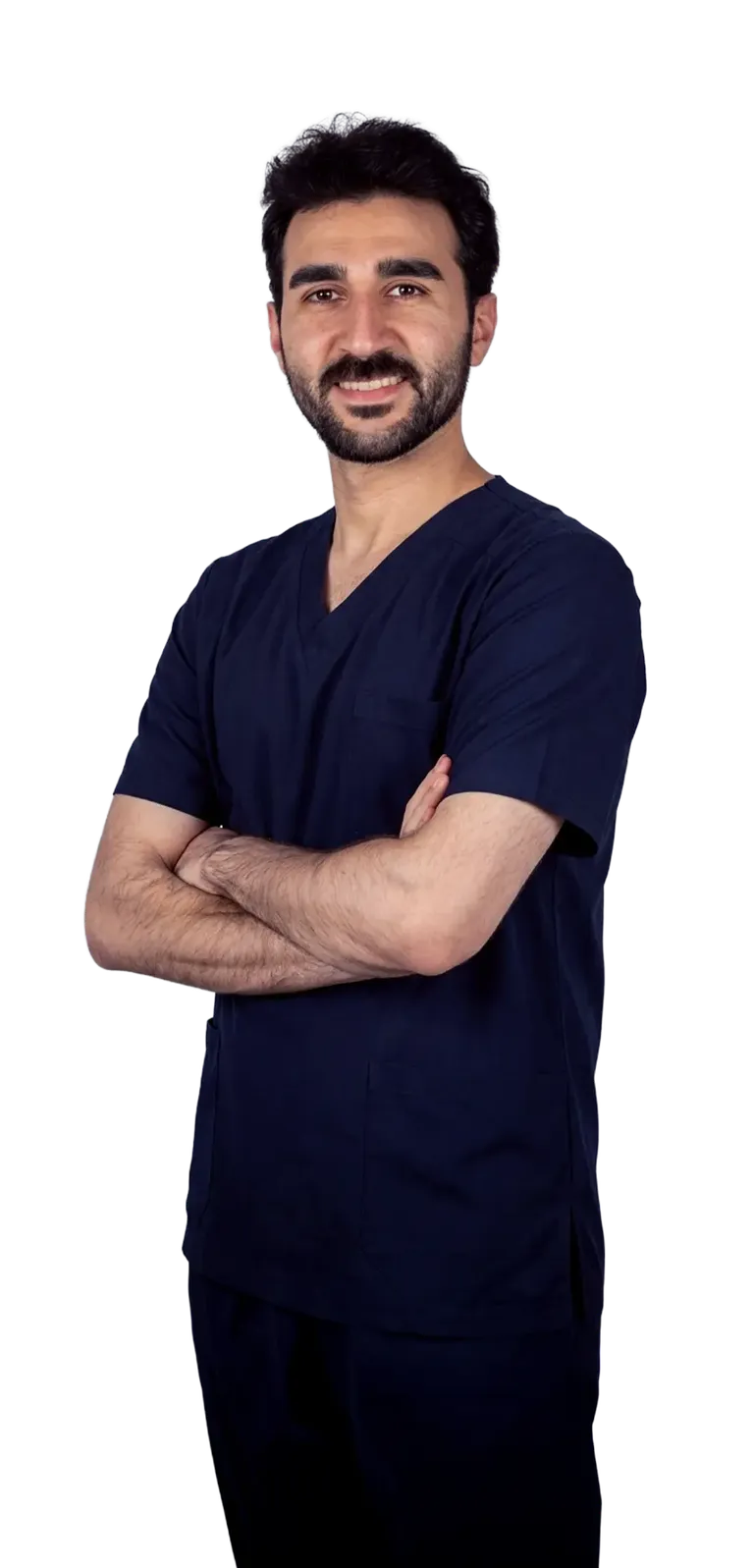
Implant Dentistry
Born in Bandırma in 1995, Dr Ömer Reşat Gültek studied at İnegöl Mediha Hayri Çelik Science High School before turning to dentistry — and he still thinks like a materials scientist. Which ceramic, which technique, which protocol for this particular tooth: those are the questions he takes seriously, and they are why his root canal treatments hold. What patients mention, though, is the manner. He explains as he works, he does not rush, and a single filling gets the same attention as a full arch.
Certificates
Prosthetic Dentistry
After successfully completing her primary and secondary education, Özaydın studied at Bezmialem Vakıf University and then at Istanbul University Faculty of Dentistry, Department of Prosthetics. She has worked in the field of prosthetics at various important institutions. In addition to her professional career, Dr. Özaydın has also made various contributions to academic literature and has been working as a Dental Prosthetics Specialist at the Natural Medical Center Dental Department for a long.
Certificates
General Dentistry
Dr Nur Karakaya graduated from Istanbul University Faculty of Dentistry in 2025 — which means she was taught the current protocols, not the ones that were current twenty years ago, and that she works inside a team of specialists rather than alone. Patients tend to remark on how much she explains: what she found, what she recommends, and what she would leave alone. She reads the new literature because she is still close enough to it to know how fast it moves.
Seminars and Trainings:
Prosthetic Dental Treatments
Dr Helin Ağırtıcı trained in International Dentistry at Medipol University and works in prosthetic and aesthetic restorative dentistry, planning cases digitally rather than by impression alone. For patients travelling from abroad she is often the one who reads the photographs, builds the plan and answers the questions before the flight is booked — in English, which is why the plan you receive and the treatment you get are the same thing. She has been at Natural Clinic since 2024.
Seminars and Trainings:
General Dentist
Born in 1999, Dr Enes Tuluk graduated from Istanbul University Faculty of Dentistry in 2023 and went straight into aesthetic work: Hollywood Smile cases, laminate veneers, E.max and zirconia crowns, implant-supported prostheses. What he watches for is what patients notice a year later rather than on the day — how the ceramic meets the gum, how the shade holds, whether the smile still looks like yours. He plans tooth by tooth, and will tell you which teeth to leave alone.
Seminars and Trainings:
Prosthetic Dentistry.
Dr. Diler Özkan İrem graduated from Istanbul University Faculty of Dentistry in 2014 and stayed for a doctorate in prosthodontics, earning her PhD in 2020 with a thesis on how all-ceramic bridges fit and where they fracture. It is an unusually specific question, and the useful kind: knowing why ceramic fails is what stops it failing. At Natural Clinic since 2020, she works on crowns, bridges and full smile design — the aesthetic side, decided on functional grounds.
Seminars and Trainings:
Aesthetic Dentistry and Implantology
Dr Ali Haydar Çapuk graduated from Ege University Faculty of Dentistry in 2012 and spent the years since in private practice, training in aesthetic dentistry, implantology and smile design in Turkey and abroad. Thirteen years of that work is a long time to watch restorations age, and it shows in what he recommends: implants where a tooth is gone, veneers where the tooth is sound, whitening where nothing needs covering at all. He joined Natural Clinic in 2025.
Seminars and Trainings:
Oral, Dental and Maxillofacial Surgery
Born in Çanakkale on July 14, 1995, she graduated from Near East University Faculty of Dentistry in 2021. Immediately after graduation, she began working intensely at a private clinic in Çanakkale with a high patient potential. During this time, she increased her clinical experience and knowledge. After working there for about two years, she decided to pursue a doctorate in Oral and Maxillofacial Surgery at Istanbul Aydın University.
General Dentistry
Dr Beliz Kerime Dede studied at Bahçeşehir University Faculty of Dentistry, graduating in 2025 from its fully English-taught programme — which is why she reads the international literature first-hand and why patients from abroad talk to her without an interpreter in the room. Her clinical focus is restorative work, endodontics and prosthetics, with congress and workshop training in implantology and aesthetic restorations. She works within a team of specialists, and says so plainly.
Seminars and Trainings:
Prosthetic Dentistry
Dr Aslı Betim Şahin graduated from Ankara University Faculty of Dentistry in 2014 and began a PhD in prosthodontics at Istanbul University in 2016 — the discipline that decides how a restoration meets the gum, the bite and the face. She has practised across several institutions and presented at national and international meetings, and she has been at Natural Clinic since 2020. Consultations are held in English, so the plan you agree to is the one you discussed.
Seminars and Trainings:
Endodontist
Endodontics is where Dr Salih Muhammed does most of his work — root canals, including the ones another clinic has already attempted. Urgent cases are the real test: a tooth that hurts today cannot wait for a plan next week, and knowing which of those teeth can still be saved is judgement built case by case. He treats local and international patients alike, works to the clock without rushing the tooth, and will say when an extraction is the honest answer.
Certificates
Specialist Prosthodontist
Dr Mehmet Anıl Tütüncüler works in prosthodontics — the discipline that decides how a restoration meets the gum, the bite and the face. His cases are planned digitally and judged against the evidence rather than the trend: a design is only worth approving if the result can be predicted, and only worth fitting if it will still be working in ten years. Appearance matters, but it is the second question. The first is whether the mouth will function.
Certificates
Oral Surgery & Implantology
Spec. Dr. Oğuzhan Sunar is a Periodontology Specialist and implant surgeon with over a decade of clinical practice. A graduate of the Hacettepe University Faculty of Dentistry, he completed his specialization at Ordu University, publishing in national and international journals and developing the "Discision" technique. He specializes in advanced and zygomatic implant surgery and lectures at professional courses. Since 2023, he has served as the Head of Dental Surgery at Natural Medical Center.
Clinical Expertise
Yes, with one condition: that you are treated by a clinic willing to tell you which teeth do not need a veneer. The materials and the technology are the same ones used in London and Berlin; the design happens in the same building, which is why a shape you are unsure about is changed at the try-in rather than after you have flown home.
High case volume means shade matching, smile design and minimal preparation are refined at scale.
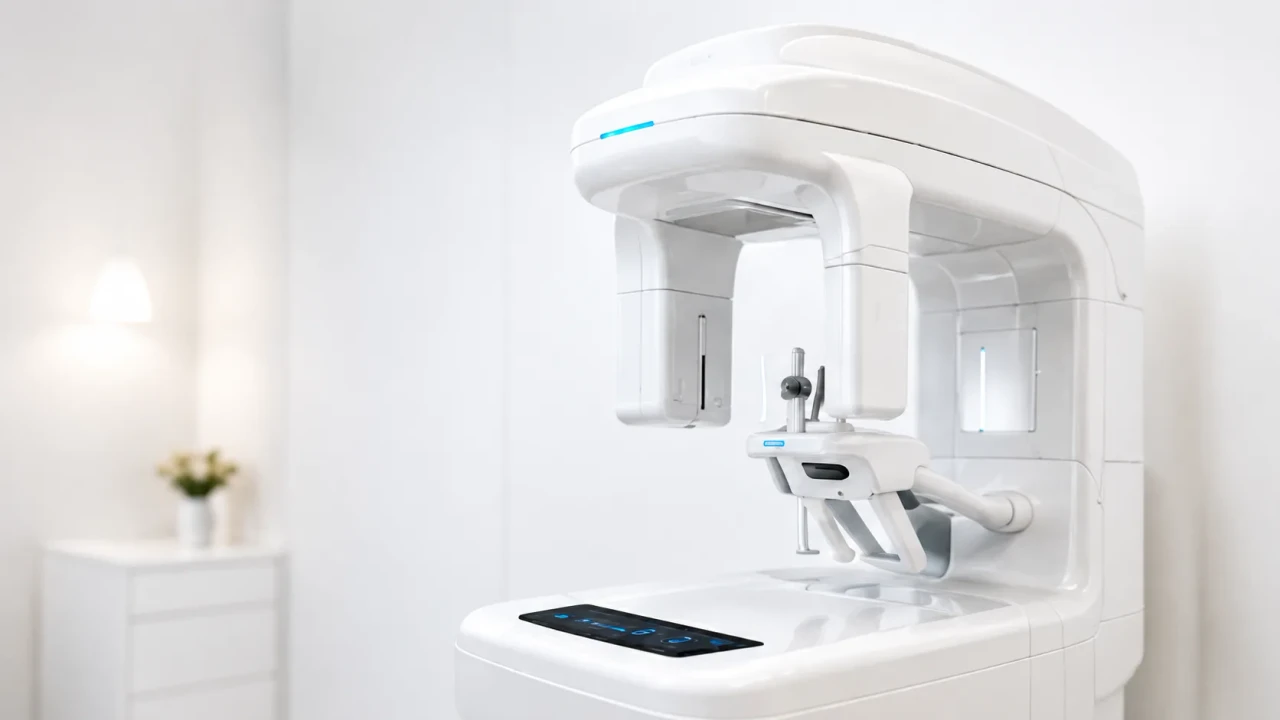
Digital smile design, intraoral scanning and a wax-up trial are standard here, not premium extras.
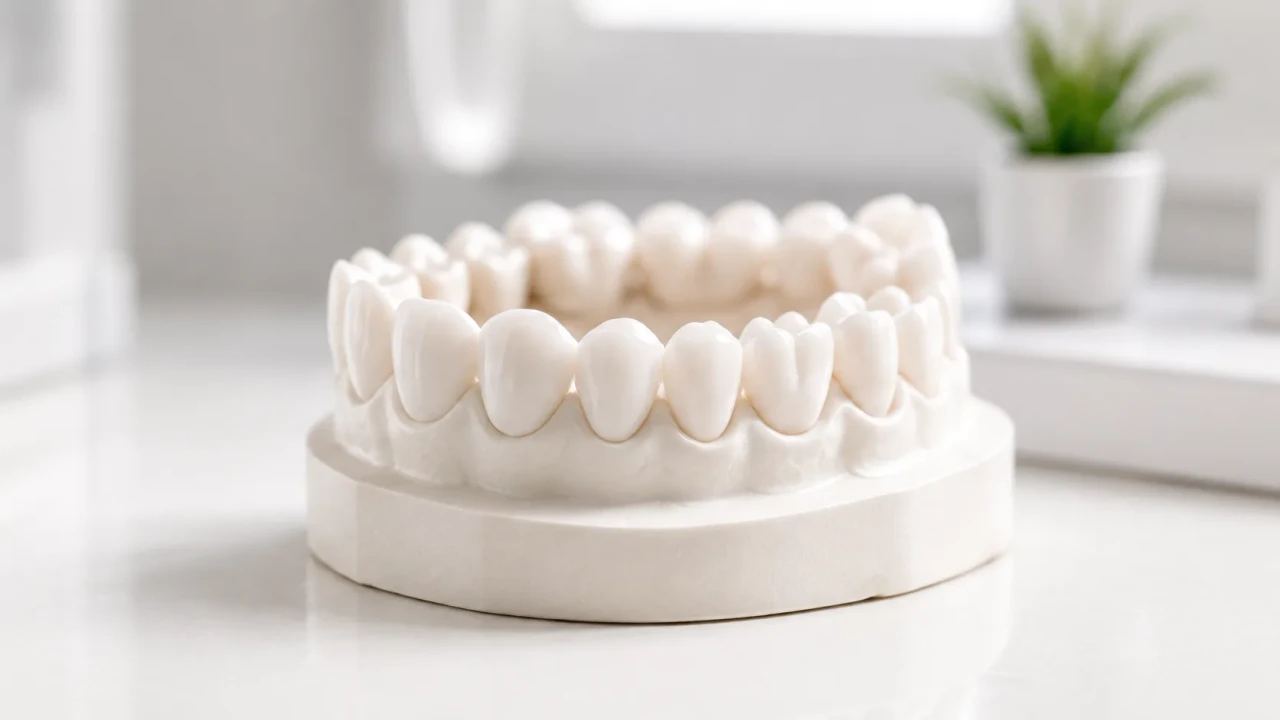
Lower operating costs can reduce treatment prices without requiring lower-grade ceramics.

Istanbul is connected to hundreds of international destinations, making treatment travel easier to plan.

International patient teams coordinate the design discussion, try-ins and aftercare in multiple languages.
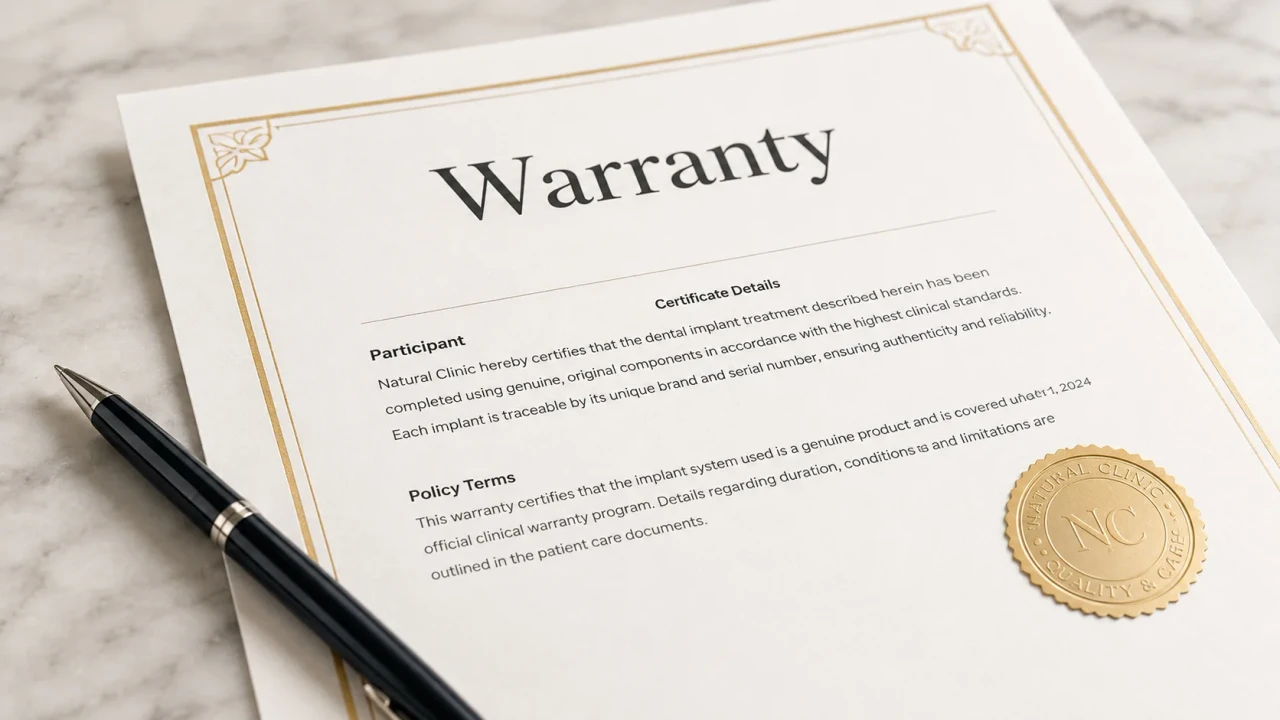
Reputable clinics name the material used on every tooth and record the dates.
Porcelain, E.max, laminate and zirconium are €200 per tooth, composite €130 — and every shell is made in our own lab.
Usually the six to ten that show when you smile; teeth that only need colour may be whitened instead.
A dark tooth may get an opaque shell while its neighbours get translucent ones, all matched to one shade.
A mock-up of the design sits over your teeth so you can judge it in the mirror.
Only as much enamel is removed as the material needs, because resin bonds best to enamel.
The shells are bonded, the bite refined, and you leave with a guard and a 15-year guarantee naming the material.
Five materials, one trip. These answers help you plan dental veneers without over-treating your teeth.
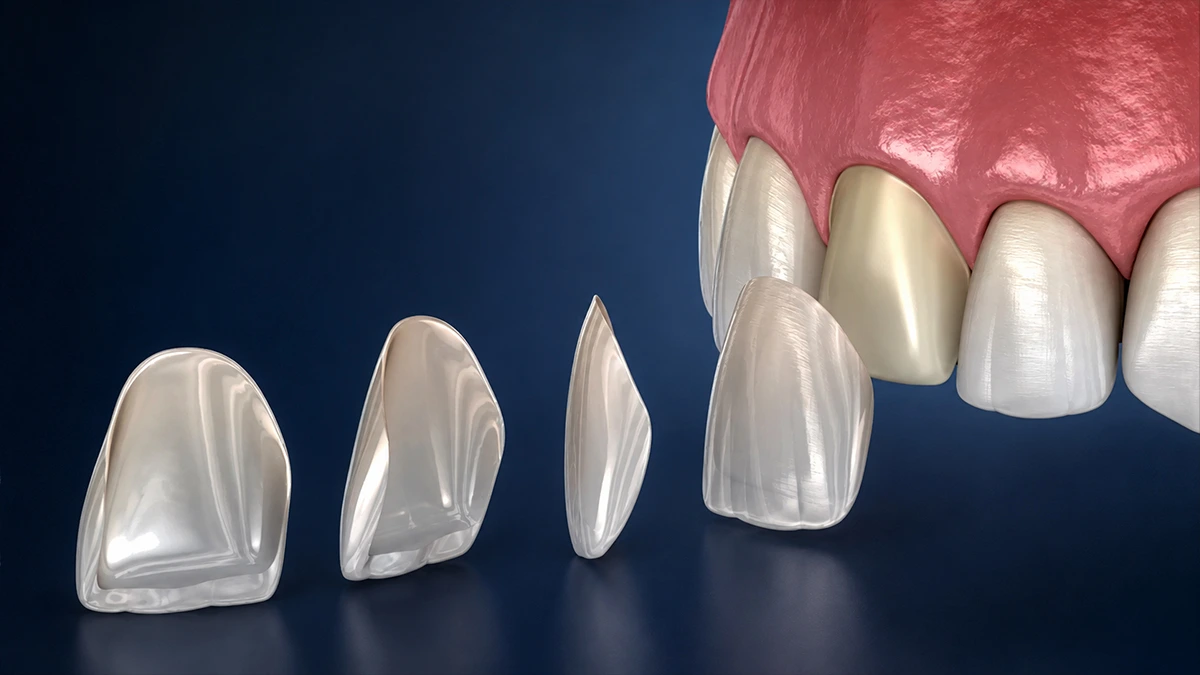
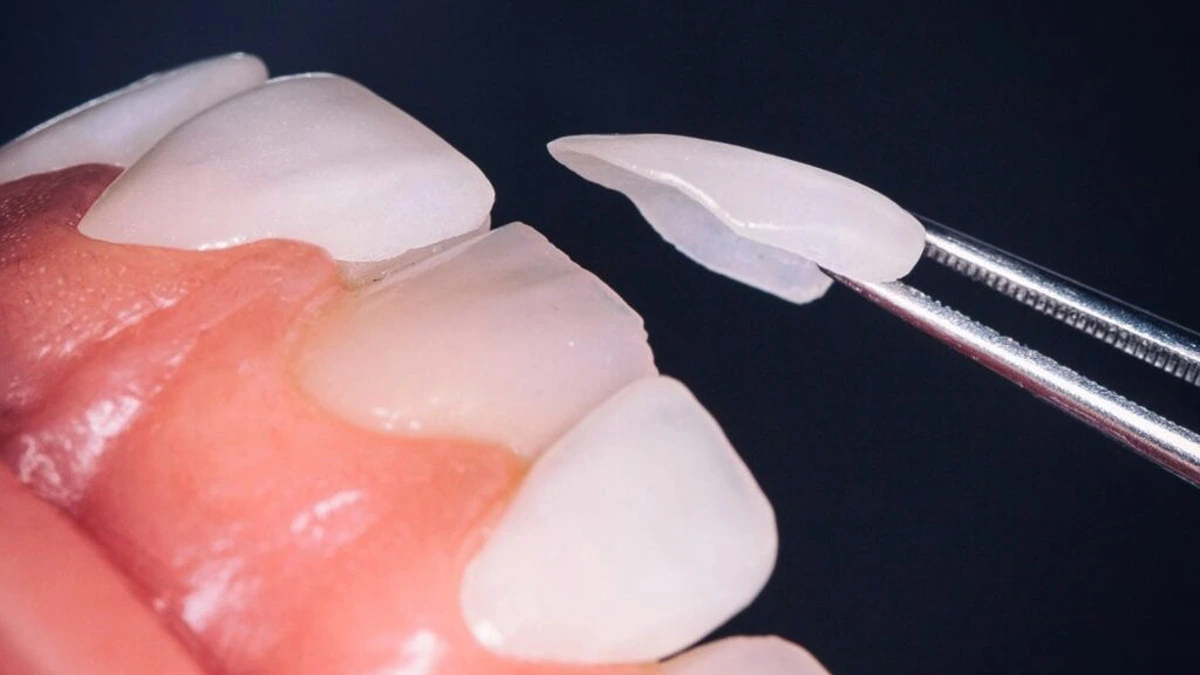
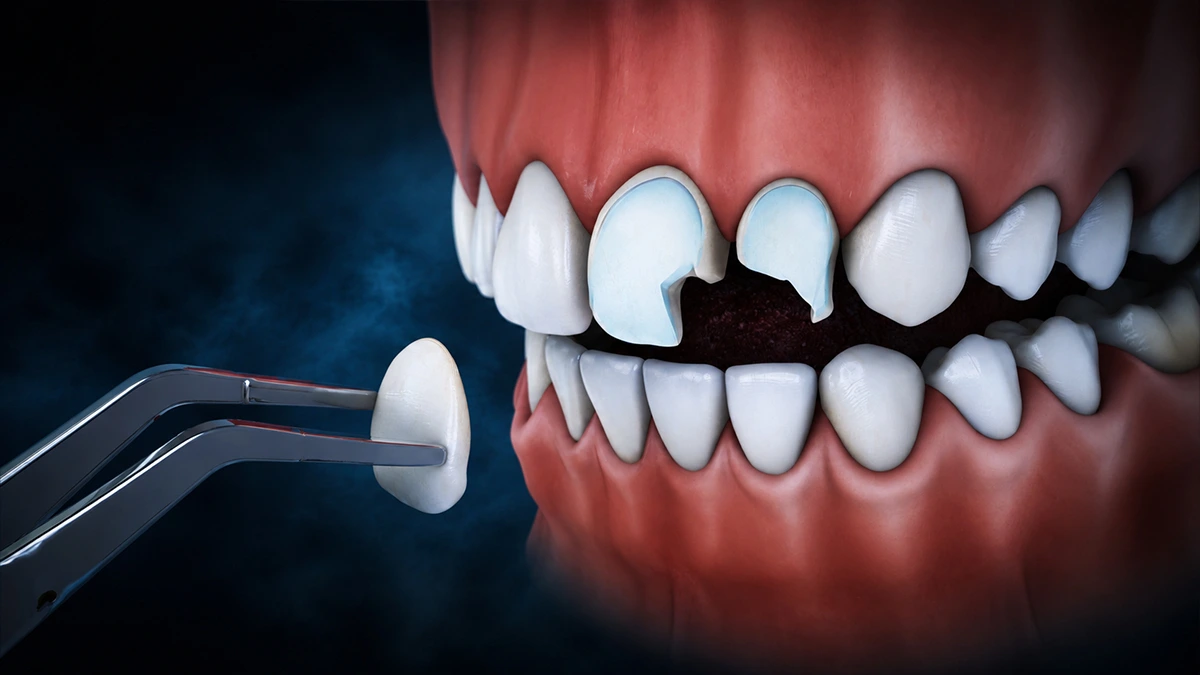
Dental veneers are thin shells bonded to the front surface of teeth to change their colour, shape, length or alignment. Because a veneer covers only the front of the tooth, far less tooth structure is removed than for a crown, usually around 0.3 to 0.7 mm, ideally staying within the enamel.
Porcelain and E.max suit most cases, offering stable colour and a stain-resistant surface. Composite veneers are cheaper and repairable but dull sooner. Laminate veneers preserve the most enamel but cannot hide very dark teeth, while zirconium is opaque enough to mask root-treated or heavily discoloured teeth.
Most people only need veneers on the teeth that show when they smile, usually the upper six to ten. A dentist reviews your photographs and identifies which teeth genuinely need a veneer and which could be improved with whitening or bonding instead, avoiding unnecessary treatment.
Ceramic veneers, whether porcelain, E.max, laminate or zirconium, are €200 per tooth at Natural Clinic, and composite veneers are €130. A single porcelain veneer in the UK often ranges from €440 to €1,410, so the saving grows with every tooth treated. Your total is the number of teeth multiplied by the price of the material chosen for each.
The per-tooth price covers the digital design, temporary veneers and the bonded shell. Additional treatments such as whitening, gum recontouring, root canal treatment or crowns are charged only when clinically necessary. Accommodation is billed separately from €75 per night. Every extra item is shown on the written plan before you commit.
No. The difference comes from lower operating costs and Natural Clinic's in-house laboratory, which designs and makes veneers in the same building. The ceramics are the same materials used by clinics across Europe, and each certificate names the material used.
Preparing a tooth for a veneer is irreversible, but a properly planned veneer removes only a thin layer of enamel and stays within it, which is where bonding works best. Damage is usually linked to aggressive preparation, such as reducing healthy teeth for crowns when veneers would have been enough.
Tooth preparation is done under local anaesthetic, so most patients feel little discomfort. Some temporary sensitivity to hot and cold can occur after preparation and while wearing temporary veneers, and it usually settles once the final veneers are bonded. Avoiding very hot or cold drinks in the first days can help.
Yes. After a digital smile design, a trial mock-up is placed over your teeth so you can see the planned length, shape and proportion on your own face. Changes are made at this stage, before any enamel is removed and while everything is still reversible.
Ceramic veneers are completed in one visit of five to seven days. Design and the mock-up happen in the first two days, followed by preparation and temporaries, laboratory fabrication, a try-in and final bonding before you fly home. The exact schedule is confirmed after your first examination.
Plan for around five nights in Istanbul for ceramic veneers, which allows time for every stage without rushing. If gum inflammation needs to settle first, or a tooth turns out to need a crown, your stay may be adjusted after the day-one examination.
Yes. Composite veneers are built directly on the teeth by hand, with no laboratory stage, so treatment usually takes one to two days. The trade-off is that composite is less resistant to staining and wear than porcelain or E.max. Composite is often chosen for smaller changes or when a shorter stay is important.
Material is the biggest factor. Glazed ceramics such as porcelain and E.max commonly serve a decade or more, often 10 to 15 years, whereas hand-built composite tends to need replacing after roughly four to eight. Grinding, biting hard objects and skipping check-ups are the habits that shorten veneer life most.
Ceramic veneers made from porcelain, E.max, laminate or zirconium have a glazed surface that resists staining and keeps its colour. Composite veneers are more porous and can stain or dull, especially with coffee, tea, red wine or smoking, so they may need periodic polishing.
Brush and floss as usual, keep regular check-ups and wear the night guard provided if you clench or grind. Avoid using your front teeth to bite hard objects such as nails, pens or packaging, as this can chip or loosen veneers.
Every veneer material has its own page, with the preparation, the timeline and the price set out in full — plus the treatments that are sometimes the better answer instead. Read as much as you like, or let a dentist tell you which applies to your teeth.
Personalised Care, Just for You
Send a few photos of your teeth, plus any X-ray you already have. One of our dentists reviews your case and replies with a realistic, itemised plan — which teeth genuinely need a veneer, which of them would be better whitened or bonded instead, which material for each, what it costs with hotel and transfers included, and how many days you’ll be in Istanbul. No obligation, no pressure, no cost.
Get My Free Veneer PlanVeneers are sold as a single treatment with a single price, and that is the source of most of the trouble. The material, the number of teeth and how much enamel comes off are three separate decisions, and getting the second one wrong is far more expensive than getting the first one wrong.
The form at the top of this page asks you to smile at your phone and decide what bothers you first: colour, shape or gaps. It's a better starting question than "which material do I want?", because the material follows from the problem. Plenty of people come to us asking for a specific type of veneer they've read about somewhere, and it isn't always the one their teeth actually need.
So this section works the other way round. Start with what you'd like to change, and the choice of dental veneers in Turkey, or anywhere else, usually narrows itself down.
If your teeth are a good shape and reasonably straight, and it's the shade that bothers you, whitening should come first. It removes no tooth structure at all, and on the price list above it costs less than a single ceramic veneer. It isn't unusual for someone who arrived expecting eight veneers to leave with whitening and one or two shells on the teeth that didn't respond.
Some discolouration won't budge with bleaching. The stubborn cases usually have a story behind them. A front tooth that went grey after a root canal years ago. Bands of colour left by an antibiotic taken as a child. An old metal filling you can see through the enamel. Here the question becomes how much the veneer has to hide. Thin, translucent shells let some of the colour underneath through, which is exactly why they look natural on a healthy tooth and why they struggle on a very dark one. For the darkest teeth, the opaque end of the range, zirconium veneers, is designed for that job.
One practical point: if some teeth are going to be whitened and others veneered, the whitening is done first. Veneers can't be bleached afterwards, so the shells are matched to your teeth at their new shade, not the old one.
Short, worn, uneven or chipped front teeth are the classic veneer case. This is where ceramic really earns its place, because it can rebuild length and edges in a way that looks like enamel and keeps its surface for years.
Two ceramic options dominate here. Porcelain veneers are layered by hand in the lab and give a ceramist the most control over how light passes through each tooth. E.max veneers are pressed from a stronger glass-ceramic and can be made thinner, which helps on teeth that take more load, such as canines or a bite where the front teeth meet edge to edge.
If it's only one small chip on one tooth, a veneer is usually more than you need. Composite bonding, built up directly on the tooth in a single appointment, can repair a corner without touching the rest of it.
Veneers can hide a small gap or a tooth that's slightly out of line. The key word is slightly. Veneers change the shape of the front surface. They don't move teeth.
Take a front tooth that sticks out a couple of millimetres. The only way a veneer can make it look straight is to shave that tooth back until it's level with its neighbours, and on a tooth that far forward, it's easy to go straight through the enamel into the softer layer underneath. We'd much rather move the tooth. A few months in clear aligners first feels like a detour, but it means the veneer goes onto a tooth that's already in the right place.
Gaps are different. Closing a space means adding width, not removing it, so a veneer here can be almost entirely additive. Laminate veneers, the thinnest shells, suit this well, and in some cases hardly any enamel needs to be touched.
Most real smiles are like this: one darker tooth, a couple of chipped edges, a small gap and a colour that isn't quite what it was. It's the situation where the idea of "choosing a veneer type" breaks down, because different teeth need different things.
Mixing materials in one smile is normal, and the pathway above mentions it. What makes it work is the shade plan. The dark tooth might get a more opaque shell, while its neighbours get translucent ones, and the lab has to make all of them look the same colour in daylight, under a bathroom light and in photos. It's fiddly work for the lab. It also means nobody has to over-prepare a healthy tooth just so it matches a dark one. When a quote puts every tooth in the same material, it's fair to ask why. Sometimes there's a good reason. Sometimes it was just easier.
For patients who want a complete, brighter redesign rather than a natural correction, the Hollywood smile page covers that approach and what it involves.
Fewer than you think, as a rule. Try this: smile at a mirror the way you would for a proper photo, and count the upper teeth you can see. Most people get to six or eight, occasionally ten with a wide smile, which is where the six to ten above comes from.
Going further back than that means more cost and more prepared teeth for a difference nobody is likely to notice. The opposite mistake happens too. If the veneers are a lot whiter than the teeth behind them, the smile can look as though it stops suddenly when you turn your head. Whitening those back teeth usually fixes that without covering them.
Lower teeth are a separate question. Many people only show them when they talk, and whitening is often enough. If the plan includes lower veneers, it should say why.
A veneer sits on the front of a tooth rather like a false nail sits on a fingernail. A crown is more like a thimble, fitting over the whole thing. The drilling reflects that. A veneer usually means shaving 0.3 to 0.7 mm off the front surface. A crown means 1 to 1.5 mm, all the way round.
That's why each has its own job. A veneer changes how a sound tooth looks. A crown holds together a tooth that's broken, heavily filled or root treated and weakened. A tooth that really needs a crown won't be saved by a veneer, and a healthy tooth doesn't need a crown just to change colour. If you've been told a tooth needs a crown, the dental crowns section explains the options.
Be wary of anything sold as veneers where the teeth are reduced on every surface. Those are crowns, whatever the quote calls them, and they should be planned and priced as crowns.
Almost everyone researching veneers abroad has seen the photos: teeth filed down to small pegs, then covered in thick, uniformly white shells. It's a fair concern, and it's worth understanding what went wrong in those cases.
Usually two things happened. The teeth were prepared as though for crowns rather than veneers, and far more teeth were treated than needed it. Neither has anything to do with the country. Both come down to planning.
The protection is the same wherever you're treated. The plan should say how many teeth, which ones and why. Preparation should stay within the enamel wherever possible, because that's where the bond is strongest. And there should be a trial smile in your mouth before any tooth is touched, so you can see the length, width and shade on your own face.
The pathway above explains that a mock-up of your new smile is placed over your teeth before preparation. It's the most useful part of the whole treatment, and it's easy to waste it by glancing in a mirror and saying it looks nice.
Take your time with it. Talk, and listen to whether your "s" and "f" sounds change. Laugh properly. Look at your side profile, not just the front. Ask someone you trust to take photos in daylight, near a window. If the teeth look too long when you speak, too wide when you smile or too white next to your skin tone, say so now. Changing a mock-up takes minutes. Changing bonded ceramic doesn't.
A total price on its own says very little, because two quotes can describe quite different treatments. A useful quote lists the teeth by number and names the material for each one. It says whether they're veneers or crowns, roughly how much enamel will be removed, and whether a digital design and trial smile are included. Whitening for untreated teeth, gum reshaping and a night guard should be listed if they're part of the plan. And the guarantee should be in writing, with the material named, as the pathway above describes.
The ceramic itself won't pick up coffee or wine stains. The thin line where it meets your tooth can, though, and the tooth underneath can still decay, so normal brushing, flossing and check-ups carry on as before.
Veneers tend to chip for fairly ordinary reasons: nail biting, tearing open crisp packets with your teeth, crunching ice, chewing the end of a pen. Grinding at night is the big one, and a lot of people don't know they do it until a veneer cracks. That's what the night guard is for, so wear it. Looked after like that, ceramic veneers typically last 10 to 15 years, often longer.
Few words in cosmetic dentistry cause as much confusion as "laminate". Talk to one dentist and it simply means a porcelain veneer, full stop. Talk to another and it means something far narrower: a shell so thin that the tooth under it has barely been touched, and sometimes not at all.
On this page, laminate means the second thing. That distinction matters, because it changes what you're actually buying. A laminate isn't a special material. It's an approach, and honestly, it fits fewer mouths than the adverts would have you believe.
The shell itself comes from the same ceramic families as other veneers: porcelain built up by hand in layers, or the pressed glass-ceramic most people know as E.max. You can read about those on the porcelain veneers and E.max veneers pages.
What makes it a laminate is the thickness and the thinking behind it. A conventional veneer is planned so that the new shell replaces roughly the enamel that was removed. The tooth ends up about the same size it started. A laminate is planned the other way round. Little or nothing comes off, and the shell goes on over the top. You finish with a tooth that's very slightly bigger than before.
That one idea explains almost everything else on this page: who laminates suit, who they don't, and why the trial smile is so important.
On paper, half a millimetre is nothing. On a front tooth, you'd be surprised how visible it is.
For some teeth it's exactly the right amount. Think of front teeth ground short over the years, a side tooth that never quite grew to full width, or one that leans back behind its neighbours. On those, the extra thickness isn't a side effect. It's the whole point.
If your teeth are already a normal size and sit where they should, the same half millimetre works against you. The teeth start to look thick. Your upper lip rests a fraction further forward. In profile, the smile can look slightly puffy, as if something has been added rather than improved. This is by far the most common reason laminate cases disappoint, and the ceramic itself is rarely to blame.
It's easier to picture with examples.
The first is someone in her thirties whose upper side incisors never grew properly. They're narrow and a little pointed, and they leave small gaps on either side. Her other teeth are healthy and a good colour. Thin shells on those two teeth can widen them and close the gaps with almost no drilling.
The second is a man in his fifties whose front teeth have been ground shorter over the years. They're still sound, but they look flat and old. Laminates can add back the lost length. He'll have to wear a night guard, since the habit that flattened his teeth hasn't gone anywhere. His own enamel, though, stays where it is.
The third is the person with one front tooth set a millimetre or so behind its partner. She's noticed it in every group photo since her teens. Nobody else ever has. A laminate on that tooth brings it forward into the line of the arch without touching its neighbour, and because the tooth was set back to begin with, the added thickness is exactly the correction it needs.
What all three have in common is room. Each of them has space for the tooth to get slightly bigger without looking wrong.
Teeth that already stick out are the clearest example. Adding thickness to a prominent tooth pushes it further forward, which is the opposite of what's needed. Those teeth either need moving with aligners first, or a conventional veneer with some reduction to keep them in line.
Dark teeth are the second. A shell as thin as a contact lens, as the page above describes it, lets most of the colour underneath show through. A tooth that has gone grey after a root canal will still look grey. For teeth like that, the opaque option on the zirconium veneers page is usually the realistic answer.
The third is anyone hoping for a big change in shape. Laminates refine. They can lengthen an edge, round off a corner or close a small gap. They can't turn crowded, overlapping teeth into a straight row.
"No-prep veneers" is one of the most appealing phrases in cosmetic dentistry, and one of the most stretched. So what does it look like when it's done properly?
Usually the enamel gets a light going-over first, just enough to take the glassy shine off so the bond grips. Now and then a sliver is smoothed at an edge to give the shell somewhere tidy to stop. The page above describes this as 0 to 0.3 mm, and that range is the honest picture: some teeth need nothing, some need a whisper, and occasionally one needs a little more.
What you should be wary of is a promise of "no drilling at all" for ten teeth, made from a few photographs. If a tooth genuinely doesn't have room, one of two things happens: the result looks bulky, or the tooth gets prepared anyway and nobody mentions it. A better question to ask is how much will come off each tooth, one by one. A careful plan can answer that.
This is a detail most people never hear about, and it's one of the main differences between a good laminate and a poor one.
With a conventional veneer, the dentist shapes a small step at the gum line so the veneer can sit flush against it. With a laminate on an unprepared tooth, there's no step. The shell has to thin down to almost nothing at its edge so it blends smoothly into the tooth.
Make that edge even slightly too thick and you've built a tiny shelf right at the gum. You'd never spot it in the mirror. Plaque finds it within days, though, and the gum beside it gradually turns red and puffy. On a good laminate you can run a fingernail across the join and feel nothing at all. Ask how the edges will be finished. It's a fair question, and the answer tells you a lot about the lab.
Almost. And the "almost" matters.
With nothing drilled away, your tooth underneath is pretty much as it was. The shell is glued to it, though, not clipped on, and getting it off means grinding it away bit by bit. A little of the outer enamel usually goes with it. That makes a laminate the most tooth-friendly ceramic veneer there is, but it isn't something you can peel off and forget about.
If being able to undo the treatment is your top priority, composite veneers are the more honest answer. They can be added, adjusted and removed with even less impact on the tooth, although they won't last as long or keep their shine as well.
The pathway above explains why whitening comes before laminates. Because the shell is so thin, it takes on the colour of whatever sits beneath it. Brighter teeth underneath give the lab a better starting point.
There's a timing point that's easy to miss. Teeth often look a little whiter straight after bleaching than they will a week or two later, as they rehydrate and settle. The shade for your laminates should be taken once that has happened, not on the same day as the whitening.
Thin shells also give the dentist a small amount of control at the bonding stage. The resin used to attach them comes in slightly different tints, and on a laminate, that tint can shift the final colour by a small amount. During the try-in, the shells are often tested with different try-in pastes so you can see the effect before anything is permanent. It's fine-tuning, though, not a way of hiding a genuinely dark tooth.
A trial smile is useful on every veneer case. With laminates it's close to a preview of the finished result.
Because a laminate adds thickness rather than replacing it, a mock-up placed over your unprepared teeth is very close in size to what you'll end up with. If the mock-up looks bulky under your lip, the laminates will too. If it looks natural in profile and you can speak comfortably, that's a strong sign the teeth have room.
So take the mock-up seriously. Look at it from the side. Smile in a photo. Read something aloud. If it feels too full, say so, because that's the moment to change the plan, perhaps to thinner shells on some teeth or a conventional preparation on one or two.
Once bonded, laminates are surprisingly tough. The bond to enamel is very strong, and because no dentine has been exposed, most people have little or no sensitivity afterwards.
They're most vulnerable before they're bonded, which is why the lab and the dentist handle them so carefully, and at their thinnest edges afterwards. The care advice on the page above is simple and worth taking literally: front teeth aren't tools. So no tearing open packets, no nail biting, no chewing the end of a biro. And if you grind at night, wear the guard. It looks after the laminates and the teeth they're stuck to.
A good laminate assessment sometimes ends with "not for your teeth", and that's a useful result, not a failure. It usually means one of a handful of alternatives will serve you better: whitening alone, a short course of aligners, conventional porcelain or E.max veneers with light preparation, an opaque shell on a dark tooth, or composite as a first step. How those options compare is laid out on the main dental veneers page.
The aim is the result you want with as little tooth removed as possible. Sometimes that's a laminate. Sometimes it's something else, and it's better to find that out from your photos than after you've flown in.
PORCELAIN VENEERS · 1654 words
https://natural.clinic/dental-treatment/dental-veneers/porcelain-veneers/
Bonding day takes a morning. The shell itself spends several days on a laboratory bench before that, being built up by hand from powders, water and heat. Most people never see that part, which is a pity, because it explains almost everything about porcelain veneers: why they look the way they do, why they resist stains, why a small change at the try-in is easy and a big one isn't, and why two clinics using the same material can produce such different smiles.
So this section follows a single porcelain veneer from the first photograph to the final glaze, and then on into the years after it's bonded.
Before anyone thinks about ceramic, the technician needs to understand your teeth as they are. That means photographs, and a lot of them. Shade tabs are held beside your teeth and photographed in daylight, so the lab can compare them directly. Many labs also use photographs taken through a polarising filter, which cuts out surface glare and shows the colour inside the tooth much more clearly.
Your natural teeth are never one colour. They're usually warmer near the gum, more translucent at the edge, and sometimes have faint white flecks or a slightly bluish tint along the biting edge. A good shade record captures all of that. "A1" or "B1" on a form tells a technician very little on its own.
Once the teeth have been prepared, one more shade is taken, of the prepared tooth itself. Porcelain is thin, and some of that underlying colour will show through. If one prepared tooth is darker than the others, the technician needs to know before building anything, so the layers on that shell can be adjusted to compensate.
From the scan or impression, the lab produces a model of your prepared teeth. For hand-layered feldspathic veneers, the porcelain is then built on a special heat-resistant copy of each tooth, or on a very thin metal foil pressed against the model, so the shell can go in and out of the furnace without distorting.
Everything that follows happens within a very small space. With 0.3 to 0.7 mm to work in, as the page above describes, there's no room for thick layers or second thoughts. That's one reason conservative preparation and skilled layering go together. The less tooth is removed, the more precise the technician has to be.
Porcelain for veneers comes as fine powders in different shades and translucencies. The technician mixes each with a liquid into a paste and applies it with a small brush, one zone at a time.
The deeper layers, sometimes called dentine porcelain, carry most of the colour. On top of those go more translucent enamel layers, and right at the edge, clearer porcelains that let light through the way a natural biting edge does. Between them, a technician can add small details if your own teeth have them: the faint vertical ridges often seen near the edge of a front tooth, a thin bright line along the edge, or a slightly milky patch. Left out, a veneer can look too perfect. Put in carefully, those details are what make people stop noticing it's a veneer at all.
None of this is visible from a price list, and it's the main difference between porcelain and materials that are milled or pressed from a single block of one shade.
Each layer is fired in a furnace. Porcelain shrinks as it fires, so the technician deliberately builds each stage slightly oversize and then checks it, adds a little more, and fires again. A single veneer can go through several firings before its shape and colour are right.
Between firings, the shell is checked against the model and against photographs of your face. Is the edge the right length? Does it line up with the tooth beside it? Is the colour reading warmer or cooler than intended? Small corrections at this stage cost nothing but time.
Natural enamel isn't perfectly smooth. Look closely at a front tooth in good light and you'll often see fine horizontal lines and gentle ridges and hollows. Those irregularities catch light in a particular way, and a perfectly flat, polished surface catches it differently. That's one of the details that gives away a poorly made veneer from across a room.
So the technician shapes and textures the surface, then applies a glaze and fires it one last time. The glaze leaves a smooth, glassy outer layer that food, coffee, tea and wine can't soak into. This is the property the page above describes as stain resistance, and it's a direct result of how the shell is finished, not just the material itself.
Porcelain veneers can be made in several ways. Some are pressed or milled from ready-made blocks and then painted on the surface for colour. E.max veneers are a good example, and they have real advantages in strength, which that page explains.
Hand-layered porcelain trades some of that strength for control over how light moves through the tooth. On the front teeth of someone who wants a result nobody can spot, especially next to their own untreated teeth, that control can make a visible difference. It also means the result depends heavily on the person holding the brush. The same powders in different hands can look quite different.
The pathway above mentions the temporaries you wear while the porcelain is being made. They're a copy of the mock-up you approved, made in a resin that's much softer than ceramic and held on quite lightly, so they can come off easily later.
That has a few practical consequences. Sticky sweets, crusty bread and anything you'd bite into with your front teeth are best avoided for those few days. The temporaries may feel a little rough or bulky, and they won't have the polish of the final shells. If one comes loose, don't try to glue it back yourself; call the clinic and it can be re-seated quickly. And pay attention to how they feel when you talk and smile, because the porcelain will follow that shape.
At the try-in, the shells are placed on your teeth with a clear or tinted paste, not yet bonded, and checked by the window in daylight. This is where a veneer might be sent back.
The reasons are usually small. An edge is fractionally too long when you speak. One shell reads slightly greyer than the others. A corner sits a little proud of the neighbouring tooth. For hand-layered porcelain, many of these can be fixed by adding a touch more porcelain, reshaping and re-firing, often the same day when the lab is on site. A shell that's fundamentally the wrong colour is usually rebuilt from scratch rather than patched, which is why the shade record at the start matters so much.
If something bothers you at the try-in, say so. Once the veneers are bonded, reshaping means grinding glazed porcelain, and the glaze is exactly what you don't want to lose.
Your tongue will find the new veneers long before anyone else does. For a while it keeps running over the edges and the backs of the teeth, checking. Give it a week or two and it loses interest.
Cold drinks might sting a little for the first few days. That's normal after teeth have been prepared and bonded. What isn't normal is a bite that feels high. If one tooth touches first when you close, or your jaw feels nudged slightly to one side, come back and have it checked before you fly. Porcelain doesn't wear in; it chips.
The page above gives 10 to 15 years as the usual lifespan, and plenty of porcelain lasts well beyond that. How long yours last depends partly on a few habits that aren't always explained.
Next time you see a hygienist, tell them about the veneers before they start. It matters more than you'd think. Acidulated fluoride gel, which some practices use routinely, can etch porcelain and leave it dull, and a gritty polishing paste can take the shine off the glaze. Once they know, they'll reach for something gentler. At home you don't need anything special. A soft brush and whatever toothpaste you normally use will do.
Years down the line, trouble tends to start where the porcelain meets your tooth. Gums often recede a little with age, and when they do, that join can peek out and pick up a faint brown line. Daily flossing won't stop the clock, but it slows that down considerably.
A tiny chip is often just smoothed off, or filled with a dab of composite. A larger fracture usually means a new shell. And if one veneer needs replacing years from now, matching it to the others is a real challenge, because the originals were built layer by layer for your teeth at that time.
That leads to one practical suggestion. Ask for a copy of your final shade details and the photographs taken during treatment, and keep them somewhere safe. If a single veneer ever needs replacing, whether here or with a dentist near home, the technician will have a far better chance of matching it with the original records than with a photo of your smile taken on your phone.
If you're still deciding between porcelain and something else, the main dental veneers page sets out which material suits which problem.
E-MAX VENEERS · 1608 words
https://natural.clinic/dental-treatment/dental-veneers/emax-veneers/
E.max is one of the few dental materials patients ask for by name. Usually they've read two things about it: that it's stronger than ordinary porcelain, and that it looks more natural. Fair enough, on both counts. Hardly anyone mentions what that strength is actually for, though, or which teeth really benefit from it.
Here's the answer in a sentence. E.max won't make your teeth tougher, but it lets a veneer be made thinner without turning fragile, and on some teeth that makes a big difference to the plan.
Strictly speaking, "E.max" is a trade name. The product is IPS e.max, a lithium disilicate glass-ceramic made by Ivoclar in Liechtenstein, and it has decades of clinical use behind it. Somewhere along the way the name started being used loosely, and you'll now see clinics call almost any pressed or milled ceramic "E.max".
That matters because the numbers on the page above, including the strength figure, belong to the genuine material. If you're paying for E.max, the paperwork should say so by name, the same way a pharmacy label names the drug rather than just "painkiller".
It's tempting to picture E.max as the veneer you can crack walnuts with. Nice image, wrong idea. Once a veneer is properly bonded, it behaves as part of the tooth, and the tooth underneath is doing a lot of the work.
The strength earns its keep at the thin bits. Hold a front-tooth veneer up to the light and the biting edge is almost paper-thin at the tip. Make that edge from a weaker ceramic and it has to be thicker to survive. The extra bulk has to go somewhere: either the veneer ends up sitting further forward than your tooth did, or the dentist removes more enamel to make room. E.max can keep that edge thin and it still holds.
So it's most useful on a few particular kinds of teeth:
Canines. When you slide your jaw sideways, the upper and lower canines usually touch first and guide the movement. That puts sideways load on their edges every day, which is hard on a delicate shell.
Edge-to-edge bites. If your upper and lower front teeth meet tip to tip rather than overlapping, the edges of any veneer take direct force.
Worn teeth being lengthened. When teeth have been shortened by years of grinding or acid wear, veneers are often used to add back length. That new length sits beyond the natural tooth, with no enamel behind it, so the ceramic has to carry itself.
On front teeth with a gentle, overlapping bite, the strength difference matters less, and the choice between E.max and hand-layered porcelain veneers comes down more to appearance and the technician's preference.
E.max starts life as an ingot, a small cylinder of ceramic that is softened with heat and pressed into the shape of your veneer. Ingots come in different levels of translucency. Some let plenty of light through. Others are cloudier and hide more of whatever sits underneath.
The choice is made tooth by tooth. A bright, healthy tooth with nothing to hide might get a translucent ingot, so the veneer picks up the natural colour beneath it. A tooth that has darkened slightly might get a more opaque one in the same shade. Done well, this is how a row of veneers ends up looking like a matching set even when the teeth under them started out different colours.
It has limits. A tooth that's very dark, such as one that has darkened since its nerve was removed, may need more masking than a thin E.max shell can provide. That's the job zirconium veneers are designed for.
There are two ways to make an E.max veneer, and two ways to finish one.
It can be pressed from an ingot, as described on the page above, or milled by machine from a solid block. Both are genuine E.max. Pressing is often preferred for very thin veneers because it can produce fine, delicate margins, while milling is faster and very consistent.
Then there's the finish. A monolithic E.max veneer is made in one piece and coloured on the surface with stains before it's glazed. It's the strongest version, because there's nothing layered on top. A cut-back veneer is pressed slightly short, and the technician then builds the edge back up by hand with layering porcelain to add translucency and small details. It looks more lifelike close up, particularly on the two front teeth, but the added layer is weaker than the E.max beneath it.
Many smiles use both: monolithic shells on the canines and side teeth, where strength counts, and cut-back shells on the central incisors, where people look first. Ask which finish your plan uses. It says a lot about how the case has been thought through.
You'll see on the page above that E.max is etched and bonded, not cemented. That sounds like jargon, but it's a big part of why these veneers stay put.
Before the shells come to the chair, the inside of each one is treated with a strong acid. Under a microscope, the surface ends up looking like a tiny honeycomb. Then a thin coat of silane goes on, which lets the resin grab the ceramic chemically as well as mechanically.
In the chair, each tooth is cleaned and lightly etched too. The most important part is keeping it completely dry. Saliva, or even moisture from your breath, can weaken the bond, so the teeth are carefully isolated, sometimes with a thin rubber sheet over the mouth. It isn't the most comfortable part of the day, but it's there for a good reason.
Each veneer is seated with the resin, excess is cleared away, and a blue curing light sets it hard. Finally, your bite is checked with marking paper, and any high spots are polished down. You'll leave with teeth that feel smooth to your tongue, and a bite that should feel natural when you close.
It helps to see how the choice plays out in ordinary cases.
Six front teeth, gently overlapping bite, mild staining. Either works well. E.max is the more common choice for a set, because it's consistent and strong. Hand-layered porcelain can look slightly more natural up close in the right hands.
A single central incisor next to natural teeth. This is the hardest match in cosmetic dentistry. A cut-back E.max or a layered porcelain veneer both have a place here, and the technician's skill matters more than the material. The FAQ above touches on why E.max's translucency helps.
Worn, short teeth in someone who grinds. E.max, with a night guard. The added length needs the strength, and the guard protects it.
Ten veneers across a wide smile. Usually E.max, sometimes with cut-back shells on the two central incisors for extra depth.
One very dark tooth among lighter ones. Neither, at least for the dark tooth. That tooth may need an opaque shell, while its neighbours can still be E.max.
Lower front teeth are narrow and often thin from front to back, so there isn't much tooth to work with. That's one place where a material that can be pressed very thin without losing strength is useful. The same applies to small or peg-shaped upper side teeth, which sometimes need building out rather than covering. In both cases the question is less "which material?" and more "does this tooth need a veneer at all?", which the veneer overview helps you think through.
Chips happen, even to strong ceramics. A very small one can often be polished smooth. A bigger one usually means a new shell.
Here E.max has a quiet advantage. Because each veneer starts from a known ingot and a recorded set of stains, a lab can reproduce it more predictably than a shell that was built up entirely by hand. It's still skilled work, and the match is never automatic, but the starting point is clearer. Like all ceramic, E.max can't be whitened, so if your natural teeth have been bleached since, the new shell is made to match the veneers beside it rather than the original shade.
Sometimes the tooth needs more than a veneer can offer. A tooth that's heavily filled, cracked or badly broken needs to be held together, not just covered on the front. E.max is used for that too, as a full crown rather than a shell, and the E.max crowns page explains when that's the better route.
At the other end, if you're not sure you want ceramic at all, or you'd like to test a new shape before committing, composite can be built directly on the teeth and adjusted or removed later. It won't last as long, but it's a legitimate first step for some people.
When you finish treatment, look at the guarantee or certificate you're given. It should name the material on each tooth. If your veneers are E.max, the document should say so, ideally with the manufacturer, rather than just "ceramic" or "glass ceramic".
It sounds like a small detail. Years from now, though, if a single veneer chips and a dentist near home needs to replace it, knowing exactly what was used, and how it was finished, makes it much easier to match.
ZIRCONIUM VENEERS · 1851 words
https://natural.clinic/dental-treatment/dental-veneers/zirconium-veneers/
People are surprisingly forgiving of teeth that are a little yellow all over. What they notice, in photos and in the mirror, is the one tooth that doesn't match. A single front tooth that has turned grey draws the eye in a way general staining never does, and it's often the reason someone starts looking into veneers in the first place.
Zirconium veneers exist mainly for that problem. They're the one material in the range chosen for what they hide rather than what they show. That makes them very good at one job, and a poor choice for almost everything else.
Worth asking, because the answer decides what comes next.
The most common story is an old knock. A front tooth takes a blow, perhaps years earlier, the nerve inside slowly dies, and the tooth darkens from the inside out. Sometimes it's had a root canal since, sometimes not. Either way, the colour is coming from within the tooth, not sitting on its surface.
Other causes are less obvious. Some people took tetracycline as children, an antibiotic that was widely prescribed at one time, and it left grey or brown stripes deep inside the teeth that were forming back then. Others had too much fluoride while their teeth were developing and ended up with a patchy, mottled look. And now and then the tooth itself is fine. What you're actually seeing is an old metal post inside a root-filled tooth, or a dark filling at the back, showing through like a shadow behind frosted glass.
That's why the pathway above starts with an X-ray. Before anyone plans a veneer, it's worth knowing whether the root filling is sound, whether there's any infection at the tip of the root, and whether something metal is sitting inside the tooth. A veneer placed over an unresolved problem just hides it for a while.
Zirconium removes more tooth than any other veneer in the range, so it makes sense to rule out gentler approaches before committing to it.
For a single root-filled tooth, internal bleaching is often the first thing to try. The whitening gel is placed inside the tooth, through a small opening at the back, rather than on the outside. It can lighten a dark tooth considerably, sometimes to the point where a thin veneer, or no veneer, is all it needs. It doesn't work on every tooth, and the colour can drift back over the years, but it removes no extra tooth from the front and it's worth asking about.
If the tooth is only moderately dark, a more opaque version of a glass-ceramic may be enough. The E.max veneers page explains how E.max comes in different levels of translucency, and a cloudier one, sometimes made slightly thicker, can hide a fair amount of colour while keeping the stronger bond that glass-ceramics offer.
Zirconium comes in when those options won't do: very dark teeth, heavy tetracycline banding, or metal that no thin, translucent shell can cover.
Every other veneer material lets some light pass through it. That's what makes them look alive: light enters the tooth, bounces around inside and comes back out, the way it does with natural enamel. It's also why they can't hide a dark tooth. Light goes in, hits the grey underneath, and brings the grey back out with it.
Zirconia stops the light. As the page above puts it, a 0.4 mm glass-ceramic shell lets the colour underneath show through, while an opaque zirconia core blocks it.
The catch is that a tooth that doesn't let light through can look flat and chalky, a bit like a white tile. That's why, as described above, the core is milled first and then layered with porcelain on the visible face. The porcelain gives back some of the depth and translucency the core takes away. Without that layer, a zirconia veneer will usually look obviously artificial next to natural teeth.
According to the page above, zirconium veneers need 0.5 to 0.8 mm of room, against the thinner preparations possible with glass-ceramics. There are two reasons.
One is simply space. The opaque core needs a certain thickness to block colour, and the porcelain on top needs room of its own.
The other is how zirconia is attached. Glass-ceramics are etched with acid and bonded so tightly that the shell and tooth act as one. Zirconia can't be etched in the same way. Instead, its fitting surface is roughened with a fine sandblast and coated with a special primer, and the shell is cemented in place. It's a reliable method, used on zirconia crowns for many years, but it relies more on the shape of the preparation to hold the veneer securely. That usually means a little more tooth is shaped.
On a dark tooth that genuinely needs masking, that trade is worth making. On a healthy tooth of normal colour, it's a cost with nothing gained.
The page above describes a common plan: zirconium on the one grey tooth, glass-ceramic on the teeth beside it, all tinted towards a single target colour. It's a sensible approach, and it's also one of the harder things a dental lab is asked to do.
The difficulty is that the teeth behave differently in different light. In a bathroom mirror, they might match perfectly. Under a camera flash, the translucent shells can look slightly brighter at the edges while the zirconium one looks more solid. Under the ultraviolet lights you sometimes find in nightclubs, natural teeth glow faintly blue, while some ceramics glow less, and an untreated zirconia shell can look darker than its neighbours. Good labs use porcelains and stains designed to glow in a similar way, but it's worth mentioning if that matters to you.
This is exactly why the try-in described above compares the shells against your natural teeth before anything is cemented. Look at them by the window, and if you can, take a quick photo with the flash on. A small difference is easier to fix at this stage than after cementation.
Sometimes it isn't one tooth at all. With heavy tetracycline staining, every front tooth has the same grey or brown stripes, and whitening barely makes a dent.
These cases are different from the single dark tooth. There's no natural neighbour to match, so the lab is effectively designing a whole new set of teeth, and the risk of a flat, uniform, too-white result goes up. The layered porcelain face on each shell matters even more here, and so does the trial smile. It's also worth thinking about where your smile ends. If the teeth further back are stained too and will show when you laugh, they need to be part of the plan, or the contrast at the edges will give the game away.
In smiles like these, zirconium usually earns its place. It's the design, though, that decides whether anyone can tell.
There's one thing zirconium veneers can't always fix, and it's better to know in advance.
When a tooth has darkened from the inside, the root can be dark too. Where the gum is thin, some of that colour can show through the gum itself, as a greyish shadow just above the edge of the veneer. The veneer covers the tooth, but it can't change the colour of the root beneath the gum.
The same thing happens with older crowns that have a metal core: a grey line appears at the gum as it recedes over the years. Replacing those crowns with metal-free ones often helps. For a dark root, internal bleaching can sometimes lighten it, and a careful choice of where the veneer edge sits can hide some of it. But if your gum is very thin and the root is very dark, a faint shadow may remain, and a good dentist will tell you that before you start.
Zirconia is extremely strong. The page above gives a figure of around 1,200 MPa, far more than any other veneer material. It's easy to see why that sounds appealing, and why "the strongest veneer" is an easy thing to sell.
On front teeth, though, raw strength almost never decides how long a veneer lasts. Any good ceramic, bonded well, ends up working together with the tooth beneath it. Veneers tend to fail for more ordinary reasons: too much enamel removed, a bond that wasn't done carefully, or a bite that puts one tooth under more pressure than the rest.
Say your teeth are healthy and a normal colour, and you're told zirconium is best for all of them because it's the strongest. Ask why. You'd be giving up more tooth for strength you almost certainly don't need, and you'd be choosing the material that is hardest to make look natural. For most people, E.max, porcelain or even laminate veneers would be the better choice, and the overview of all five materials shows which problem each one is designed for.
A dark tooth has often had a root canal, and that raises another question: would a crown serve it better than a veneer?
It depends on how much of the tooth is left. A front tooth that had a root canal through a small opening at the back, with most of its structure still in place, can often take a veneer perfectly well. Now picture a tooth that's more filling than tooth, or one with a large post inside, or one that has already lost a corner. Put a veneer on that and you've dressed up the front while leaving the rest free to crack. It needs something that wraps all the way round.
In those cases, a full crown is usually the safer option. Zirconia is used for that too, and the zirconia crowns page explains when a crown makes more sense. Because zirconium veneer preparations are already deeper than other veneers, the difference in how much tooth is removed can be smaller than people expect, which is one more reason the choice should be made tooth by tooth.
If you're considering zirconium because of one or two dark teeth, the most useful thing you can send with your photos is an X-ray of those teeth, if you have one. Add what you know about their history: whether the tooth was knocked, roughly when it started to change colour, whether it's had a root canal, and when.
Photos help most when they're taken in daylight, without a filter, and with your natural teeth visible alongside the dark one. That gives the dentist a realistic sense of how much colour needs hiding, and whether internal bleaching, a more opaque glass-ceramic or zirconium is likely to be the right answer.
COMPOSITE VENEERS · 1893 words
https://natural.clinic/dental-treatment/dental-veneers/composite-veneers/
Composite is the only veneer you actually watch being made. It goes on your tooth as a soft paste, gets shaped while you sit there, and leaves the chair finished. It's also the veneer that changes most over the years, because resin behaves differently from fired ceramic.
So rather than describing composite in the abstract, this section follows a set of composite veneers through their life: the planning, the appointment itself, the first few weeks, and what tends to happen after one year, three years and five. If you know that story in advance, you can decide whether composite fits the way you live.
Because composite is sculpted freehand, how it turns out rests largely on whoever is holding the instrument. The best way to take some of the guesswork out is to agree the shape before the day.
That usually starts with photos and a digital design, as with any veneer. From that design, a model of your teeth with the new shape built up in wax is often made, and from the wax model a clear silicone guide. On the day, the dentist presses the first layer of composite into that guide on your tooth, so the back surface and length are already where you agreed. The rest is built up freehand from there.
It's also worth asking to see the dentist's own composite work, not stock photos. Composite is a craft, and two people using exactly the same material can produce very different teeth.
One practical point catches people out. Resin doesn't bleach. Once composite is on your teeth, whitening products will lighten the natural enamel around it but leave the composite exactly as it was.
So if you'd like your teeth brighter overall, the whitening comes first. The composite is then matched to your new shade, ideally after a week or two once the colour has settled. Reverse the order and you end up with veneers that look slightly darker than the teeth beside them, and no easy way to fix it except redoing the composite.
As the page above says, six teeth usually take one long appointment. Most people are surprised by how calm it is. Because little or no enamel is removed in most composite cases, many patients don't need an injection at all.
First, the surface of each tooth gets a mild acid treatment so the resin has something to grip. Then the dentist builds the veneer up in thin layers, curing each one with a blue light. Deeper layers carry the colour; the outer ones are more see-through at the edge. The FAQ above covers the basics of that process.
The part people remember is the shaping. With the layers on, out come the fine discs and polishing burs. The dentist trims a little, steps back, looks from the side, trims again, and then hands you a mirror. If an edge seems too long or one tooth looks slightly wider than its partner, it can be changed there and then. Speak up. It's one of the few treatments where your opinion can be acted on in minutes.
Last comes the polishing, then a check of how your teeth meet when you close, with any spot that hits too early smoothed down.
Your tongue will notice the change straight away. The teeth may feel very slightly fuller at the front, and the edges may seem different when you bite into food. That usually settles within a few days.
Some dentists suggest going easy on strongly coloured food and drink for a day or two, such as curry, red wine, black coffee and beetroot, while the surface fully settles. It's a sensible precaution rather than a strict rule.
One thing not to ignore is a bite that feels off. If a single tooth bumps first when you close, have it looked at before your flight. It's a two-minute fix now, and quite possibly a chipped edge later if you leave it.
In the first year, composite usually looks at its best. The polish holds, the colour matches, and most people forget they have veneers at all.
This is also the period when small problems tend to show up if they're going to. A thin edge on a front tooth might chip if you bite something hard. A tiny ledge might collect a little stain. The good news is that composite can be repaired easily: the area is roughened, a little fresh resin is added, and it's polished back to shape, often in less than an hour, as the page above notes.
Your first check-up is a good time for a quick polish and a look at the edges.
This is where composite starts to show its nature. Resin has tiny pores that glazed ceramic doesn't, and bit by bit the surface goes from glossy to satin. Nobody is going to mistake it for anything other than a tooth. It just isn't as shiny as it was, and plenty of coffee, tea or cigarettes will speed that up.
Keep an eye on the edges. Colour tends to show up first along the thin seam where composite meets tooth. It can pick up a faint brown or grey outline. Regular professional polishing removes much of this and brings back the lustre, which is why composite does best with check-ups every six months or so rather than whenever you remember.
Small chips may happen now and then. Each one is a minor repair rather than a disaster.
The page above gives four to eight years as a typical lifespan, and that matches what happens in practice. Somewhere in that window, most composite veneers need either a full refinish or replacing.
At that point you have a genuine choice. You can have new composite built on the same teeth, often with very little impact on the enamel beneath. Or you can move to ceramic, knowing much more by then about the shape and colour you like. Some people do exactly that. They start with composite in their twenties, live with it for a few years, and later switch to porcelain veneers or E.max veneers with a very clear idea of what they want.
Not every composite case is a full smile. Some of the most rewarding ones are tiny. A corner knocked off a front tooth in a bike accident at twelve. One side tooth that stayed smaller than the rest. That gap between the two front teeth that everyone at school had an opinion about.
These small cases are where composite really shines. The change is quick, the neighbouring teeth stay untouched, and the result blends with your own enamel because most of what people see is still natural tooth. It's also where the question of travel comes up, and the page above is honest about it: a single small repair doesn't usually justify the journey by itself. Combined with whitening, or with other treatment you were planning anyway, it can make much more sense.
People often assume composite stains because of what they eat. Diet plays a part, but the bigger factors are usually the surface and the edges.
A freshly polished surface is very smooth, and stain has little to cling to. As that polish wears, the surface becomes slightly rougher at a microscopic level, and pigments from your morning coffee, a glass of red or cigarettes settle in more easily. The margins, where composite meets tooth, are the most vulnerable spot of all. That's why regular polishing does so much: it resets the surface and takes the early stain with it, long before it becomes visible from across a room.
Composite has another role that rarely gets mentioned: it can work as a trial run.
Say you're tempted by longer front teeth but can't quite picture yourself with them. Composite lets you try. You wear them to work, see them in holiday photos, hear yourself on a video call. Maybe you end up loving them, in which case you keep them or have them copied in ceramic a few years on. Maybe you don't. Then they're reshaped, or polished off.
For younger patients especially, this matters. Any enamel removed for a ceramic veneer is gone for good, and at 22 that's a long commitment. Composite can put that decision off for years while still giving you the smile you want now.
On the first day, a good composite veneer and a good ceramic one can look remarkably similar. The differences show up later.
Give it a few years and ceramic pulls ahead on looks: it keeps its gloss and colour, and coffee slides straight off it. It needs a laboratory, several days in Istanbul and, in most cases, some enamel removed. Composite needs no lab and often no preparation, and it can be finished within a day or two. It's also far easier to repair or change. The trade is that it needs more maintenance and a refresh within a few years. If you'd like to see all five materials side by side, the veneer comparison page lines them up.
Price follows the same pattern. Composite costs less at the start, as the price list above shows. Spread over ten years, with polishing appointments and at least one redo, the gap narrows more than the first bill suggests. So the real question isn't which is cheaper. It's whether you'd rather have something that needs a bit of looking after but leaves your enamel alone, or something you can mostly forget about in exchange for some preparation.
If you want a big change across ten teeth and would like to forget about them for the next decade, ceramic is usually the better fit. Composite can do the change, but it will ask for attention along the way.
Heavy grinders are another group to be careful with. Composite edges chip more easily than ceramic, so a night guard isn't optional. Serious coffee drinkers and smokers should expect the shine to fade faster and plan for more frequent polishing.
Very dark teeth are a different problem again. Composite can hide some discolouration with opaque layers, but a front tooth that turned grey following root canal treatment often needs the stronger masking of zirconium veneers. And a tooth that is cracked or heavily filled needs holding together with a crown, not covering with resin.
A few small things make composite much easier to look after later. Ask which composite system and shades were used, and keep a note of them. If a veneer chips a year from now, a dentist near home can repair it far more neatly if they know exactly what to match.
Keep the photos taken on the day. They show how the teeth looked when they were freshly polished, which is useful for comparison at future check-ups.
And find a dentist at home who is comfortable polishing and repairing composite. Most are, but it's worth asking before you need them.
Laminate Veneers: A Thinner Shell for Fewer Smiles · How a Porcelain Veneer Is Made, Layer by Layer · E.max: Where the Extra Strength Actually Goes · +2

© 2026 Natural Clinic. All rights reserved.
-1280x854.webp?v=mumk9bll)
%20(1)-1280x854.webp?v=mumjvber)
-1-1280x854.webp?v=mumjx0r2)
-1-1280x854.webp?v=mumk1j5c)
.webp?v=mth4mn70)