 English
 Italiano
 Español
 Français

Rhinoplasty
Closed Rhinoplasty in Istanbul · €3,000
Want no visible scar at all? Every incision stays inside the nostrils.
Closed rhinoplasty works entirely through internal incisions, suiting moderate changes to the bridge or hump with less visible swelling. It costs €3,000, the same as the open approach, so your surgeon chooses based on anatomy alone.
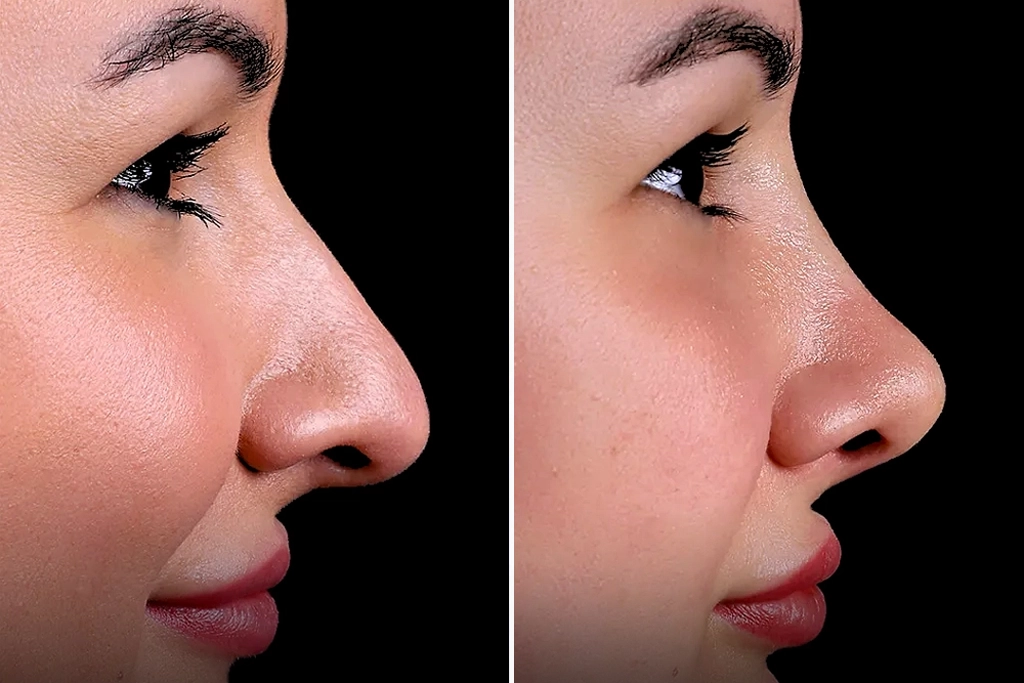
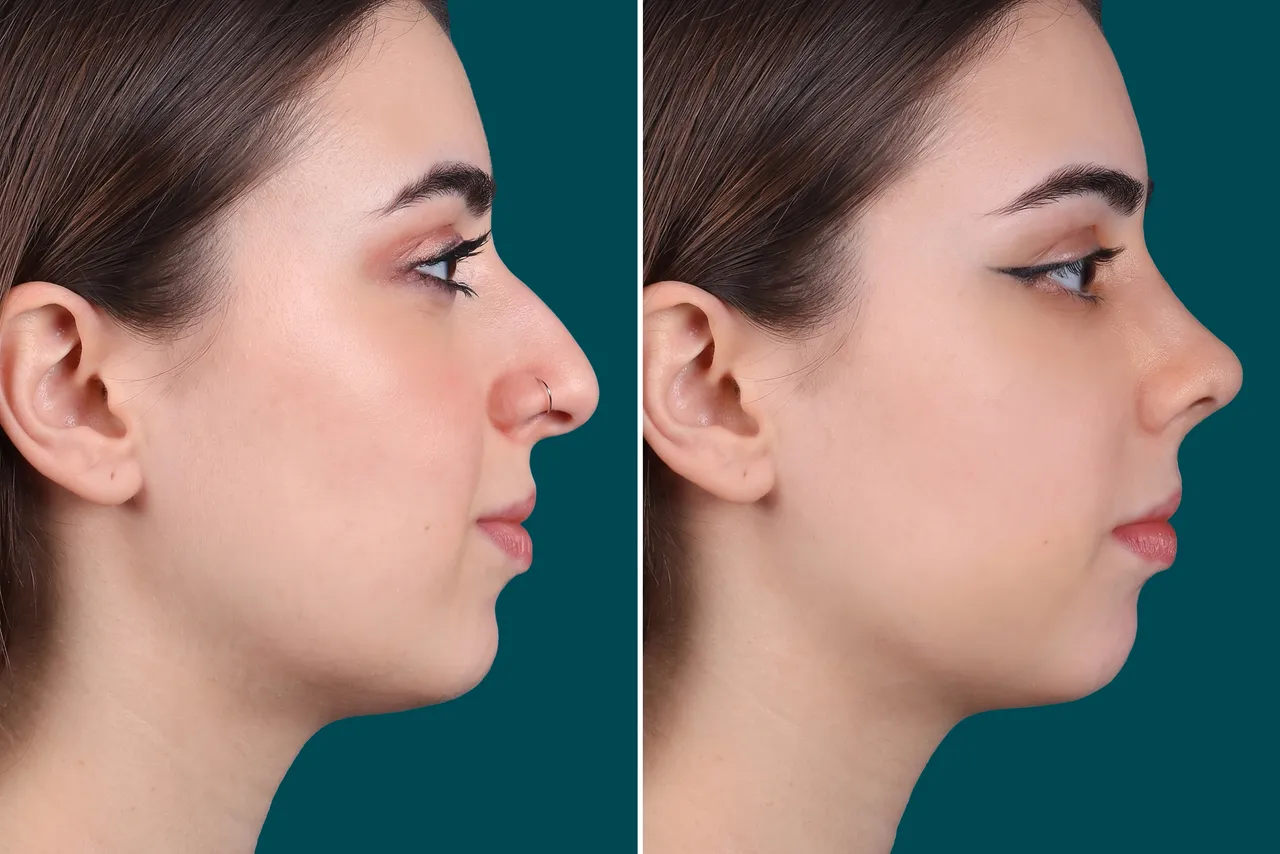
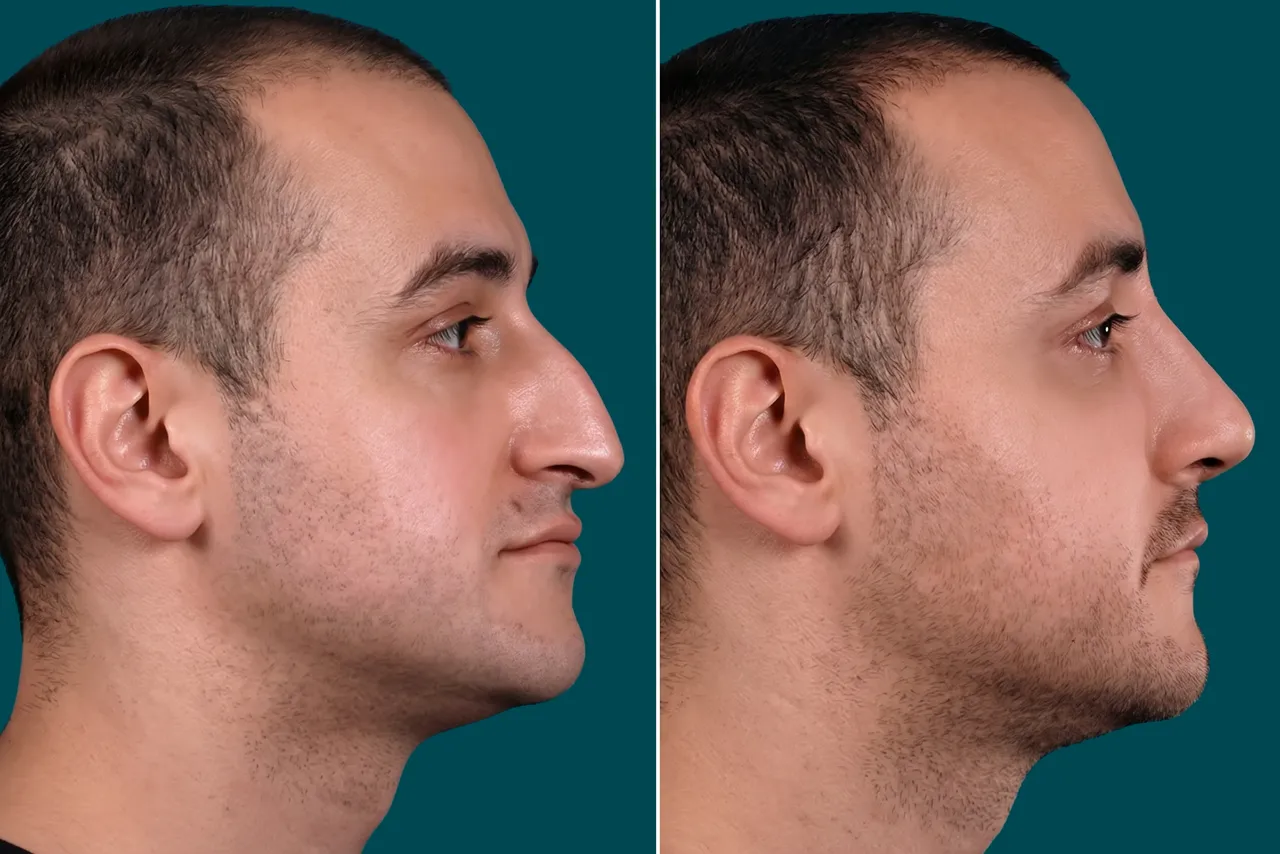
No external incision was used in these closed rhinoplasty before and after cases, which mostly involve hump reduction and moderate tip work. The tip keeps refining for up to a year.
Rhinoplasty
Rhinoplasty
Rhinoplasty
Natural Clinic brings multiple fields of specialised healthcare together under one roof, combining medical expertise, advanced technology and patient-focused care. From hair transplantation and dentistry to facial, body and breast aesthetics, bariatric surgery and reconstructive treatments, every patient journey is managed by experienced medical teams working across disciplines.
1200+ — Advanced treatments across multiple medical specialties
50+ — Experienced specialists working across disciplines
360° — Consultation, treatment, recovery and aftercare coordinated under one roof
150+ — Large-scale medical infrastructure in Istanbul
Access, incision placement and technique demands are what genuinely separate this approach from open rhinoplasty — including the parts that are a trade-off rather than an advantage.
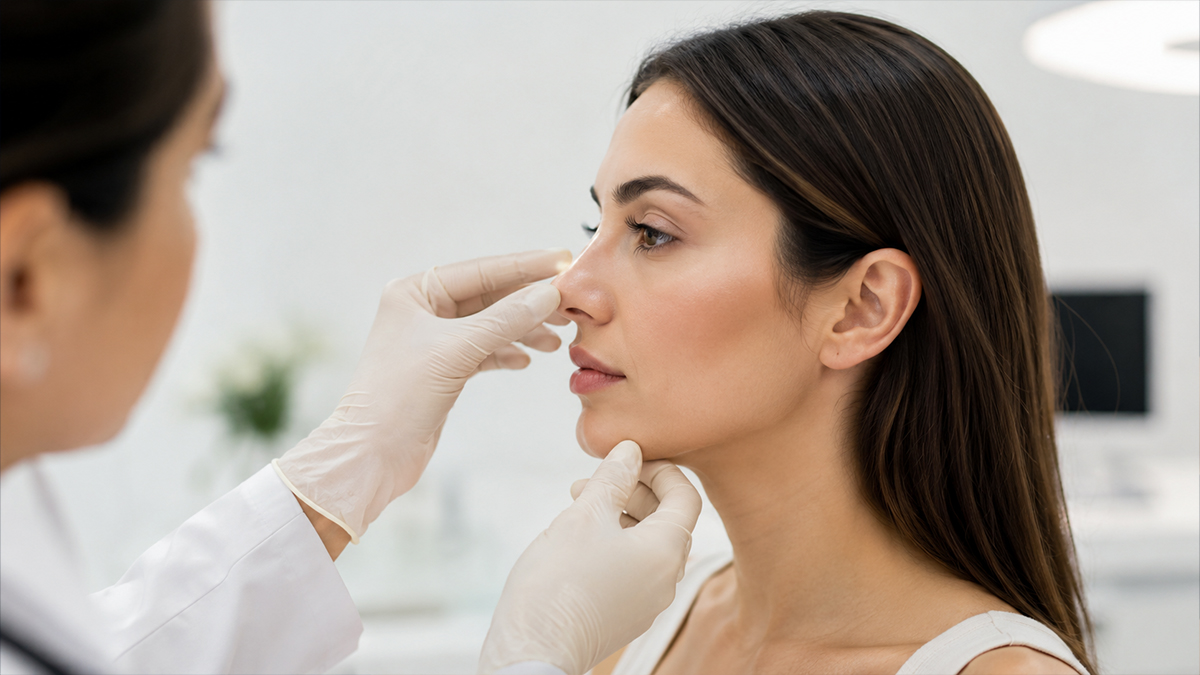
01 · Intranasal Incisions
Every incision is placed entirely inside the nostrils. Nothing crosses onto visible external skin at any point, which is the single defining feature of the closed approach.
Where the incisions sit: inside both nostril rims, hidden from view.
No external wound to dress, protect or watch heal.
Short answer: yes — and not because it is cheaper. Closed technique rewards accumulated repetition more than almost any other rhinoplasty approach, and Istanbul is where that repetition exists. The cost difference is real, but it is the second reason, not the first.

Istanbul performs more rhinoplasties per year than any comparable city, and the volume shows up where it matters: surgeons who have worked through the tactile, limited-view closed approach thousands of times.

Nasal imaging, photographic analysis and structural planning happen before you fly, not on the morning of surgery.

Lower operating, staffing and facility costs plus the exchange rate produce a real 50–70% difference. It says nothing on its own about surgical quality.

Closed rhinoplasty needs one trip: surgery, splint removal at about a week, and a pre-flight check before you go home.

Every appointment coordinated in English, with Dutch on request, and your interpreter free from consultation to discharge.

Ministry of Health licence, board registration, logged sterilisation cycles and an independent anaesthesia review.
Everything happens through the nostrils, which keeps this journey short and scar-free on the outside.
Closed surgery suits a hump to lower or a tip to refine, where the framework is symmetrical and doesn't need structural grafting.
Bridge and tip are reshaped through internal incisions, with septal straightening added if breathing needs it.
At about seven days the splint is lifted off; with no external sutures, that appointment is quick.
Without columellar dissection, early tip swelling is often less pronounced, though the tip still takes about a year to finish.
All incisions inside the nostrils — who closed rhinoplasty suits and how it heals.
Closed rhinoplasty is a nose reshaping technique performed entirely through incisions hidden inside the nostrils. Because the skin across the columella is not opened, there is no external scar, and the bridge, tip and septum are reshaped by working through these internal openings.
Closed rhinoplasty generally suits people who want a dorsal hump reduced, a slightly wide nose narrowed or a tip refined, where the nasal framework is fairly symmetrical and does not need extensive structural grafting. Your surgeon decides after examining the inside and outside of your nose.
Yes. If a deviated septum or narrow airway is restricting airflow, straightening the septum can be performed through the same internal incisions during closed rhinoplasty, so cosmetic and breathing improvements are made in one operation. Your surgeon checks your airflow on each side during the consultation to decide whether this is needed.
A first closed rhinoplasty is listed at €3,000, which already includes septal work if your breathing needs it. British clinics usually quote €8,150 to €11,700 for similar surgery, and the Istanbul figure also covers the ward night, the nasal splint and twelve months of reviews.
No. Natural Clinic lists closed and open rhinoplasty at the same €3,000 for a first operation. Whether the surgeon works through the nostrils or adds a columellar incision is decided by what your nose needs, not by which option is less expensive.
No. When the examination shows that the septum or internal airway is limiting your breathing, correcting it is part of the same €3,000 operation rather than an extra charge, because function and shape are planned together from the start. Your written plan states whether septal work is part of your operation.
Closed rhinoplasty leaves no visible external scar, because every incision is made inside the nostrils. The internal incisions heal within the nasal lining and are not seen in normal conditions, which is one of the main reasons patients ask about this technique.
Working through the nostrils gives the surgeon less direct visibility of the tip cartilages. For major tip reconstruction, significant asymmetry or complex grafting, an open approach is often more precise, so closed rhinoplasty is chosen only when the planned changes can be achieved reliably from inside.
The risks include swelling, bruising, temporary nasal congestion, changes in breathing, and the possibility that a later refinement may be needed. Because no columellar incision is made, there is no risk of an external scar, but the general risks of nasal surgery still apply.
During the first week, the nose is covered by an external splint and may feel blocked, and bruising around the eyes is common. Sleeping with the head raised and avoiding blowing the nose help, and the splint is removed around day seven in Istanbul.
There are no external stitches after closed rhinoplasty, so the splint-removal appointment around day seven is usually quick. Any sutures inside the nose are typically dissolvable and do not need to be taken out. Keeping the nostrils clean with the saline spray you are given helps the internal incisions heal comfortably.
Bruising around the eyes after closed rhinoplasty usually fades within ten to fourteen days, and many patients feel comfortable returning to work or social life by the end of the second week, sometimes with light make-up to cover residual discolouration.
Without an incision across the columella, the tip often looks less puffy in the first weeks than it would after an open operation. Refinement still happens slowly: definition improves month by month as residual fluid clears, and the tip is formally assessed at the twelve-month review.
The side profile of the nose, particularly the bridge, usually settles by around six months after closed rhinoplasty. Minor changes can continue beyond that point, especially if your skin is thick, so follow-up continues through the first year. Photographs taken at each stage help you see gradual changes that are hard to notice day to day.
If a small irregularity remains once the nose has fully settled, a minor revision may be considered, usually no earlier than twelve months after the original operation. Waiting allows swelling to resolve completely so that any remaining issue can be assessed accurately.
Closed technique is one access method among several. Access, situation and aesthetic goal are independent choices — each approach has its own guide, so you can read the one that actually describes your nose.
Personalised Care, Just for You
Send a few photos and our rhinoplasty surgeons will review your case before anyone contacts you — telling you plainly whether closed technique fits your nose or whether open access would give a better result. No obligation, no pressure, no cost.
Get My Free Surgical Plan100% Confidential & Secure
Reply Within 24 Hours
Reviewed by Board-Certified Surgeons
Choosing closed rhinoplasty is ultimately a decision about whether your nose fits within what limited access can do well. This section sets out how that judgement is actually made, so you can ask better questions of any surgeon — including ours.
The question in our heading is usually the first thing people tell us. They want their nose changed, and they don't want anything on the outside to show it was. Closed rhinoplasty in Turkey answers that directly. With a closed operation, every cut sits inside the nostrils. Look at the outside of your nose afterwards and there's nothing to find.
We'd be doing you no favours, though, if we pretended closed rhinoplasty in Turkey suits every nose. Some noses need more than can be done through a nostril, and below we'll get into where it works and where it runs out. The rhinoplasty overview compares the approaches side by side, if you haven't settled on one yet.
You're asleep for it and stay one night on the ward. The surgeon works through small cuts on the inside of each nostril, loosening the skin just enough to get underneath.
Dorsal hump removal is what most closed operations are for, so here's what that involves. The bump is part bone, part cartilage, and it gets taken down bit by bit, with the surgeon checking your profile as they go. Once it's off, the top of the nose is left flat and open, which would look boxy from the front. Moving the side bones inwards closes it up. That step is behind most of the bruising round the eyes.
Tip work, if you need any, goes through the same openings. The inside cuts are closed with dissolving stitches, and a splint goes on top.
On the outside, yes, in almost every case. The incisions heal inside the nostrils where nobody can see them, which is why people search for it as scarless rhinoplasty.
One catch: narrowing wide nostrils needs a tiny cut on the outside, hidden in the crease beside each nostril. If that's in your plan, you'll know. Most closed rhinoplasties don't involve it at all.
The typical patient for closed rhinoplasty in Turkey has a straight nose with a bump on the bridge. Maybe they've disliked their profile since their teens. The tip is fine, or needs only a little refining, and both sides of the nose are roughly symmetrical.
Someone whose bridge is slightly too wide from the front can also do well with a closed approach. So can a person with mild breathing trouble from a bent septum, since that can be straightened through the same incisions. What all of these have in common is that the framework mostly needs reducing or tidying, not rebuilding.
Plenty of people simply want a smaller nose. Nose reduction surgery usually means some mix of a lower bridge, a slightly shorter nose and a less prominent tip, and a fair amount of that can be done closed. Shortening a long nose, for example, often comes down to trimming the lower end of the septum and lifting the tip a touch.
The limit is your skin. It won't shrink endlessly, so a very big reduction under thick skin can leave the tip looking soft and full. Your surgeon will tell you how much smaller is realistic for your nose.
Some noses need more than reduction. A tip that has collapsed, twisted or lost its support usually has to be rebuilt with grafts stitched in exactly the right place. A badly crooked nose needs the same kind of precise work. So does a nose that's already been operated on, where scar tissue hides the anatomy.
In those cases the surgeon needs a direct view of the whole framework, which is what open rhinoplasty gives. Insisting on closed surgery for a nose like that can leave the job half done. If the main goal is avoiding a scar, it's worth hearing honestly whether that's realistic for your nose.
A lot of men who come to us want one thing: a straight bridge with the bump gone, and nothing that looks "done". That's often a very good fit for a closed approach. Our male rhinoplasty page explains why a man's tip is usually left a little lower and stronger.
Women more often want the tip lifted slightly, or the bridge given a gentle curve. Small tip changes can still be made from inside the nostrils. Bigger changes to tip shape may need open access. The female rhinoplasty page goes into those proportions.
Occasionally. Old scar tissue, or cartilage softer than it looked on the scans, can turn up mid-operation. It's rare, but it happens. At that point, switching to open is the grown-up decision. A half-fixed nose helps nobody.
Nobody should wake up to that news cold, so if a switch is even a possibility for your nose, your written plan says so, along with what it would mean for scarring.
Because the skin isn't lifted, more of the small vessels that drain fluid stay intact. That usually means less swelling in the first weeks, especially at the tip. Many people look presentable a little sooner than they would after open surgery.
It doesn't change the long timeline, though. The bridge settles first. The tip still goes on refining for up to a year, and thick skin can take longer still.
A deviated septum can be straightened from the inside during the same operation, at no extra charge. We check each side of your nose at the consultation anyway. Still, tell us if one nostril has always been the "bad" one. People get so used to it they forget to mention it.
Skin thickness affects every nose job. With thick skin, fine detail at the tip shows less clearly, whichever approach is used. In a closed operation the surgeon has less room to add support to the tip, so very thick skin over a soft tip may be better served by open surgery. Your surgeon will judge this by examining your nose in person.
Expect to feel rough for three days or so, mostly blocked up and puffy round the eyes. Sleeping with your head raised helps. The splint comes off at about a week. With no outside stitches to take out, that appointment is quick.
By about a fortnight the bruising has mostly gone, and that's when people tend to go back to the office. Gentle exercise can usually start again at three or four weeks. Contact sports and anything that could knock your nose should wait longer. Keep glasses off the bridge for a few weeks and don't blow your nose until the team says you can.
For the first few days you'll be bruised and bunged up, and a little bleeding from the nose isn't unusual. A numb tip is common and tends to come back to normal over a few weeks. Infection is uncommon.
The risk most specific to closed surgery is a small irregularity along the bridge, noticed once the swelling has gone. It's more likely with thin skin, which shows every detail. Most are minor and can be smoothed later. A larger correction counts as a second operation, covered on our revision rhinoplasty page.
Yes. What's been removed doesn't grow back. Your nose keeps ageing with the rest of your face, of course. Over decades the tip tends to drop a little and the skin changes. That happens whether or not you've had surgery, and it doesn't undo the result.
Most people plan seven to ten nights for a closed rhinoplasty in Istanbul. One of those nights is in hospital straight after surgery. The splint is removed at around a week, and you're usually cleared to fly at about ten days. You'll have the dates in writing before you book a flight.
Most of the closed rhinoplasty before and after cases in the gallery above are hump reductions, some with a little tip work. Look at the side view first. You want a bridge that runs smooth, without a scoop where the bump used to be. The three-quarter angle is the unforgiving one; small ridges that hide in a straight profile tend to show up there.
And look for the date. Before and after pictures from a few weeks out are still mostly swelling. One photo at twelve months is worth ten taken at two weeks. Patient reviews help fill in what recovery actually felt like, and your own before and after begins with the photos below.
Our fee for a closed rhinoplasty is €3,000, which is also what an open one costs. Septum straightening and any cartilage borrowed from your own septum come within that figure. Should rib cartilage be needed, you'd move to the €4,000 price line, and you'd know before travelling. Your surgeon, the anaesthetist, a night on the ward, airport pick-ups, a translator and twelve months of aftercare are all part of it.
Abroad, the same nose surgery tends to cost a good deal more, judging by the table above. In Britain you'd be looking at €8,150 to €11,700. Germany is cheaper, at €5,500 to €6,900, while American prices are all over the place: as low as €7,750 at one end and €21,550 at the other. If another clinic quotes you a closed rhinoplasty price, ask whether septum work and aftercare are in it.
We'll want five photos: front, both sides, a three-quarter angle and one from underneath. Daylight's best, with your hair tied back. Mention any blocked breathing, old knocks or earlier surgery. Then the surgeon will give you a straight view on whether closed rhinoplasty in Turkey is right for your nose, or whether open access would serve you better, and which price you'd pay.

© 2026 Natural Clinic. All rights reserved.