
 English
 Italiano
 Español
 Français
 Deutsch
 Português
 Русский
 Български
-1280x854.webp?v=munv7q7r)
-1280x854.webp?v=munv8r8s)
-1280x854.webp?v=munwltco)
-1280x854.webp?v=munxa717)
-1280x854.webp?v=munzr8yw)
-1280x854.webp?v=munxao8e)
%20(1)-1280x854.webp?v=munzp6s9)
-1280x854.webp?v=munv3dwf)
%20(2)-1280x854.webp?v=munv453l)
%20(1)-1280x854.webp?v=munv4yrj)
%20(1)-1280x854.webp?v=munv5l0m)
-1280x854.webp?v=munv6596)
%20(1)-1280x854.webp?v=munv6t6b)



-1280x853.webp?v=mv1dw0ut)
-1280x853.webp?v=mv1dw31y)
-1280x720.webp?v=mv1dw5mi)
-1280x720.webp?v=mv1dw86j)
-1280x720.webp?v=mv1dwb0g)
-1280x720.webp?v=mv1dwvpw)

That question under the page title is the right place to begin, and the answer surprises most people. Most people researching a Turkey hair transplant start with the price. Online graft calculators ask how bald you are and give you a number. They don't ask how much hair you have left to move. That second number decides everything about a hair transplant in Turkey, or anywhere else.
A hair transplant doesn't grow new hair. It takes follicles from the rear and sides of your head and moves them to the front, top or crown. Once a follicle has been moved, it can't be used again. So think of your donor area as a bank account you only get once. This guide covers how that account is measured, what the operation and recovery are really like, and what to expect over the twelve months it takes to see the result.
Your donor area is a fixed budget
Hair growing around the back and sides of your head usually carries on even in men who go very bald on top. Those follicles are far less sensitive to the hormone behind pattern hair loss, and that resistance travels with them when they're moved.
The catch is quantity. Everyone has a limited "safe zone" behind and above the ears, and only part of it can be taken before the donor area itself starts to look thin. Take too much and you swap a fuller front for a patchy back, which is far harder to fix. So step one on the pathway above is what your donor can spare, not the package ceiling of 5,000 grafts.
How many grafts do I need?
Often fewer than a calculator suggests, and for reasons a calculator can't see.
A graft is a natural group of one to four hairs, called a follicular unit. How much scalp each one covers depends on your hair. Thick, wavy or curly hair covers far more than fine, straight hair, and low contrast between hair and skin colour makes the same number look denser.
Then there's the stage of your hair loss. You may have seen the Norwood scale: stage 2 or 3 is a hairline that's just started to creep back, stage 6 or 7 is most of the top gone. Fixing a Norwood 3 temple and filling a Norwood 5 crown aren't remotely the same job. The bigger the bald area, the thinner the budget gets spread. For a lot of men, the sensible move is to put the grafts into a solid frame around the face first, then add behind it whatever the donor can still afford.
Am I a good candidate for a hair transplant?
Pattern loss, a pattern that's settled down, a decent donor: that's the FAQ answer in one line. Age is where it gets messy. In your early twenties it's hard to know how far your loss will go, and a dense, low hairline placed at twenty-two can look stranded by thirty-five if the hair behind it keeps thinning.
That's why, as the pathway above says, medication sometimes comes first. A transplant moves hair; it doesn't stop the native hair around it from thinning. Slowing active loss protects both the result and the donor supply. A doctor can advise which options suit you.
Diffuse thinning that includes the donor area, patchy loss and scarring conditions all need a proper diagnosis before surgery is discussed. Female hair transplant and afro hair transplant cases have their own pages, because the pattern of loss and the shape of the hair both change the plan.
Hairline and crown: where the grafts go
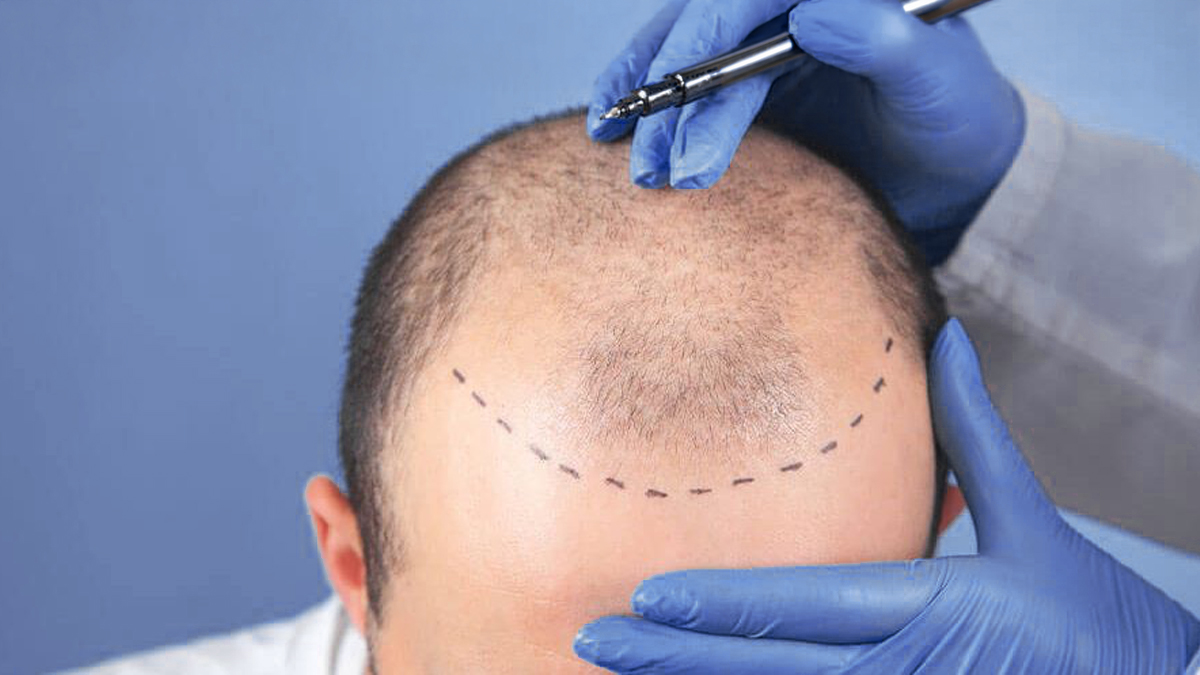
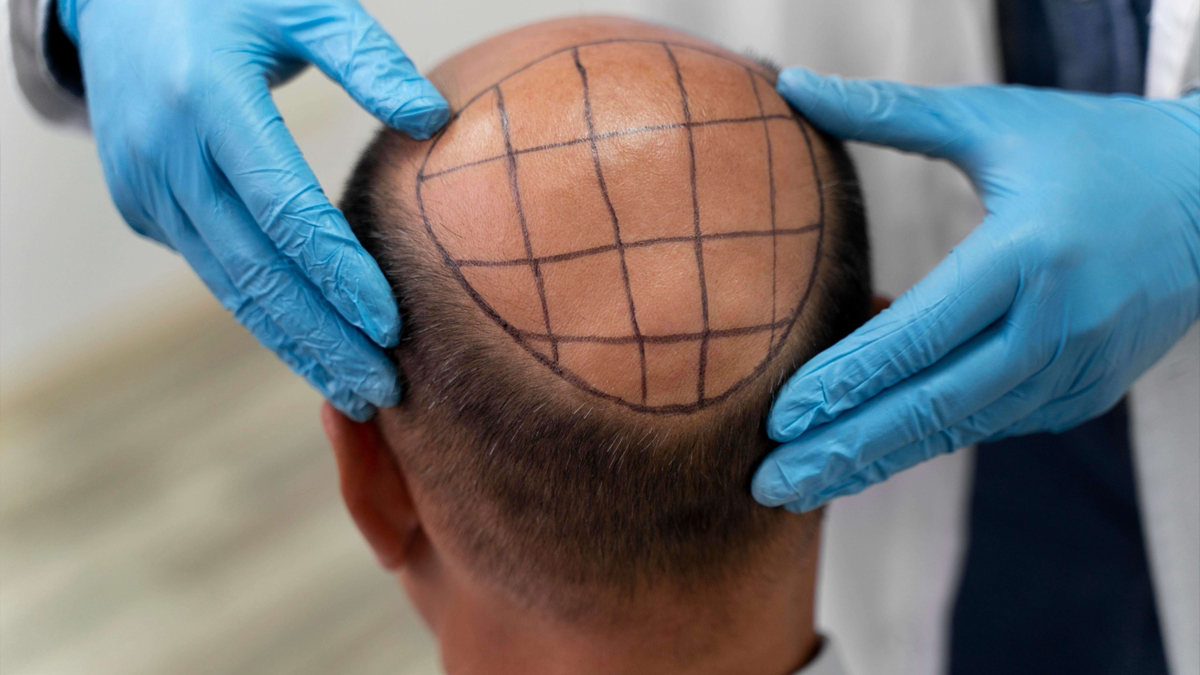
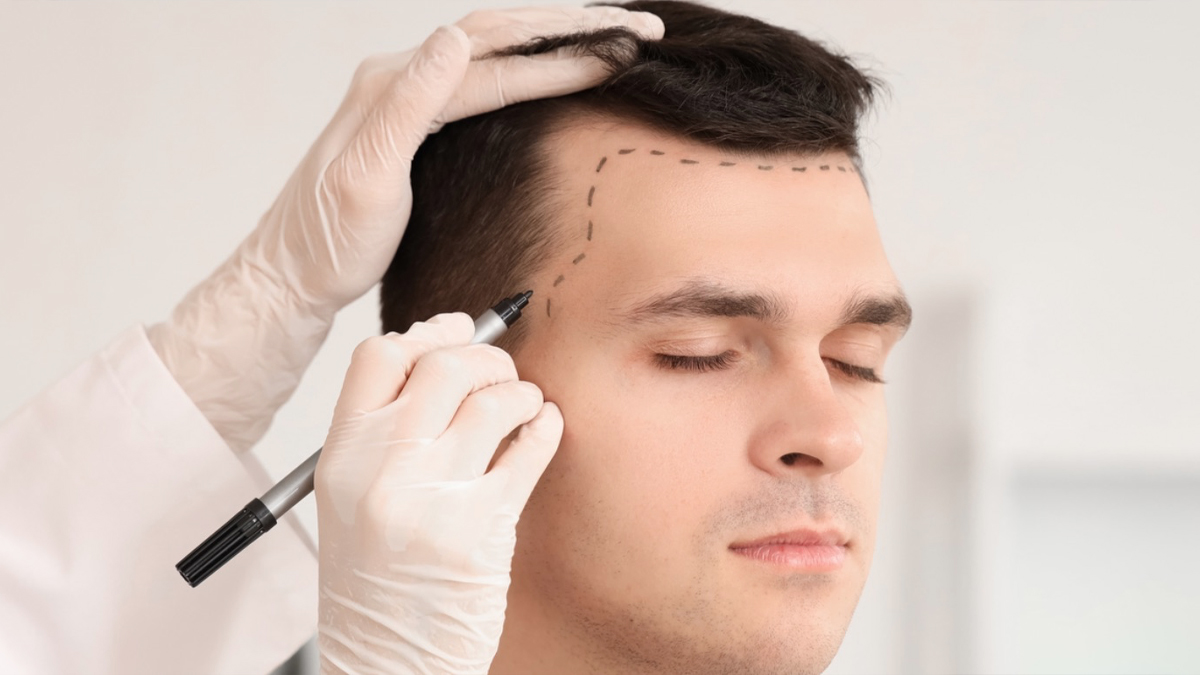
A natural hairline isn't a straight edge. It's slightly irregular, with single-hair grafts at the very front and a gentle curve at the temples. A mature, slightly higher line suits most men better over the years and uses fewer grafts, leaving more for the top. You should see it drawn on your own forehead, front and profile, and approve it before anything starts.
The crown is the opposite problem. Hair there grows in a spiral, the area keeps expanding as loss progresses, and it can swallow a lot of grafts for a modest visual change. Many plans treat the front first and the crown later, or not at all.
FUE, DHI, Sapphire, FUT, hybrid or unshaven?
The six techniques above are tools, not products. They differ in how grafts are removed, how the channels for them are opened, how they're placed, and whether you need to shave.
FUE is about taking grafts out one by one without a strip. Sapphire FUE is about the fine blades that open the tiny channels. DHI uses a pen-like implanter that places each graft directly, which suits hairlines. FUT takes a thin strip of donor skin for very large cases. Hybrid combines methods for different parts of the scalp. And unshaven hair transplants keep your length on show, in exchange for fewer grafts per session. The right one follows your case, not the newest name.
Does a hair transplant hurt?
The injections at the start are the uncomfortable part: a series of small stings as the donor and recipient areas are numbed. After that, most people feel pressure and hear the instruments but no pain. A hair transplant in Istanbul is a long day rather than a hard one, six to eight hours with breaks, and plenty of patients watch films through it.
Afterwards the scalp is usually sore and tight for a few days, the donor area more than the front, and ordinary painkillers as advised by the team normally handle it. Wear a shirt that buttons up the front on the day, so nothing has to go over your head.
Hair transplant recovery: the first two weeks
The first few nights, sleep with your head raised on a couple of pillows to limit swelling, which often drifts down to the forehead around days two to four. Don't scratch, rub or knock the grafts. The first wash is done at the clinic, then you follow a gentle washing routine at home for about ten days, until the small crusts around each graft have softened and cleared.
Most people are back at desk work within a few days. Heavy exercise, swimming, saunas and direct strong sun are usually off the list for a few weeks, and a loose hat is fine once the team says so. Smoking and alcohol slow healing, so the less of both, the better. Your written hair transplant aftercare sheet gives the exact timings for your case.
Hair transplant timeline: results month by month
The pathway above gives the outline. Here's what hair transplant results tend to look like along the way.
Weeks 1–2: crusts, redness and some swelling, settling day by day.
Weeks 2–4: hair transplant shedding. Many of the transplanted hairs fall out. Alarming if nobody warned you, but normal: the follicles stay in the scalp and rest.
Months 2–3: the "ugly duckling" phase. The area can look much as it did before surgery.
Month 4: fine new hairs start to appear.
Month 6: a visible change for most people, still thin and uneven.
Months 9–12: hair thickens and settles into its final texture. The crown often takes longer.
That's why, as the section above says, nothing before month nine should be treated as a finished result.
Hair transplant side effects and risks
Most side effects are temporary: swelling, redness, crusting, numbness in patches of the scalp and some itching as things heal. A few people get small spots around growing hairs, similar to ingrown hairs, which usually settle with care. Some people also get "shock loss": a few of their own hairs near the grafts drop out for a while, then grow back.
Rarer, and more serious, are infection, grafts that don't grow well, or a back of the head that looks see-through because someone got greedy with the punch. You avoid most of that by picking a team that treats your donor as limited and actually checks on you afterwards. If anything looks wrong during recovery, send photos rather than waiting.
Is a hair transplant permanent?
Mostly, yes. Moved follicles hang on to the resistance they had at the back of your head, so once they've grown in, they tend to stay. The hair around them doesn't have that protection. If your native hair keeps thinning over the next ten or twenty years, you may want a second hair transplant later, often at the crown. That's why experienced surgeons never empty the donor area in one go.
Hair transplant cost and price in Turkey: what's included
The hair transplant price here is fixed, as the list above shows: three packages for the same operation of up to 5,000 grafts, at €1,600 for the procedure alone, €1,800 with three nights' hotel, and €2,100 with fibroblast therapy added. Transfers, an interpreter, local anaesthetic and twelve months of follow-up are included; below the €1,800 package, the hotel is billed separately from €75 a night. The graft count doesn't change the price.
Look further down the list and you'll see the same operation priced at €3,500 to €11,680 in the UK, €5,860 to €11,720 in Germany and €3,800 to €10,350 in the US. Worth saying, though: a cheap hair transplant in Turkey stops being cheap the day you need a repair. With the price fixed, spend your energy on the plan, not on squeezing out extra grafts.
Reading hair transplant before and after photos
Before and after pictures are the most persuasive thing on any clinic's website, and the easiest to misread. Check the date first: an "after" taken at three months shows swelling and short stubble, not a result. Look for matching angles and lighting, because a wet head under a bright ring light and a dry head in soft daylight can make the same scalp look like two different people. And check the donor side too, not just the hairline. A great hairline paired with a thinned-out donor area isn't a good outcome. Hair transplant reviews deserve the same scepticism: the most useful ones are written a year after surgery, not a week.
Choosing a hair transplant clinic in Turkey
Istanbul does more hair transplants than almost anywhere, and as the section above admits, that's both the good news and the bad news. Looking for the best hair transplant clinic in Turkey? Forget the loudest adverts and ask four things. Who draws my hairline, and who actually handles the grafts? Why this many grafts? Were your before and after photos taken nine months or more after surgery? Will I get the graft number and technique in writing before I pay? A very high graft quote without a close look at your donor area is a warning, not a bargain.
Photos for your free graft estimate
Take four photos in daylight with dry hair: front, top, crown and back. If your hair is long, add a set with it pushed back so the scalp shows. Add a few lines: how old you are, when the thinning started, any tablets or lotions you use, and whether you've had a transplant before. Send that over and the Istanbul team will come back with a graft number your donor can actually afford, the technique that fits, and a straight answer if the right move is to wait.
FUE HAIR TRANSPLANT · 1929 words
https://natural.clinic/hair-treatment/hair-transplant/fue-hair-transplant/
FUE Hair Transplant in Turkey: What Really Happens in the Donor Area
Scroll through FUE hair transplant photos and your eye goes straight to the front. New hairline, fuller top, big before and after. The real work of FUE happens somewhere else. It happens behind you, in the donor area, where a few thousand follicles are lifted out one at a time. How well that part is done decides how your hairline looks in a year, and how the back of your head looks for decades afterwards.
Most people's first worry is the one in the tagline up top: the scar. FUE's answer is tiny dots instead of a line. Below: what those dots actually are, how they're kept out of sight, and the small habits that tell a careful extraction team from a rushed one.
How an FUE hair transplant works, step by step
Hair clipped, scalp numbed front and back, and then the slow part begins. Working across the back and sides, the surgeon or technician uses a hollow micro-punch, thinner than a millimetre. The punch is centred over a follicular unit, turned or pushed gently to free it from the surrounding skin, and the graft is lifted out with fine forceps.
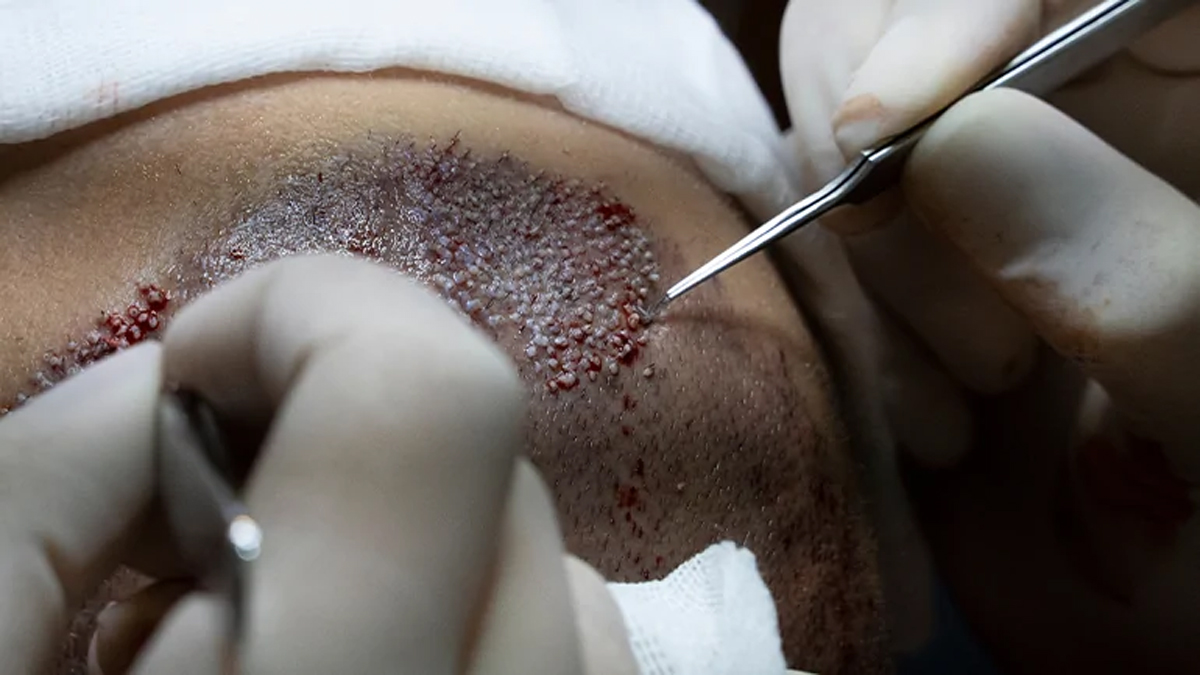
Each graft is checked, sorted by the number of hairs it carries, and kept in a cool storage solution while the rest are harvested. Then, as the pathway above explains, the recipient channels are opened in the thinning area, and the grafts are placed into them one by one at the angle and direction your existing hair grows. Nothing is cut out in a strip and nothing needs stitching.
The safe donor zone
Not every hair back there is equal. There's a horseshoe-shaped band, roughly from above one ear, round the back of the head, to above the other, where follicles are most resistant to pattern loss. That's the safe donor zone, and good FUE stays inside it.
Grafts taken from too high on the crown, or too low on the neck, may come from hair that thins later in life. Taken from the neck, they can also be finer and grow at awkward angles. Keeping extraction within the safe zone is one of the quiet decisions that protects both your result and your donor for the long term.
Punch size, hair type and transection
The page above notes that punches are under a millimetre wide. The exact size isn't fixed. It's chosen to match your hair.
Fine, straight hair can usually be taken with a very small punch. Thicker hair, or hair that curls under the skin, needs a slightly wider or differently shaped punch, because the follicle below the surface doesn't run in a neat straight line. If the punch is too small, or angled wrongly, it can cut through the follicle as it frees it. That's called transection, and a transected follicle may not grow.
Transection rates aren't something many clinics publish, but it's a perfectly reasonable question to ask. A careful team will talk about how they adjust punch size and angle for your hair type, especially if your hair is very curly. Curly and afro hair raise their own challenges, covered on the afro hair transplant page.
Time out of the body
Between being lifted out and being placed in its new home, each graft is outside your body. The page above lists this, alongside punch and handling, as one of the things that decides the result.
Grafts are delicate. They need to be kept cool, moist and handled only gently, by the edges rather than the bulb at the base. A well-organised team keeps that time as short as practical, often by extracting and placing in batches rather than harvesting everything first and planting it all hours later. It's not something you'll see from the chair, but it's worth knowing it's being managed.
Spreading the extraction evenly
This is the detail that separates a donor area nobody notices from one everyone does.
A good surgeon takes grafts spread out across the whole safe zone, leaving plenty of hair between each extraction site. Taking too many from one patch, or too many overall, leaves the back looking thin, patchy or "moth-eaten", especially once the hair is cut short. That's usually called overharvesting, and it can't be undone, because the follicles that were taken don't grow back.
This is also why the number of grafts in an FUE hair transplant in Turkey is set by your donor, not by the package. The page above is clear that "up to 5,000" is a ceiling, not a promise. For some people it's comfortably achievable. For others, taking that many would mean a thin donor area for life.
FUE scars: what the donor looks like afterwards
The hero line above makes the point: FUE leaves tiny dots, not a line. Each extraction site closes within a few days and, once the hair grows back to stubble length, becomes a small pale dot that sits among the surrounding hair.
At most normal lengths, including short back-and-sides cuts, those dots are hidden. The one situation where they may show is a very close shave, such as a skin fade or a zero clipper guard, where there's no hair left to hide them. If you like to keep your hair shaved right down, mention it at the consultation, because it may affect how grafts are spread and how many are taken.
How many grafts can FUE take?
Of all the techniques on this site, FUE is the one that can reach the full package ceiling, because grafts can be spread across the whole safe zone in one session. Whether you get close to that number depends on your donor density, the size of the safe zone and the thickness of your hair. A person with dense, coarse donor hair may be able to give far more than someone with fine, sparse hair at the back.
That's also why FUE is so often the starting point for larger cases. The main hair transplant page explains how the right number of grafts is worked out in the first place.
Using beard or body hair
Running short on scalp donor? Some surgeons will borrow from under the chin, and now and then from the chest. It isn't a like-for-like swap. Beard hair is wiry. Chest hair grows short and gives up early in each cycle. So they tend to go where they bulk things out, behind the hairline or into the crown, and stay well away from the front edge.
It's an option for specific cases, not a routine top-up. If your scalp donor is thin, ask whether it's been considered.
FUE into an old strip scar
FUE also has a repair job. People who had a strip procedure years ago sometimes have a visible line across the back of the head, especially if they now like their hair short. Grafts taken by FUE can be placed into that scar to break it up and make it much less noticeable. Fair warning: scars don't have much of a blood supply, so grafts there are a bit hit and miss, and a second pass isn't unusual.
Who shouldn't have FUE?
Nobody can move hair that isn't there. Thin back and sides? Then the donor can't carry a big job. Patchy loss from alopecia areata, or shedding after chemotherapy, is a different problem altogether, and surgery isn't where you start. Those need a medical diagnosis and, often, time. A good FUE assessment says so plainly.
FUE vs FUT
The FAQ above sums up the headline difference: dots with FUE, a single line with FUT. For most people today, FUE is the default.
FUT still has a role. When very large numbers of grafts are needed, or when a donor area has already been thinned by earlier FUE, a strip can sometimes provide grafts that FUE can't. Some patients even have both, at different times, to get the most from a limited donor. The FUT hair transplant page covers when that trade makes sense.
FUE, sapphire FUE and DHI
It helps to know that sapphire FUE and DHI both use the same extraction described on this page. The difference lies in what happens next. Sapphire FUE changes the blade used to open the channels the grafts go into. DHI skips separate channels and places grafts directly with an implanter pen. So when people compare "FUE vs DHI", they're really comparing two ways of implanting grafts that were taken out in exactly the same way.
Shaving for FUE
Classic FUE means clipping both the donor and the recipient areas short, a point the pathway above makes in passing. For some people that's no problem at all. For others it's the biggest obstacle, especially if work or family life means they'd rather nobody noticed.
The donor area usually looks like an ordinary short haircut within a couple of weeks. The front takes longer to look normal because of the healing grafts. If shaving isn't an option, an unshaven hair transplant or DHI can be discussed, usually with fewer grafts per session.
FUE hair transplant recovery: the donor area
After an FUE hair transplant in Istanbul, the back of the head tends to feel more sore than the front for the first few days, because that's where most of the tiny wounds are. It can feel tight, tender or slightly numb in patches, and sleeping on your back may be uncomfortable for a night or two. Small scabs form over each extraction site and fall away within about a week or so with gentle washing.
Numbness in the donor area usually fades over the following weeks as the nerves recover. Tell the team if you notice anything that seems to be getting worse rather than better. At the front, FUE results follow the usual pattern: shedding around week three, new growth from month four, and the full picture at about a year.
FUE hair transplant before and after: check the back too
Most FUE hair transplant before and after shots show the hairline, and that's only half the story. Ask to see the donor area as well, ideally at a short haircut a year after surgery. You're looking for an even spread of hair with no thin patches, and dots too small to pick out. Patient reviews that mention how the back looks, not just the front, are worth far more than the ones that don't.
FUE hair transplant price and cost in Turkey
The FUE hair transplant price in Turkey is set here as one session: €1,600 for any graft count up to 5,000, €1,800 once accommodation is added, or €2,100 including fibroblast therapy. Many clinics abroad charge per graft instead, which is one reason the UK, German and US ranges shown above are so much wider. With a fixed price, there's no financial reason to push the graft number beyond what your donor can safely spare.
Photos of your donor area
For an FUE plan, the back of your head matters as much as the front. Along with photos of your hairline, top and crown, send clear close-ups of the back and both sides, ideally with the hair cut fairly short or combed so the scalp shows. If you've had a transplant before, include those areas too. Our FUE team in Istanbul can then judge how dense your donor is, how far the safe zone reaches, and how many grafts FUE can realistically take for you.
SAPPHIRE FUE HAIR TRANSPLANT · 1855 words
https://natural.clinic/hair-treatment/hair-transplant/sapphire-fue-hair-transplant/
Sapphire FUE in Turkey: What the Blade Changes, and What It Doesn't
"Sapphire" has become one of the most used words in hair transplant advertising, and one of the least explained. Some clinics sell a "sapphire hair transplant" as a premium upgrade. Others print it on every package whether anything has changed or not. The line under the page title puts it more simply: the blade that opens each channel shapes how your grafts sit and heal.
That really is the whole story. Sapphire improves one step of the operation; it doesn't work miracles. So it pays to know exactly where it helps, which of the claims about sapphire FUE in Turkey hold up, and how to check the blade in your quote is the real thing.
Sapphire FUE vs FUE: the one step that changes
Extraction in sapphire FUE, the section above confirms, is identical to classic FUE. Same punch, same donor area, same scattered dots. If you want to understand that part, the FUE hair transplant page covers it in detail.
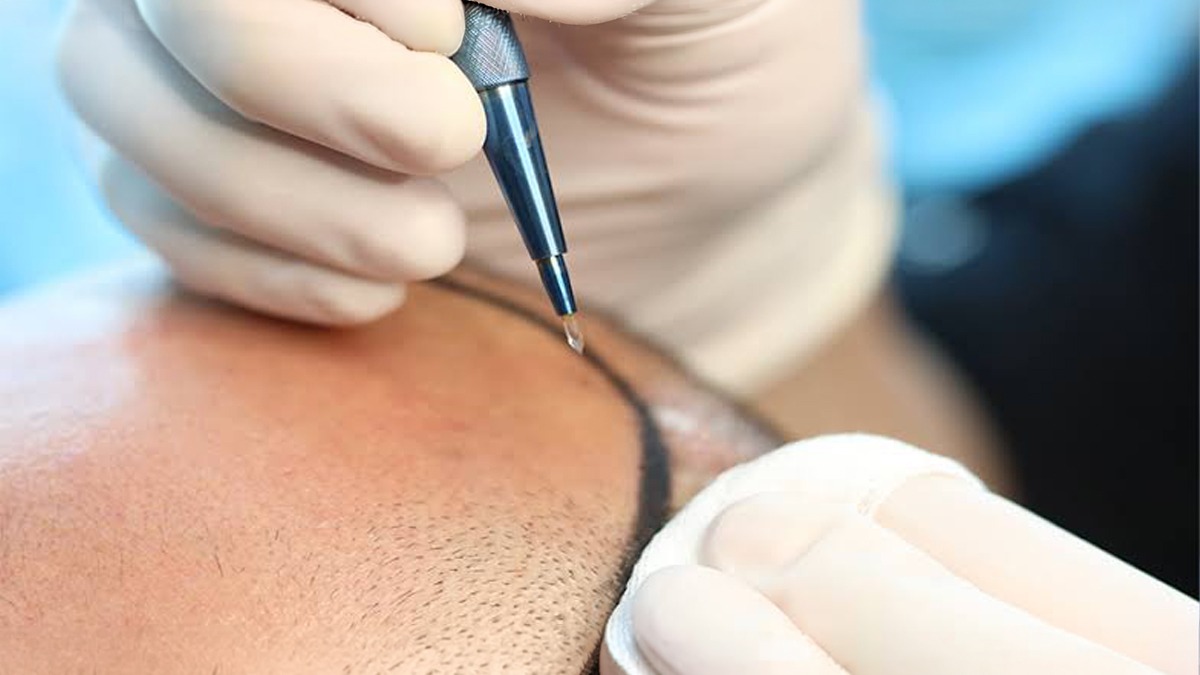
The difference comes afterwards, at the front. Before any graft can be placed, a small opening has to be made in the thinning area to receive it. That's the recipient channel, and a planted graft will grow in whatever direction, at whatever angle and depth, that channel sets. In classic FUE those openings are often made with fine steel blades or needles. In sapphire FUE they're made with blades cut from synthetic sapphire, 0.6 to 0.8 mm wide, as the page above says.
Who is sapphire FUE best for?
The pathway above points to large areas where density is wanted, and that's the classic sapphire FUE hair transplant case. Think of someone around Norwood 4 to 6: a receded hairline, thinning or bare skin across the mid-scalp, and often a crown that has opened up behind it. There's a lot of ground to cover, most of it without much native hair, and the head is going to be shaved anyway.
In that situation, being able to open thousands of clean, closely spaced channels in one day is exactly what's needed. For a small patch of thinning in otherwise full hair, or a hairline adjustment in someone who doesn't want to shave, other techniques often fit better. How that choice gets made is set out in the hair transplant overview.
Sapphire vs steel: an honest comparison
Being a harder material than steel, sapphire keeps a sharp edge through thousands of incisions, as the page above says, so the last channel of the day is cut as cleanly as the first. That consistency is its main practical advantage, along with the narrow, smooth openings it makes.
It's also fair to say that excellent results are achieved with fine steel blades and needles too. Put a great blade in careless hands and you'll still get a poor result. Put a decent steel blade in careful ones and you can get a very good one. Sapphire is a better tool in skilled hands. It isn't a substitute for them.
Why the channel matters so much
It's easy to think of the channel as just a hole. It's closer to a mould.
Tilt first. Along the hairline, hair creeps forward almost flat against the forehead, then stands up more and more as you move back towards the top. Then which way it points: around the temples and crown that shifts every few centimetres, like wind across a field. Then how deep. Too shallow and the graft pokes up out of the skin; too deep and it gets buried. And the width needs to be just enough to hold the graft snugly.
Get those right and transplanted hair falls naturally among the hair around it. Get them wrong and it can grow at odd angles, look tufted or refuse to lie flat, however well the extraction was done. Sapphire doesn't choose those angles for the surgeon. It simply makes it easier to cut them cleanly and consistently, thousands of times in a row.
Myth: sapphire FUE grows more hair
This is the claim patients most often bring with them, usually after scrolling through sapphire FUE results online, and it isn't really true. The number of hairs that grow depends on how many healthy grafts are placed and how well they're handled. A sapphire blade doesn't add follicles.
What sapphire can do is make denser placement easier. Because the channels are narrow and clean, grafts can sit closer together with less damage to the skin between them. In a large area that needs coverage, which is the case the pathway above has in mind, that can help the result look fuller for the same number of grafts. It's a real advantage. It just isn't the same as "more hair".
Lateral and sagittal slits
Few patients know this one, yet it's a question worth asking at any consultation. Channels can be cut in two orientations.
A sagittal slit runs front to back, in line with the direction the hair points. A lateral slit, sometimes called coronal, runs side to side, across the direction of growth. Lateral slits tend to hold a graft so the hairs fan out sideways, the way natural hair does, and they can make it easier to control the angle at which hair lies against the scalp. Many surgeons use lateral slits for most of the recipient area. It isn't a strict rule, and experienced teams may mix the two, but it's a good sign if the team can explain which they use and why.
How close is too close?
Dense packing is one of the selling points of sapphire channels, and the page above mentions a density map with targets for each zone. There's a limit, though.
Every graft needs blood supply to survive in its new place. Pack the channels too tightly and the skin between them can struggle, which may reduce growth rather than increase it. A sensible plan puts the most density where it has the most visual effect, usually the front and the part line, and uses a little less towards the back and crown, where the eye reads coverage differently. That's what "zone-by-zone" should mean in practice.
Matching the blade to the graft
The 0.6 to 0.8 mm range isn't a single size. It's a set of options. Single-hair grafts, which usually go into the very front of the hairline, are small and fit a narrower blade. Grafts carrying two, three or four hairs are larger and need a slightly wider one.
Using the right size for each graft keeps the fit snug. Too wide, and the graft may sit loosely or pop out. Too narrow, and it has to be forced in, which can damage it. A careful team sorts grafts by size as they're extracted and opens channels to match.
Sapphire FUE among existing hair
Sapphire FUE is at its best in areas that are largely bald, where channels can be opened freely without anything in the way. When the thinning area still has a fair amount of native hair, the picture changes.
Opening channels between existing hairs carries a small risk of damaging them, and some of that hair may shed temporarily after surgery. That's one reason DHI hair transplant is often preferred for thinning areas that still have hair, or for patients who can't shave. In many larger cases, the answer is both: sapphire channels for the bald zones, DHI where native hair remains. That combination is covered on the hybrid hair transplant page.
The crown and its spiral
The crown is where channel direction matters most. Hair there grows in a whorl, spiralling out from a central point, and each channel has to follow that swirl. If it doesn't, the crown can look thin even with plenty of grafts, because the hairs cross each other instead of lying together.
Sapphire blades make it easier to cut many small, precise channels in changing directions. The skill is still in reading your natural whorl and following it.
Sapphire FUE recovery and healing at the front
Donor healing is the same as in any FUE. The difference shows in the recipient area. Narrow, clean channels tend to mean less swelling and a little less bleeding on the day, and small crusts that clear within the first one to two weeks, in line with the healing note in the pathway above.
After a sapphire FUE procedure in Istanbul, once the crusts have gone, the recipient area often stays slightly pink for a while, especially on fair skin. That usually fades over the following weeks. Protecting the area from strong sun during that time helps it settle evenly.
Sapphire FUE price: is it worth it?
Here, there's no premium to weigh up. As the price section above explains, sapphire FUE is priced the same as classic FUE, up to 5,000 grafts: €1,600 on its own, €1,800 once three hotel nights are included, or €2,100 with fibroblast therapy on top. So sapphire FUE cost in Turkey, in this case, is simply the cost of the transplant.
Where sapphire is sold as an expensive extra, the question is whether that extra buys anything. The blade helps. The planning, the angles, the handling of each graft and the experience of the person opening the channels help far more.
Sapphire FUE before and after: judging density
Sapphire FUE is chosen for coverage, so judge the before and after images on coverage. Look at the mid-scalp from above, with the hair wet or parted, not just the front in profile. Check that before and after shots share the same lighting and angle, since a brighter light can make thin hair look fuller. And notice the direction the new hair lies: neat, consistent flow is a sign the channels were cut with care. Reviews that talk about how quickly the scalp settled are useful too.
Checking you're actually getting sapphire
The section above makes a pointed remark: for some clinics, "sapphire" is a word on a price list rather than a change in technique. It's a fair thing to check.
Ask what the recipient channels will be opened with, and in what sizes. Ask whether lateral or sagittal slits will be used. Ask who will open the channels, since that's the step that sets angle and direction. A team that genuinely works with sapphire blades will answer all of that easily, and will usually be happy to show you the blades.
Photos for a density plan
For sapphire FUE, the top and crown photos matter as much as the hairline. Take one straight down from above, with your hair parted in the middle, and one of the crown with the hair wet or combed flat so the whorl and the thin areas show clearly. Add the usual front, sides and back. From those, the team in Istanbul can map where density is needed most, whether sapphire channels, DHI or a mix suits your scalp best, and how many grafts your donor can support for a sapphire FUE hair transplant in Turkey.
DHI HAIR TRANSPLANT · 1873 words
https://natural.clinic/hair-treatment/hair-transplant/dhi-hair-transplant/
DHI Hair Transplant in Turkey: One Graft's Journey Through the Choi Pen
The line under the title describes DHI better than any brochure: the site opens and the follicle lands in the same motion. Hold on to that sentence. The upsides of DHI come from it, and so do the downsides.
So let's follow one graft. It starts behind your ear and ends up somewhere along your new hairline, and its trip explains why people booking a DHI hair transplant in Turkey tend to be hairline cases or people who'd rather not shave. It also shows why DHI isn't the right call for every head.
Step one: taken out like any FUE graft
A DHI graft starts life exactly as it would in FUE. As the section above describes, a fine micro-punch lifts it free of the donor skin, 0.7 mm across in this case, and the donor heals as small scattered dots. That stage is explained in full under FUE hair transplant in Turkey.
Once it's out, someone looks at it under magnification and counts its hairs: one, two, three. Single-hair grafts are set aside for the very front. Grafts with two or three hairs go further back.
Step two: loaded into the pen
This is where DHI parts company with every other technique. Instead of waiting for a channel to be opened, the graft is gently loaded into the hollow needle of a Choi implanter pen.
Picture a slim fountain pen. Swap the nib for a hollow needle and put a small plunger on the back end, and you've got a Choi pen. Needles come in a few widths: a skinny one for a single hair, a bit wider for a three-hair graft. On the day you'll see several pens on the tray. A technician loads them, the implanter uses them, and the pens go back and forth like a relay baton, so nobody's graft sits waiting.
Step three: in and placed in one movement
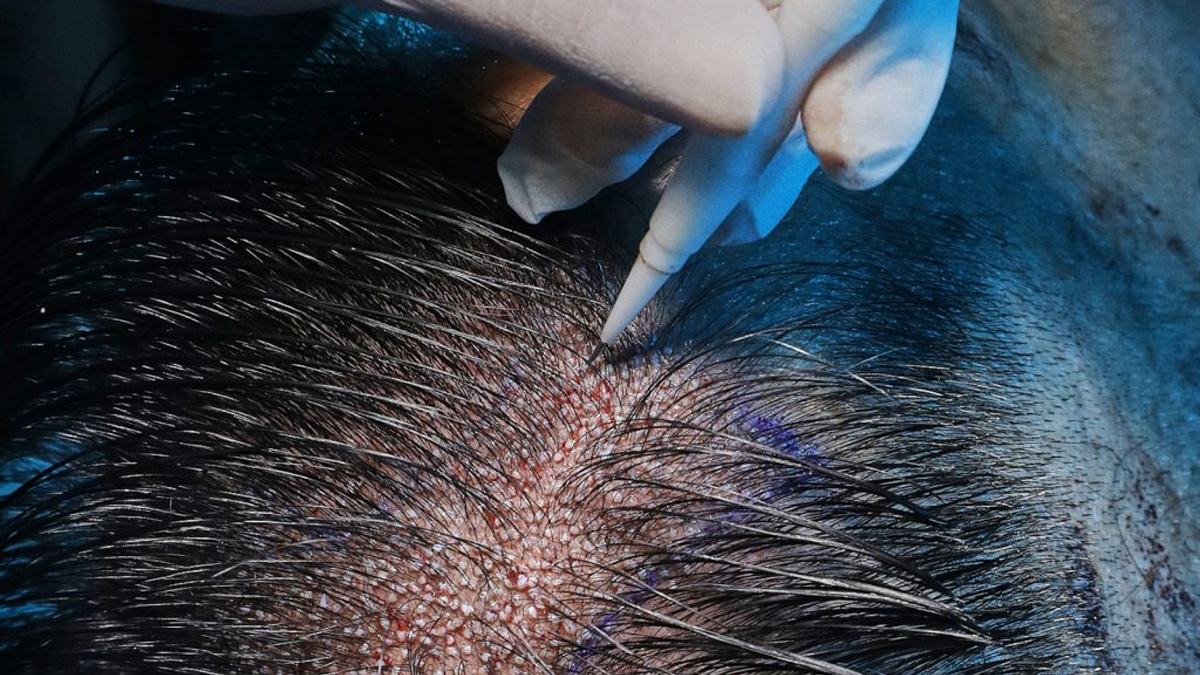
The implanter holds the pen at the exact angle and direction the hair should grow, pushes the needle into the scalp to the right depth, and presses the plunger. As the needle withdraws, the graft is left behind in the opening the needle has just made.
That's the "same motion" the title refers to. Angle, depth and direction are all decided at the moment of placement, graft by graft. No surprise, then, that the pathway above singles DHI out for hairlines. It also means the graft spends a little less time outside the body, because it doesn't have to wait for a whole field of channels to be cut before it goes in.
What is a Choi pen actually good at?
Two things stand out.
The first is control at the very front. A hairline needs single hairs placed at a low, forward angle, slightly irregular, with subtle changes of direction at the temples. Setting each of those by hand, one at a time, is exactly what the pen does best.
The second is working among existing hair. Because nothing is cut in advance, the implanter can slip grafts between native hairs with less risk of damaging them. That's why DHI is often chosen for thinning that still has hair in it, for refining a hairline that's only slightly receded, and for patients who want to keep their length.
DHI without shaving
The FAQ above confirms that DHI is commonly done without shaving the recipient area, and it's the reason many people arrive on this page. The donor area may still need to be trimmed in some cases, often in strips that longer hair can cover, and whether a fully unshaven procedure is possible depends on your donor density and the size of the area.
If keeping your hair is the main priority, the unshaven hair transplant page goes into the day-to-day side: returning to work, how visible things are, and what the trade-offs are.
How many grafts can DHI do in a day?
This is where DHI's strength becomes its limit. Placing grafts one at a time with a pen is slower than opening a field of channels and filling them. The page above doesn't hide it: DHI is slower per graft, the number of DHI grafts per session tends to run lower, and very large plans may be split rather than rushed.
In practice, that means DHI is at its best for small and medium areas, especially the front third of the scalp. For someone who needs thousands of grafts across the hairline, mid-scalp and crown, it often makes more sense to combine methods. The hybrid hair transplant page explains how DHI at the front and sapphire FUE behind it are planned in a single session.
DHI vs FUE: which is better?
Neither, in general. It's one of the most searched questions, and the honest answer is that they're good at different things.
Both take grafts out the same way. The difference is in how they go in. Classic FUE and sapphire FUE open all the channels first and then place grafts into them, which is quick and well suited to large, mostly bald areas. DHI opens and places in one step, which is slower but gives fine control at the hairline and among existing hair, and usually doesn't need shaving.
So "is DHI better than FUE?" usually becomes "which parts of my scalp need which approach?" Many plans end up using both.
Who is DHI best for?
DHI tends to suit people with an early or moderately receding hairline, thinning at the temples, a hairline that just needs refining, or diffuse thinning where plenty of native hair remains. It's also a common choice for anyone whose job or family life makes a shaved head difficult.
It's less well suited to extensive baldness across the whole top of the head, where the number of grafts needed would stretch a DHI session too far, or where there's little existing hair to protect.
DHI for women
The section above mentions that DHI is often the choice for female patients, and it's easy to see why. Women's hair loss usually shows as thinning along the parting or across the top, with plenty of hair still present. Shaving is rarely acceptable. DHI's ability to place grafts between existing hairs without shaving makes it a natural fit. The female hair transplant page covers when surgery is appropriate for women and when it isn't.
Less time outside the body: what it really means
DHI is often sold on the idea that grafts spend less time out of the body, and the page above mentions it too. It's true that there's no wait for a whole field of channels to be cut. It's also true that loading each graft into a needle is an extra step of handling, and grafts are delicate.
In the hands of an experienced, well-organised team, both factors are managed well, and growth is good. The real protection for your grafts isn't the name of the technique. It's how gently and how quickly the team handles them, whichever tool is used.
Can DHI treat the crown?
It can, but it's rarely the most efficient way. The crown is often a wide area, sometimes largely bald, and it needs many grafts spread along a spiral. Placing them one by one with a pen is possible, just slow, and it eats into the number of grafts that can be placed at the front in the same day.
That's why, in larger plans, the hairline and temples often get DHI, where its precision shows most, while the crown gets sapphire FUE channels. For someone who only has a small, thinning crown with hair still in it, DHI alone can work well.
The skill behind the pen
According to the section above, doing DHI properly takes long specialist training, and it recommends asking who holds the pen before asking what it costs.
That's because the pen doesn't make decisions. Every angle, every depth and every direction comes from the hand holding it, over and over through the day. A good implanter adjusts constantly: flatter at the hairline, steeper behind it, following the swirl at the crown and the changing direction at the temples. The same pen in less experienced hands can produce hair that sits too upright or grows in slightly the wrong direction.
DHI hair transplant recovery
Recovery in the recipient area is broadly similar to other FUE-based methods: small crusts that settle over the first week or two, and the usual timeline of shedding and regrowth described on the main hair transplant page.
The difference with DHI is often the hair around the grafts. If you kept your length, washing needs a little more care, because you're cleaning around healing grafts without pulling on long hair. The pathway above points out that the first wash at the clinic is where you're shown how to do it. Many people find that longer hair also helps disguise the treated area during the first couple of weeks. DHI results then arrive on the same curve as any other method, with the hairline filling in between months four and twelve.
DHI hair transplant before and after: zoom in on the hairline
DHI is a hairline technique, so the hairline is where you should judge any DHI before and after. Zoom in. The very front should be made of single hairs, slightly irregular, lying forward at a low angle, with no visible row or "plugged" look. A photo with the hair swept back tells you far more than one where a fringe hides the edge. When reading reviews, look for people whose hairline started out similar to yours.
DHI hair transplant price in Turkey
For a DHI hair transplant in Istanbul, the Choi pen doesn't change the price at all. Per the price section above, DHI costs the same as FUE: €1,600 for the session, €1,800 with three hotel nights, or €2,100 with fibroblast therapy. Elsewhere, DHI is sometimes priced as a premium technique, which is why the UK, German and US figures shown above are worth comparing.
Questions to ask before DHI
Who will hold the pen, and how long have they been doing DHI? How many grafts can realistically be placed in one day for your case, and will the plan be split if more are needed? Will the donor area be trimmed, and if so, how much? And is the whole recipient area being treated with DHI, or will part of it be done another way?
Clear answers to those are a good sign that "DHI" on your quote means the real technique, not just a label.
Photos for a DHI plan
For DHI, the hairline and temples matter most. Take a straight-on photo with your hair pulled back from your forehead, and a close-up of each temple from the side. Then add the top, crown and back, once as you normally style it and once flattened so the skin is visible. With that set, our Istanbul team can judge whether DHI alone, DHI without shaving, or a combination with other techniques is the right route for your DHI hair transplant in Turkey.
FUT HAIR TRANSPLANT · 1885 words
https://natural.clinic/hair-treatment/hair-transplant/fut-hair-transplant/
FUT Hair Transplant in Turkey: The Case for the Strip Method, Honestly Made
The question under the title is a good filter. If you always wear your hair longer at the back, the strip method might be worth a look. If you like a skin fade, it probably isn't. That single detail rules more people in or out of an FUT hair transplant than anything else.
FUT has an image problem. Almost every clinic in Turkey now leads with FUE, and the page above admits it will try to talk you into FUE first. So why does the strip method still exist at all? Because for a handful of people it still does a job nothing else does quite as well. Who those people are, what the scar actually looks like a year on, and how a strip and FUE can end up on the same team: that's what follows.
Is FUT outdated?
Not outdated, just specialised. For most people, FUE is the better choice: no linear scar, easier recovery and the freedom to wear hair short. That's why a strip hair transplant has become the exception rather than the rule.
But FUT's strengths haven't disappeared. When a strip is dissected under magnification, as the section above describes, almost every follicle in it can be used, and very few are damaged. And because the strip comes from a single horizontal band behind you, the donor hair above and below it is left untouched for later. In the right patient, those two advantages matter a great deal, and they're why an FUT hair transplant in Turkey is still offered here at all.
Who is FUT best for?
The FAQ above names the two main groups, and they're worth picturing.
The first is someone with extensive hair loss, perhaps Norwood 6, who needs as many grafts as possible over the course of their life. Taking a strip first yields a large number of grafts in one sitting while leaving the rest of the donor intact. A few years later, FUE can then be used from the areas above and below the scar. Used this way, strip and FUE together can provide more grafts over a lifetime than FUE alone.
The second is someone who has already had one or more FUE procedures, and whose donor area now looks thinner than it used to. Punching more grafts out of that area risks making it look patchy. A strip taken from the remaining density can supply grafts without spreading more small scars across an already-thinned zone.
A third, smaller group simply prefers it: people who always wear their hair long, don't mind a line they'll never see, and want the largest possible yield in one session.
Scalp laxity: how much can be taken
The pathway above mentions scalp laxity, and it decides how useful FUT can be for you. Laxity simply means how much the skin over your donor area can move. The looser it is, the wider the strip that can be removed and closed without tension, and the more grafts it will provide.
A tight scalp limits the strip to a narrower band. Closing a strip under too much tension is one of the main causes of a wide, stretched scar, so a careful surgeon takes only what the skin can comfortably close over. That's why laxity has to be checked in person, by feel, and why a firm quote for FUT comes only after assessment.
The FUT scar: what it really looks like
There's no way around it: FUT leaves a line. In the words of the section above, the line fades and narrows over months, and it doesn't go away.
In most well-healed cases, it's a thin, pale line running from roughly behind one ear towards the other. With the hair a few centimetres long, or longer, it's covered completely. With a very short clipper cut it may be visible, and with a shaved head it will be.
How narrow it heals depends on several things: how wide the strip was, how much tension the closure was under, your own skin and how you heal, and how carefully the wound was stitched. Some people form wider scars regardless of technique, which is worth mentioning if you've had stretched or raised scars elsewhere on your body.
Trichophytic closure
One technique helps a lot here, and it's worth asking about by name. In a trichophytic closure, the surgeon trims a very thin sliver from the edge of one side of the wound before stitching, so that one edge slightly overlaps the other. Hair follicles in that overlapped edge then grow up through the healing scar.
The result is a line with hair growing through it rather than a bare stripe, which makes it much harder to see even when hair is shorter. It doesn't make the scar disappear, but it's one of the most effective ways to make it less noticeable.
FUT without shaving
Here's an advantage of the strip method that often gets overlooked. Because grafts come from a single band, only that narrow strip of hair needs trimming, and the hair above it falls down over the stitches straight away. The rest of the donor area stays at its normal length.
For people who can't be seen with a shaved head, that can make FUT surprisingly discreet in the first weeks, especially if the recipient area can be treated among existing hair too. It won't suit everyone, but it's worth knowing that "no shave" isn't only an FUE option. The unshaven hair transplant page compares the discreet approaches.
FUT scar revision: can the line be improved?
Yes, in several ways. A scar that has stretched can sometimes be cut out and closed again more carefully, ideally with a trichophytic closure, which often leaves a narrower line. FUE grafts can be placed into the scar so hair grows through it. And some people choose scalp micropigmentation, a form of cosmetic tattooing that mimics tiny hair follicles, to blend the line into short hair.
None of these makes the scar vanish entirely. Together, they can make it hard to spot at almost any length.
What happens to the strip
Once the strip is out and the wound is closed, a team works under magnification to divide it into individual follicular units, as the pathway above describes. This is slow, careful work: first into thin slivers, then into single grafts of one, two, three or four hairs, each trimmed and kept in a cool solution.
Because the follicles are cut out under direct vision rather than punched blindly from the surface, fewer of them are damaged along the way. Implantation then happens exactly as in FUE, into channels in the thinning area, which is why FUT results at the front look no different from FUE results. Only the donor area tells them apart.
FUT recovery: stitches, tightness and numbness
The front heals just as it would after any transplant. The back is where FUT feels different.
For the first days, the donor area usually feels tight, and bending your head forward or sleeping on your back can be uncomfortable. The stitches or staples stay in for a period set out in writing in your aftercare notes, as the pathway above mentions, often around ten days to two weeks. They can be removed in Istanbul if you're still here, or by a doctor or nurse at home.
Numbness above the scar is common and, as the section above warns, can last months as the nerves recover. Most people also avoid heavy lifting, intense gym sessions and anything that strains the neck for a few weeks, to protect the healing line from stretching.
FUT vs FUE: an honest comparison
The FAQ above summarises it, and it's worth putting side by side.
FUT gives the largest single-session yield and uses a limited donor very efficiently. It leaves one linear scar, needs stitches, and has a slightly longer, tighter donor recovery. FUE gives scattered dots instead of a line, lets you wear your hair very short, and has an easier donor recovery, but it spreads small scars across a wider area and uses up more of the donor zone to reach a similar total.
Neither is better in general. The FUE hair transplant page explains the extraction side in detail, and the hair transplant overview covers how the technique is chosen for each case.
Combining FUT and FUE
Some of the best long-term plans use both. A strip first provides a large number of grafts from the centre of the donor zone. Later, FUE can harvest from the areas above and below the scar. And FUE grafts can even be placed into the scar itself to camouflage it further.
This isn't something most people need. For someone with advanced hair loss and a long future ahead, though, it can make the donor supply go considerably further.
A second strip
If you've had FUT before, a second strip is often taken so that the old scar is removed within the new one. That way you still end up with a single line rather than two. Whether that's possible depends on how much laxity is left after the first procedure.
FUT hair transplant before and after: ask for the scar
With FUT, the most important before and after photo isn't of the hairline. It's of the donor scar, a year on, with the hair wet or cut fairly short so the line is visible. That's the photo that tells you how well the strip was closed and how it healed. Reviews from long-term FUT patients who talk about wearing their hair short are especially telling.
FUT hair transplant cost: how the price is set
According to the section above, the FUT hair transplant price is quoted per case after your scalp laxity and donor area have been assessed, because the strip width and the number of grafts it yields vary from person to person. The written quote covers transfers, local anaesthesia, an interpreter and a year of follow-up. For a rough benchmark, the comparison table lists what the same kind of surgery tends to cost in Britain, Germany and America.
Choosing a clinic for FUT
The page above makes a sharp point: because almost all transplants in Turkey are now FUE, a clinic that still performs strip well is harder to find. Dissecting a strip and closing the wound neatly are skills that need regular practice.
So ask how many strip procedures the team performs, who does the dissection, what closure technique is used, and whether you can see photos of healed donor scars, not just the hairlines. The section above deliberately includes donor scar photos for exactly that reason.
Photos for an FUT assessment
For FUT, the donor side tells the story. Photograph the rear of your head and each side twice: once at your normal length, once with the hair lifted or parted to expose the skin. Had FUE or FUT before? Then add sharp close-ups of those spots. Mention how short you like to wear your hair. From that, our team in Istanbul can judge whether an FUT hair transplant in Turkey suits your donor, or whether FUE is the better route after all.
HYBRID HAIR TRANSPLANT · 1804 words
https://natural.clinic/hair-treatment/hair-transplant/hybrid-hair-transplant/
Hybrid Hair Transplant in Turkey: A Map of Your Scalp, Zone by Zone
The question under the title gets to the heart of it: density at the front and coverage at the crown are two different jobs, and one technique rarely does both best. A hybrid hair transplant is simply the plan that admits that. It divides your scalp into zones and gives each one the method that suits it.
That makes a hybrid hair transplant less of a technique and more of a map. So let's walk it, forehead to crown. Every patch of scalp has its own job, the handover between methods needs real care, and, as the page above admits with refreshing bluntness, most people don't need two methods at all.
Zone one: the hairline edge
The very front of a hairline is the most visible few millimetres of any transplant. Only one-hair grafts belong here, lying almost flat and pointing forward, and set a little unevenly so the edge looks grown rather than ruled. This is where DHI earns its place. With a Choi pen, each graft's angle and direction are set individually as it goes in, as the section above describes.
In a hybrid hair transplant in Turkey, this transition zone is almost always DHI territory. It's small in area but huge in impact, and precision matters more here than speed.
Zone two: the temples
The temple points, the small peaks of hair at each side of the forehead, are easy to get wrong. The hair there changes direction sharply, often growing downward and slightly backward. Recreating them, or deciding not to, has a big effect on how natural the whole frame of the face looks.
Temples usually fall into the DHI zone too, for the same reason as the hairline: every graft needs its own angle. They also use relatively few grafts, so the slower pace of DHI costs little.
Zone three: the front core
Just behind the hairline sits the part of the scalp that gives the front its fullness: the forelock area. This zone carries more weight visually than the mid-scalp behind it, because it frames the face and it's where hair is usually styled.
Depending on the case, the border between methods may fall at the front of this zone or partway through it. If a good amount of your own hair survives here, it can pay to keep the pen going a bit further back, since it slips new grafts in among old ones with little disturbance. If the area is bare, sapphire FUE channels can take over sooner.
Zone four: the mid-scalp
Behind the front core, the job changes from precision to volume. The mid-scalp is often a large area with little native hair left, and the goal is to cover it evenly with a sensible density. This is where sapphire FUE comes in. The channels are opened ahead of time with fine sapphire blades, and the bigger, multi-hair grafts are dropped into them, which is much faster across a wide area than placing each one with a pen.
Zone five: the crown
The crown is the last and usually the hardest zone to fill convincingly. It keeps widening as hair loss continues, its whorl means channels have to follow a spiral, and it can soak up thousands of grafts without looking dramatically different. In a hybrid plan the crown normally sits in the sapphire zone.
Because of all that, many plans treat the crown lightly, or leave it for a later session, so that the donor budget is spent where it shows most. The hair transplant overview explains why the front usually takes priority.
Where the two methods meet
Patients rarely give the border between the DHI zone and the sapphire zone a second thought. It deserves one. As the FAQ above explains, the line is drawn on your scalp during planning, and you approve both the hairline and the zone layout before anything begins.
A good plan doesn't treat that line as a wall. Density, graft size and angle change gradually across it, so there's no visible step between the front and the area behind. Singles at the edge give way to two-hair grafts, then to larger grafts further back, and the angle slowly rises as you move towards the top of the head. Done well, nobody could ever tell where one technique stopped and the other began.
Ask for the split in writing
The page above gives a simple, useful piece of advice: ask for the graft split, not just the total. A plan that says "4,000 grafts, hybrid" tells you very little. A plan that says how many go into the hairline and temples with DHI, how many into the mid-scalp and crown with sapphire FUE, and roughly where the border sits, tells you whether the plan has really been designed around your scalp.
It also lets you check the numbers against your donor. The total still has to come from what your back and sides can safely give, whichever method places the grafts.
Is a hybrid hair transplant worth it?
For the right case, yes. For most cases, the page above says plainly, it isn't needed, and one technique on its own will do the same job.
A hybrid makes sense when the front and back genuinely need different things, as the FAQ describes: a receded hairline that needs a natural, irregular edge, plus real thinning behind it that needs broad coverage. Someone with only a receding hairline and good hair behind it may be better served by DHI alone. Someone with a largely bald top and no particular hairline concerns may be well served by sapphire FUE alone. The honest question to ask any clinic is why your case needs two methods.
Hybrid vs DHI vs sapphire FUE
It helps to think of it this way. DHI on its own gives the finest control but is slow, so it suits smaller areas and hairlines. Sapphire FUE on its own covers large areas efficiently but needs shaving and offers slightly less graft-by-graft control at the very edge. A hybrid borrows the strengths of each, at the cost of a longer, more complex day and the need for a team skilled in both.
Extraction is identical in all three. As the section above notes, it happens once for the whole session, using the same punch described on the FUE hair transplant page.
Does a hybrid mean shaving?
Partly. Sapphire FUE channels are opened in a shaved area, and extraction usually means trimming the donor too. The DHI zone at the front, though, can sometimes be worked among existing hair.
So a hybrid is rarely a fully unshaven procedure, but the amount of shaving depends on how large the sapphire zone is. If avoiding a shaved head matters a lot to you, say so early. It may change where the border is drawn, or point you towards the unshaven hair transplant route instead.
Who shouldn't have a hybrid?
Anyone whose donor can't support the graft numbers a two-zone plan implies. A hybrid is usually a bigger case, and a bigger case spends more of a limited supply. It's also a poor fit for younger men whose loss is still moving quickly, because a full front-to-crown plan at twenty-five may leave little in reserve for the changes that come at forty. In both situations, a smaller, front-focused plan first is often wiser.
A longer day in the chair
Two methods take more time than one, and the pathway above is upfront about it: a longer day, with planned breaks. For most people that means an early start, extraction in the morning, then the two placement stages through the afternoon.
It helps to prepare for it. Eat a proper breakfast, bring headphones, and keep that evening in Istanbul free. If you have any health conditions, tell the team in advance, because the health checks before surgery take the longer session into account.
When the plan is split into two stages
Sometimes the full hybrid plan would make for too long a sitting. In that case the pathway above offers a staged alternative. That might mean treating the hairline and front core in one session and the crown in another, or doing the larger sapphire area first and refining the hairline later.
Splitting isn't a failure of the plan. It's often the safer and more comfortable option, and it gives a chance to see how the first stage grows before deciding exactly how to finish.
Hybrid hair transplant before and after: front and crown together
A hybrid is judged on two areas at once, so a convincing before and after set has to show both. A great hairline shot on its own tells you only half of it. Look for a top-down view of the crown, a side view of the hairline, and, ideally, the area where the two methods meet, which should show no visible change in density or direction. Reviews that describe the longer day in the chair give a useful sense of what to expect.
What a hybrid hair transplant costs in Turkey: price and packages
No surcharge for mixing methods, the price section above makes clear. A hybrid session is €1,600, same as either technique on its own; add three hotel nights and it's €1,800; add fibroblast therapy as well and it's €2,100. The zone map decides where the grafts go, not how much you pay.
That's worth knowing, because elsewhere "hybrid" is sometimes sold as a premium tier. Here, the question isn't whether you can afford a hybrid. It's whether your scalp needs one.
Healing: one timeline for both zones
Even though two methods are used, recovery follows a single clock, as the pathway above notes. The DHI and sapphire areas crust, shed and regrow on roughly the same schedule, which the hair transplant overview explains month by month. You'll have one set of aftercare instructions, one first wash at the clinic and one twelve-month follow-up. Hybrid hair transplant results are judged at that same twelve-month point, with the crown often trailing the front by a little.
Photos for a hybrid plan
A hybrid plan is a map, so the photos need to cover the whole territory. That means your forehead with the hair swept back, each temple up close, a bird's-eye view of the top, the crown shot after a shower when the hair is flat, plus the back and both sides. With that complete picture, our Istanbul team can draw a realistic zone map, suggest where the border between DHI and sapphire FUE should fall, and tell you honestly whether a hybrid hair transplant in Turkey is the right plan for you, or whether one technique would do.
UNSHAVEN HAIR TRANSPLANT · 1828 words
https://natural.clinic/hair-treatment/hair-transplant/unshaven-hair-transplant/
Unshaven Hair Transplant in Turkey: Getting It Done Without Anyone Knowing
Back at your desk on Monday, and not one colleague any the wiser. That's the promise in the line under the title, and for plenty of people it holds. With an unshaven hair transplant (you'll also see it called a no-shave hair transplant) your hair stays at its usual length and quietly covers everything while it heals.
It isn't a different operation. As the section above explains, the extraction and placement are the same; they're simply done through hair that's left at its normal length. What changes is everything around the surgery: how many grafts fit into a day, who qualifies, and what the first few weeks look like from the outside. That's what this page covers, for anyone weighing up an unshaven hair transplant in Turkey.
Three things "unshaven" can mean
The word gets used loosely, which is why the section above advises asking exactly what will be trimmed before asking what it costs.
In a fully unshaven procedure, nothing at all is cut short. Grafts are taken from between the hairs of the donor area and placed between the hairs of the thinning area. This is the most discreet option and the most demanding.
In a hidden donor trim, a narrow band at the back is clipped short for extraction, and the longer hair above it falls down to cover it. Nobody standing behind you would see it unless they lifted your hair.
Then there's long hair FUE, which a few clinics offer. Here the grafts go in with their hair still long, so you walk out with a sort of preview of the finished look. Enjoy it while it lasts. Those hairs drop out within weeks like any other transplanted hair, so it's a nice bonus for the first fortnight, nothing more.
Hair transplant without shaving: how many grafts?
Fewer than with a shaved technique, and the page above is clear about it: unshaven has the lowest graft ceiling of the six approaches. Finding and freeing each graft from among long hairs, then placing new ones without disturbing the existing ones, is slower and more painstaking work.
For small and medium areas, such as a receding hairline, the temples or thinning along a parting, that's often no problem. For extensive baldness, the pathway above notes that a second visit may be needed to reach the goal. If your goal is bigger than a discreet session can carry, that ought to be said at the planning stage, well before a flight is booked.
Who is a good candidate for a no-shave hair transplant?
Thick hair at the back, enough length to hide things, and a goal that doesn't need a huge number of grafts: that's the FAQ answer. Then come the details.
Your hair has to be long enough to cover the back and the front comfortably, which usually means a few centimetres at least. Thicker hair hides more than fine hair, and hair that's close to your skin colour shows the scalp less than dark hair on pale skin. And the area being treated should still have enough native hair around it to act as camouflage while things heal.
Very extensive baldness, with little hair left on top, is usually better treated with a shaved technique. There's simply nothing to hide the work behind.
Unshaven hair transplant for women
A woman asking about a hair transplant almost never wants her head shaved, and she rarely needs it. Her thinning tends to sit along a widening part or spread lightly over the top, with plenty of her own hair still in place to hide new grafts. That's close to the ideal unshaven case, and it's often done with DHI pens, which can work in among long strands. Whether surgery is right in the first place is a separate question, answered on the female hair transplant page.
The weeks before surgery
A little planning makes the result more discreet. Normally keep it short? Stop booking the barber a few weeks out and let it grow. Skip the last trim altogether. Leave the hair dye alone for a week or so before surgery too; the team wants a calm, clean scalp to work on. If you colour your hair, ask when it will be safe to do so again afterwards.
The first 48 hours: what others might see
Straight after surgery, the scalp around the grafts is slightly red and there are tiny crusts, but with your hair styled forward or over the area, most of that is hidden.
The thing that surprises people is swelling. Around days two to four, it often drifts down onto the forehead and occasionally around the eyes. It's harmless and settles on its own, but it's the one sign that can give the game away. Many people plan the procedure so those days fall at the end of their stay in Istanbul, or over a weekend at home.
Back to work after an unshaven hair transplant
Most people with desk jobs return within a few days, and for many, nobody notices anything at all. That's the whole point of the technique, and it's why the pathway above calls it "back at work" rather than "recovery".
A few small habits help. Wear your hair as you normally do, or slightly forward if the hairline was treated. Skip gel, wax and hairspray for a few weeks, as advised in your aftercare notes, since they can irritate healing grafts. If you're on video calls, a slightly different camera angle or softer lighting hides any residual redness at the hairline. And if someone does ask, "I've had a bit of scalp treatment" is usually all that's needed.
Jobs that involve heavy physical work, helmets or hard hats may need a little longer before they're comfortable. Ask the team what's sensible for your situation.
Hats, caps and helmets
A loose cap can be a useful extra layer of cover, but not straight away. Early on, the grafts don't like being pressed or rubbed. So wait for the team's nod, then go for something soft and roomy. A snug beanie or a tight snapback can wait.
Helmets are a different story. Bike, motorbike, building site: they squeeze the scalp and hold in heat and sweat, and that combination isn't welcome for a while. If your commute or job depends on it, raise it at the planning stage so the timing of your procedure can take it into account.
Flying home
Most people fly home a few days after an unshaven transplant with nobody on the plane any the wiser. A travel pillow that supports the neck helps you sleep without resting the treated area against the seat, and a spare copy of your aftercare notes in your hand luggage is useful if anything is delayed. If the swelling is still visible on travel day, it's worth knowing that it looks more dramatic to you in the mirror than to anyone passing you in an airport.
Washing and styling long hair afterwards
Washing is the part that needs the most care. The trick is getting shampoo to the scalp without yanking or knotting the long hair sitting on top of new grafts. Wash number one is done at the clinic while someone shows you how, and your aftercare sheet covers the days after.
Think lukewarm, not hot. Pat the shampoo on; don't scrub. Blot with a towel rather than rubbing, and let it air-dry or use the cold button on the hairdryer. Once you're told combing is fine, go gently and keep the teeth away from the grafts.
Hidden shedding
Around week three, many of the newly placed hairs fall out. On a shaved head, that can look discouraging. With an unshaven transplant, as the pathway above notes, it happens underneath your own hair, so nobody sees it but you.
That's expected: the roots stay put, rest for a while, and push out new hair from around month four. Unshaven hair transplant results follow exactly the same timeline as a shaved procedure; the only difference is that nobody watches them happen. The hair transplant overview runs through the whole timeline.
Which technique is used?
"Unshaven" describes how the hair is handled, not a single method. Most often it's unshaven FUE for extraction, carried out between long hairs, with placement by DHI pen, which is why you'll also see the procedure called unshaven DHI. Occasionally a strip procedure can be discreet too, because only a thin band at the back is trimmed, as the FUT hair transplant page explains. Your surgeon chooses based on your donor, the size of the area and how much discretion matters to you.
Unshaven hair transplant before and after: why the change looks gradual
Because grafts are tucked between existing hair, unshaven hair transplant before and after pictures usually show a quieter change than shaved cases, as the section above notes. Compare the parting and the hairline at the same length, from the same angle. A thinning part that has closed up, or a temple that has filled in, is exactly the kind of result to look for. Reviews that mention whether anyone noticed are, for this technique, the most relevant of all.
Unshaven hair transplant price in Turkey
Keeping your hair costs nothing extra; the unshaven hair transplant price is the same as a shaved one. An unshaven hair transplant in Turkey sits on the same packages listed above as the other techniques: €1,600 for the procedure, €1,800 with three nights' accommodation, and €2,100 with fibroblast therapy.
Where the money can differ is a second trip. A discreet session simply can't hold as many grafts, so a bigger goal may mean coming back to Istanbul. If that's likely, your quote should spell it out on day one.
What to ask the clinic
What exactly will be trimmed, if anything, and where? What's a realistic graft number for your case if nothing is shaved? Will a second session be needed to reach your goal, and roughly when? Which technique will be used for extraction and placement? And what will you look like on day three, when the swelling peaks?
A clinic that answers all of those clearly, before you travel, is taking "unshaven" seriously rather than using it as a selling point.
Photos at your usual length
For an unshaven plan, send photos of your hair exactly as you normally wear it, front, top, crown, back and both sides, so the team can see how much cover you have. Then add a second set with the hair parted or pushed back so the thinning areas and the donor scalp show clearly. With both sets in hand, the Istanbul team can tell you whether you're a good candidate for an unshaven hair transplant, how many grafts a discreet session can place, and whether a second visit is likely.