
 English
 Italiano
 Español
 Français
 Deutsch
 Português
 Русский
 Български
-1280x854.webp?v=munrlg7n)

.webp?v=mtgx0g8a)

















Start with the question near the top of this page, because most people who grind their teeth have no idea they do it. A partner hears it at night. Or they wake up with a sore jaw, day after day. Sometimes it's the dentist who spots smooth, flattened areas on the molars. Or a filling or crown just cracks one day for no obvious reason.
That's exactly where most dentists reach for zirconia, and heavy bites are the commonest reason people ask us about zirconia crowns in Turkey. So this section looks at why, what grinding does to teeth and crowns, and the decisions that come with putting zirconia on the teeth that take the most punishment.
What a back tooth goes through
Front teeth mostly cut and tear. Molars crush. Whether it's a steak or a bag of almonds, the back teeth do nearly all that work, meal after meal, for decades.
Then grinding piles on extra hours. Asleep, people bite harder than they ever could on purpose. It can go on for long stretches, and the teeth often scrape sideways too. Enamel wears flat under that. Fillings crack at the edges. Layered ceramics tend to chip, because the thin porcelain over a stronger core is the weak spot.
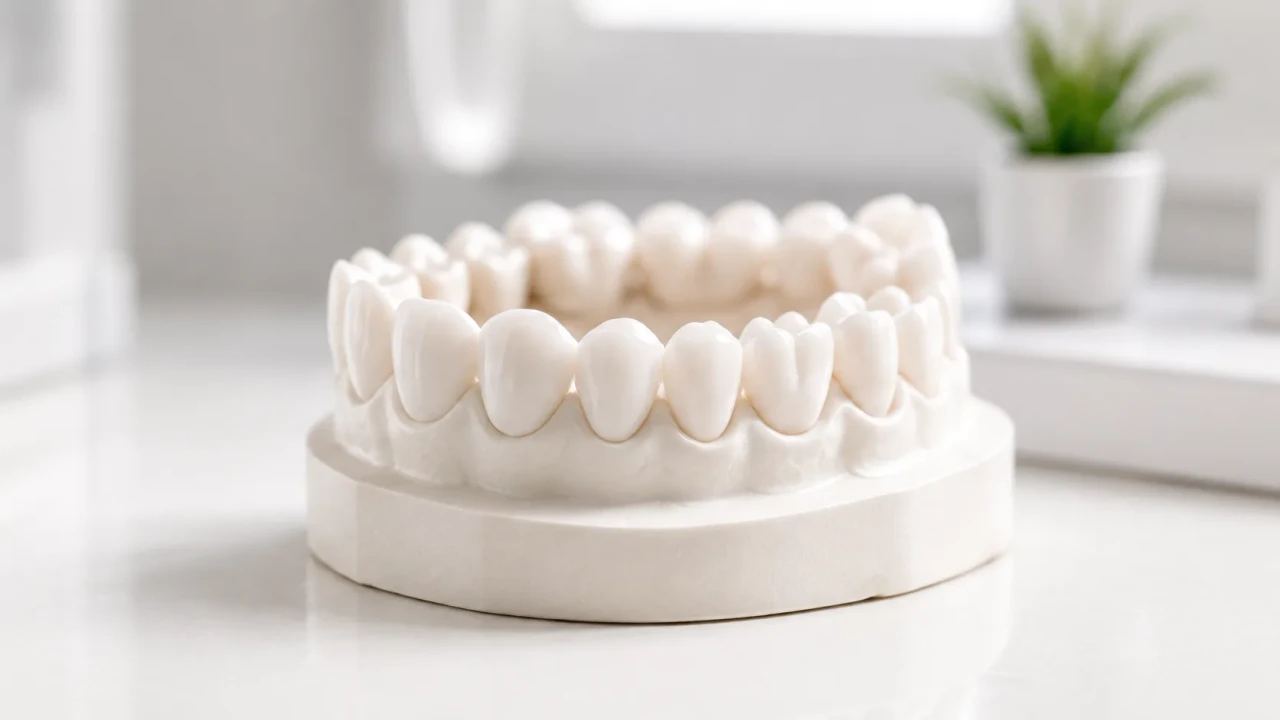
A monolithic zirconia crown, as the page above explains, is one solid piece. There's nothing layered on top to flake off. That's the main reason it goes on molars and on people who grind. The strength runs right through.
Reading the wear on your teeth
The pathway above mentions bite mapping, so here's what the dentist is actually looking for. Grinders' teeth develop wear facets, small flat polished patches where tooth has rubbed on tooth. Canine tips get worn flat. The hills and grooves on molars go shallow. Look closely and you may also find small dips near the gum, or hairline cracks that glint.
They're a map. They tell the dentist where the pressure goes, and which teeth bear the brunt. Those are the teeth where zirconia earns its keep, and where the crown might be made a bit thicker. It's also why you might get asked about headaches, a clicking jaw or stiffness first thing. None of that proves grinding by itself. Together, it builds a picture.
Worn-down teeth and not much room
Grinding causes a problem nobody notices until they try to crown the tooth. Worn molars get shorter, and the jaw tends to close a fraction more to keep the bite together. So there's less tooth, and less gap above it for anything to go.
Plenty of ceramics only hold up when they're reasonably thick, and that means trimming the tooth even lower. Zirconia copes with thinner sections than most, which helps a lot on a tooth that's already short. When a whole row has worn down, there's a bigger fix: raising the bite slightly across several teeth so every crown gets the space it needs. Nobody does that blind. You'd normally wear temporaries at the new height for a while first to see how your jaw takes it.
Why polish matters so much
People often worry that something this hard will wear down the teeth it bites against. Fair question. It mostly comes down to how smooth the surface is.
Zirconia polished to a mirror finish is kind to whatever it bites against. A rough surface, on the other hand, works more like fine sandpaper. That's what the page above means about well-polished zirconia being gentle on opposing teeth.
Here's a detail patients rarely hear. Crowns occasionally need a touch taken off in the chair if they're a bit high. That leaves a rough patch, and the patch needs re-polishing before you leave. Run your tongue over it. Any rough spot on a zirconia crown is worth pointing out. A few minutes with a polisher makes a real difference to the tooth above or below it.
Zirconia crown cost in Turkey, and bridges at the back
On our price list, zirconia crowns in Turkey cost €150 each, and each unit of a zirconia bridge is the same. To give a sense of scale, people coming from the UK or Germany often tell us three or four back crowns here cost them roughly what a single one would back home. On any quote, check that it says zirconia, and whether it's monolithic or layered.
Back-tooth bridges are usually zirconia too. Being rigid, it won't bend over the space. The weak point of any bridge is the connector, where the false tooth joins the crowns beside it. That join has to be thick, so it eats into the gap between teeth, and cleaning needs one extra step each day: pass floss or a little brush beneath the false tooth. Bridges versus implants? See our dental bridge page.
Monolithic or layered
This page is mostly about monolithic zirconia, because that's what heavy bites need. There's also a layered version, covered on the main crowns page, with porcelain fired onto the front of a zirconia core.
That porcelain makes a visible tooth look softer and more lifelike. The cost is the chipping risk that solid zirconia doesn't have. On a grinder's back molar, we wouldn't bother. On an upper premolar in someone who bites gently, it can be worth it. And today's zirconia is a lot less chalky than it used to be, so a solid crown with good staining often blends in better than people expect.
Zirconia vs E.max crowns: front and back
Plenty of plans split the mouth this way: E.max crowns on the teeth people see, zirconia on the ones that do the chewing. The trick is making them look like one set.
The two materials handle light differently, so the lab matches both to one target shade and thinks hard about where the switch happens. Usually it's around the premolars, which sit partly in shadow, where differences are hardest to spot. At the try-in, turn your head and look at the profile in the mirror too. A mismatch shows up there first.
Zirconia crowns on implants
Lose a molar, replace it with an implant, and the tooth on top will very likely be zirconia. Natural teeth sit in a thin cushion of ligament. Implants don't, so every bite goes straight into the crown. Often a small screw holds the crown on instead of cement, which means it comes off again later with little fuss. For how the implant itself is planned, see our single dental implant page.
Replacing old metal-ceramic crowns
Lots of people asking about zirconia already have older crowns on their back teeth with metal inside, and the page above lists that as a common reason to switch. The porcelain may have chipped. A dark line may have appeared at the gum. Or the crown is just old and the tooth underneath needs a look.
Swapping to monolithic zirconia gets rid of the metal and the layer that chips. As with any replacement, nobody knows what's underneath until the old crown is off, so an X-ray beforehand helps. How metal-ceramic crowns are put together, and why they age as they do, is covered on our porcelain crowns page.
How zirconia crowns stay on
Zirconia crowns are usually cemented, not bonded. That's reliable and well proven, but it means the crown depends a lot on how the tooth underneath has been shaped. A tall tooth with nearly parallel walls holds a crown well. A short, worn tooth with sloping walls doesn't hold as well.
Dentists have a few tricks for short teeth. Building the core up higher, cutting a couple of small grooves for grip, or using a cement that sticks as well as seals. If a zirconia crown ever drops off, the tooth under it was probably on the short side. Normally it's cleaned and cemented again. It's fair to ask how they'll make it hold better second time round.
Zirconia crown lifespan: how long do they last?
Few crown materials outlast zirconia. Breakage is unusual. When one does need replacing years later, it's usually the tooth underneath or the gum around it. The flip side of all that strength? If the crown ever has to come off, it's much harder to cut than other ceramics, takes longer and wears through more drills.
That's rarely an issue, since most zirconia crowns never need removing. If the tooth underneath ever needs a root canal, the dentist can usually go through a small hole in the top and seal it afterwards. Still, it's one more reason to get the crown right first time, and why the try-in at the gum line, as the page above describes, matters so much.
Zirconia crowns before and after, and reviews
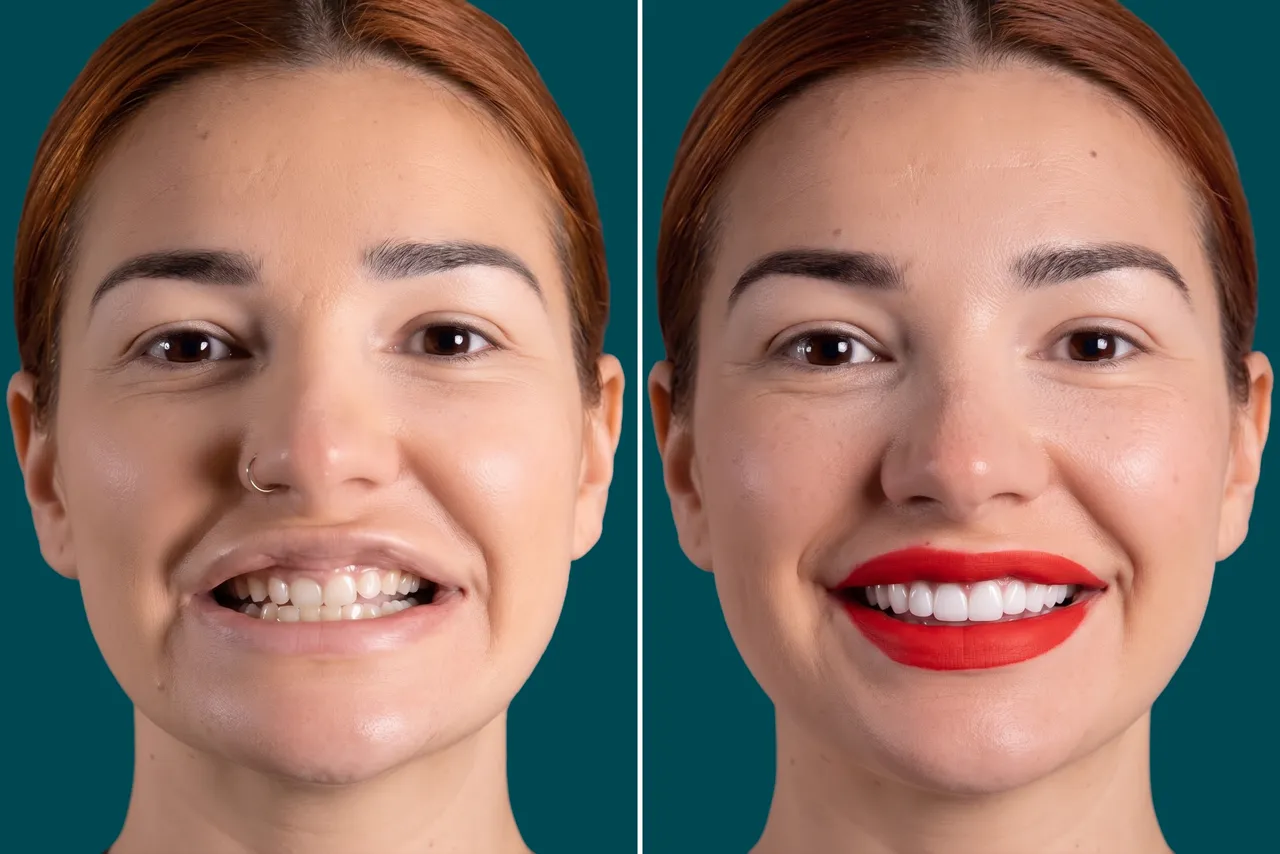
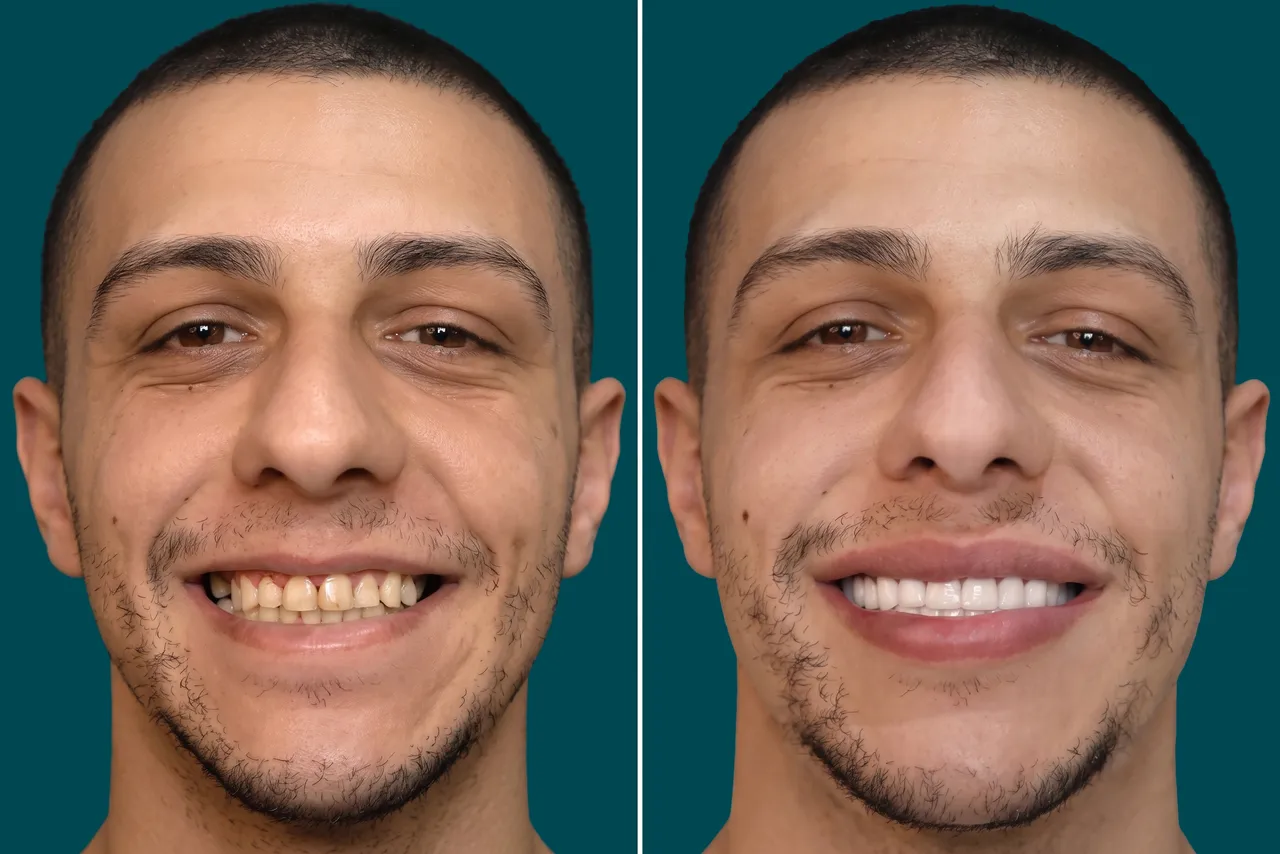
Back-tooth zirconia crowns before and after pictures won't look as striking as a new front smile. Still, have a look. Are the gum edges neat? Do the chewing surfaces have proper grooves, or do they look like flat slabs? Reviews from grinders who've had theirs for several years tell you most.
The night guard is part of the treatment
The page above lists the night guard as optional, at €100. For people who don't grind, it really is. For people who do, it's the single thing most likely to decide how long the crowns last.
Zirconia handles huge force, but it doesn't stop the habit. The crown will cope. The teeth around it, the other fillings, the jaw joints and even the roots under the crowns still take the strain. A guard spreads that force across the whole arch. We make it once the crowns are on, shaped to how your teeth now meet.
It only works if it's in your mouth, every single night.
Before your zirconia crowns in Istanbul
Planning zirconia crowns in Istanbul and suspect you grind? Say so with your photos, even if you're not sure. Mention it if a partner has heard grinding, if mornings start with a stiff jaw, or if you've cracked a filling or crown in the past. A couple of photos of your back teeth taken from the side are useful as well. Wear shows up on camera better than you'd think.
Few details shape the plan as much. From them we decide which teeth get zirconia, how thick each crown should be, and whether a night guard belongs in the plan from day one. Some of your teeth may be better off in another material, and our dental crowns guide shows how plans combine them.