
 English
 Italiano
 Español
 Français
 Deutsch
 Português
 Русский
 Български


-1-1280x720.webp?v=mv1dodem)
Everything On One Site
Theatres, hospitalisation and aftercare in the same building, not a subcontracted hospital.
Penile Implant in Istanbul · €7,000
Tablets and injections stopped working? That isn't the end of the road.
A penile implant is a concealed device placed inside the penis that allows an erection on demand when other treatments no longer help. It costs €7,000, with one hospital night and about four nights in Istanbul.
Natural Clinic brings multiple fields of specialised healthcare together under one roof, combining medical expertise, advanced technology and patient-focused care. From hair transplantation and dentistry to facial, body and breast aesthetics, bariatric surgery and reconstructive treatments, every patient journey is managed by experienced medical teams working across disciplines.
1200+ — Advanced treatments across multiple medical specialties
50+ — Experienced specialists working across disciplines
360° — Consultation, treatment, recovery and aftercare coordinated under one roof
150+ — Large-scale medical infrastructure in Istanbul
Inflatable devices stay soft between uses and firm on demand; semi-rigid rods are simpler but permanently firm. Both close the door on returning to unaided erections. E2507 is €7,000 whether the prosthesis is inflatable or semi-rigid — unusual, since elsewhere the device is where most of the price difference sits.
Erectile dysfunction · from €7,000
An inflatable or semi-rigid device replaces the erectile mechanism for men whose erectile dysfunction hasn't responded to tablets, injections or a vacuum device. Inflatable devices stay soft between uses and firm on demand; semi-rigid rods are simpler but permanently firm.
Established erectile dysfunction where first-line treatments have failed, or a considered decision to skip them. Any infection is cleared first.
From €7,000 on our current list, regardless of device family. One night in hospital, four nights in Istanbul.
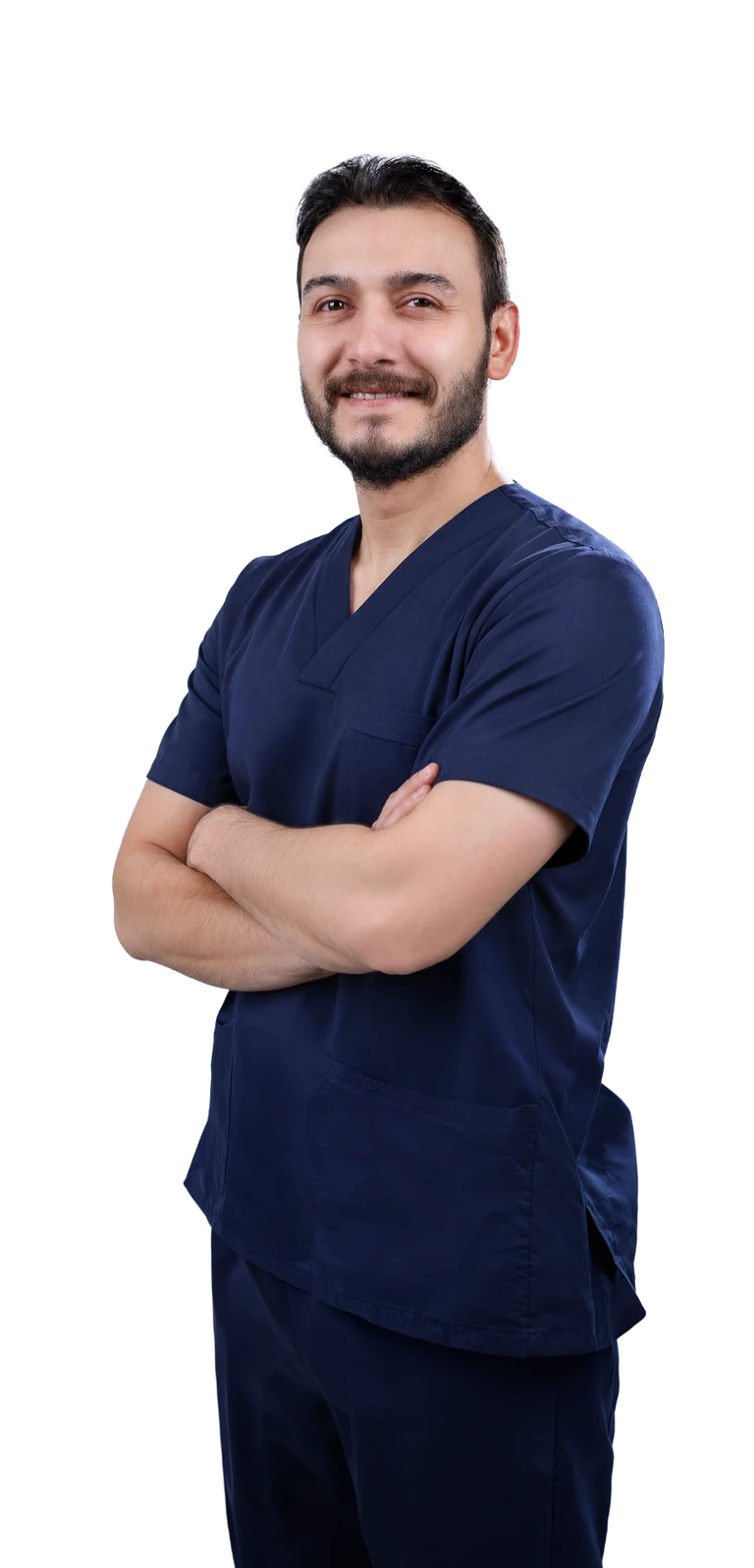
Plastic Aesthetic and Reconstructive Surgery
Dr Emre G. qualified in medicine at Uludağ University in 2007 and completed his specialist training in plastic, reconstructive and aesthetic surgery at Bezmialem Vakıf University between 2008 and 2014, with a research post at the University of Wisconsin School of Medicine and Public Health. He has worked in both public hospitals and private practice, and the reconstructive half of that training shows in how he plans an aesthetic case. He practises at Natural Clinic in Istanbul.
Education
Surgery carries risk wherever it is performed. For this operation the published risk figure comes with a condition attached: the European Association of Urology quotes an infection rate of two to three per cent at primary implantation in low-risk patients and in high-volume centres. Volume sits inside the number rather than in the marketing beside it.
Theatres, hospitalisation and aftercare in the same building, not a subcontracted hospital.
-1280x720.webp?v=mv1dxkcr)
The published infection rate for this operation is quoted for high-volume centres. Volume is part of the number, not a slogan next to it.
Lower operating costs, not lower standards. Ask what the price includes and compare like with like.
-1280x720.webp?v=mv1dxpnk)
Hundreds of routes, which matters when you are flying home four nights after an operation.
-1280x720.webp?v=mv1dxrzy)
Consent, risks and aftercare explained in your own language.
-1280x720.webp?v=mv1dxuk2)
Twelve months is included — and a device has a service life. Ask who you contact in year six.
A €7,000 prosthesis is for erectile dysfunction that medication hasn't helped. It permanently replaces natural function.
Tablets, injections and other therapies are reviewed; the implant is only considered once they have genuinely failed.
The erectile tissue is dilated to fit the device, so no later treatment can restore unaided function — this is written into consent.
Cardiovascular, hormonal and medication causes are examined; occasionally this changes the plan entirely.
Infection usually means removing the device, so the operation is run with particular care, followed by a night in hospital.
Once the tissues allow, you're taught how to use the device, and future revision is discussed as a normal part of its life.
A penile implant treats erectile dysfunction when medication has failed. Here is what that commitment involves.
A penile implant, also called a penile prosthesis, is a medical device surgically placed inside the penis to allow an erection for men with erectile dysfunction. It is a functional treatment used when other options, such as tablets or injections, have not worked, rather than a cosmetic procedure to change size.
A penile implant is considered for men whose erectile dysfunction has not improved with medication, injections or other treatments, and who have been assessed by a urologist. Candidates should understand that the device replaces natural erectile function permanently and be comfortable operating it.
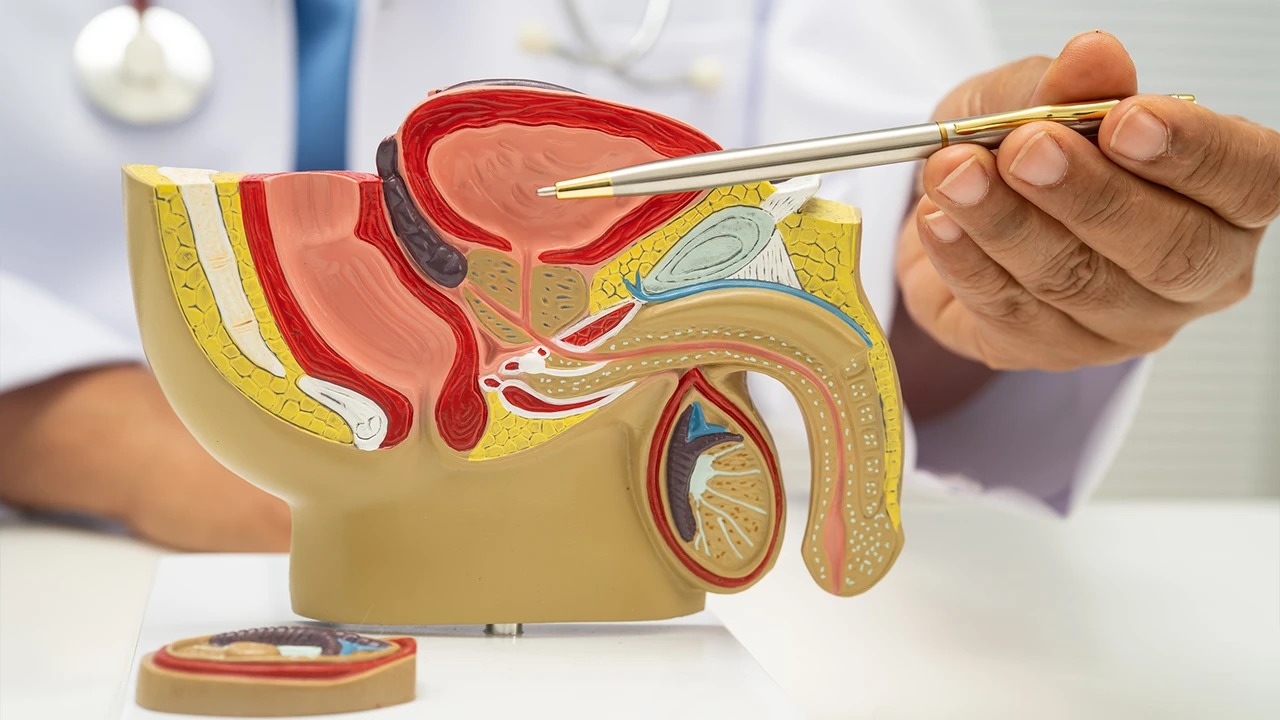
Penile implants are broadly either inflatable, which use a small pump placed in the scrotum to fill cylinders when an erection is wanted, or malleable, which are semi-rigid rods that can be bent into position. Your surgeon explains which type suits your anatomy, dexterity and preferences.
A penile implant costs €7,000 at Natural Clinic. The price covers the device, the surgeon's fee, anaesthesia, one night in hospital, airport transfers, an interpreter and confidential follow-up. A urological assessment is required before surgery and forms part of the treatment pathway.
Erectile dysfunction can be an early sign of heart disease, diabetes, hormonal imbalance or medication side effects. A urologist reviews these possible causes before a penile implant is planned, because treating them may be important for your wider health and can sometimes change the recommended treatment.
A penile implant is a mechanical device with a finite working life, so revision or replacement may be needed after some years, particularly with inflatable models. This possibility is discussed before surgery so that future care can be planned rather than coming as a surprise.
No. Placing a penile implant permanently changes the internal erectile tissue, so natural, unaided erections are no longer possible afterwards, even if the device is later removed. This is why the decision is made only after other treatments have been tried and the consequences are fully understood.
The most significant risk is infection, which usually requires removal of the device. Other risks include mechanical malfunction over time, erosion, changes in sensation and a perception of reduced length. Strict sterile technique and careful aftercare help reduce the likelihood of these problems.
Penile implant surgery is performed with strict sterile precautions, including careful skin preparation, antibiotics and minimal handling of the device. Patients are monitored overnight in hospital, and conditions such as diabetes should be well controlled beforehand, as they can affect infection risk.
Penile implant patients stay four nights in Istanbul, including one night in hospital after surgery. This allows the surgical team to monitor for bleeding and early signs of infection and to check that swelling is settling before you travel home.
The device is not used until the tissues have healed, which usually takes several weeks. Once your surgeon confirms healing, you are shown how to activate and deactivate the implant, and follow-up checks confirm that you are comfortable operating it.
After surgery, sexual activity, strenuous exercise, heavy lifting and cycling should be avoided until your surgeon advises otherwise. Keeping the wound clean and dry, wearing supportive underwear and taking prescribed medication as directed support healing and reduce the risk of complications.
Among men for whom a penile implant is genuinely appropriate, satisfaction is generally high, as the device provides reliable erections on demand. Satisfaction depends on realistic expectations, including understanding how the device works and that it does not increase penile size.
Many penile implants function well for years, but as mechanical devices they can eventually wear or malfunction. Regular follow-up helps identify any issues early, and if the device stops working, revision surgery to repair or replace it may be considered.
Difficulty inflating or deflating the device, a change in rigidity, new pain or swelling around the pump should be reported promptly. Your surgeon assesses whether a component has failed and whether repair or replacement is needed, and during the first year these reviews are part of your confidential follow-up.
Penis enlargement is the other operation in this field and it is not a smaller version of this one. It changes dimensions and leaves erectile function alone; an implant restores erections and does not add size.
Personalised Care, Just for You
Describe what has stopped working and what has already been tried rather than naming an operation. One of our surgeons reviews your case and replies with a realistic assessment — whether an implant is the right step, which device family fits your case, what recovery honestly involves, how many days you would need in Istanbul and what it costs. No obligation, no pressure, no cost.
Get a Surgeon's Opinion100% Confidential & Secure
Reply Within 24 Hours
Reviewed by Board-Certified Surgeons
Penile prosthesis implantation is performed under general anaesthesia for established erectile dysfunction, using either an inflatable device or a semi-rigid malleable device. It is not reversible: implantation makes latent natural erections, as well as other interventional treatment options, impossible. Reported satisfaction is the highest of any treatment for the condition.

A man doesn't usually email us about a penile implant in his first year of erection trouble. More often it's year five, or ten. He's tried the blue tablets, then the stronger ones. Perhaps injections, which worked for a while and then didn't. Maybe a vacuum pump that sits in a drawer. Very often there's been a prostate operation, or years of diabetes. A penile implant in Turkey is rarely anybody's first idea. It's what men look into when the other doors have closed.
The section above covers the two device families and the published numbers. Here we walk through what actually happens, in the order it happens, and the decisions you'll face along the way.
The men we see for this tend to fall into a few familiar groups. A good number had their prostate taken out for cancer. The operation dealt with the cancer, but despite months of rehab, erections never came back properly. Diabetes is the other big one. Years of high blood sugar wear down the tiny vessels and nerves an erection relies on. Some have a curve in the penis from Peyronie's disease alongside the erectile problem. In that situation a penile prosthesis can sometimes help with both, though the plan needs careful discussion.
A smaller group has simply decided, after hearing all the options, that they'd rather not spend years on injections. The page above notes that this can be a considered choice. It's still one a urologist should talk through with you first.
There are two kinds, and men are often surprised how much the choice matters day to day.
In its most common form, the inflatable sort comes in three pieces. Inside the penis, a pair of soft cylinders. Down in the scrotum, beside the testicles, a pump you'd barely pick out by touch. And tucked behind the lower belly, a little reservoir of salt water. Squeeze the pump a few times and that water moves into the cylinders. Afterwards you press a release valve and it softens. In between, the penis hangs naturally. Most men who can manage the pump prefer this type, and partners often do too.
A malleable implant is simpler. Two bendable rods sit in the shaft, and you position them by hand, up for sex and down the rest of the time. There's nothing to inflate and less that can go wrong mechanically. The trade-off is that the penis stays firm all the time, which can show through light clothing.
What tips the decision? Hand strength and dexterity, for a start. A man with severe arthritis may find the pump hard to work. Had a hernia repaired, or your prostate removed? Scar tissue low in the abdomen can affect where the reservoir goes, and the surgeon will plan around it. And some men simply want the least mechanical option. Our €7,000 price is the same for either, so cost doesn't steer you. Do ask which make and model is being quoted, and make sure it's written on your plan.
This is the part people most often misunderstand, so it's worth being plain.
An implant gives you rigidity when you want it. It doesn't change how things feel. Sensation in the skin stays as it was. Orgasm and ejaculation, for men who still had them before, usually carry on as before too.
It doesn't add length or girth. In fact, the commonest complaint after the operation is that the erect penis seems shorter than men remember. Part of that is real, because long-standing erectile dysfunction itself causes some shrinkage over the years. Part of it is that the head of the penis doesn't stiffen with the shaft. Surgeons measure and talk this through beforehand so it isn't a surprise.
And it can't be undone. To fit the cylinders, the spongy erectile tissue inside the shaft is stretched. If the device were ever removed, natural erections wouldn't come back, and tablets or injections would no longer work either. That's written into your consent form for a reason.
Most of the groundwork happens at home. We'll ask for a recent blood test, blood sugar included, plus a list of your medicines, down to the vitamins. For men with diabetes, tighter sugar control in the weeks before surgery means less chance of infection. Your own GP may tweak your treatment to get there. Smokers will be asked to give up for a good while beforehand.
Any infection anywhere in the body has to be cleared first, including a urine infection or a sore on the skin. That's not fussiness. The implant is a foreign body, and bacteria that reach it can mean taking the whole thing out.
You're asleep for it. The surgeon usually works through one small cut, either where the penis meets the scrotum or just above the penis. Our theatre team works to a strict sterile routine, because preventing infection is the single most important thing on the day. The device and its serial number are recorded in your notes.
You'll stay one night in hospital. Some men have a urinary catheter overnight. Pain is real for the first few days, mostly a deep ache and swelling in the scrotum, and it's managed with tablets.
The full stay for a penile implant in Turkey is about four nights in Istanbul. After the ward, it's back to the hotel. Expect to do very little there. That first week, the bruising can look dramatic. Purple, sometimes spreading right across the scrotum. That colour is normal. It'll be gone in a couple of weeks. Snug briefs that hold everything still are surprisingly helpful.
On your last day in Istanbul the surgeon checks the wound and feels where the pump has settled. You'll also get a clear list of warning signs to take home.
Most men with desk jobs go back to work within about a week or two. The bike stays in the shed for six weeks. Heavy lifting waits just as long. Some surgeons like patients to ease the pump gently downward every day early on. It keeps it from creeping up while the tissues set. Ours will tell you whether that applies.
Infection is the complication everyone watches for. It's uncommon. When it happens, it's most likely early on. Redness and heat around the wound are worth a call to us. So is pain that gets worse by the day instead of better, or any leaking. The same goes for a temperature. Then see a doctor locally that day.
Somewhere around six weeks, once everything has healed, comes the lesson in actually using it. The details depend on your situation, so raise it with us before booking rather than after. Partners are welcome at that session, and many find it useful.
The first attempts are rarely smooth. A couple of weeks in, most men have it sorted. A lot of couples tell us the real change wasn't the erection. It was no longer timing everything around a pill.
Will anyone be able to tell? With an inflatable device deflated, not in a changing room or in normal clothes. With the malleable type, thin summer trousers can give it away. In bed, partners rarely notice the device itself. What they may notice is that the tip stays softer than the rest.
Does it hurt to use? Not once you've healed. The first few weeks of pumping can feel tender, and that passes.
What about airport scanners and hospital scans? Security scanners don't usually react to it. Before any MRI or medical procedure, though, show staff your device card so they can check the model.
Can my GP look after it? For everyday things, yes. For problems with the device itself, you'll want a urologist who fits implants, which is why it pays to find out who that would be near you.
There are no penile implant before and after photos, here or at most clinics, and that's how it should be. The result isn't a look. It's being able to have sex again, when you want, without planning around it.
Published satisfaction rates are among the highest for any treatment of erectile dysfunction. Penile implant reviews, when men write them at all, usually say the same thing in plainer language: they wish they'd done it sooner. The useful ones are honest about length, too.
Nothing mechanical lasts forever, and an implant is no exception. At five years most are still going. At ten, many still are. Some fail sooner. A fluid leak or a pump fault usually means replacing the device in another operation. That's a normal part of an implant's life, not a disaster.
You'll be given a card with the device details on it. Keep it in your passport wallet for good. Doctors need to know the implant is there. That goes double before anyone puts in a catheter or operates in your pelvis.
This is also where having the operation abroad needs thinking through. Who will you see in year six if the pump stops working? Twelve months of follow-up are included with us, and after that a urologist near home is often the first port of call. Talk to your own doctor about that before you travel, not after.
Our list puts the penile implant cost in Turkey at €7,000, whether the device is inflatable or malleable. That price covers the device itself, the surgery, the general anaesthetic and a night in hospital. Airport pick-up and an interpreter come with it too, and you're followed up for a full year.
Elsewhere the numbers climb steeply. The table above shows Germany at roughly €11,500 to €15,400, and the US at €17,500 to €22,000. In the UK it can reach €22,177 to €33,852. Two questions are worth putting to every clinic. Which device is in the quote? And what would a replacement cost later?
Some men read all this and realise their problem is really about size rather than function. That's a different operation entirely, explained on our penis enlargement page. If you haven't worked through tablets, injections and a vacuum device yet, the male genital surgery page explains that ladder. How a private enquiry works with us is covered in our overview of genital surgery in Turkey.
Tell us what you've tried and for how long. Prostate surgery, diabetes or heart trouble are all worth mentioning. A surgeon will write back to you privately. If a penile implant in Turkey isn't the right next step, you'll hear that plainly.

© 2026 Natural Clinic. All rights reserved.