
 English
 Italiano
 Español
 Français
 Deutsch
 Português
 Русский
 Български
-1280x854.webp?v=muo05k9h)



-1280x853.webp?v=mv1dw0ut)
-1280x853.webp?v=mv1dw31y)
-1280x720.webp?v=mv1dw5mi)
-1280x720.webp?v=mv1dw86j)
-1280x720.webp?v=mv1dwb0g)
-1280x720.webp?v=mv1dwvpw)

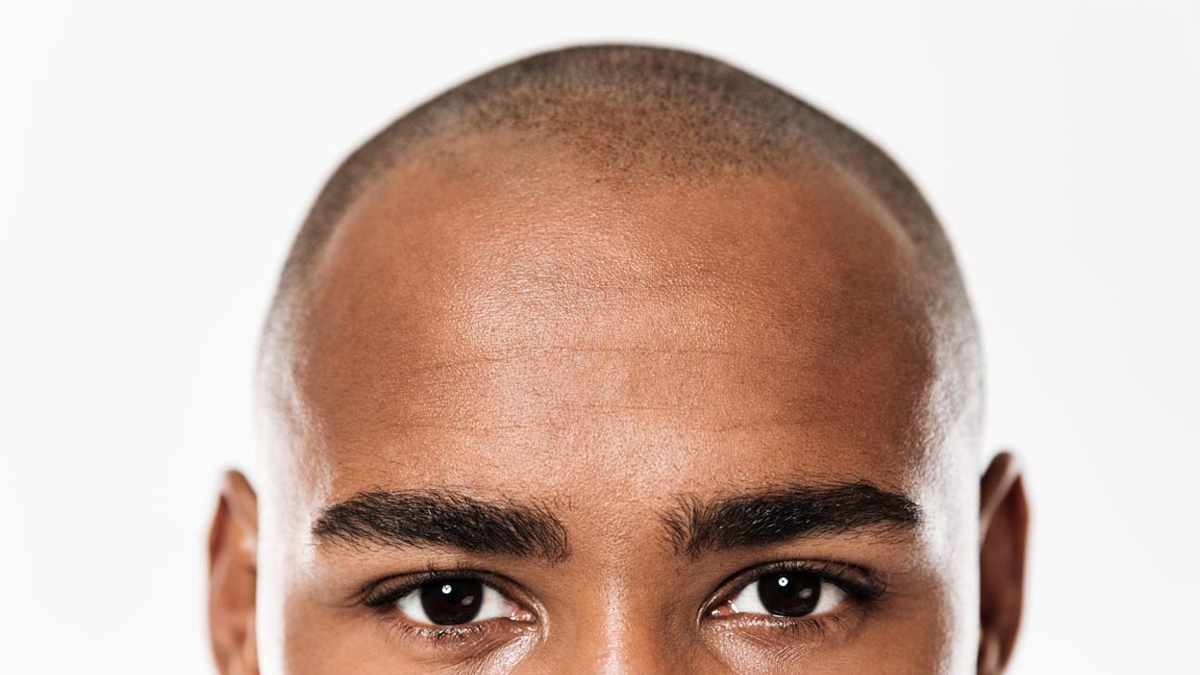
Curly roots curve under the skin too. It's printed under the title for a reason. Everything about an afro hair transplant that's different, harder, or occasionally better than a straight-haired case comes back to it.
Maybe your hairline is going and you've been reading up on hair transplant for black men. Maybe your edges thinned after years of braids. Or maybe you're in the US or Canada searching for an African American hair transplant and wondering whether Turkey is worth the flight. Whichever it is, this is the practical side of an afro hair transplant in Turkey: the curl, the questions worth asking, life with your barber afterwards, and what you'll pay.
Why an afro or curly hair transplant is different
Straight hair is predictable. What you see above the skin is roughly what's going on beneath it, angle and all, and the surgeon aims by eye.
Coily hair isn't. Tease one out whole and the root has a hook in it. Sometimes it's a gentle curve, sometimes a tight C. And from the surface, there's no way to tell which. We've had patients whose hair looked fairly loose on top and turned out to curl hard underneath.
So the operation is the same on paper. The extraction isn't.
Transection, and the case for a test extraction
If the punch cuts across that hidden bend, the follicle is sliced in two. Surgeons call it transection. The page above is upfront that the tighter your curl, the higher the risk, and a graft cut that way may grow weakly or not at all.
Our answer is to find out before committing. At the start of the day, a few grafts come out first. They go under the microscope. Whole roots? Carry on. Clipped ends? Change the punch, the depth or the angle, and test again. Once in a while the right move is a short trial session on a separate day. If a clinic doesn't bring this up with you, ask why.
Why a wider punch is the right punch
Hair transplant adverts love to boast about tiny punches. For afro hair, smaller isn't better, and the page above says as much.
A slightly bigger punch leaves room for the curve to come out in one piece. Yes, each extraction site is a touch larger. In coiled hair, though, the donor grows back over them so thoroughly that they're very hard to find. A surviving graft beats a slightly smaller dot every time.
How many grafts for afro hair?
This is where curly hair works in your favour. Each coiled hair springs up and outwards, taking up far more room than a flat, straight one, so a single graft covers a surprising amount of scalp. That's why an afro hair transplant before and after set can show real density from fewer grafts than people expect, as the gallery above shows.
Dark hair on darker skin helps too. Low contrast means thinning is less obvious to start with, and new density reads as fuller. Your donor still sets the ceiling, of course. The hair transplant guide explains how that's measured.
Keloids, scarring and darker skin
The pathway above starts here, and so should you.
Some skin heals a small cut with a thick, raised, shiny lump that keeps growing past the edges of the wound. That's a keloid. Others form wide, raised scars that stay within the edges. Darker skin is more prone to both. Now multiply one small cut by a few thousand, which is roughly what a transplant is. Pierced ears that healed lumpy? A scar on your knee that kept growing? Tell us in your first message, not on the morning of surgery. It might mean a test patch. It might mean a smaller area, a different technique, or, now and then, a frank "we wouldn't operate".
Pigment is the other thing. Healed dots on darker skin sometimes look a shade lighter or darker than the skin around them for a few months. Annoying, usually temporary. Better you hear it from us now.
Traction alopecia and the edges
Plenty of people researching an afro hair transplant don't have pattern baldness at all. What they have is thin or missing edges, worn away by years of tight braids, cornrows, locs, weaves or extensions. That's traction alopecia.
As the FAQ above explains, grafts can rebuild edges where the follicles have truly gone. The catch is timing. If the styling that caused the damage is still going on, it will pull the new hair out exactly as it pulled out the old. The surgeon also checks whether some follicles are just tired rather than dead, because those sometimes come back on their own once the tension stops. Women dealing with traction loss can read more under hair transplant for women.
Designing an afro hairline
Coils soften an edge all by themselves, which the gallery above points out, so an afro hairline doesn't need the heavy feathering a straight one does.
Shape matters more. Line-up every fortnight? Then your barber traces this hairline twenty-odd times a year. You'll want to love it. Where do your temples sit naturally? How much forehead looks like you? Picture it at fifty, not at thirty. It gets drawn on your forehead first, and nothing happens until you've said yes.
FUE or DHI for afro hair?
FUE is the usual route, per the section above, and DHI is there if shaving is a problem. Whichever you choose, extraction is the step that decides the outcome; the adapted method above is what keeps the curve intact. For how FUE works more generally, see FUE hair transplant.
Placing curly grafts has its own fiddly bits. Each one needs a channel cut to its own bend and depth. DHI pens manage, though threading a coiled graft into a narrow needle tests anyone's patience. Some surgeons go the other way entirely and take a strip for very tight curls: cutting grafts from it under a microscope lets them see every hook. The price is a linear scar, which is a hard sell for anyone who forms keloids.
Fades, waves and your barber
Ask about this early if you keep your hair very short. Extraction leaves small dots across the back. At most lengths, even a short afro, you'd never see them. Take the clippers right down to the skin for a fade, though, and they might show.
Expect to be back in the barber's chair a few weeks after an afro hair transplant in Istanbul, once things have healed. Be upfront with them. Clippers stay off the new hair for the time being, and the sharp edge at the front waits until we say it's fine. Chances are your barber's had transplant clients before and won't blink.
Afro hair transplant recovery: products, durags and washing
The healing calendar is the standard one. Your routine is what changes. Edge control, pomade, heavy oils and gel stay off the grafts until you're told otherwise, and so do braids, twists or anything that tugs.
A durag? Later, and loose. Early on, anything snug, durag or wave cap, sits right on top of fresh grafts. Drawer. Washing is more pouring than scrubbing: water and a little shampoo, left to run. Don't work the coils in with your fingers the way you normally might. The clinic shows you how on the first wash.
Razor bumps a regular thing for you? Then a few spots as the new hairs break the surface won't come as a shock, and most fade without help. If one gets angry or sore, send us a photo.
Afro hair transplant results
After an afro hair transplant in Turkey, the timeline is the familiar one: grafts shed somewhere around week three, sprout again from about month four, and settle in between nine and twelve months. One nice surprise with curly hair is speed. Because each new hair coils and fills space straight away, density tends to show earlier than it would in straight hair, something that comes up again and again in the afro hair transplant reviews and before and after photos above.
Afro hair transplant before and after: what to check
Before and after galleries are where an afro hair transplant in Turkey is easiest to judge, and easiest to oversell. Studying an afro hair transplant before and after set? Look at three things. The hairline should look natural even after a sharp line-up. Is the back shown, cut short, twelve months later, or conveniently cropped out? And are the pictures dated, with the same light each time? Flash does strange things to dark hair.
Afro hair transplant price and cost in Turkey
You don't pay more for curl, and the price section above says so plainly. An afro hair transplant in Turkey uses the same three tiers as everyone else's, up to 5,000 grafts. €1,600 gets you the procedure. €1,800 adds the hotel. €2,100 adds fibroblast therapy on top. Because the afro hair transplant price in Turkey doesn't move with graft count, and curly hair tends to need fewer grafts anyway, the maths is usually kind. The slower extraction is our problem to plan around, not an extra line on your bill.
Choosing a surgeon for an afro hair transplant in Turkey
Here's the question the page above wants you to ask first, before price: how many afro cases does this team actually do in a year? Most hair transplants in Turkey are on straight hair. Curved follicles are a different skill, and any clinic offering a black hair transplant should be able to show you real afro cases, not stock images. Experience is the whole game.
Next, photos. Afro-textured cases, with dates, with the back of the head included. Then the punch: how do they choose it, and do they test a few grafts first? And ask, by name if you can, who'll be doing your extraction.
Photos for your afro hair transplant estimate
One person holding the phone, you standing by a window. That's the whole set-up. Front hairline first, then the top, the crown, the back, and each temple close up, all at your normal length. Hair on the long side? Pick it out and go round again so we can actually see skin. After that, just tell us the story. Messy is fine. Any keloids. How long the braids or locs were in. Whether you like a skin fade. From there the Istanbul team can say how many grafts your donor will stand, what your curl needs, and whether now is really the moment.