
 English
 Italiano
 Español
 Français
 Deutsch
 Português
 Русский
 Български
-1280x854.webp?v=mumkwx65)
-1280x854.webp?v=muml08zc)
-1280x854.webp?v=mumkqdd1)
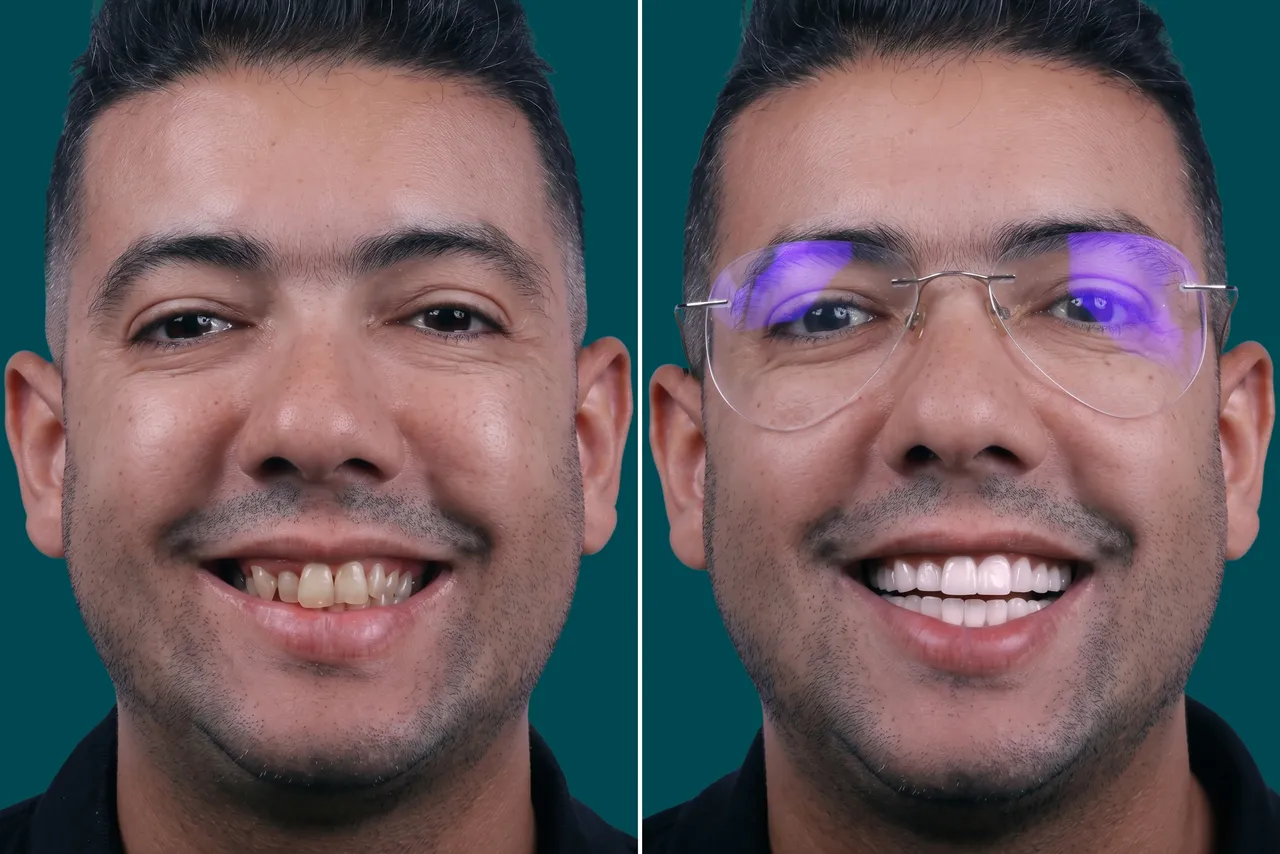








E.max is one of the few dental materials patients ask for by name. Usually they've read two things about it: that it's stronger than ordinary porcelain, and that it looks more natural. Fair enough, on both counts. Hardly anyone mentions what that strength is actually for, though, or which teeth really benefit from it.
Here's the answer in a sentence. E.max won't make your teeth tougher, but it lets a veneer be made thinner without turning fragile, and on some teeth that makes a big difference to the plan.
A name, not a category
Strictly speaking, "E.max" is a trade name. The product is IPS e.max, a lithium disilicate glass-ceramic made by Ivoclar in Liechtenstein, and it has decades of clinical use behind it. Somewhere along the way the name started being used loosely, and you'll now see clinics call almost any pressed or milled ceramic "E.max".
That matters because the numbers on the page above, including the strength figure, belong to the genuine material. If you're paying for E.max, the paperwork should say so by name, the same way a pharmacy label names the drug rather than just "painkiller".
What "three times stronger" means in practice
It's tempting to picture E.max as the veneer you can crack walnuts with. Nice image, wrong idea. Once a veneer is properly bonded, it behaves as part of the tooth, and the tooth underneath is doing a lot of the work.
The strength earns its keep at the thin bits. Hold a front-tooth veneer up to the light and the biting edge is almost paper-thin at the tip. Make that edge from a weaker ceramic and it has to be thicker to survive. The extra bulk has to go somewhere: either the veneer ends up sitting further forward than your tooth did, or the dentist removes more enamel to make room. E.max can keep that edge thin and it still holds.
So it's most useful on a few particular kinds of teeth:
Canines. When you slide your jaw sideways, the upper and lower canines usually touch first and guide the movement. That puts sideways load on their edges every day, which is hard on a delicate shell.
Edge-to-edge bites. If your upper and lower front teeth meet tip to tip rather than overlapping, the edges of any veneer take direct force.
Worn teeth being lengthened. When teeth have been shortened by years of grinding or acid wear, veneers are often used to add back length. That new length sits beyond the natural tooth, with no enamel behind it, so the ceramic has to carry itself.
On front teeth with a gentle, overlapping bite, the strength difference matters less, and the choice between E.max and hand-layered porcelain veneers comes down more to appearance and the technician's preference.
One block, many translucencies
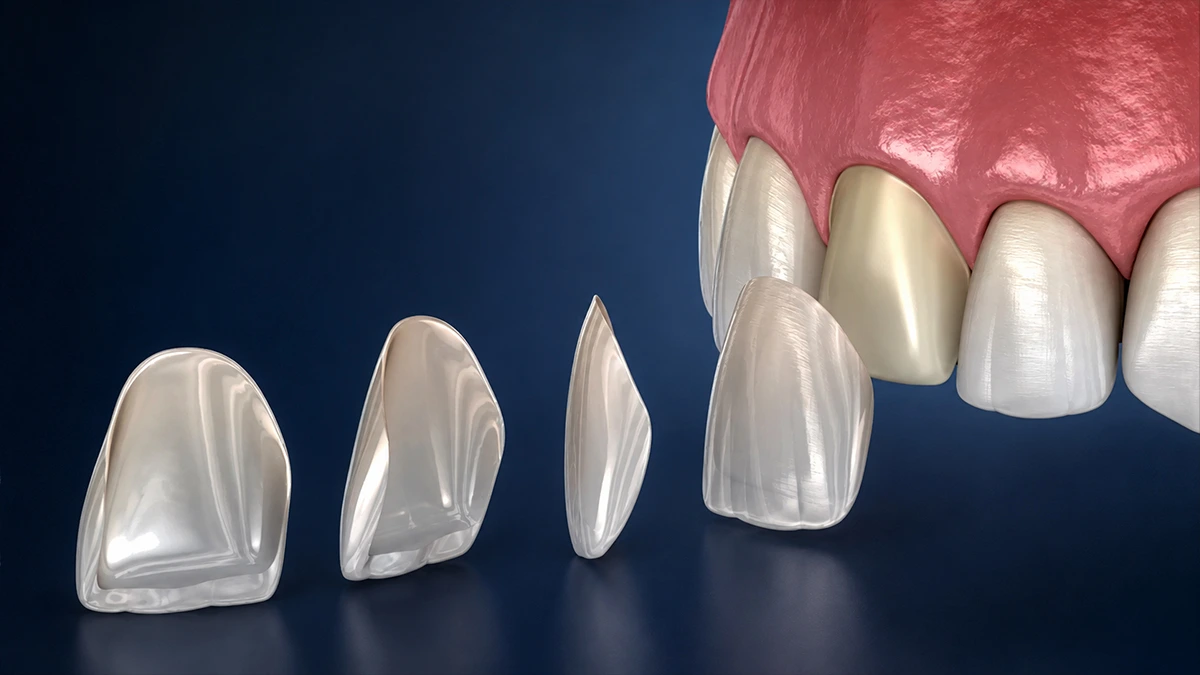
E.max starts life as an ingot, a small cylinder of ceramic that is softened with heat and pressed into the shape of your veneer. Ingots come in different levels of translucency. Some let plenty of light through. Others are cloudier and hide more of whatever sits underneath.
The choice is made tooth by tooth. A bright, healthy tooth with nothing to hide might get a translucent ingot, so the veneer picks up the natural colour beneath it. A tooth that has darkened slightly might get a more opaque one in the same shade. Done well, this is how a row of veneers ends up looking like a matching set even when the teeth under them started out different colours.
It has limits. A tooth that's very dark, such as one that has darkened since its nerve was removed, may need more masking than a thin E.max shell can provide. That's the job zirconium veneers are designed for.
Pressed, milled, plain or layered
There are two ways to make an E.max veneer, and two ways to finish one.
It can be pressed from an ingot, as described on the page above, or milled by machine from a solid block. Both are genuine E.max. Pressing is often preferred for very thin veneers because it can produce fine, delicate margins, while milling is faster and very consistent.
Then there's the finish. A monolithic E.max veneer is made in one piece and coloured on the surface with stains before it's glazed. It's the strongest version, because there's nothing layered on top. A cut-back veneer is pressed slightly short, and the technician then builds the edge back up by hand with layering porcelain to add translucency and small details. It looks more lifelike close up, particularly on the two front teeth, but the added layer is weaker than the E.max beneath it.
Many smiles use both: monolithic shells on the canines and side teeth, where strength counts, and cut-back shells on the central incisors, where people look first. Ask which finish your plan uses. It says a lot about how the case has been thought through.
Bonding day, step by step
You'll see on the page above that E.max is etched and bonded, not cemented. That sounds like jargon, but it's a big part of why these veneers stay put.
Before the shells come to the chair, the inside of each one is treated with a strong acid. Under a microscope, the surface ends up looking like a tiny honeycomb. Then a thin coat of silane goes on, which lets the resin grab the ceramic chemically as well as mechanically.
In the chair, each tooth is cleaned and lightly etched too. The most important part is keeping it completely dry. Saliva, or even moisture from your breath, can weaken the bond, so the teeth are carefully isolated, sometimes with a thin rubber sheet over the mouth. It isn't the most comfortable part of the day, but it's there for a good reason.
Each veneer is seated with the resin, excess is cleared away, and a blue curing light sets it hard. Finally, your bite is checked with marking paper, and any high spots are polished down. You'll leave with teeth that feel smooth to your tongue, and a bite that should feel natural when you close.
E.max or porcelain: some real examples
It helps to see how the choice plays out in ordinary cases.
Six front teeth, gently overlapping bite, mild staining. Either works well. E.max is the more common choice for a set, because it's consistent and strong. Hand-layered porcelain can look slightly more natural up close in the right hands.
A single central incisor next to natural teeth. This is the hardest match in cosmetic dentistry. A cut-back E.max or a layered porcelain veneer both have a place here, and the technician's skill matters more than the material. The FAQ above touches on why E.max's translucency helps.
Worn, short teeth in someone who grinds. E.max, with a night guard. The added length needs the strength, and the guard protects it.
Ten veneers across a wide smile. Usually E.max, sometimes with cut-back shells on the two central incisors for extra depth.
One very dark tooth among lighter ones. Neither, at least for the dark tooth. That tooth may need an opaque shell, while its neighbours can still be E.max.
Lower teeth, and small teeth
Lower front teeth are narrow and often thin from front to back, so there isn't much tooth to work with. That's one place where a material that can be pressed very thin without losing strength is useful. The same applies to small or peg-shaped upper side teeth, which sometimes need building out rather than covering. In both cases the question is less "which material?" and more "does this tooth need a veneer at all?", which the veneer overview helps you think through.
If one veneer ever needs replacing
Chips happen, even to strong ceramics. A very small one can often be polished smooth. A bigger one usually means a new shell.
Here E.max has a quiet advantage. Because each veneer starts from a known ingot and a recorded set of stains, a lab can reproduce it more predictably than a shell that was built up entirely by hand. It's still skilled work, and the match is never automatic, but the starting point is clearer. Like all ceramic, E.max can't be whitened, so if your natural teeth have been bleached since, the new shell is made to match the veneers beside it rather than the original shade.
When a veneer isn't enough
Sometimes the tooth needs more than a veneer can offer. A tooth that's heavily filled, cracked or badly broken needs to be held together, not just covered on the front. E.max is used for that too, as a full crown rather than a shell, and the E.max crowns page explains when that's the better route.
At the other end, if you're not sure you want ceramic at all, or you'd like to test a new shape before committing, composite can be built directly on the teeth and adjusted or removed later. It won't last as long, but it's a legitimate first step for some people.
Check the name on the paperwork
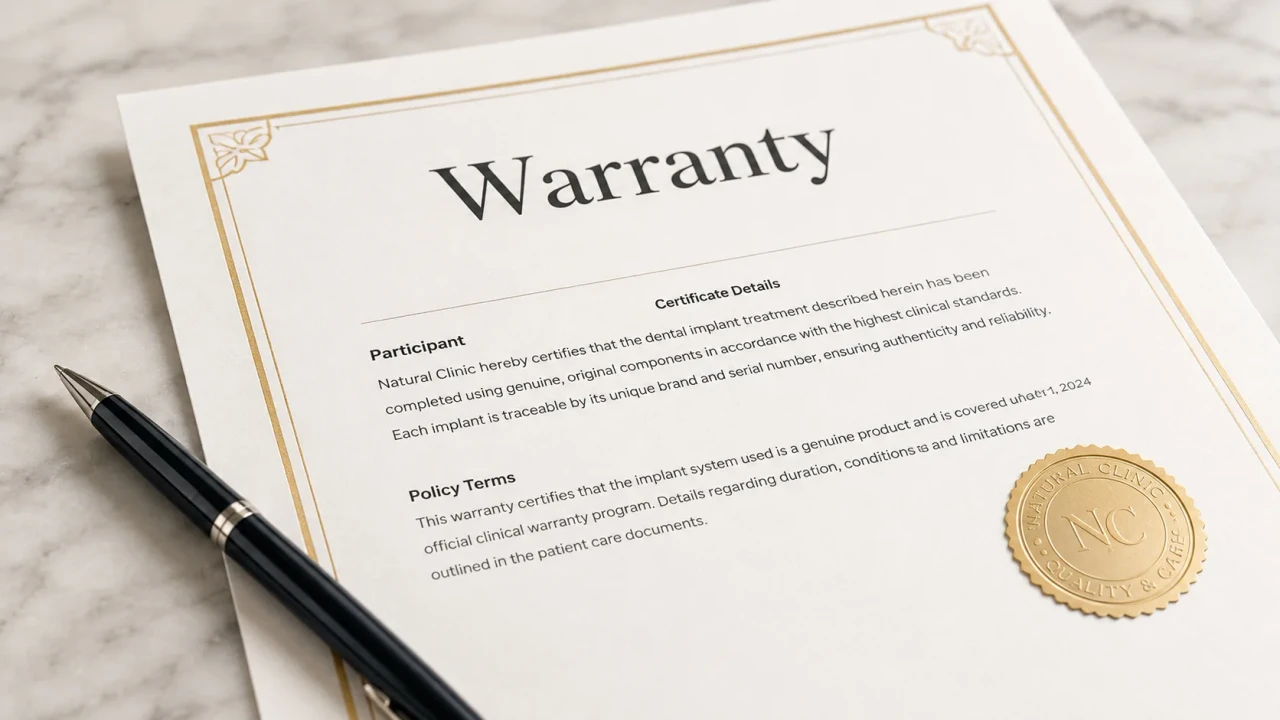
When you finish treatment, look at the guarantee or certificate you're given. It should name the material on each tooth. If your veneers are E.max, the document should say so, ideally with the manufacturer, rather than just "ceramic" or "glass ceramic".
It sounds like a small detail. Years from now, though, if a single veneer chips and a dentist near home needs to replace it, knowing exactly what was used, and how it was finished, makes it much easier to match.