
 English
 Italiano
 Español
 Français

Volume, and Why It Matters Most Here
Etching is worked millimetres under the skin, where judgement is built by repetition and by nothing else.
HD Liposuction in Istanbul · Six-Pack €7,000
Already lean, but the muscle lines won't show?
HD liposuction sculpts around the natural muscle borders instead of simply reducing volume, revealing definition that a thin fat layer still hides.
Natural Clinic brings multiple fields of specialised healthcare together under one roof, combining medical expertise, advanced technology and patient-focused care. From hair transplantation and dentistry to facial, body and breast aesthetics, bariatric surgery and reconstructive treatments, every patient journey is managed by experienced medical teams working across disciplines.
1200+ — Advanced treatments across multiple medical specialties
50+ — Experienced specialists working across disciplines
360° — Consultation, treatment, recovery and aftercare coordinated under one roof
150+ — Large-scale medical infrastructure in Istanbul
Etching is liposuction worked in the superficial layer, a few millimetres under the skin, so that the borders of the muscles beneath become visible. It uncovers relief that already exists, which makes the assessment rather than the technique the part that decides the result.
Definition Is Made at the Surface
Fat is thinned over the lines that already exist under your skin and left thicker over the blocks between them, so that light and shadow do the rest. It reveals muscle relief and cannot create it, which is why it needs a low starting body fat and skin that still recoils.
A low starting body fat, muscle relief that appears when you tense, and skin that recoils. Where any of the three is missing we recommend plain liposuction instead.
One night in hospital, five nights in Istanbul. Compression for six weeks; the definition reads at around six months, not before.
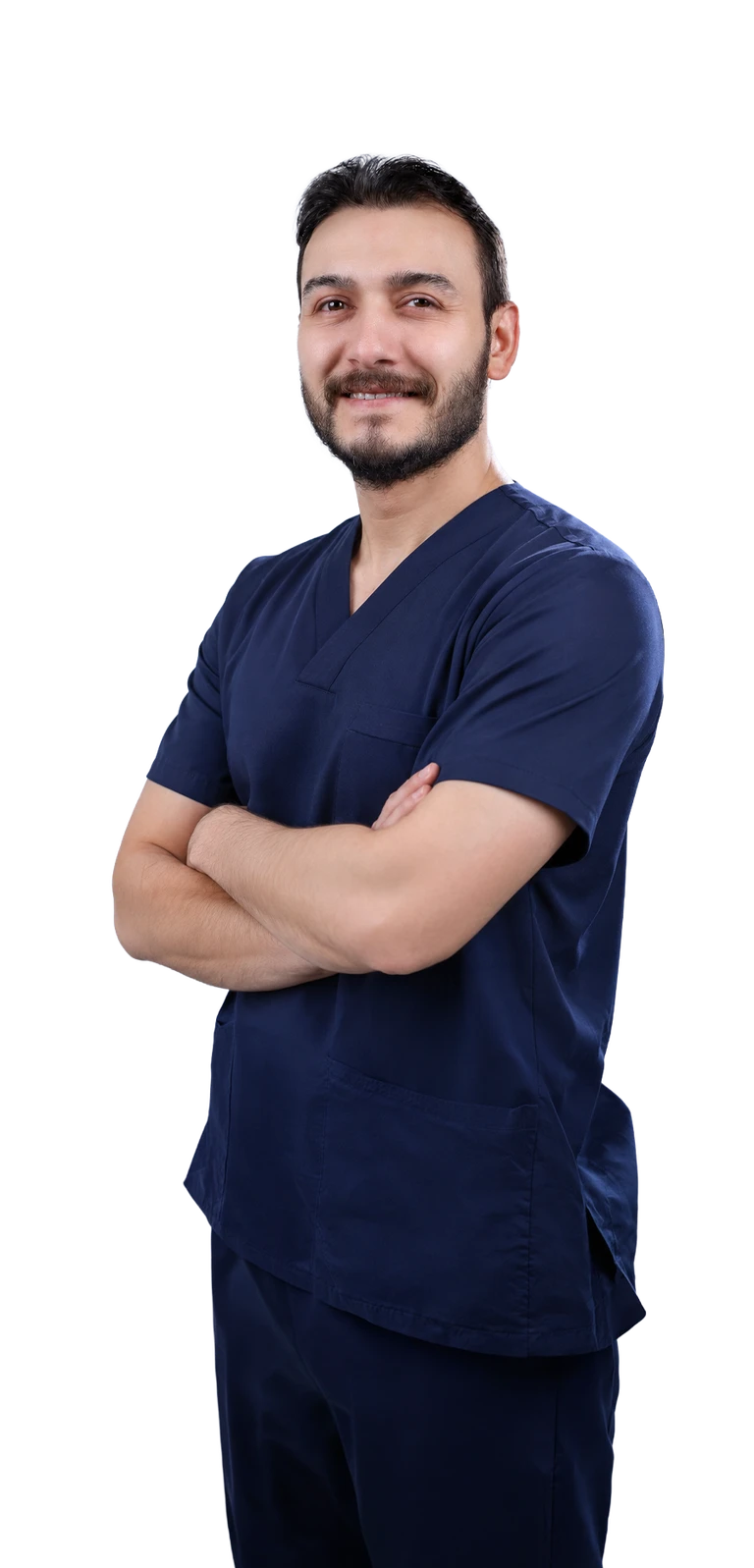
Plastic Aesthetic and Reconstructive Surgery
Dr Emre G. qualified in medicine at Uludağ University in 2007 and completed his specialist training in plastic, reconstructive and aesthetic surgery at Bezmialem Vakıf University between 2008 and 2014, with a research post at the University of Wisconsin School of Medicine and Public Health. He has worked in both public hospitals and private practice, and the reconstructive half of that training shows in how he plans an aesthetic case. He practises at Natural Clinic in Istanbul.
Education
Yes, with one qualification. This is the operation where the wrong candidate produces the worst result in body contouring, so what you verify is the assessment rather than the technology. Ask whether the clinic has ever said no.
Etching is worked millimetres under the skin, where judgement is built by repetition and by nothing else.

Your plan records your starting body fat, what appeared on tensing, and the verdict in plain words.
Lower costs and the exchange rate produce a real difference. A figure far below ours is plain liposuction.

Five nights in Istanbul, one of them in hospital, and you fly home in your compression garment.

Every appointment is coordinated in English, Dutch on request, and your interpreter is free throughout.

Ministry of Health licence, board registration, logged sterilisation cycles and the markings photographed before theatre.
High-definition work suits people who are already lean and trained; the markings are the operation's blueprint.
HD sculpting reveals definition that is already there; it can't manufacture muscle.
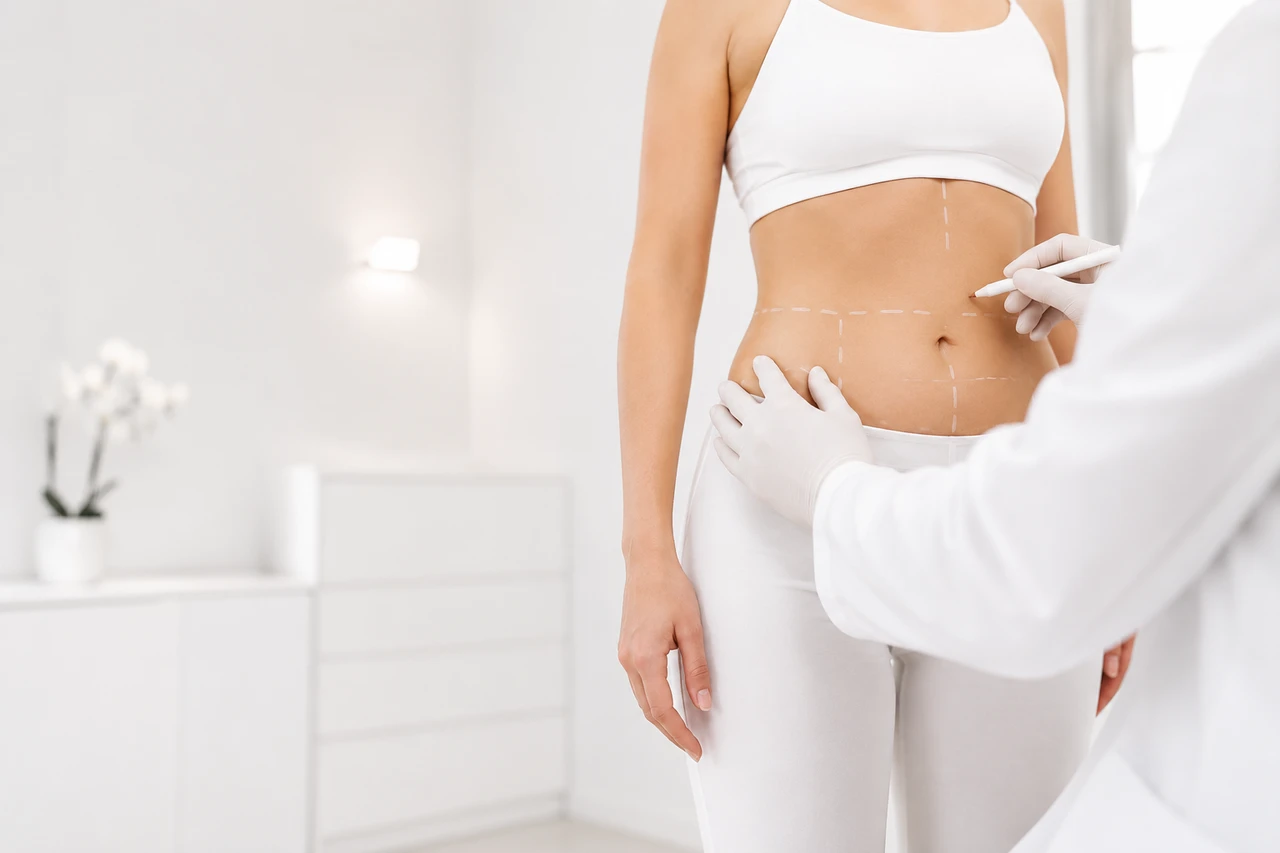
The surgeon outlines abdominal, oblique or chest borders while you contract each group.
Fat is taken deeper along the lines and left in between, creating the contrast that reads as definition.
Pads help skin adhere to the new grooves during the first weeks.
Lines look soft early and sharpen over months; staying fit keeps them.
High-definition liposuction reveals muscle lines in lean patients. Here's who it suits.
HD liposuction, or high-definition liposuction, is an advanced body-sculpting technique that removes fat in a pattern that follows the outlines of the underlying muscles. By leaving thin layers of fat in some areas and removing more along muscle borders, it creates the appearance of athletic definition.
HD liposuction is best suited to people who are already lean, exercise regularly and have visible or near-visible muscle tone, with only a thin layer of stubborn fat obscuring it. Candidates also need good skin elasticity so the skin can settle into the sculpted contours.
HD liposuction cannot build muscle. It reveals and enhances the definition of muscles you already have by removing fat along their borders and creating subtle shadows. The better your existing muscle development, the more convincing the result. Strength training before surgery can make the eventual definition more visible.
HD liposuction is priced using Natural Clinic's liposuction zone tiers, with each area to be sculpted counted as a zone. If energy-assisted technology such as VASER is recommended to help with fine sculpting, it is shown in your written plan.
HD liposuction often involves more zones, more detailed sculpting and sometimes VASER to help remove fat precisely along muscle lines. These factors can increase the total compared with a simpler debulking procedure, and each element is shown clearly in your plan.
If you carry a moderate or thicker layer of fat, standard liposuction is usually more appropriate, as the fine definition of HD liposuction may not show through. Some people choose to lose weight and build muscle first before considering high-definition sculpting.
Before surgery, the surgeon marks the borders of your muscles while you stand and contract them, for example by tensing the abdominal or chest muscles. These markings act as a map, guiding where fat is removed more deeply and where a thin layer is preserved.
In addition to the usual liposuction risks, HD liposuction carries the risk of lines that look too sharp or artificial if they do not follow your natural anatomy, as well as contour irregularities. An experienced surgeon and careful marking help reduce these risks.
Yes. In men, HD liposuction usually emphasises the abdominal muscles, obliques and chest for a more angular look. In women, the sculpting is generally softer, highlighting a slim waist and subtle abdominal lines rather than pronounced definition. Your surgeon discusses which level of definition suits your frame before marking.
Foam pads are placed under the compression garment after HD liposuction to apply even pressure over the sculpted areas. They help the skin adhere to the newly defined contours and reduce the risk of fluid collecting in the grooves created along the muscle borders.
Light walking is encouraged early, but structured training, especially core and upper-body workouts, is usually resumed gradually over several weeks. Your surgeon gives a timeline, and returning to exercise at the right time helps maintain the muscle tone that HD liposuction reveals.
How long you stay after HD liposuction depends mostly on how many regions are sculpted, since abdominal etching alone needs less time than abdomen, flanks and chest together. The plan lists the nights so the team can check foam pads, garment fit and early swelling along the new lines before you fly.
Swelling initially hides much of the definition created by HD liposuction. As it resolves over the following months, the muscle lines gradually become sharper, and the final result is usually assessed several months after surgery. Early photographs rarely show the full effect.
HD liposuction results depend on staying lean and fit. Regular exercise and a stable weight preserve the visible muscle definition, while significant weight gain can blur the sculpted lines as the remaining fat cells enlarge. Protein-rich nutrition and strength training support the muscle tone that the sculpting reveals.
HD liposuction looks most natural when the sculpted lines follow your own muscle anatomy and are not overly exaggerated. Marking while you flex, and adjusting the level of definition to suit your build, helps the result look athletic rather than artificial.
Plain liposuction at €5,500 for six zones, when the fat is the problem and the definition is not achievable. Gynecomastia at €3,500, which is where most male chest definition genuinely sits. And abdominoplasty at €4,000, when the skin will not recoil.
Personalised Care, Just for You
Send a photograph standing relaxed, front, side and back, and then one of the abdomen tensed hard. That tensed photograph is the assessment. A body surgeon replies with your recorded finding, the lines that could be etched if any, and a verdict in plain words — yes, no, or not yet — with the price of whatever he recommends instead printed beside it. No obligation, no pressure, no cost.
Get My Free Surgical Plan100% Confidential & Secure
Reply Within 24 Hours
Reviewed by Board-Certified Surgeons
One operation on our list, priced above plain liposuction because it is more work — and refused more often than it is accepted, because it uncovers muscle rather than creating it and only works on someone already lean.
Try this before reading on. Let the air out of your lungs and tighten your stomach, the way you would if a child were about to jump on you. Now check the mirror. Can you see a faint groove down the middle, a suggestion of blocks on either side, an edge where your side muscles start? Then there's something for HD liposuction to work with. A flat, smooth surface with nothing showing means there isn't, and no surgeon can invent it.
So let's be clear from the start about what HD liposuction in Turkey is. You won't build muscle with it, and you won't lose weight with it. What it does is take away the last thin layer of fat covering definition you've already worked for. This page covers the lines it can bring out, the people it's right for, and how it goes wrong in the wrong hands.
You'll also hear it called abdominal etching or 4D lipo. Whatever the name, the surgeon works to your own anatomy. Fat over certain lines gets thinned. Over the muscle blocks between them, a little more is left. Shadows fall into the grooves, and the eye reads that as definition.
First comes the centre line, from the bottom of the breastbone to the belly button. People notice it before anything else, and on a lean stomach you can often just make it out already.
Across the six-pack run two or three horizontal lines. These are bands of tendon inside the muscle, and nobody's sit in quite the same place. We etch yours where they really are. Lines put in the "standard" position, rather than where your muscle actually divides, are a big reason some results look fake.
Then there are the edges. On each side the six-pack ends and the obliques begin, and lower down a V runs from the hip bone into the groin. In photos of swimmers and footballers these are often what catches the eye. Men usually want them sharp; women usually ask us to leave the V soft.
Most men come wanting a visible six-pack, crisper side lines and a strong V. Many want the chest done as well, with a defined lower edge to the pectoral muscle so the chest looks firm instead of soft.
Here's the catch. A chest only etches well if what's there is fat. A firm lump behind the nipple is often gland tissue, and gynecomastia surgery is what removes that. Etch over gland and you won't get a muscular chest.
Men who already train regularly often have a good foundation for this kind of work. The aim isn't to create the appearance of a bodybuilder overnight. It's to uncover the shape that's already present and make the transitions between the muscle groups clearer. A lighter touch generally looks better than a deeply carved result, particularly when the stomach is visible from different angles.
A woman asking for HD liposuction rarely wants a six-pack. What we hear most is "flat, with a line down the middle", sometimes with a hint of the side edges. Blocks are almost never on the list, and if a plan starts drifting that way we'll say so, since on a female frame they can look masculine.
Plenty of women add the waist and flanks to the same session for a stronger hourglass. A few add the arms or back. Shape and smoothness lead. Definition is a light touch on top.
The difference is subtle but important. A defined female abdomen doesn't have to look heavily etched. In many cases the most natural result is one where the centre line and side contours only become obvious when the person moves, tightens the stomach or stands under certain light.
Being lean has to come before the operation, not after it. We don't go by a body-fat percentage. We go by what appears when you tense, in the mirror and in the photos you send.
The people who do well usually train several times a week and have held the same weight for a good while. Their skin bounces back when pinched. The rest of their body is in shape, and there's just a stubborn thin layer over the stomach that diet and exercise haven't shifted.
Carrying more than that? Then ordinary liposuction followed by a few months of training is often the smarter order. And where pregnancy or weight loss has left the skin loose, the operation to discuss is a tummy tuck. Lines etched into loose skin don't look like muscle.
Stable weight matters for another reason. HD liposuction works on a very thin layer, so even a relatively small change afterwards can soften the definition. It's much easier to preserve the result when you've reached a weight you can realistically maintain rather than treating the operation as the final stage of a large weight-loss plan.
It can. When it does, there are usually three culprits. The grooves are cut too deep, they're cut where your muscles don't divide, or the blocks end up looking sculpted out of plaster. Do too little and it looks like normal liposuction. Do too much and it looks drawn on.
Part of the difficulty is the layer this work happens in. It's the shallow fat right under the skin, and ordinary liposuction keeps away from it precisely because every unevenness shows. With HD, the surgeon goes there on purpose. That's why we mark you standing up, with your muscles tensed, before anything starts. And it's why ultrasound comes included in our price. With fat pre-loosened by VASER liposuction, our surgeons find the fine work in that layer far easier to control.
Small dents, if they happen, can sometimes be filled with your own fat later. A layer that's been thinned too much across a whole area is a far harder problem.
This is also why the surgeon's judgement matters so much. The abdomen doesn't look the same when you're standing relaxed, flexing, sitting down or turning sideways. Marking only from a single position can produce lines that look convincing in one photograph but unnatural in everyday life.
On the operating table they look alike. The intent is what differs. Ordinary liposuction is about reducing volume, and it does most of its work in the deeper fat. There the surgeon can take plenty out, and a thicker layer above hides small irregularities. You end up smaller and smoother.
HD is about shape. There's some deep work, but what makes or breaks it happens just under the skin, where any wobble of the cannula leaves a trace. It's slower. It's harder. You wait longer to see the outcome. And far fewer people are suited to it.
Want less fat and a flatter stomach, full stop? Ordinary liposuction will usually serve you better. HD earns its place only when the fat is already thin and there's muscle underneath worth showing off.
Muscle that's thicker and better developed throws deeper shadows, and deeper shadows make etching look more convincing. That's why we, like many surgeons, suggest spending a few months on core and strength work beforehand, with a steady, sensible diet.
What we'd steer you away from is crash dieting in the weeks before. Turn up at a weight you can hold onto, with muscles in decent condition. That's what the result gets built on.
There's no advantage in trying to exhaust yourself with extra workouts immediately before surgery. The goal is to arrive healthy, adequately nourished and at a stable weight. The definition you're hoping to reveal needs to be there before the fat covering it is removed.
Lean men sometimes want the arms, chest or back defined too. Some women ask for a more sculpted waist or upper arm. In the right person these can be added to the abdominal plan. They're priced from our standard zone list rather than included in the six-pack figure, and your written plan spells it out.
Wherever it is on the body, the same principle holds. If the muscle isn't well developed underneath, there's nothing to reveal.
When several areas are treated together, the overall proportions matter. A sharply defined abdomen beside completely untreated flanks can sometimes look less balanced than expected. That's why the final plan is based on the shape of the whole body rather than simply counting the areas a patient initially asks about.
The risks people worry about most are medical, but the commonest problems here are cosmetic. Uneven lines. Dents. That carved look. In medical terms there's not much difference from other liposuction. Some people get a small fluid collection, called a seroma, which we drain with a needle at a follow-up visit. Others notice the swelling lingering past the point they'd hoped, or a patch of skin that stays numb for a few months. Clots are rare, and we still treat the risk seriously. Since ultrasound is used, the skin around each entry point is shielded during surgery to prevent heat damage. The anaesthetist reviews your total volume before anything is signed off.
The operation also needs to be planned around the amount of fat being removed and any other procedures being performed at the same time. More treatment isn't automatically better. There is a point where adding another area increases the operating time and recovery without improving the result enough to justify it.
The stay is five nights in Istanbul, the first of them in hospital. A compression garment goes on in theatre, with foam pads underneath that help the skin settle into the new grooves. You'll wear it for about six weeks.
For the first few weeks you'll look swollen and completely undefined. Most people find that hard. We warn every HD patient about this in advance. A few weeks in, people often send us photos convinced nothing has changed. Over the following weeks the centre line is usually the first to reappear, and the side edges follow. Once the small entry wounds have closed, your surgeon may suggest gentle massage.
Walking is encouraged from day one. Gym work comes back in stages: light weights at four to six weeks, heavier sessions later. We don't ask anyone to judge their result before the six-month review.
The early photographs can be particularly misleading. Swelling can make the stomach look smooth and puffy at the same time, hiding the grooves that will eventually become visible. This is one reason we prefer to judge HD results over months rather than weeks.
The fat cells removed don't come back. The catch is how little separates a defined stomach from a smooth one. We're talking about a few millimetres of fat over the grooves. A small weight gain, the kind nobody notices on your face or arms, can be enough to fill those grooves back in.
Our longest-lasting HD results belong to people who never stopped training. Those who did, or who put on weight, tend to send us photos with softer lines. Even then, the overall shape stays better than it was.
The operation doesn't replace exercise. It simply removes the layer that exercise may no longer be able to shift. Keeping the weight broadly stable and maintaining the muscle underneath is what keeps the definition visible.
Six-pack shaping with VASER costs €7,000 with us. That covers the ultrasound, general anaesthesia, your hospital night, the garment with its pads, transfers and an interpreter. Our ordinary liposuction of the same six areas comes to €5,500 (€6,000 with ultrasound).
If any clinic quotes less for etching than its price for ordinary liposuction over that same area, you're probably being offered plain liposuction with a new name. Abroad it costs considerably more. Our comparison table puts HD liposuction at €9,450 to €11,700 in British clinics and €13,450 to €19,850 in American ones.
When comparing prices, check exactly what is included. The headline figure may not cover ultrasound, anaesthesia, compression garments, hospital care or follow-up. A lower starting price isn't necessarily the lower total cost.
There's so little room for error that the surgeon counts for more here than in nearly any other body operation. Ask to see their own HD patients, in relaxed and tensed photos, taken no sooner than six months after surgery. Ask whether they mark you standing and flexing, and whether those markings are photographed before surgery.
Most of all, ask how often they turn people away. A surgeon who says yes to everyone who asks for a six-pack is a warning sign. Plenty of the people who enquire with us are told that ordinary liposuction, more training, or nothing at all would serve them better.
A good consultation should therefore involve more than choosing a number of abdominal lines. The surgeon needs to look at your existing muscle, skin quality, fat thickness and overall proportions before deciding whether HD is appropriate.
HD liposuction before and after photos are easy to flatter, so look carefully. Check that the lighting is the same in both pictures, since strong overhead light can create definition that isn't there. Look for photos taken relaxed as well as tensed. Then check the date. Pictures from the first three months still carry swelling.
Reviews tell you most once at least six months have passed since the operation. By then the writer knows whether the result looks natural and whether it's holding.
A useful before and after set should show more than one angle. Front, side, relaxed and tensed photographs give a much better idea of whether the surgeon has revealed your anatomy or simply created a pattern that photographs well.
We need photos of you standing naturally, front, side and back, plus one with your abdomen tensed as hard as you can. Tell us your weight, how long it's been stable, and how you train. Our surgeons in Istanbul will tell you plainly whether HD liposuction in Turkey is a yes for you, a not-yet or a no, and what we'd suggest instead. Our main liposuction page explains how ordinary liposuction differs if that turns out to be the better choice.

© 2026 Natural Clinic. All rights reserved.