 English
 Italiano
 Español
 Français

.jpg?v=mu2r7vsa)
.jpg?v=mu2r8ryj)
.png?v=mttw3gcd)
.png?v=mttw3ztq)
.png?v=mttw4ecu)
.png?v=mttw4t31)
.png?v=mttw54v6)
.png?v=mttw5ilm)

Show most people a side-on photo of themselves and their finger goes straight to the bump on the bridge. We get it. That bump is what the camera catches. It's rarely the only thing going on, though, and taking it down on its own often leaves the tip looking heavier than before.
That's why a rhinoplasty in Turkey with us usually starts a step back from the thing you've noticed. The page above already explains how the bridge, tip and base are planned as separate decisions. This part covers the questions people ask once they've got that far.
Which rhinoplasty page fits your nose?
Below this page sit six narrower guides. Most readers end up needing one, occasionally two.
Two of them are about how the surgeon gets in. On a closed rhinoplasty, nothing is cut on the outside at all. Open rhinoplasty is the one with a small mark under the tip, which heals into a faint line most people forget about. Men and women usually come to us wanting different things from their noses, so each has its own guide, male rhinoplasty and female rhinoplasty. Then there's ethnic rhinoplasty, for anyone who's fond of where their nose comes from and only wants it refined. Had surgery on your nose already? Then revision rhinoplasty comes first.
Open or closed: who decides?
Your anatomy does, and the surgeon reads it. Patients sometimes arrive set on closed because there's no outside scar, or on open because they've heard it's more precise. Both are good operations. Closed tends to suit a straightforward reduction with a tip that only needs refining. Open comes into its own for noses that need more building than trimming, such as a collapsed or crooked tip, or grafts that have to be stitched in exactly. Since both cost the same here, nobody gains from steering your rhinoplasty in Turkey either way.
Ultrasonic and preservation rhinoplasty
These two names come up in almost every consultation now, usually because someone has seen them on social media.
Ultrasonic rhinoplasty, which you'll also see called piezo, is really about the instrument. The surgeon shapes the nasal bones with a vibrating tip rather than a chisel and file. In the right nose it gives very fine control over the bony part of the bridge, and many surgeons find there's less bruising afterwards.
Preservation rhinoplasty changes the plan rather than the tools. In a classic operation the hump is removed and the bridge rebuilt on top. In a preservation approach, the surgeon takes a strip of tissue from underneath the bridge and lets it settle lower, so the original surface of the nose is kept.
Whether either one suits you depends on the nose. A very large hump, a badly twisted nose or one that's been operated on before is often better served by the traditional method. Neither costs extra; your written plan simply says which approach your nose needs and why.
Rhinoplasty and breathing
A lot of people who come in for the shape also breathe badly through one side and have simply got used to it. Sometimes it's a bent septum, the wall of cartilage down the middle. Sometimes it's a narrow spot just inside the nose, where the side wall meets that wall, which surgeons call the internal valve.
The combined job has its own name, septorhinoplasty. One operation covers it, at no extra cost. There's a cosmetic reason to care as well. Every nose that's going to be narrowed gets its valve checked first, because slimming the outside can squeeze the airway on the inside. If one side clogs up, particularly lying down or on a run, put that in your message.
When the chin is the real problem
Here's one that surprises people. A small or set-back chin makes the nose look bigger in profile than it really is. Some of the noses we're asked to reduce are actually in proportion; the chin underneath just never came forward enough.
In those cases, bringing the chin forward with chin surgery can change the profile more than shaving the nose would. Sometimes both are done. Sometimes the chin alone does the job. We'll point it out from your side photo if we see it, and the face surgery overview explains how the other features of the face are weighed up.
Can filler replace a nose job?
Up to a point. A liquid nose job, as some people call it, is non-surgical rhinoplasty with hyaluronic acid filler. Injecting a little above and below a hump can make the profile look straighter, and a small amount near the tip can lift it slightly. It takes minutes and lasts months. What it can't do is make a nose smaller, narrow it, or fix breathing. It only ever adds.
There's also a safety point that clinics don't always mention. The nose has a delicate blood supply, and filler injected in the wrong place can block a vessel. That's rare, but serious when it happens. If you're considering it, have it done by a doctor who knows the anatomy and can deal with a complication on the spot.
How old do you need to be for rhinoplasty?
The nose needs to have finished growing, which for most girls happens by the mid to late teens and for boys a little later. Below that, the result can shift as the face keeps developing.
Is there a top age? Not really. We operate on people in their fifties and sixties as well. Skin at that age is usually thinner, so changes show clearly. Cartilage gets more brittle with age, though, and you'll heal a little slower than you would have at thirty. Honestly, we're more interested in why you want it, and whether it's achievable, than in the date on your passport.
Rhinoplasty recovery tips from our nurses
The timeline above covers the milestones. What it doesn't cover is the fiddly bit, which is getting through the first fortnight comfortably.
After a nose job, sleep propped up for a week. Swelling drains better that way, and you'll see the difference in the mirror. No blowing your nose until we say so. Sneezes go out through the mouth, which takes some practice. Glasses are the nuisance nobody plans for. Anything heavy can't sit on the bridge for several weeks, so people either tape their frames to the forehead or live in contact lenses for a while. A desk job is usually fine once the splint's gone and the bruising has faded. Football, boxing and anything else where the nose might get knocked has to wait a couple of months.
Rhinoplasty swelling and the long wait
The thing nobody quite believes until it happens is how slowly the tip settles. The bridge can look good within weeks. The tip, especially under thick skin, can stay full and slightly rounded for many months, and it's the last part to show its final shape. Lots of people look at their nose at six weeks and decide it hasn't worked. Almost always, it simply hasn't finished.
Rhinoplasty risks
Some of what happens after surgery is simply part of the deal. Bruising round the eyes, for one, and the odd nosebleed in the first days. A numb tip is common too, and so is a stuffy, blocked feeling while the inside heals. Infection is unusual. So is a lasting change in breathing, or a bit of asymmetry that's still there once the swelling has gone.
One number we'd encourage you to ask about is the revision rate. Even for experienced surgeons, published series put it somewhere around one nose in ten to twenty, and the second operation is usually a small tweak to the tip. Any surgeon worth booking will answer that without flinching.
Will people be able to tell?
Not if the nose job is done with restraint. The noses that give themselves away are usually over-done: a bridge scooped too low, a tip turned up so far you can see straight into the nostrils, or a narrow nose sitting on a broad face. A good result looks like it belongs to your face. Friends notice you look well, and can't quite say why.
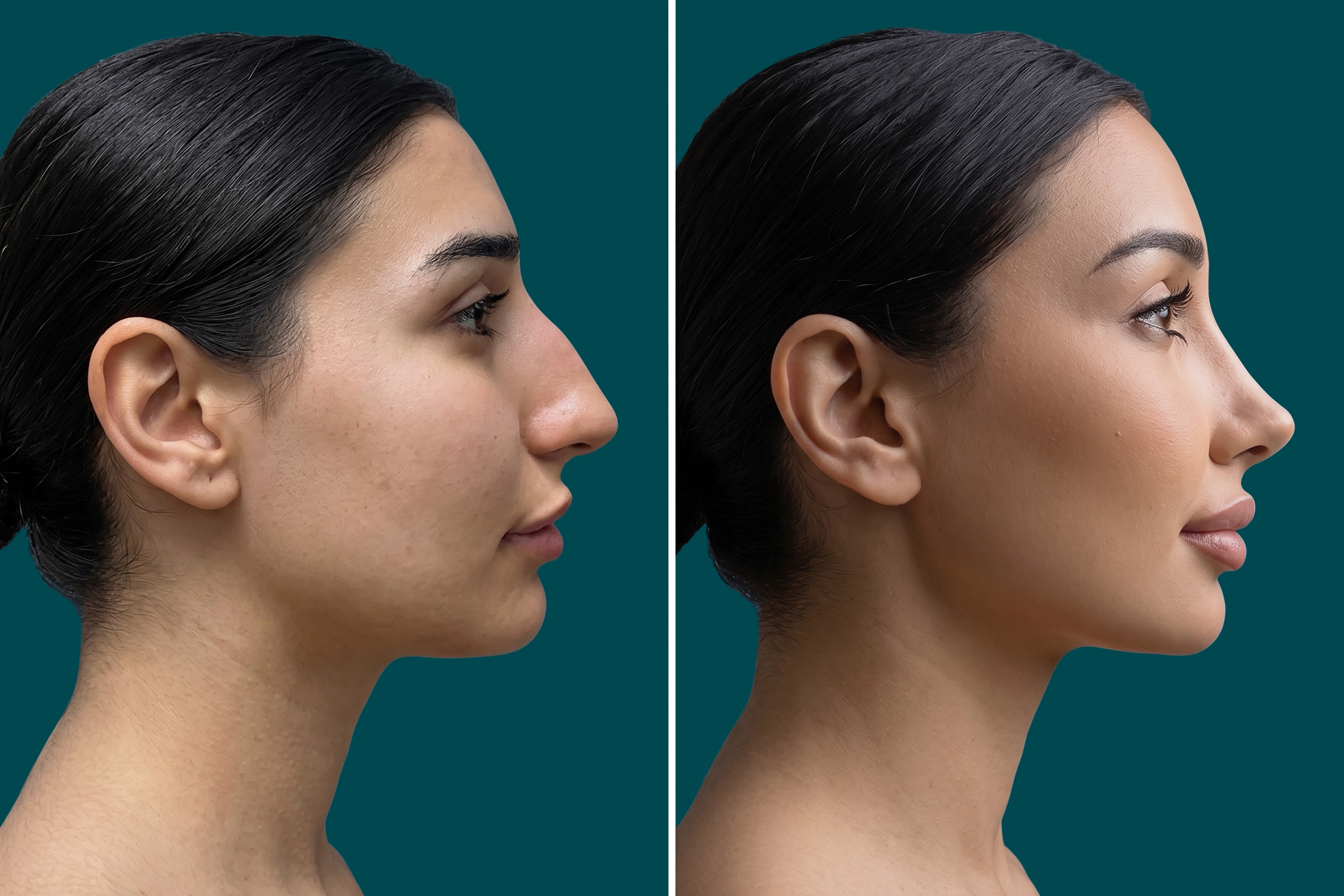
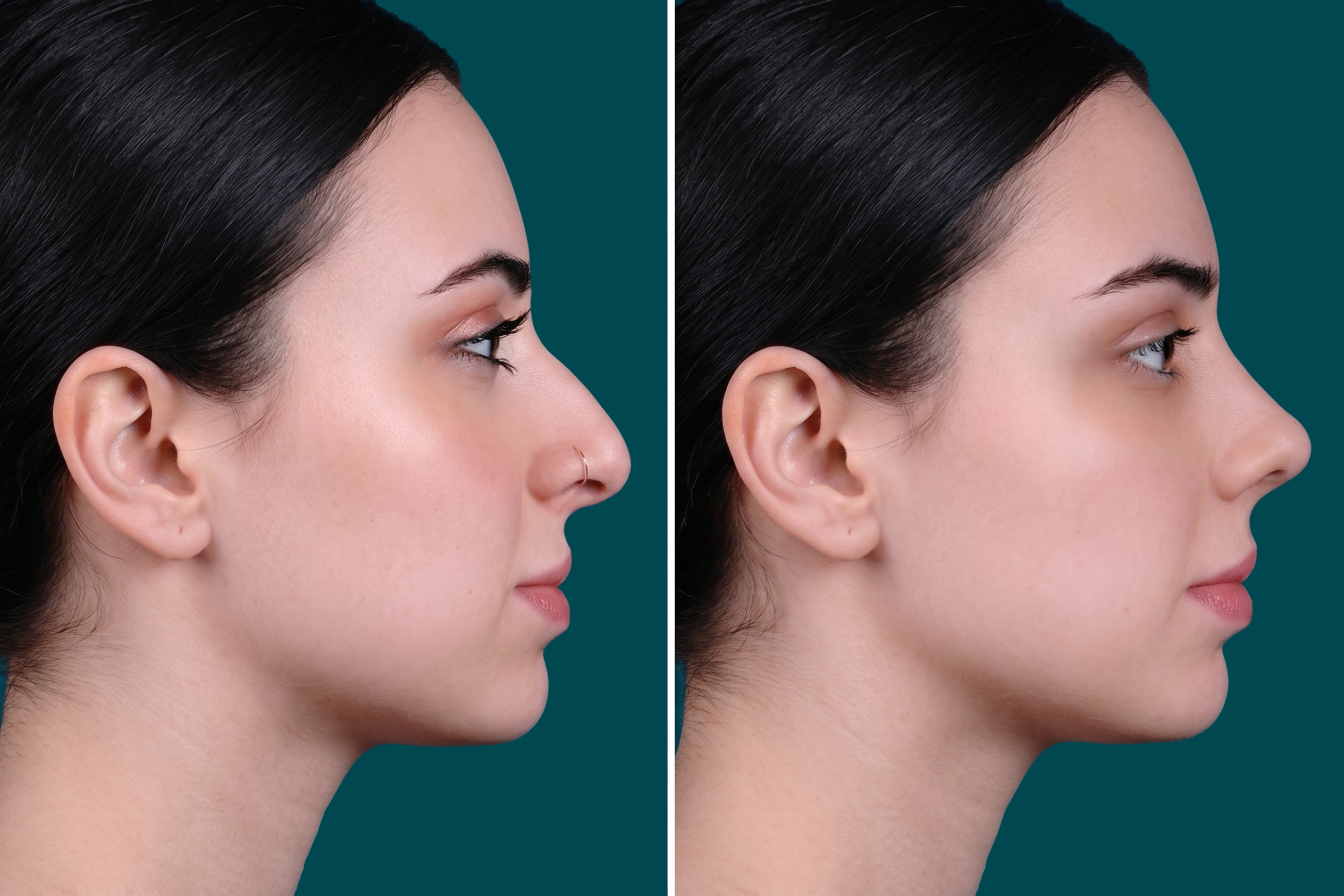
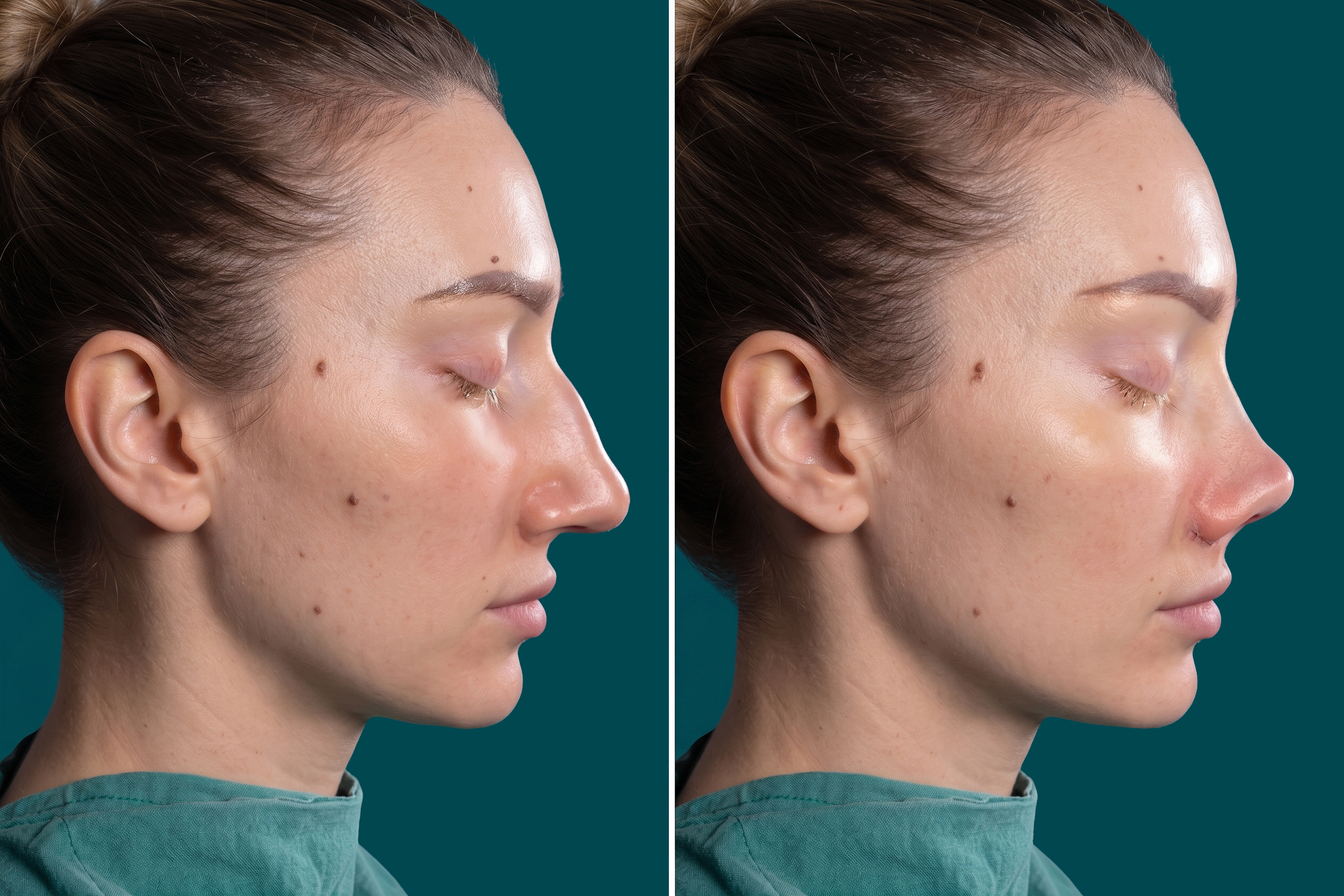
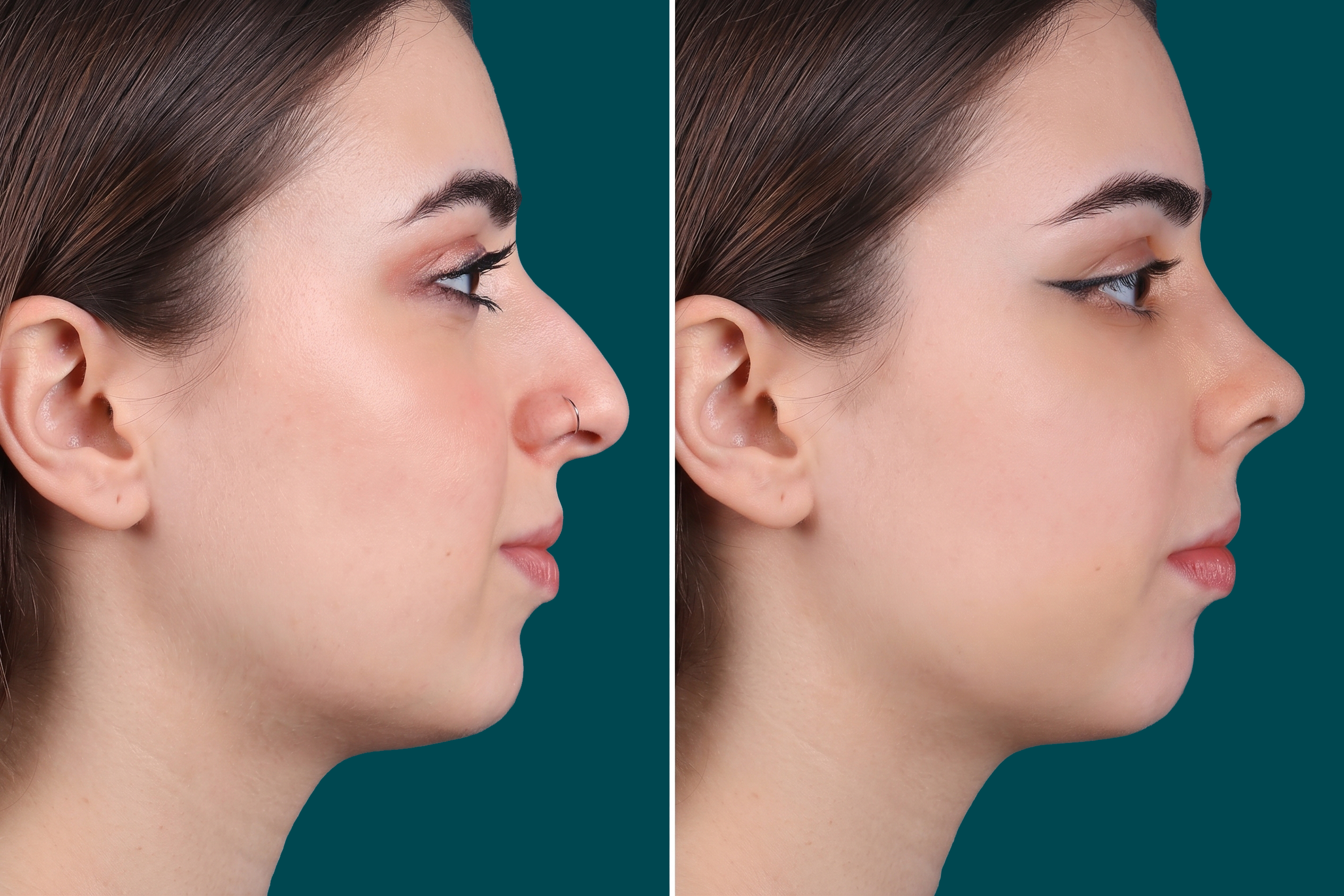
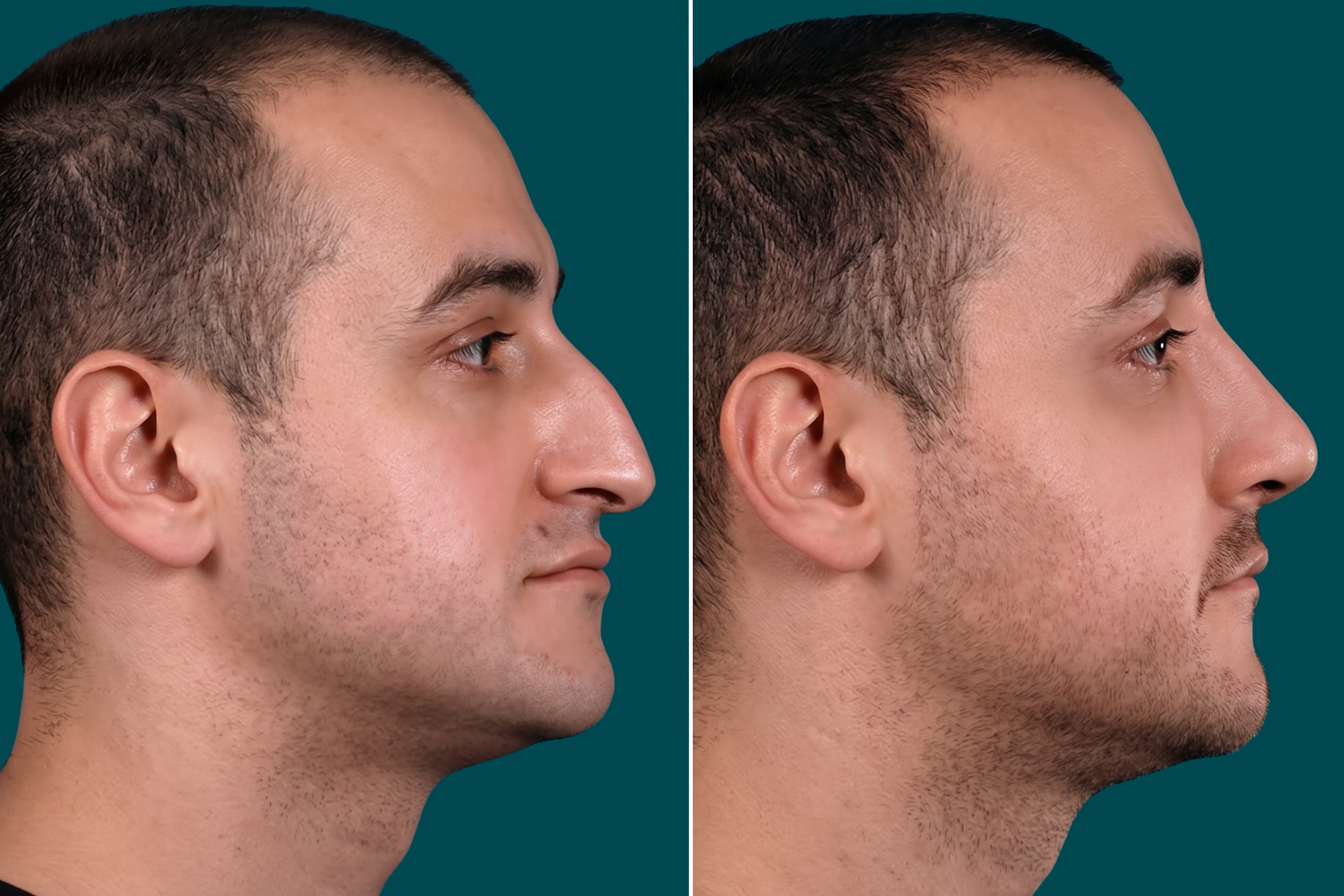
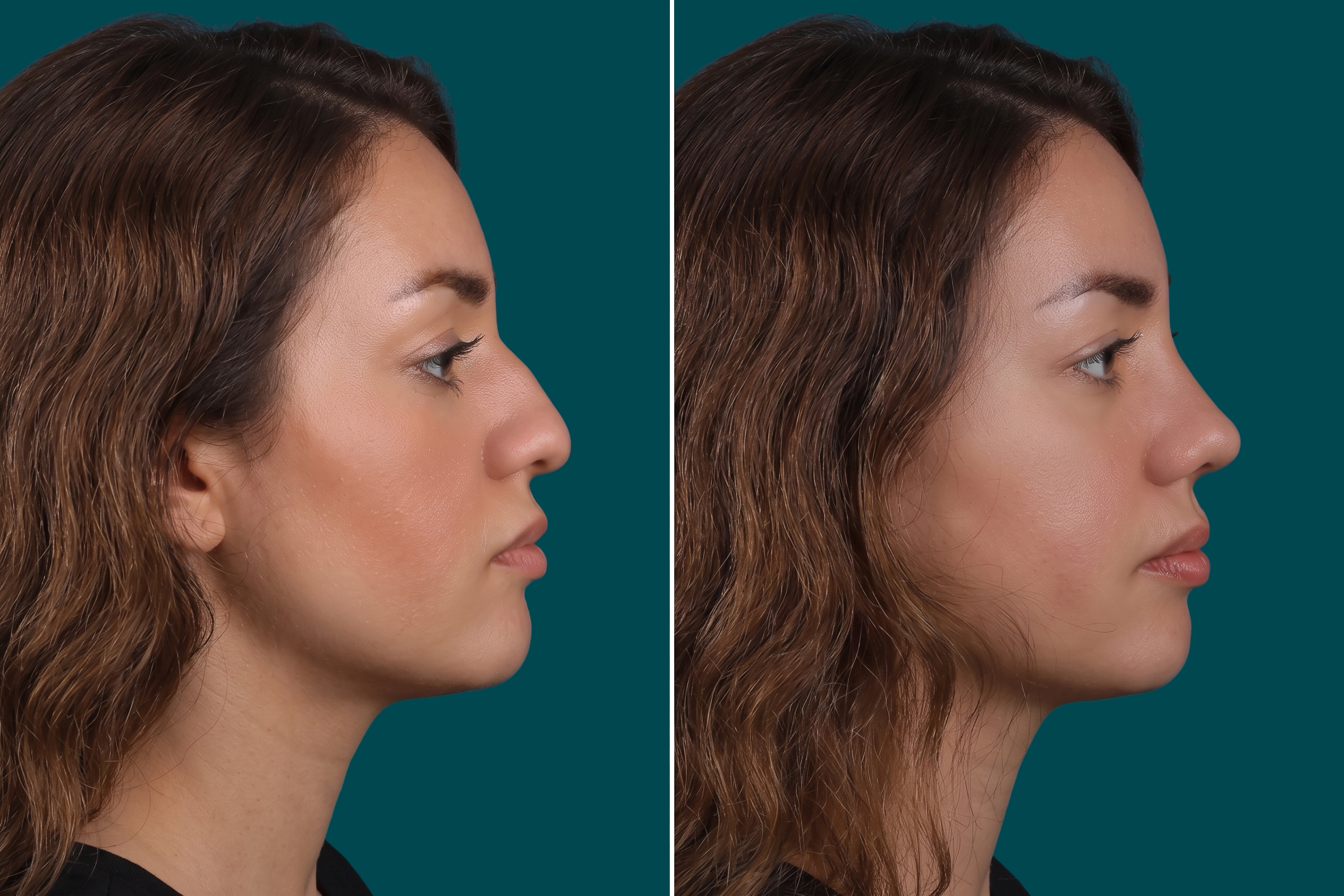
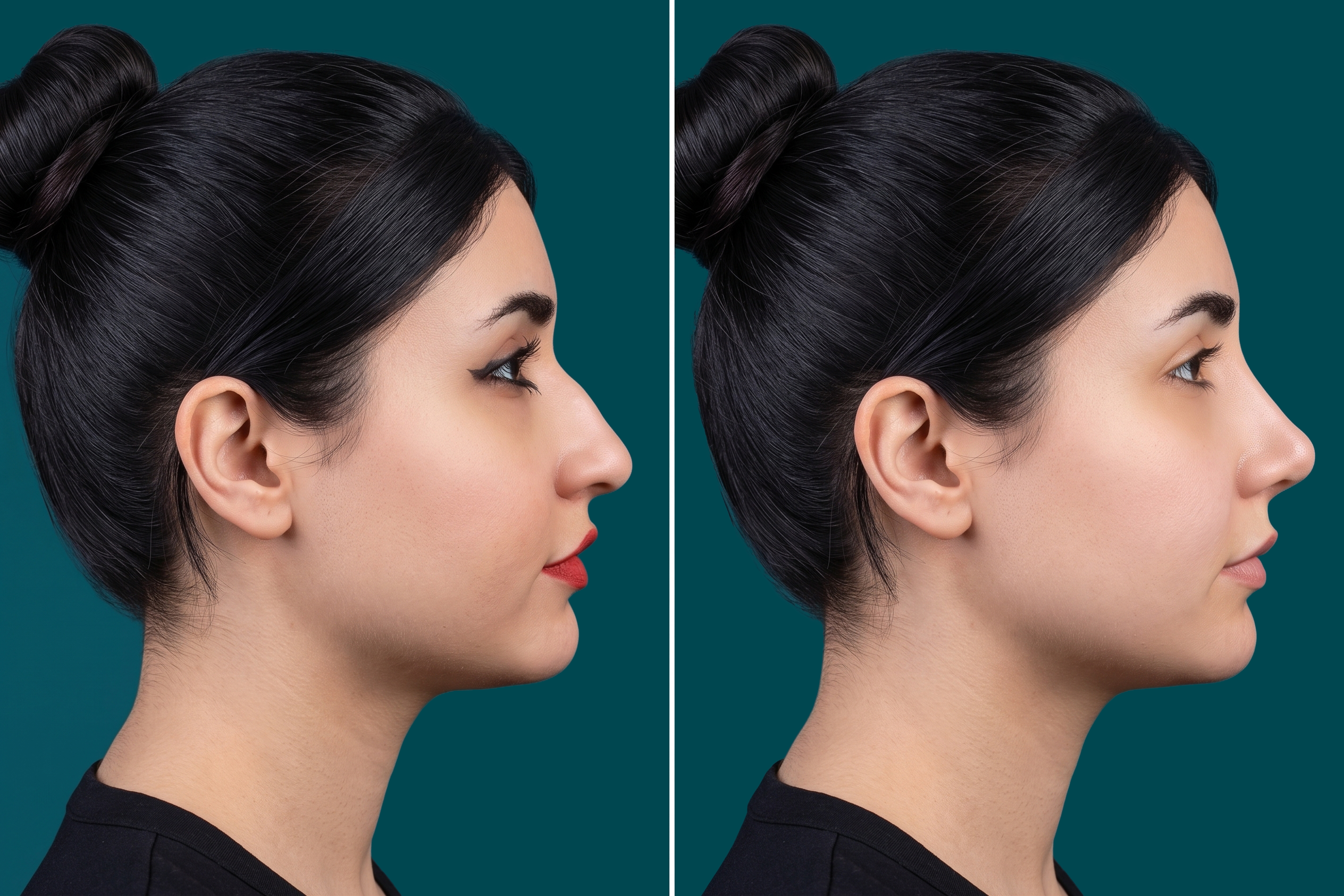
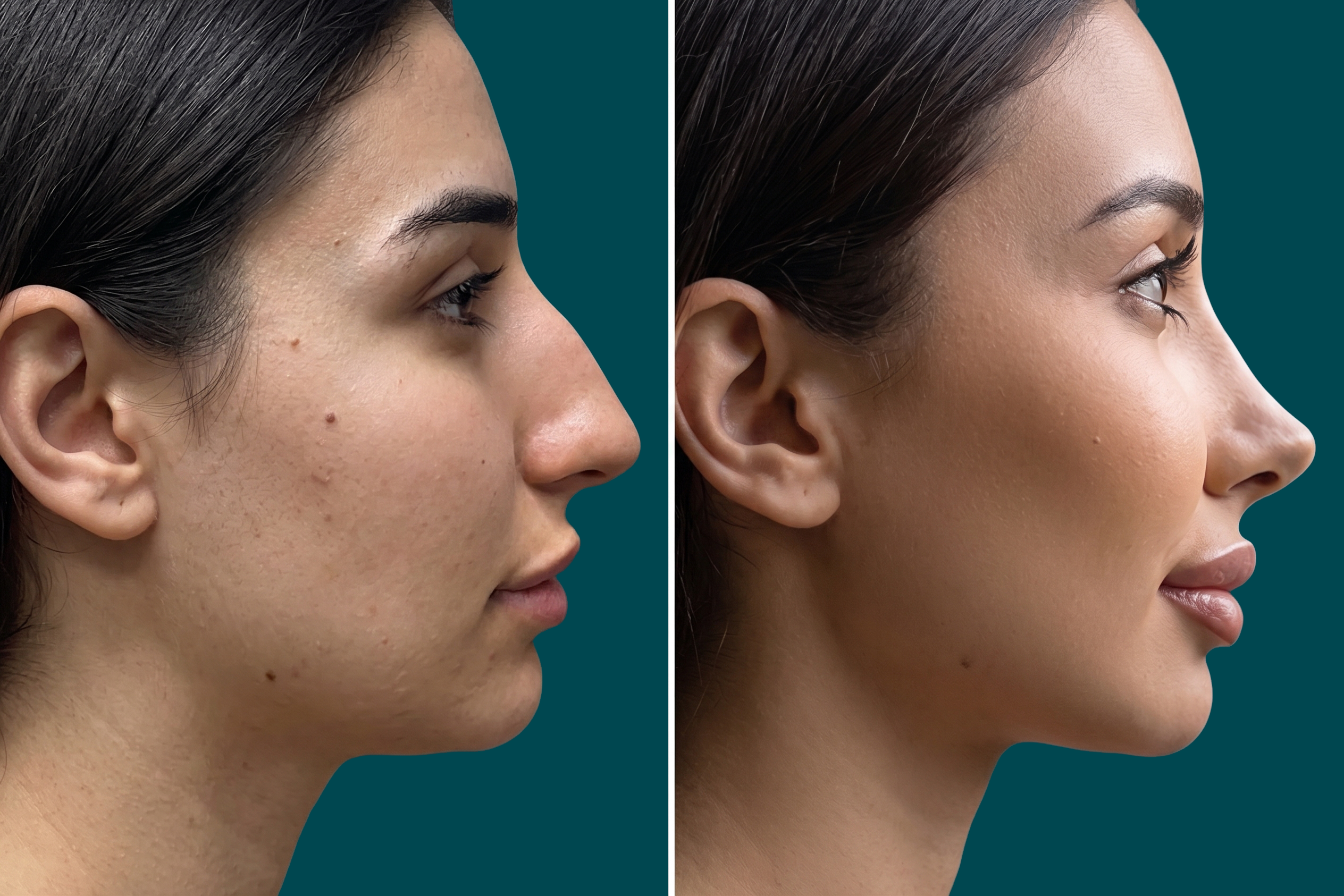
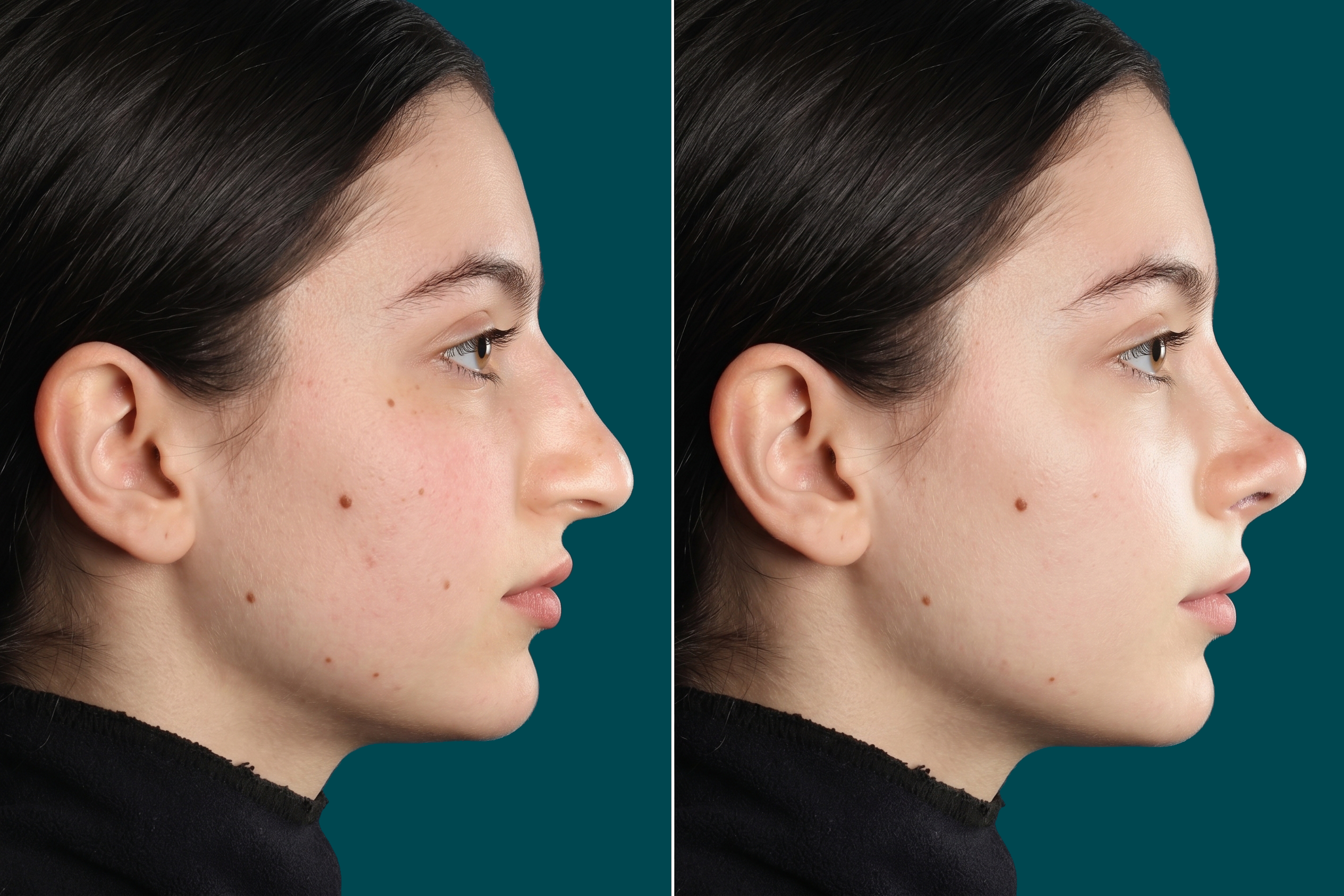
Rhinoplasty before and after: reading the photos
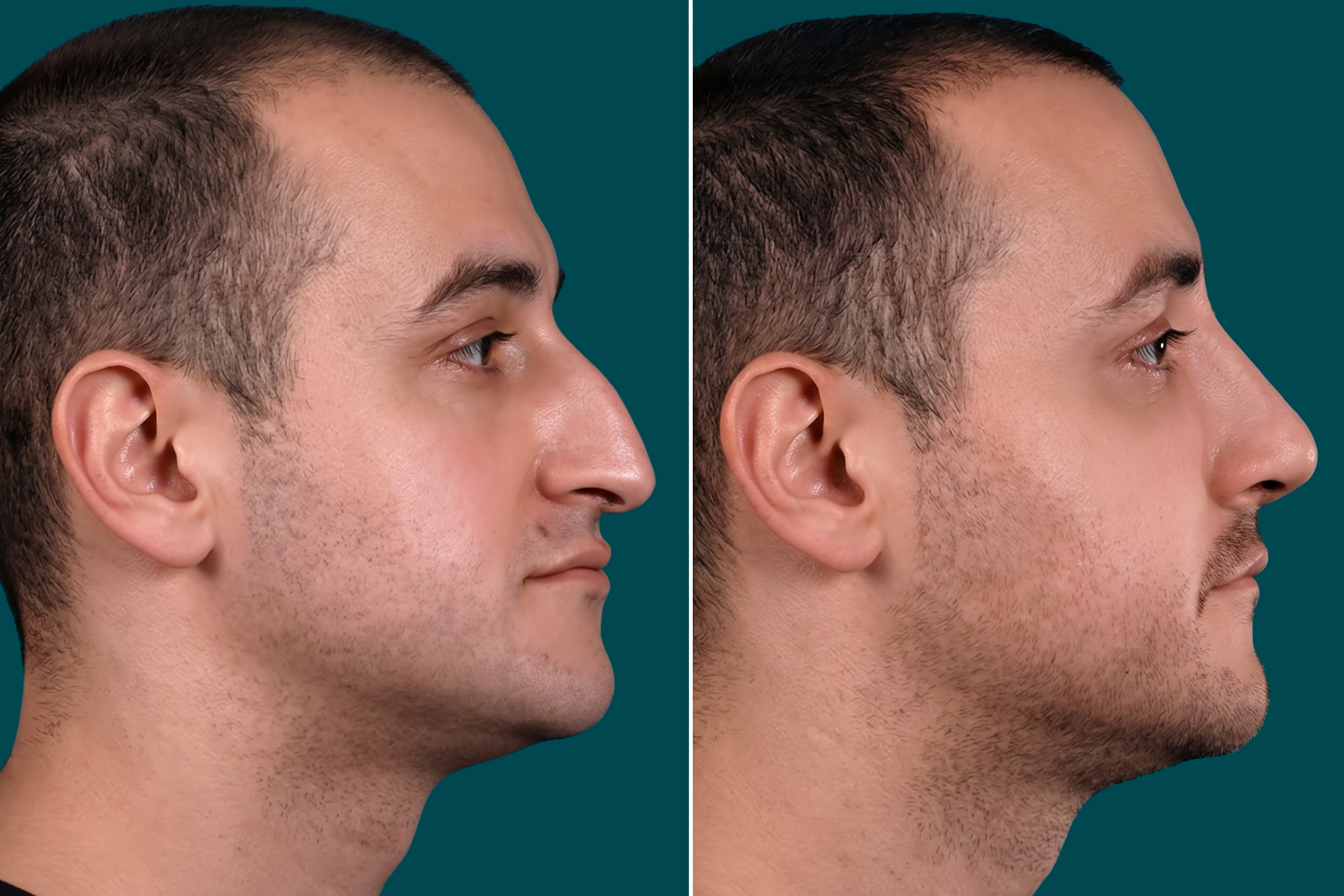
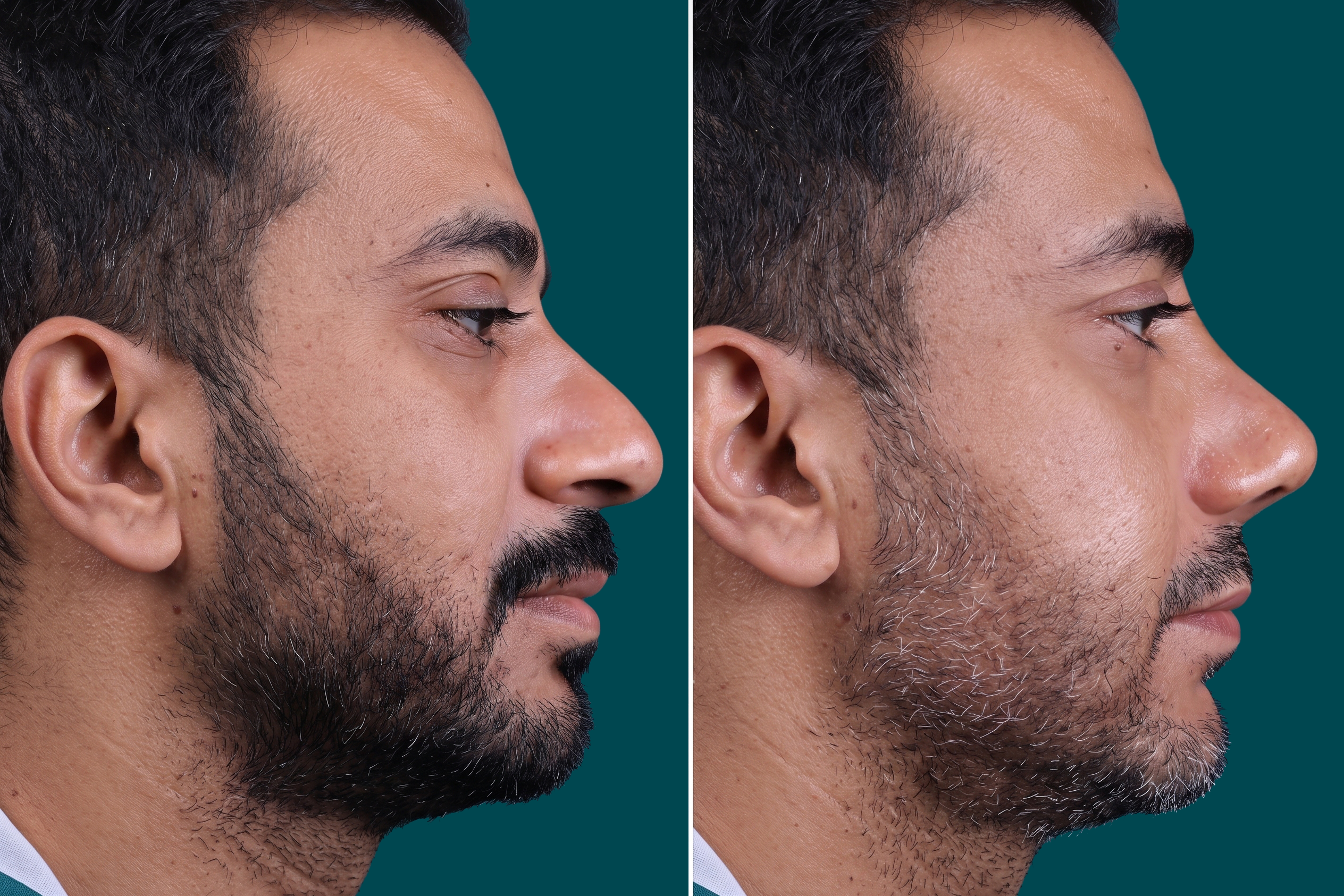
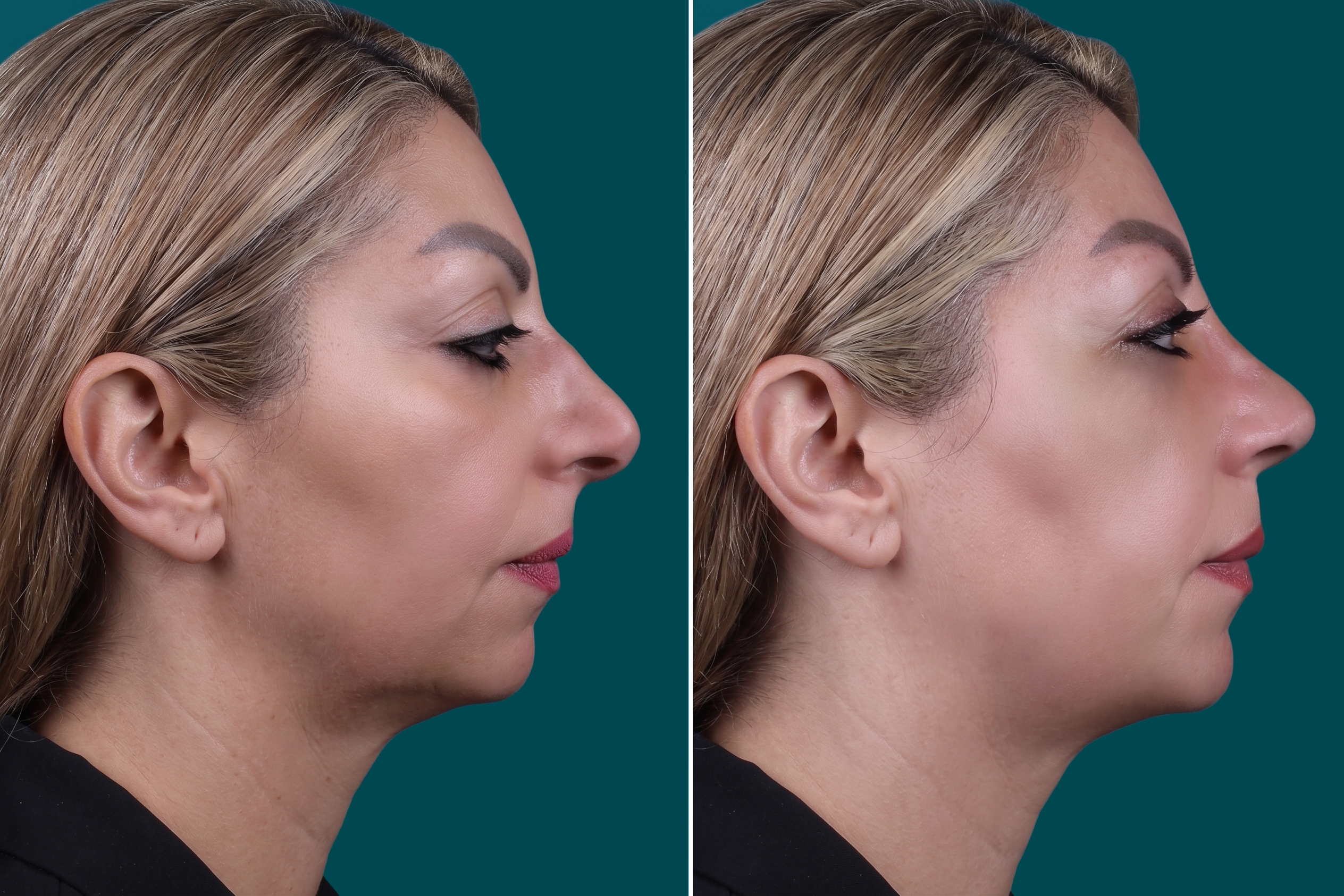
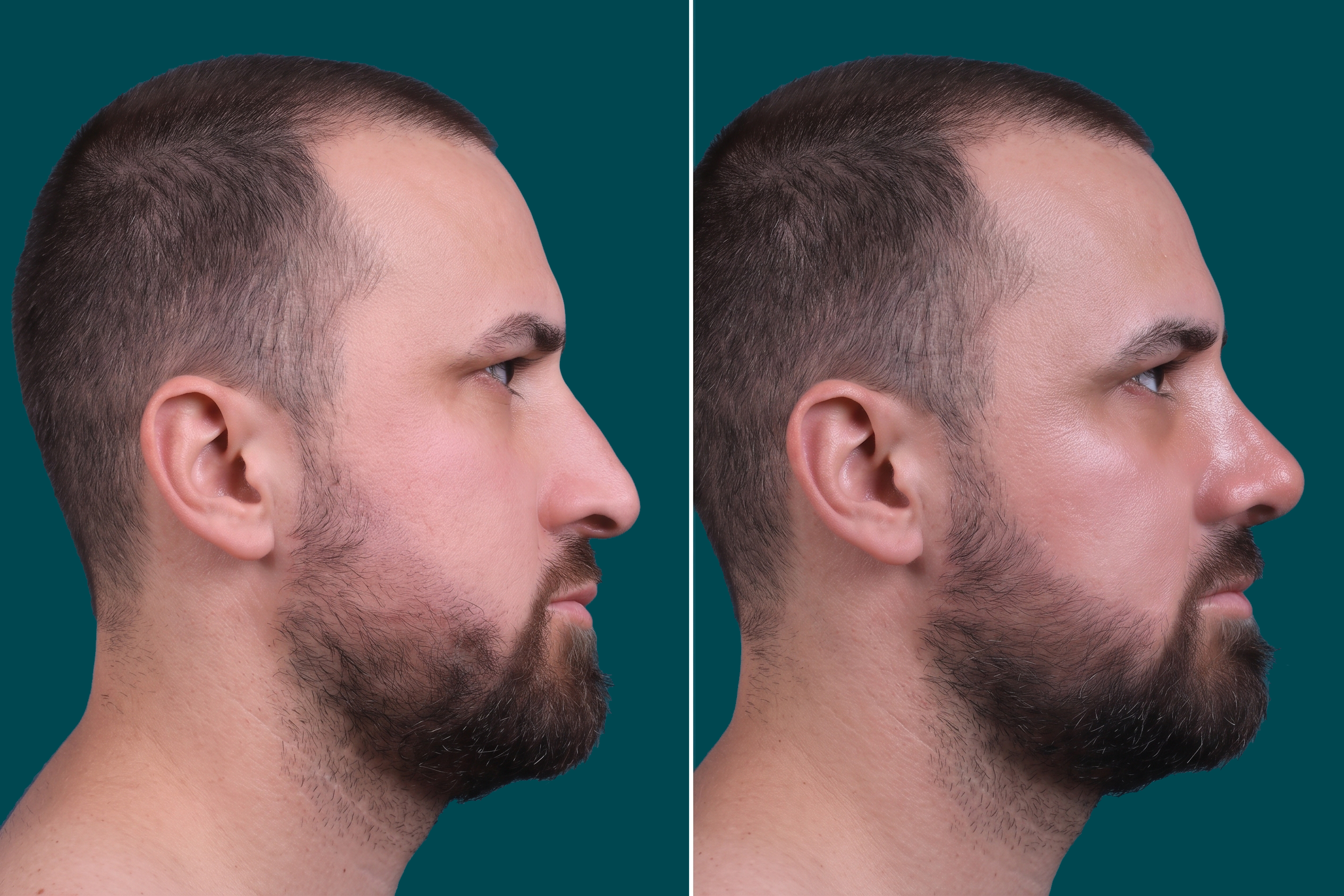
Our rhinoplasty before and after gallery shows humps, droopy tips and crooked noses. Whichever clinic's gallery you're scrolling, check the date on each "after". At twelve months, rhinoplasty before and after photos tell you a great deal; at two weeks, almost nothing. On the profile, look for a bridge that runs straight and natural, without a dip. Look at the base view too, the one from underneath, because nostril shape gives a lot away. And compare the same angle in each pair.
Reviews add the part pictures leave out. The videos above cover splint week, the swelling and, for many patients, breathing that improved alongside the shape. Your own before and after starts with the photos you send us.
Rhinoplasty cost in Turkey
There are two prices on our list. First-time noses sit on one line at €3,000, whether the operation is done open or closed, on a man or a woman, and that figure includes any septum or valve work and cartilage borrowed from the septum or ear. When the nose needs cartilage from the rib, as in many revision and ethnic cases, it moves to €4,000. Whichever applies, the surgeon, the anaesthetist, your hospital bed, the airport runs and an interpreter are already in it, along with a year of aftercare.
For comparison, Britain charges €8,150 to €11,700 for a first rhinoplasty, going by the table above. In Germany it's €5,500 to €6,900, and American prices stretch from €7,750 right up to €21,550. A cheap rhinoplasty price only matters if the plan is right, so ask us, or anyone, which of the two items you fall under, and why.
Is Turkey a good place for a nose job?
Often, though price shouldn't be what tips it. The surgeons doing rhinoplasty in Istanbul see a lot of noses, and with that comes a feel for small things, like which tip is going to sag the moment the hump comes off. The checks don't change from country to country. Ask the person operating how many noses they do a year and how many were second operations, and ask to see results a full year on.
For a rhinoplasty in Turkey, the stay is usually six nights in Istanbul, one of them in hospital, so that the splint and internal supports come out here before you fly.
Photos for your rhinoplasty plan
Four photos, please. Side profile, front, three-quarter, and one from underneath so we can see the nostrils. Natural light, hair off the face, glasses off. Add a line or two about your breathing, any knock or operation your nose has had, and the thing about it that bugs you most. From there, the surgeon will tell you what a rhinoplasty in Turkey would change, which of our two price items applies, and where any cartilage would come from.