
 English
 Italiano
 Español
 Français
 Deutsch
 Português
 Русский
 Български
-1280x854.webp?v=mumgiand)















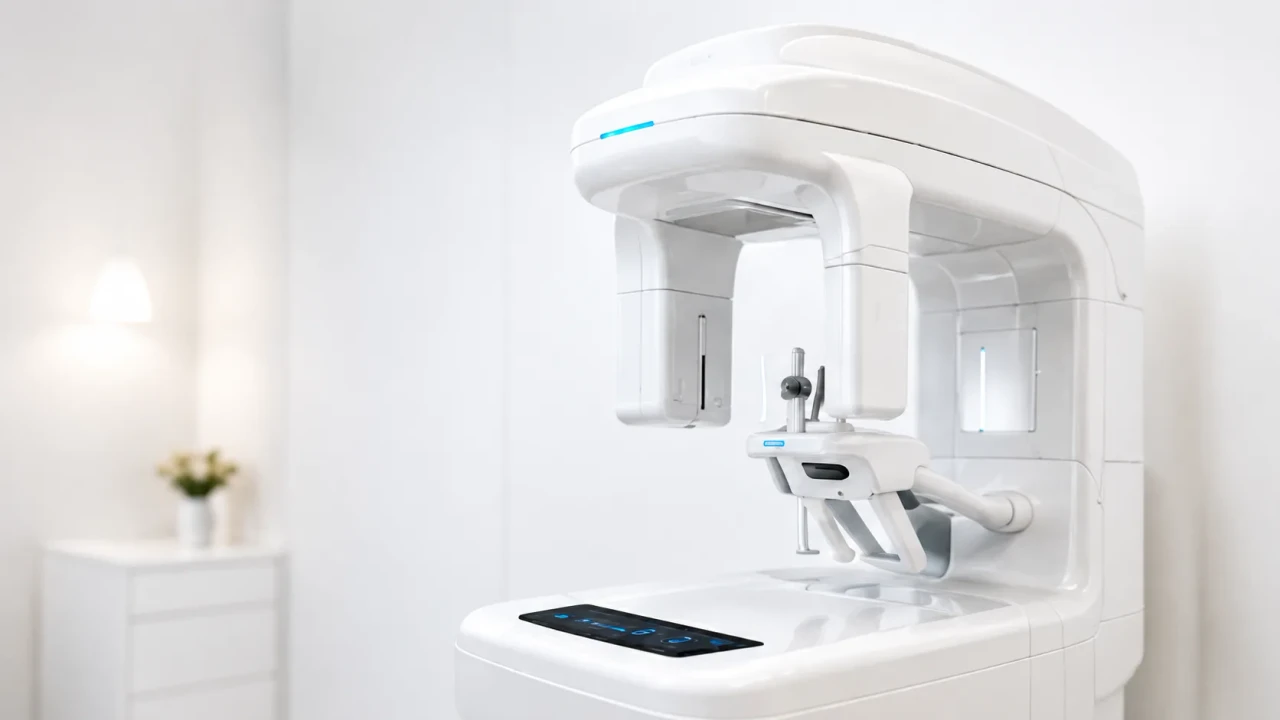
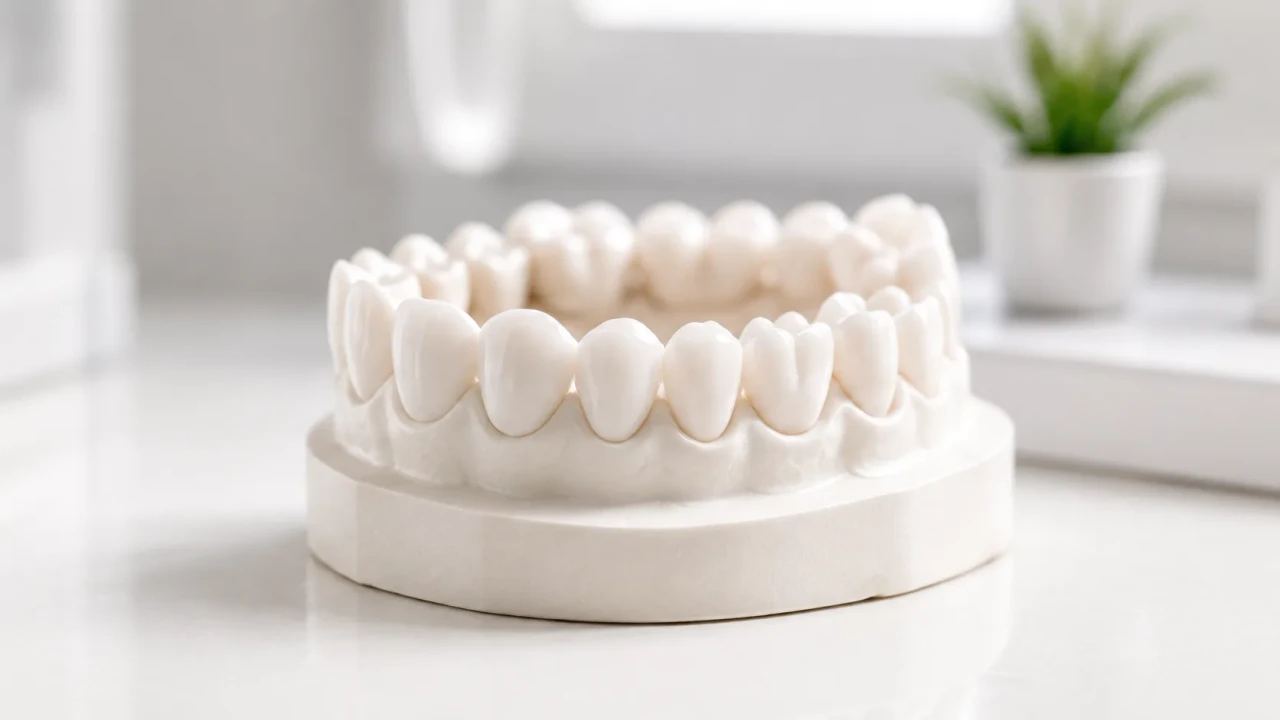


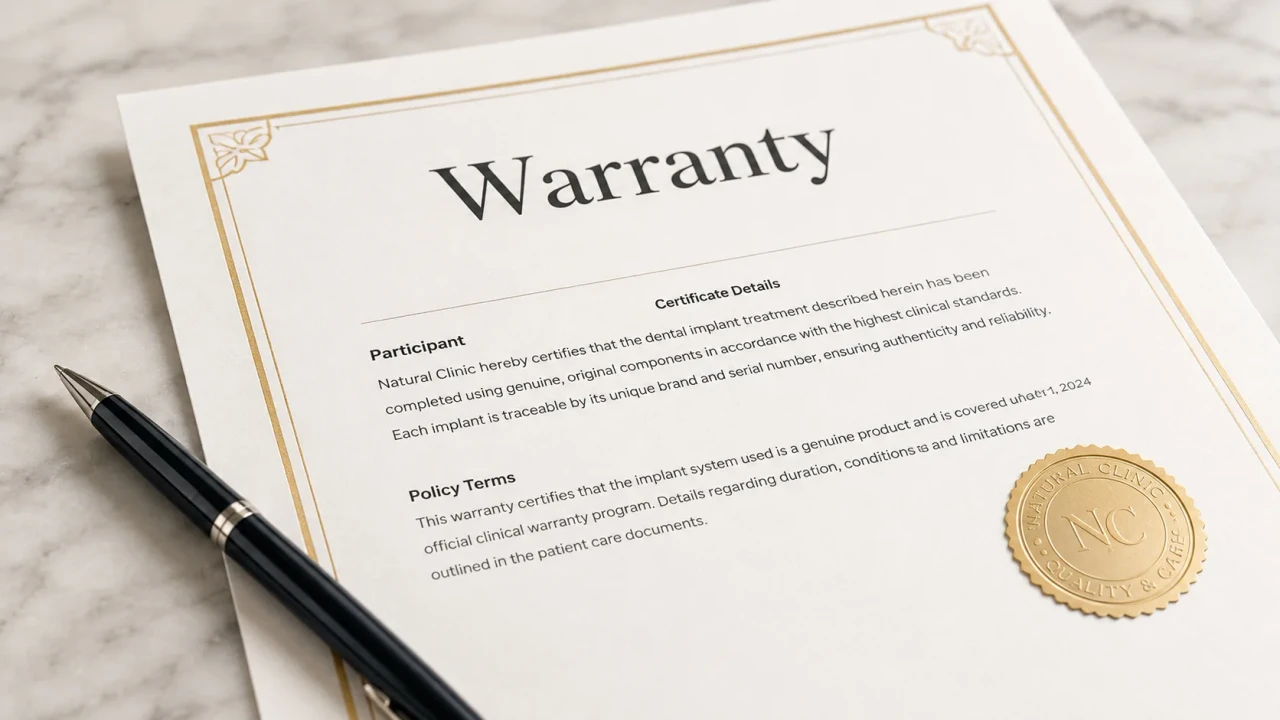

Hardly anyone turns up for a full mouth dental implants consultation with an empty mouth. The usual picture is messier than that. A couple of molars move when you press them. There's a bridge from the nineties clinging on by one crown. And then, oddly, the lower front teeth look fine. Before implants even come up, somebody needs to go round that mouth one tooth at a time and work out what's worth keeping.
You'd think that step would always happen. It doesn't. Taking everything out and starting from scratch is easier to plan, and frankly easier to sell, but for a fair number of patients it's more than they need.
How remaining teeth are judged
We look at each tooth by itself first, then at how it fits with the rest. The questions aren't complicated. How much bone is left around the root? If it's loose, is that gum disease we can treat, or bone that's already gone for good? Has it been root filled, and is the filling any good? And is there enough tooth showing above the gumline for a crown to grip?
Pass all four and a tooth usually stays. Fail two or three and saving it tends to be money poorly spent. You might get a few more years out of it before it comes out anyway, and rarely at a convenient moment.
The awkward ones are in the middle. Picture a tooth with moderate bone loss. Look after it well and it might last ten years. It might also be gone in three. Here the call is partly yours to make. Some people want to keep every natural tooth for as long as it'll hold. Others would sooner get it all done in one go than keep coming back for the next extraction. We don't think either instinct is wrong. What you're owed is a straight estimate of the odds.
The lower front teeth
This comes up so often it deserves its own section. The six lower front teeth are frequently the last ones left. They don't do much of the heavy chewing, and they sit right where saliva pools from the glands under the tongue, which seems to give them some protection against decay.
So what do you do with them? One route is to keep them and sort out only what has failed further back. The other is to take them out and fit a full arch on implants. Keeping them spares that part of the jaw from surgery, and you hold on to teeth that still feel like yours. The catch is the back of the jaw, which still needs something, usually implants to fill the gaps on either side. And if those front teeth are already showing early gum disease, keeping them starts to look less attractive.
Two jaws, not always two full arches
"Full mouth" sounds as though both jaws get identical treatment. Quite often they don't. Upper teeth tend to give up first, especially where gum disease or years of a partial denture have worn them down, while the lower jaw still has a decent set of natural teeth.
A full implant arch on top, biting against your own teeth underneath, is a perfectly workable result. The bite has to be set with care, since implants and natural teeth don't behave the same way under pressure, but we do this combination regularly. Occasionally it's the other way round.
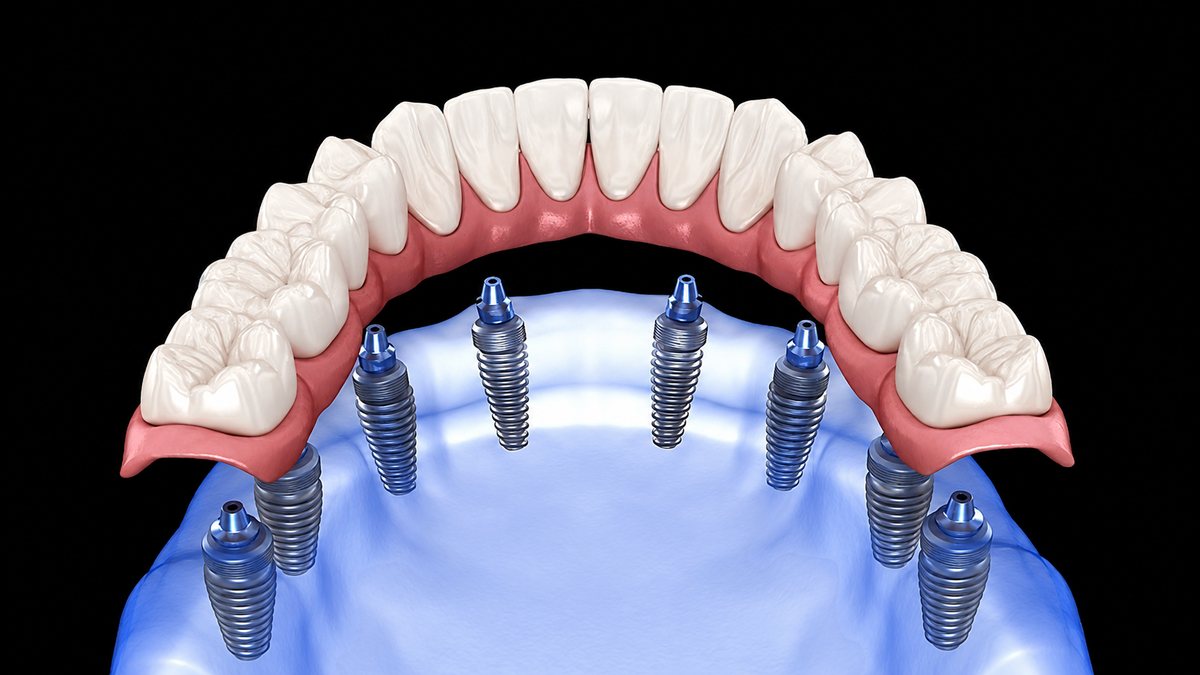
The two jaws can also end up with different designs, for example All-on-4 in one and All-on-6 in the other, depending on how much bone each has. Those pages cover when each design makes sense. The thing to take from this page is that "full mouth" describes where you end up, not a set menu.
Not enough bone?
Years of missing teeth or dentures shrink the jawbone, and many people assume that rules implants out. Usually it doesn't. All-on-4 gets round thin bone at the back by angling the rear implants forward into firmer bone. A thin upper jaw can also be built up with a graft or a sinus lift. And where there's next to nothing left, zygomatic implants are anchored in the cheekbone. Your CBCT scan tells us which route, if any, applies to you.
Fixed teeth or snap-in dentures?
Most of what's on this page is about fixed bridges: teeth that stay put and only come out when a dentist unscrews them. That's what most people are after. There's a second option, though, and we'd rather you heard about it now than found out later.
An implant-retained overdenture is a denture that clicks onto two or more implants instead of resting loose on the gums. You won't need adhesive, and it won't lift when you bite into an apple. At night you unclip it, clean it and put it back in the morning, just like an ordinary denture.
Why would anyone choose that over fixed teeth? Fewer implants, usually. Cleaning is simpler too, because you can hold the whole thing in your hand and see every surface. And for people whose lips and cheeks have sunk in after years of bone loss, the pink base of an overdenture can fill the face out surprisingly well. On the other side of the ledger, it still comes out, it covers more of the mouth than a fixed bridge, and the clips wear and need swapping now and then.
After years of dentures, most people want teeth that don't come out, and that's what most full mouth plans end up being. If your hands aren't steady, if budget is tight, or if there's been a lot of facial bone loss, ask whether an overdenture could work for you before you rule it out.
If you already have implants
Every so often, someone arrives with one or two implants from treatment years ago and hopes they can be used in the new arch.
Sometimes they can. If the old implant is healthy, well placed and from a brand that still makes parts, it may be built into the new arch. Usually something rules it out. It may sit in an awkward spot for a full arch, the company may have stopped supporting it, or the bone around it may be thinning. In that case it's either left alone, doing nothing, or removed so the new implants have room. If you have any paperwork from that earlier work, even just the brand name, bring it. It saves a lot of detective work.
Full mouth dental implants vs full mouth restoration
These two get confused a lot, and it's easy to see why. One swaps out teeth you've lost or can't keep. The other holds on to your teeth and fixes them up, mostly with crowns or veneers.
Plenty of plans include a bit of each. Sound teeth that are worn, chipped or stained get restored; loose or failing ones are where implants come in. The CBCT scan, plus a proper look at each tooth, will show which way your mouth leans.
Full mouth dental implants cost in Turkey
Four things drive the cost of full mouth dental implants in Turkey. First, how many of your teeth can be kept. Second, how many implants each jaw takes. Then there's any bone grafting or sinus lift, and finally the bridge itself, since zirconia and porcelain cost more than acrylic and hold up better over the years. Snap-in overdentures generally come in cheaper than fixed teeth, as they use fewer implants.
After your CBCT scan you'll receive an itemised quote in writing. It should cover two visits, the first for surgery and temporary teeth and the second, a few months on, for the final bridge. Patients from the UK, Ireland and the US usually find the total far lower than at home. Whichever clinics you're comparing, look for the implant brand by name and both bridges in the price.
Teeth in a day: surgery and recovery
If you're going straight from failing teeth to fixed implant bridges, surgery day is a big one. Extractions, implants and fixed temporary teeth often all happen in the same visit. You walk in with your own teeth, however poor they are, and by evening there's a different set in your mouth.
That's a lot for one day, so here's what to expect. Your face may look a bit different while the swelling comes and goes and your lips adjust to the new support. You may sound slightly odd to yourself for a week or so. And some people feel a strange sense of loss, even for teeth that caused them nothing but grief. It comes up more than you'd guess. For most, it's gone within days, round about the time eating stops being hard work. If you can bring someone with you on this trip, do. A companion for the first couple of days helps with the practical side and the emotional one.
What keeps an implant arch healthy
An implant can't get a cavity. Gum and bone around it are another matter. The first warning sign is often one implant with red, puffy gum that bleeds on brushing. Dentists call this peri-implant mucositis, and a hygienist visit plus tighter cleaning at home tends to clear it. Ignored for months, it can turn into peri-implantitis. By then bone around the implant is being lost, treatment gets much harder, and quite a few late implant failures trace back to this.
Get in touch with us straight away about bleeding gums, a taste or smell that hangs around, a swollen patch of gum, or a bridge that suddenly feels wrong. Don't save any of these for your next routine appointment.
If you smoke, or have had gum disease in the past, the odds are worse, and your daily routine matters more. The part that needs most attention is under the bridge, out of sight. Superfloss is the usual starting point: it has a stiff end that you slide under the bridge before pulling the soft part through along the gum. Tiny interdental brushes reach between the implants, and a water flosser flushes out whatever's left. The first week or two it feels fiddly. After that, most people stop noticing they're doing it.
Full mouth dental implant reviews and before and after results
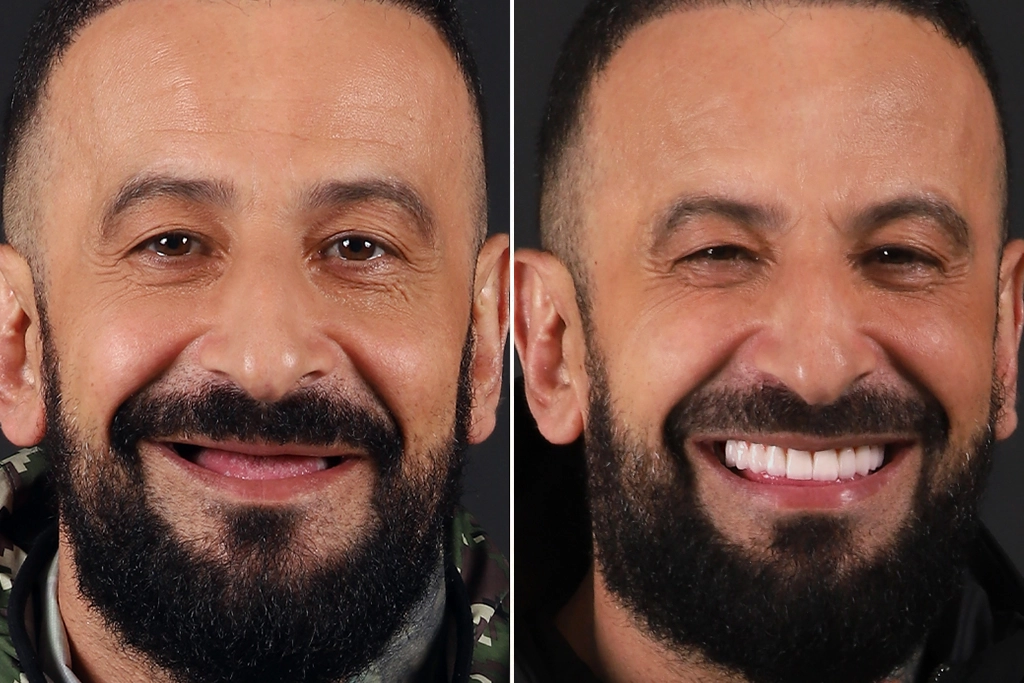
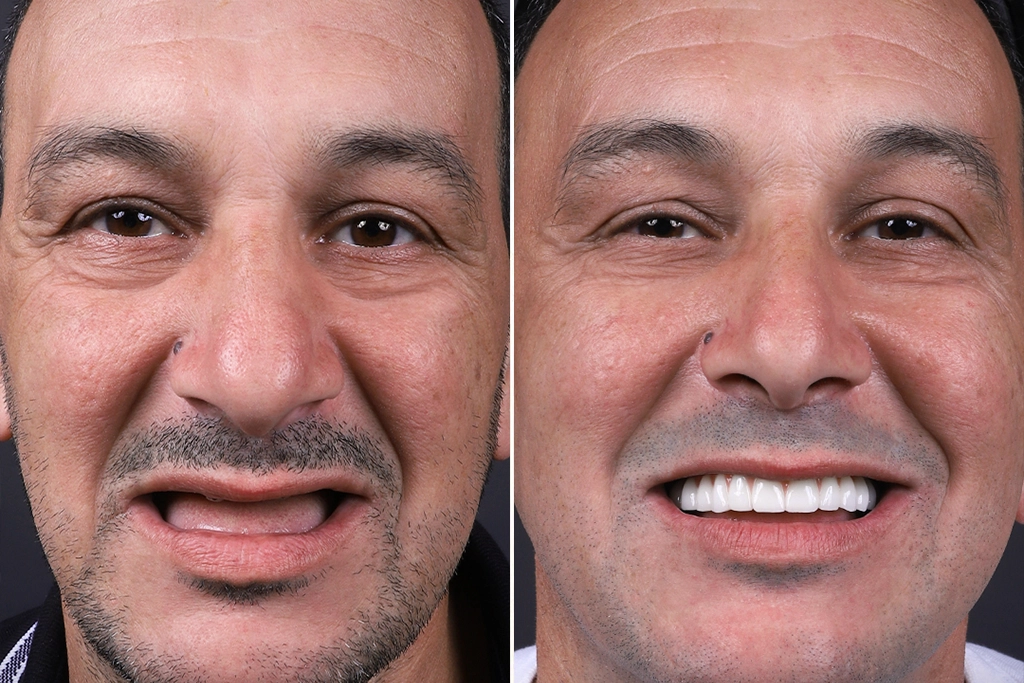
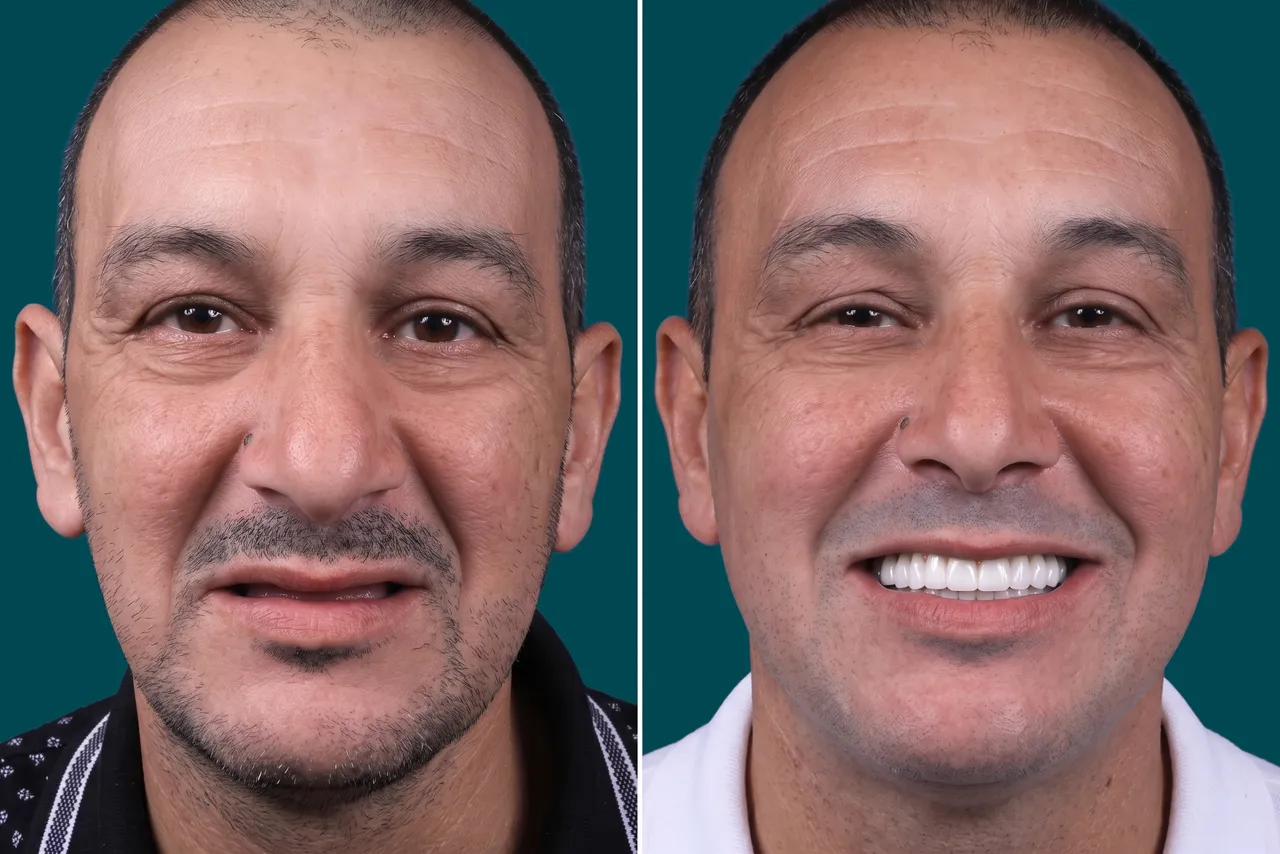
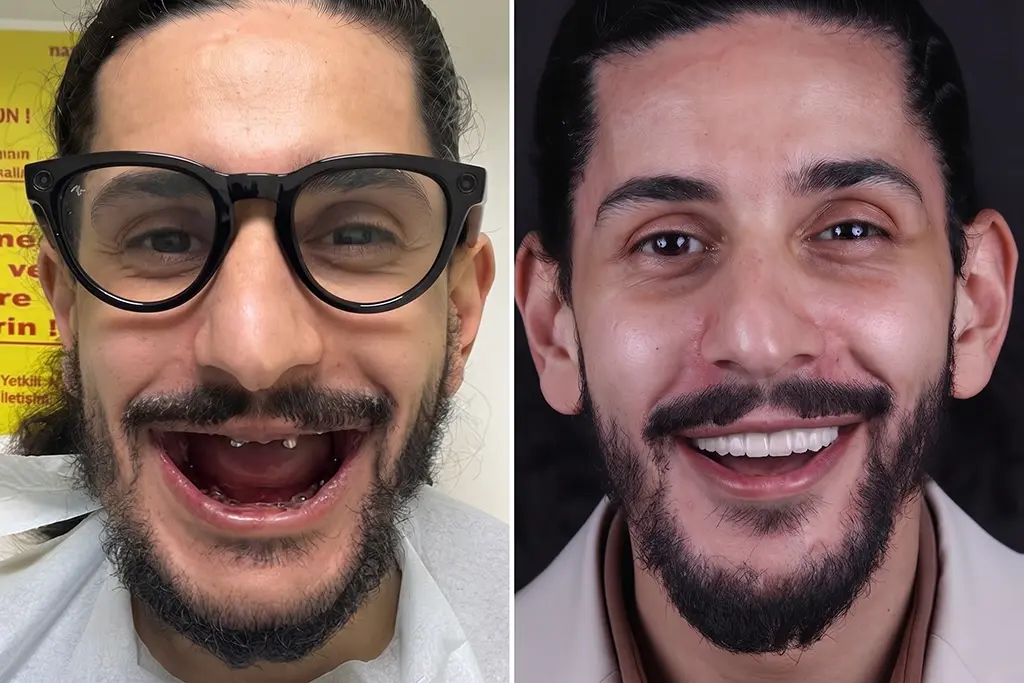
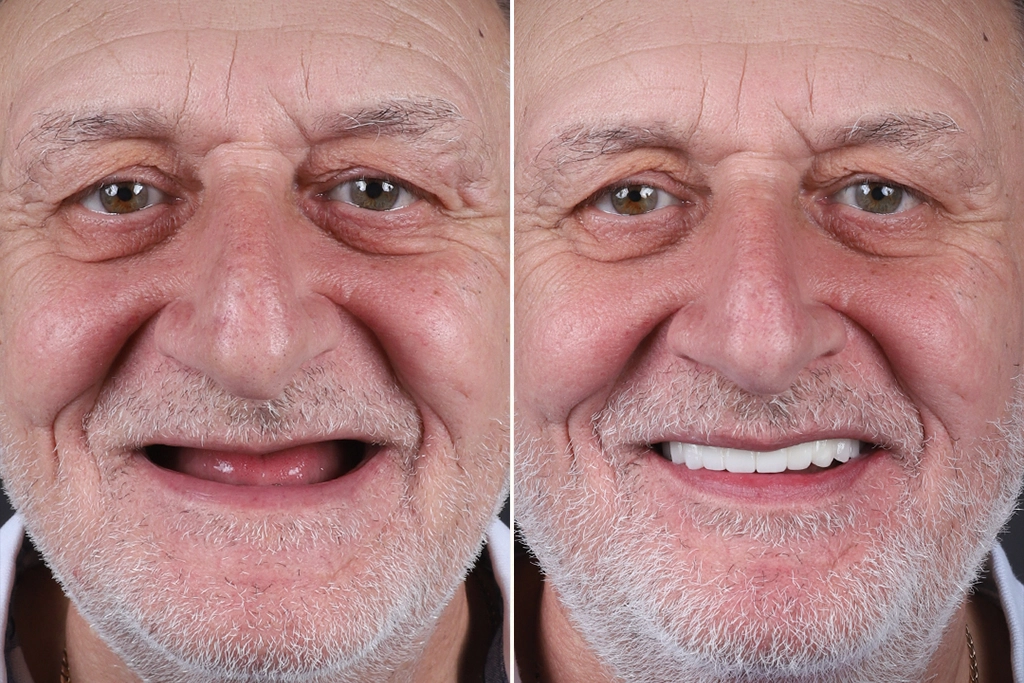
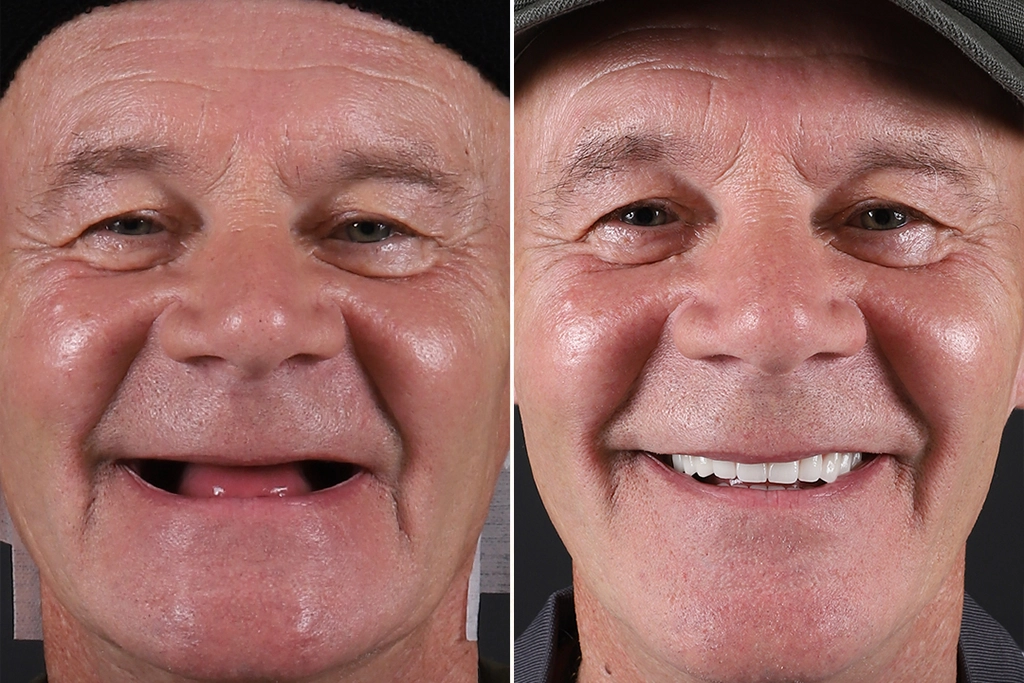
Full mouth dental implants before and after photos can be striking, but look closely. Is the final bridge in place, or the temporary one? Do the teeth look in proportion to the face and lips, not just bright white? Reviews from patients a year or two after treatment tell you far more about full mouth dental implants in Turkey than ones written in the first week.
How long do full mouth dental implants last?
A full implant arch is made to last a long time, and the guarantee described above reflects that. How long yours actually lasts depends as much on the years at home as on the day of surgery.
Turn up to your check-ups, and when your dentist suggests taking the bridge off for a proper clean, let them. Wear the night guard if you were given one. If something changes, tell someone rather than waiting to see if it settles. And if you smoke, this is as good a reason to stop as you'll ever get.
Looking after a full arch soon becomes as routine as brushing ever was. The people who get the most years out of theirs are simply the ones who keep at it.