 English
 Italiano
 Español
 Français
 Deutsch
 Português
 Русский
 Български
-1280x854.webp?v=muplorb4)
Deep Plane Facelift
Deep Plane Facelift in Istanbul · €5,000
Deep nasolabial folds and heavy jowls? Surface lifting won't reach them.
The deep plane technique releases and lifts the muscle layer together with the skin, which suits advanced midface descent and can last 10 to 15 years. The €5,000 fee also covers a temporal lift.
Deep nasolabial folds and a heavy midface are corrected in these deep plane facelift before and after results. Allow eight to ten weeks for full recovery before judging cheek position.
Deep Plane Facelift
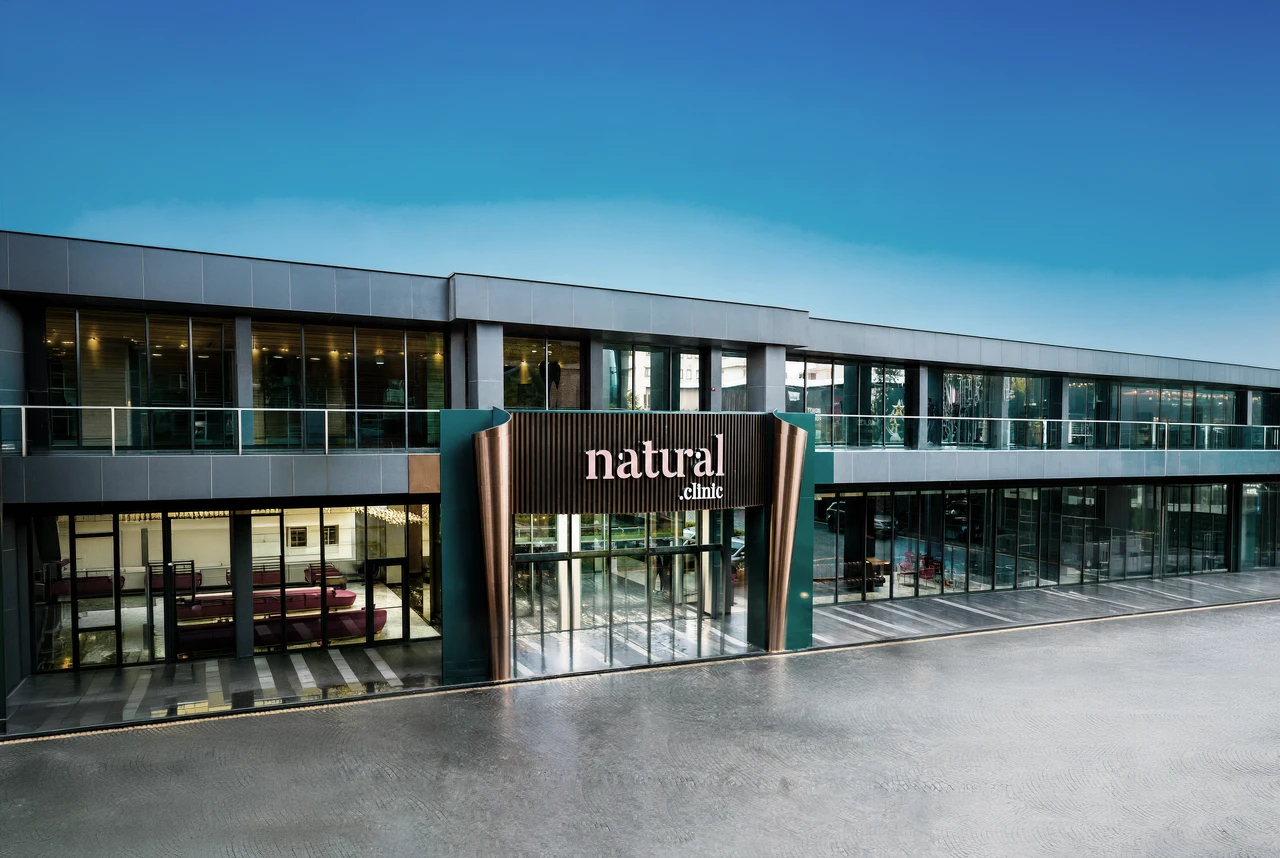
Natural Clinic brings multiple fields of specialised healthcare together under one roof, combining medical expertise, advanced technology and patient-focused care. From hair transplantation and dentistry to facial, body and breast aesthetics, bariatric surgery and reconstructive treatments, every patient journey is managed by experienced medical teams working across disciplines.
1200+ — Advanced treatments across multiple medical specialties
50+ — Experienced specialists working across disciplines
360° — Consultation, treatment, recovery and aftercare coordinated under one roof
150+ — Large-scale medical infrastructure in Istanbul
Deep plane is often described as a deeper SMAS facelift, which understates the difference. The two techniques do not differ by degree; they differ in what actually holds the result in place. One relies on tension, the other on repositioned structure — and that single distinction explains the longevity, the natural look, the longer operation and the greater technical demand all at once.
-1.jpg?v=mu3v17p9)
Structural
Skin and SMAS move together as one composite unit, and the retaining ligaments anchoring that unit to bone are released first. Sagged tissue is returned toward where it came from, the malar fat pad travelling with it, rather than tightened where it now sits. Nothing is being held under tension, which is why the result reads as movement rather than pull.
Midface descent and deeper sagging where structure, not surface tension, needs to move.
From €5,000 — the same figure as SMAS. Four to six hours of surgery, one night in hospital.
Short answer: yes, on one condition — that the surgeon's deep plane count is specific and verifiable. This is the one facelift technique where general volume does not transfer. Istanbul's scale is what makes a genuine deep plane caseload findable rather than rare.
-1-1280x720.webp?v=mv1dodem)
860+ deep plane cases with one named specialist, counted separately from the clinic's total facelift volume. The number that matters is the technique-specific one.
-1280x720.webp?v=mv1dxkcr)
Direct examination of how far the midface has descended settles whether deep plane is genuinely required. If SMAS would reach it, that's what your plan says.
-1280x720.webp?v=mv1dxmxq)
Lower operating, staffing and facility costs plus the exchange rate produce a real difference against the €13,000–€24,000 this technique commands elsewhere.
-1280x720.webp?v=mv1dxpnk)
Istanbul connects directly to hundreds of cities, and deep plane needs one trip of ten to fourteen days.
-1280x720.webp?v=mv1dxrzy)
Every appointment coordinated in English, with Dutch on request, and your interpreter free from consultation to discharge.
-1280x720.webp?v=mv1dxuk2)
Ministry of Health licence, board registration, logged sterilisation cycles and an independent anaesthesia review.
Deep plane reaches the midface by releasing ligaments. That extra reach is why the surgeon's experience — and your stay — matter more.
Deep plane is for faces where the cheek has dropped along with the jaw. Without midface descent, a lighter lift is the honest recommendation.
Your plan names the operating surgeon and their deep plane caseload specifically, because facial nerve branches sit closer at this depth.
The retaining ligaments are divided so the SMAS and deeper tissue move as one unit along the line they originally descended from.
A night in hospital and strict blood-pressure control reduce the risk of hematoma during the first 48 hours.
Deep plane asks for the most patience in Istanbul: walking and reading from early on, but the green light to board a plane rarely comes before the twenty-first day.
Full recovery takes eight to ten weeks; results usually last ten to fifteen years.
Why deep plane reaches the midface, and what its longer recovery involves.
A deep plane facelift is the most comprehensive facelift technique. The surgeon works beneath the SMAS layer and releases the retaining ligaments that tether facial tissue, allowing the skin, SMAS and deeper tissue to be repositioned together as one unit, including the midface and cheeks.
In a SMAS facelift, the supporting layer is tightened in place by folding and stitching. In a deep plane facelift, the retaining ligaments are released so the tissue can move freely along its natural direction, which allows the midface to be lifted and often gives a longer-lasting result.
A deep plane facelift is suited to people with significant sagging that includes the cheeks and midface, not only the jawline, or those seeking the longest-lasting facelift result. Without midface descent, a lighter technique may be more appropriate, and your surgeon will say so.
Although it is the most extensive technique, the deep plane facelift is priced at the same €5,000 as the mini and SMAS options, including the temporal lift and hospital night. In the UK the same operation is frequently quoted between €14,000 and €17,500, so the relative saving is greatest for this technique.
Natural Clinic keeps all facelift techniques at one price so there is no financial reason to recommend a deeper operation than you need. The recommendation is based on your anatomy, and a deep plane facelift is advised only when your degree of sagging requires it.
Ask for the name of the operating surgeon and how many deep plane facelifts, specifically, they perform, rather than their total number of facelifts. Because this technique works close to facial nerve branches, experience with the deep plane is particularly important.
A deep plane facelift involves working in closer proximity to branches of the facial nerve than other techniques, so surgical experience is especially important. Temporary nerve weakness, hematoma and swelling are the main risks, and they are discussed in detail before consent.
A deep plane facelift can take up to six hours, so your heart, lungs, medication and bleeding risk are assessed by an anaesthesiologist who is independent of the operating surgeon. This review confirms that a long general anaesthetic is appropriate for you before a surgery date is fixed.
Hematoma is most likely in the first 48 hours after a facelift, so blood pressure is closely controlled, activity is restricted and you are monitored overnight in hospital. Avoiding straining, bending and certain medications in the early days also helps reduce the risk.
Four to six hours are needed because the surgeon must identify and release several retaining ligaments while protecting nearby facial nerve branches, then reposition the tissue as one unit on both sides. This careful dissection is what gives the technique its reach into the midface.
Swelling after deep plane surgery is more pronounced and lasts longer, and the surgeon prefers to see the tissues settle before clearing a long-haul flight. Staying around twenty-one days allows staged stitch removal, several reviews and a final check before travel, all within one trip.
Desk-based work is often possible after about three weeks, once you are home. Public-facing roles may need longer because swelling can still be noticeable, and exercise or heavy lifting usually waits several weeks more, following the timeline your surgeon sets at the final review.
The first three weeks involve the most swelling and restricted activity. By weeks four to six, most people look presentable in daily life, and by eight to ten weeks they feel fully recovered. Subtle firmness and swelling in the cheeks can continue to soften for several months.
Because the retaining ligaments are released and the deeper tissues are repositioned rather than simply tightened, the lift is supported by structures that resist gravity well. Most patients see the benefit for around ten to fifteen years, the longest of the three facelift techniques.
Because the skin and deeper tissues are moved together as one unit, the skin is not pulled tightly over structures that have not been repositioned. This helps avoid a stretched or windswept appearance and allows the midface and jawline to look naturally lifted.
If your midface has not descended, one of the lighter techniques is the honest answer — and the neck, brow and eyelids are separate decisions that often belong in the same session. Each has its own guide.
Personalised Care, Just for You
Send front, side and three-quarter photographs in even light. Our deep plane specialist reviews your case and replies with a realistic, itemised plan — whether the midface descent genuinely calls for this technique or SMAS would reach it, her case count in the technique she recommends, whether a neck lift belongs in the same session, what it costs with free transfers and the hotel arranged, and how many nights you'll be in Istanbul. No obligation, no pressure, no cost.
Get My Free Surgical Plan100% Confidential & Secure
Reply Within 24 Hours
Reviewed by Board-Certified Surgeons
Deep plane facelift is often described as a deeper SMAS facelift, a framing that understates how genuinely different the two are. This section sets out what the technique actually does, what it costs you in theatre time and recovery, and how to check that a surgeon has done it often enough.
Find a mirror with decent light and look at the grooves either side of your mouth, the ones that start beside your nostrils. Now look just above them, at your cheek. If the fullness that used to sit high on the cheekbone has slid down and is now piled up against those folds, that's what the line under our heading means. Lifting the surface won't reach it. A deep plane facelift in Turkey is designed for exactly that kind of descent.
Fair warning before you get attached to the idea: of our three lifts, this one keeps you in theatre longest and asks the most patience afterwards. Worth checking you actually need it, then.
There's a small cushion of fat sitting on each cheekbone. Surgeons have a name for it, the malar fat pad, but you'd know it better as the bit of your face that catches the light in a photo. Over the years it slips down and drifts towards the nose. The cheek above goes flat, and the groove below gets deeper, because the fat that left the cheek has piled up right on top of it.
Doctors call it midface descent. You've probably seen the result of ignoring it: someone with a sharp, freshly lifted jaw and the same flat, tired cheeks they had before. Nothing went wrong in theatre. The lift just never went deep enough to touch the cheek.
Under the skin sits the SMAS, the supportive layer that the SMAS facelift page explains in detail. Under the SMAS, in turn, is a natural gap, a plane, where the surgeon can work. Across that plane run a few small, tough ligaments that tie the soft tissue of the face to the bone beneath. Once the cheek has dropped, it's those ligaments that keep it pinned at the lower level.
In a deep plane lift, the surgeon goes into that space and releases them. Skin, SMAS and the cheek fat then move upwards together, as one connected piece, back along roughly the path they came down. Nothing needs to be pulled tight to hold it there. That's the real difference: the result comes from tissue that's been put back, not from tension.
The face that benefits most usually shows several of these together. Cheeks that look flatter than they did in photos from ten years ago. Deep, heavy folds from nose to mouth. Jowls that have properly formed. And often a lengthened look under the eyes, where the lower lid seems to run further down into the cheek than it used to.
If most of that is there, deep plane is probably the right tool. If your cheeks still sit high and the trouble is mainly the jaw and neck, a SMAS lift will usually reach it with an easier recovery. If it's early and confined to the jawline, the mini facelift page is the better place to start, and our guide to facelift in Turkey compares all three.
No. And we'll tell you so, even if you've come specifically for a deep plane facelift in Turkey. Because all three lifts carry the same price here, we've got no reason to steer you deeper than your face needs. If the cheek hasn't dropped, the extra dissection doesn't give you a better result; it gives you a longer operation, more swelling and a few more weeks of recovery.
Where deep plane earns its place is the face where the midface has genuinely fallen. There, nothing else does the same job.
Small branches of the facial nerve, the ones that move your smile and your brow, run close to the plane this operation works in. That's the main reason deep plane is considered the hardest of the three to do well. Temporary weakness, a lopsided smile for a few weeks, is a recognised risk. Lasting damage is rare, and its rarity depends very much on how often the person holding the instruments works at that depth.
Which is why, when you're weighing up a deep plane facelift in Turkey, a general "we do lots of facelifts" tells you almost nothing. Ask for the surgeon's personal deep plane count. The page above gives our specialist's figure, more than 860 cases, counted separately from the clinic's total. Ask how they protect the nerve branches during the dissection. And ask to see results labelled as deep plane, not a general facelift gallery.
Often, yes. The reason's fairly mechanical. Moving tissue, rather than stretching it, leaves the skin relaxed, and relaxed skin doesn't give you that flattened, blown-back look. You get the cheek back where it was and a softer fold, and people tend to say you look well rather than asking what you've had done.
There's a catch, mind. Haul a deep plane lift too high or too far back and it can look every bit as strange as an over-tight skin lift. The surgeon's judgement about how much to move things, and in which direction, matters far more than the label on the operation.
Some people come to us having had a facelift years ago, usually one that relied mainly on tightening skin, and they don't like how it's aged. The face looks pulled sideways, the cheeks have dropped anyway, and the lower face still sags under the stretched surface.
A deep plane approach is often used in these revision cases because it can move the deeper structures that the first operation left behind. It's more complex the second time round, as there's scar tissue to work through, so bring every detail of your earlier surgery you can find.
Lifting the cheek has a knock-on effect under the eyes. As the cheek goes back up, the junction between the lower lid and the cheek usually shortens, and some of the hollow or bulge there improves on its own. Sometimes that's enough. If there are true eye bags, though, lower blepharoplasty is often combined with a deep plane lift, because the two areas are so closely linked that it makes sense to plan them together rather than months apart.
There are a few cases where we'd rather not go this deep. Heavy smokers unable to quit for a few weeks either side of the operation, people on blood thinners that can't be paused safely, and anyone with uncontrolled diabetes or high blood pressure all carry a higher risk with a longer, deeper operation. Very early sagging is another: there's simply nothing for the extra depth to fix.
Allow four to six hours under a general anaesthetic, temple lift included, and then a night on the ward. Ahead of booking, our anaesthetist looks at your health separately from the surgeon and decides how long it's safe for you to be asleep. That cap is also what settles whether a neck lift or eyelid surgery can go on the same day, or should wait.
Because more of the face has been moved, more of it swells. Your cheeks will be puffy, not just the jawline, and for a while there may be some fullness under the eyes too. Smiling can feel a bit wooden for a fortnight or so. Numb patches on the cheek tend to hang around longer than they would after a SMAS lift. None of that signals a problem. It's the extra depth showing up.
Most people are walking around and reading from the first few days. Light activity is usually comfortable by about three weeks, and full recovery takes around eight to ten weeks. The cheek keeps settling quietly for up to a year.
Of the three lifts, a deep plane facelift in Istanbul is the one that keeps you here longest, usually two to three weeks. Most patients aren't cleared to fly until somewhere around day twenty-one, as the timeline above mentions, and your written plan gives the exact number of nights. Bring company if you can. The first week is slow, and having someone to fetch things and keep you sensible about resting makes a real difference.
Typically ten to fifteen years. It tends to hold longer than the other two techniques because the cheek and jowl have been moved back to where they belong, rather than held up by tension that slowly gives way. You'll keep ageing, of course; the difference is the starting point.
The best deep plane facelift before and after photos are judged on the cheek, not the jawline. Is the fullness back up on the cheekbone? Is the fold from nose to mouth softer? Lower lid: does it now meet the cheek a little higher up? Finally the side view, and the ear. Neither should give anything away.
Wait a good eight to ten weeks before deciding where the cheek has settled; the gallery above says the same. Early swelling makes the midface look fuller than it really is, so before and after shots from the first month or so can flatter. For the recovery itself, reviews from people describing their first three weeks will tell you more than any photo.
Our deep plane facelift price is €5,000: no more than a mini or a SMAS lift. Inside that figure sit the temple lift, a general anaesthetic, your night on the ward, airport transfers, an interpreter, plus twelve months of us keeping an eye on you. The comparison table above puts the same operation somewhere between €14,000 and €17,500 in Britain, €7,000 to €9,500 in Germany and about €23,450 on average in America.
Abroad, deep plane is usually the most expensive lift, and that higher price quietly encourages surgeons to recommend it. Here it costs the same as the lighter options, so the recommendation is based on your face alone. That's worth bearing in mind when you compare any deep plane facelift cost elsewhere.
We'll need a front view, both profiles and both three-quarter angles, taken in daylight with no make-up and your hair pulled back. Add one where you're smiling and one with your chin tilted up a little. And here's the one most people forget: an old photo, ten or fifteen years back. Nothing shows us faster how far your cheeks have travelled, and it gives your eventual before and after a proper starting point. Then fill us in: how old you are, any earlier surgery or filler, any regular tablets, and whether you smoke or vape. With that in hand, the Istanbul team will tell you straight whether a deep plane facelift in Turkey is the right call, or whether a lighter lift would serve you just as well.

© 2026 Natural Clinic. All rights reserved.