
 English
 Italiano
 Español
 Français

Volume, and Why It Matters Here
High case volume shows in how the zones are blended, so no step is left at a seam.
Belly Liposuction in Istanbul · From €3,100
A lower-belly pouch that stays after every diet?
Belly liposuction targets fat above and below the navel and at the sides, usually as four areas priced at €3,100. It suits firm skin; if the skin is loose or the muscles have separated, a tummy tuck may serve you better.
Natural Clinic brings multiple fields of specialised healthcare together under one roof, combining medical expertise, advanced technology and patient-focused care. From hair transplantation and dentistry to facial, body and breast aesthetics, bariatric surgery and reconstructive treatments, every patient journey is managed by experienced medical teams working across disciplines.
1200+ — Advanced treatments across multiple medical specialties
50+ — Experienced specialists working across disciplines
360° — Consultation, treatment, recovery and aftercare coordinated under one roof
150+ — Large-scale medical infrastructure in Istanbul
The abdomen is four treatment zones — upper, lower and both flanks — and they are physically continuous, so treating one and leaving its neighbour can leave a visible step. What the operation reaches is the subcutaneous layer between your skin and the muscle wall, and nothing beneath it.
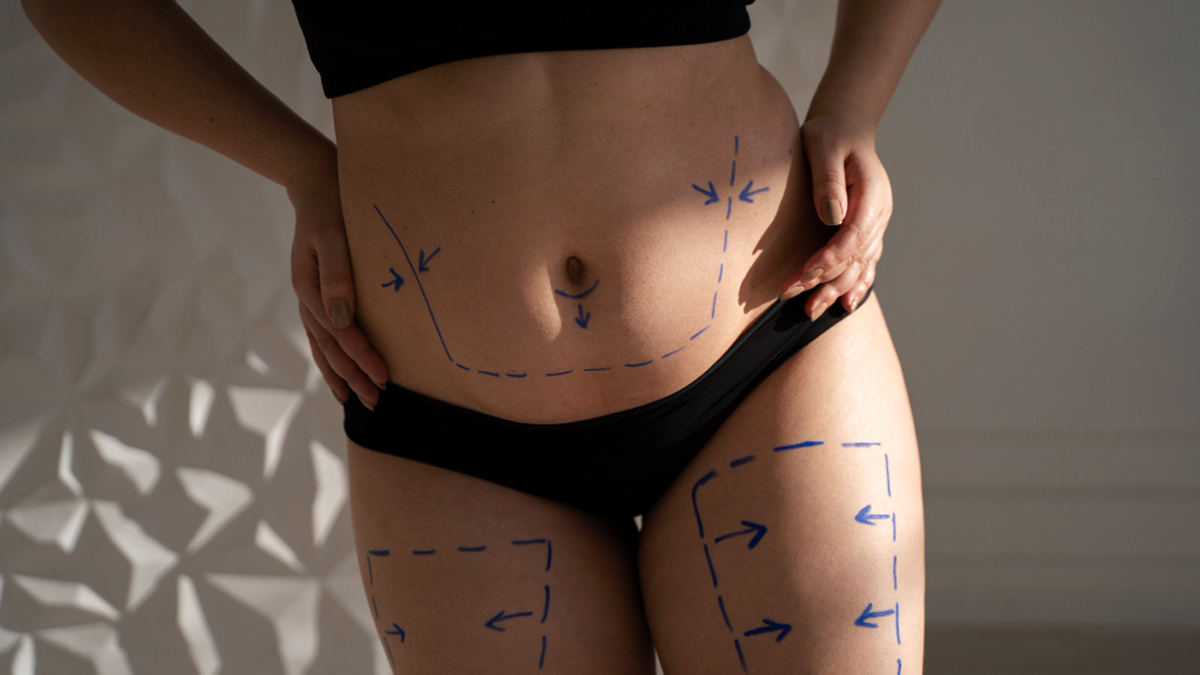
From €3,100, priced by zone count
Tumescent fluid is infiltrated first, then the fat is aspirated through small entry points at the pubic line and in the flank creases. The zones are blended into one another so that no step is left where a treated area meets an untreated one.
Subcutaneous abdominal fat that lifts generously between finger and thumb, with skin that recoils when you release it.
One night in hospital, four nights in Istanbul. Compression garment for six weeks; the shape settles across three to six months.
Yes, and what to verify has nothing to do with geography. Two questions do the work: how much lifts between my fingers, and which zones would you actually treat?
High case volume shows in how the zones are blended, so no step is left at a seam.

Each zone named and counted in writing, with the pinch test and the skin recoil recorded.
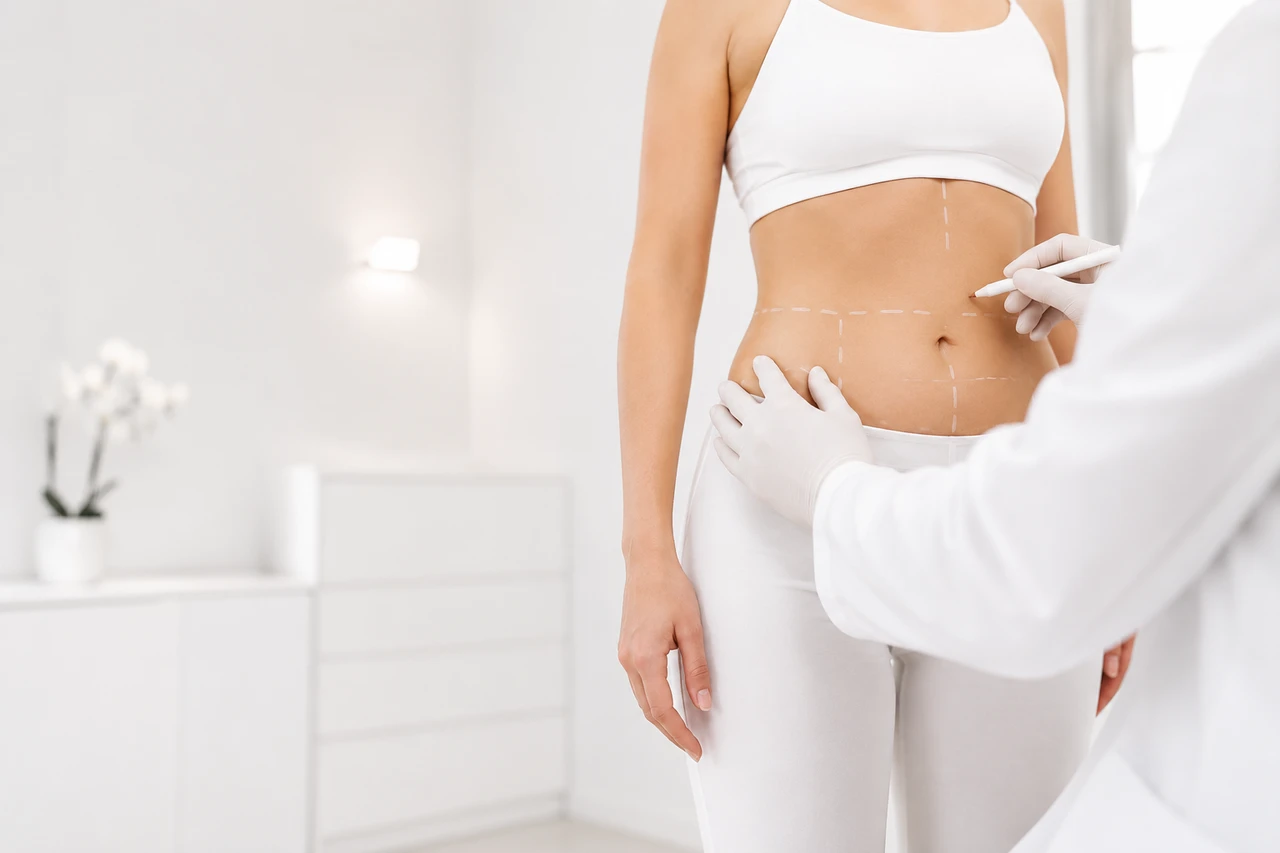
Lower operating costs and the exchange rate produce a real difference, without shortening the stay.

Istanbul connects directly to hundreds of cities. Four nights here, one of them in hospital.

Every appointment coordinated in English, Dutch on request, and your interpreter is free from consultation to discharge.

Ministry of Health licence, board registration, logged sterilisation cycles and an independent anaesthesia review.
An abdomen can bulge from fat, loose skin or separated muscles. Liposuction treats only the first.
Several pregnancies or major weight loss often leave skin that won't retract.
The abdomen is examined lying and standing for separation that liposuction cannot close.
Fluid makes the belly look rounder at first; daily walking helps it clear.
Belly liposuction only fixes fat. These answers explain how to tell if it's right for your abdomen.
Belly liposuction removes stubborn fat from the upper and lower abdomen through small incisions, flattening and reshaping the stomach area. It is most effective for people with good skin elasticity and fat that remains despite diet and exercise. The upper and lower abdomen are usually treated as separate zones.
Liposuction on the stomach can only take away fat. It cannot remove the stretched skin or close the muscle gap that pregnancy often leaves behind, so women with those changes are usually better served by a tummy tuck, sometimes combined with liposuction of the flanks for a smoother waist.
Pinch the skin on your abdomen: if it springs back quickly and the bulge is mainly soft fat, belly liposuction may work well. If the skin stays folded, stretch marks are extensive or the abdomen bulges when you strain, a tummy tuck may be recommended instead.
At Natural Clinic, treating four abdominal zones with liposuction costs €4,300. If fewer zones are needed, the price follows the lower zone tiers. Your written plan names each abdominal zone included, so you can see exactly what the total covers.
Not necessarily. A tummy tuck at Natural Clinic costs €4,000, which is €300 less than four zones of belly liposuction at €4,300. When loose skin or muscle separation is present, a tummy tuck may therefore be both more effective and more economical.
Energy-assisted techniques such as VASER, added at €500, or J-Plasma for skin tightening, added at €1,500, increase the total if recommended. Treating additional areas, such as the flanks or back, also adds zones to the plan. Each addition appears as a separate line in your written plan.
Abdominal fat removal stays within a volume limit that an independent anaesthesiologist sets for your body size and health. Inflatable calf sleeves are used during the operation to guard against clots, you are encouraged to walk on the same day, and any medication or condition that affects bleeding is reviewed before surgery.
Muscle separation, known as diastasis recti, often follows pregnancy and causes the abdomen to bulge even when fat levels are low. Liposuction cannot repair this gap, so the surgeon examines your abdomen lying down and while tensing the muscles to check for it.
Swelling, bruising, numbness and temporary firmness are common after belly liposuction. Less common effects include uneven contours, fluid collection and changes in skin texture. Wearing the abdominal garment and following aftercare advice help the area heal smoothly. Firm, lumpy areas in the early weeks usually soften with time.
The abdomen feels sore, tight and swollen during the first days, and getting up from lying down can be awkward, so rolling onto your side first helps. Short walks are encouraged, many people return to desk work within about a week, and lifting or abdominal exercise waits until your surgeon clears it.
Belly liposuction does not move the belly button, unlike a tummy tuck. The shape of the navel usually stays the same, although it may look slightly different as the surrounding fat is reduced and the abdomen becomes flatter. Any change in how the navel looks tends to be subtle.
Wear your abdominal garment and loose clothing, choose an aisle seat so you can walk around, and drink plenty of water. Your surgeon only confirms the flight once swelling, mobility and clot risk have been reviewed, and compression stockings may be recommended for longer journeys.
Not immediately. The abdomen is usually swollen for several weeks after belly liposuction, so it may look fuller than expected at first. As swelling subsides, the flatter contour gradually becomes visible. Consistent garment use helps the flatter shape emerge. Walking daily also helps the fluid clear.
Belly liposuction results are typically assessed between three and six months after surgery, once most of the swelling has resolved and the skin has settled. The shape continues to refine gradually during this period. Stretch marks, if present, are not removed by liposuction.
Yes. Pregnancy stretches the abdominal skin and muscles and can lead to weight gain, which may alter the results of belly liposuction. If you are planning a pregnancy, discussing timing with your surgeon beforehand is advisable. Liposuction is therefore often best planned after your family is complete.
The tummy tuck comes first for a reason that is in our own price list: at €4,000 it costs less than four zones of liposuction. VASER explains what the €500 fee does and does not buy. 360 liposuction is worth reading if the flanks and back belong in the same plan as your abdomen.
Personalised Care, Just for You
Send photographs standing relaxed after a normal exhale, plus one of you lifting the fold of your lower abdomen between your fingers. A body surgeon replies with the zones and the price, or with the tummy tuck and its price, or with the finding that the volume is behind your muscle wall, or that the wall itself has separated. The last two are not operations and we are paid nothing for saying so. No obligation, no pressure, no cost.
Get My Free Surgical Plan100% Confidential & Secure
Reply Within 24 Hours
Reviewed by Board-Certified Surgeons
Four zones, and four possible explanations for a protruding abdomen — of which only one is priced in that table. What follows: both tests you can do on yourself, the two findings we cannot sell you, and why a tummy tuck is listed below four zones.
"My stomach sticks out" is probably the sentence we read most often in enquiries. It sounds like one problem. In practice it's one of four, and only one of them is fixed by liposuction. The other three need something else, sometimes surgery, sometimes not.
So before talking about belly liposuction in Turkey, it helps to work out which of the four you have. You can get a fair idea at home in a couple of minutes, and the photos you send us will confirm it.
This is the fat sitting just under the skin, the bit you can take hold of when you're standing up and relaxed. If there's a good handful, and the skin snaps back when you let go, this is the layer liposuction removes.
This is the classic candidate for stomach liposuction. The fat often sits mainly below the belly button, as a soft pooch that's there even when you're slim, or spread across the upper and lower abdomen together.
Some stomachs are round and firm, with very little to pinch. The fat there sits deeper, around the organs, and liposuction can't reach it at all. Our main liposuction page explains the difference between the two layers in more detail.
This pattern is common in men with a so-called beer belly, and in women after menopause, when hormonal changes move more fat to the middle. The answer is weight loss, not surgery. Liposuction in this situation removes a little from the surface and leaves the shape almost unchanged. Not sure which kind you have? Send the photos anyway. Telling the two apart is part of our job.
Mothers often describe this one to us in much the same words. "I'm back to my old weight, I do my sit-ups, and I still look a few months pregnant." What's usually happened is that the two strap-like muscles running down the front have parted. Pregnancy stretches the seam between them. In many women it knits back. In some it doesn't.
A physiotherapist or GP can check this in a minute, and so can we from a short video of you doing a half sit-up. When there's a gap, a soft groove opens down the middle or the centre domes up like a ridge. Doctors call it diastasis recti.
No amount of suction closes that gap. Physio helps a fair number of women, more so in the year after giving birth. If the gap is still wide after that, the muscles have to be stitched back together, and that happens during a tummy tuck.
Skin that's lost its elasticity doesn't snap back when pinched. It lingers in a crease, or it just hangs. Liposuction under that skin leaves it emptier, not tighter.
We see this a lot after pregnancy and big weight loss. A specific version is the fold that hangs over a caesarean scar. Women often call it the C-section shelf. The scar holds the skin down at one level, and everything above it drapes over. If there's a lot of fat in that fold, liposuction can make it smaller. A fold that's mostly skin needs cutting away, which means a tummy tuck.
Most of the time the examination settles it. Soft fat under firm skin is a liposuction job. Loose skin, separated muscles or both point to a tummy tuck. Deep fat points to neither.
Price is rarely the deciding factor, and when it is, it doesn't favour liposuction as much as people expect. A full tummy tuck is €4,000 on our list. Four zones of belly liposuction are €4,300. Combine a tummy tuck with three VASER zones and it's €5,000.
Many people have a mix: some skin laxity low down and fat elsewhere. Removing skin at the front while suctioning the flanks often handles both. After children, when the breasts have changed as well, a mommy makeover brings it all into one plan.
Most people point to the area below the navel. Fewer mention the upper stomach, but if there's fat there and only the lower part is treated, you can end up with a ledge where the two meet. We usually look at the whole front of the abdomen together, even if the upper part only needs a light touch.
The flanks tend to come into it as well. If your fat runs right round to the back, have a look at 360 liposuction, which treats the full waistline.
The people happiest with belly liposuction usually have a soft layer they can pinch, skin that tightens back when released, and no gap between the muscles. Their weight has been steady for a good while, and they're not trying to lose a lot more. Many are fit and active and simply can't shift the lower pooch however much they train.
Men usually want two things: a flatter area below the belly button and smaller love handles. Both respond well when the fat is pinchable. The flanks in particular can make a man's waist look much narrower. Male flank fat is often firmer and more fibrous, and that's where adding VASER for €500 can make the work smoother.
The limit is the firm, round belly that many men carry, which is mostly deep fat. Liposuction won't flatten that, however many zones are treated. If you're already lean and what you want is a visible six-pack, our HD liposuction page covers that.
Then liposuction now and a tummy tuck later, if you ever need one, is usually the right order. Liposuction won't stop another pregnancy stretching your skin or muscles. It won't make them any worse either, and the fat it removes stays gone.
A tummy tuck is a different story. Muscles stitched together can be pulled apart again by a later pregnancy, so we'd wait until your family is complete. And after any birth, give your body several months beyond the end of breastfeeding before booking anything on the stomach.
People sometimes hope liposuction will change the shape of their navel. It won't. With the padding around it gone, it may sit a little neater. Stretched or hooded navels, and those pushed out by a hernia, get reshaped during a tummy tuck instead.
Most of what goes wrong is minor. Small irregularities can show on the lower belly, where the layer is thinnest. Some people need a pocket of fluid drained at a follow-up. Numb patches are common, and most recover. Clots are uncommon, and calf pumps plus early walking keep them that way.
There's one rare but serious complication particular to the abdomen: the cannula passing through the muscle wall. Hernias and old scars raise that risk.
Tell us about anything that's been done to your stomach before. Caesareans, a gallbladder removed by keyhole, an appendix scar: we want to know about all of them. Scar tissue from those operations changes how the cannula moves. Another thing we'll ask about is any lump at the navel that appears when you cough and goes when you lie flat. That's often a hernia, and we need to know before going near it.
You're on your feet the same day. The garment comes off only in the shower for roughly the first six weeks. In the first fortnight many people are surprised to find their stomach bigger than before surgery. That's fluid from the operation, not fat, and it goes.
Early on, the hardest moment of the day is often getting out of bed. Rolling onto one side and pushing up with your arms makes it easier. A desk job is usually manageable after a week or so. Sit-ups, planks and lifting wait until about six weeks. Pools and baths wait until each tiny incision has sealed. Bruises and strong sun don't mix, as the sun can stain them brown for weeks. Expect three to six months before the shape is final.
Small things change a stomach photo. A held breath, a tilted pelvis, a lower camera. Any of them can look like a surgical result. Before trusting a before and after pair, make sure the lighting, stance and distance match. A side view of the same patient tells you far more than the front.
The most trustworthy reviews are written once three to six months have passed and the swelling has gone.
The scales barely move. What people do notice is clothing. Jeans that used to sit under a roll now sit flat against the stomach. A side view in a shop window looks different. Being able to tuck a shirt in again is the kind of small change people tend to mention first.
It won't make a stomach flat if the bulge was really skin, muscle or deep fat. That's the whole point of the four causes above.
Belly liposuction in Turkey is priced zone by zone, and the abdomen has four of them: the upper belly, the lower belly and each flank. Treating two of them costs €3,100, three cost €3,700, and the whole abdomen comes to €4,300. Whatever the count, your stay in Istanbul is four nights, beginning with one on the ward. If your fat turns out to be fibrous, VASER adds €500.
In the UK, belly liposuction is usually quoted somewhere from €4,100 to €6,400; in the US, from €4,450 to €6,050. Whenever you're given a figure, find out which zones it covers and whether anyone has checked you for separated muscles.
A front photo and a side photo, both standing relaxed. Add a close-up with the skin of your lower belly pinched, and write a few lines about pregnancies, any caesarean, and your weight over the past year or two. If you've ever been told you have a gap between your stomach muscles, mention it. From Istanbul, our team will explain which of the four causes is behind your stomach, and whether belly liposuction in Turkey, a tummy tuck or something else is the honest answer.

© 2026 Natural Clinic. All rights reserved.