
 English
 Italiano
 Español
 Français

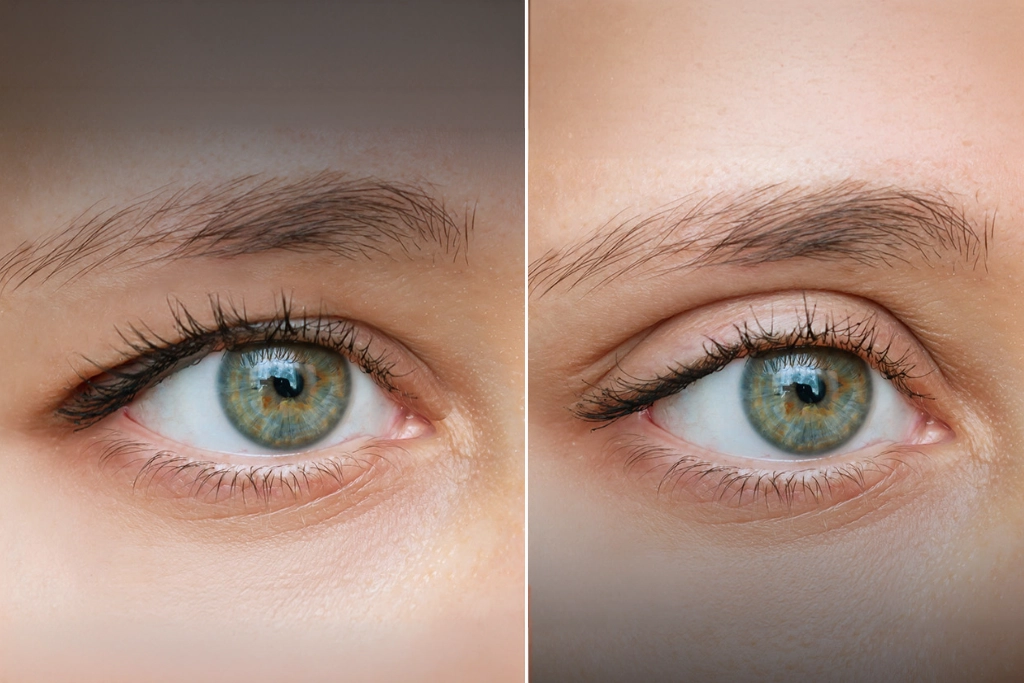
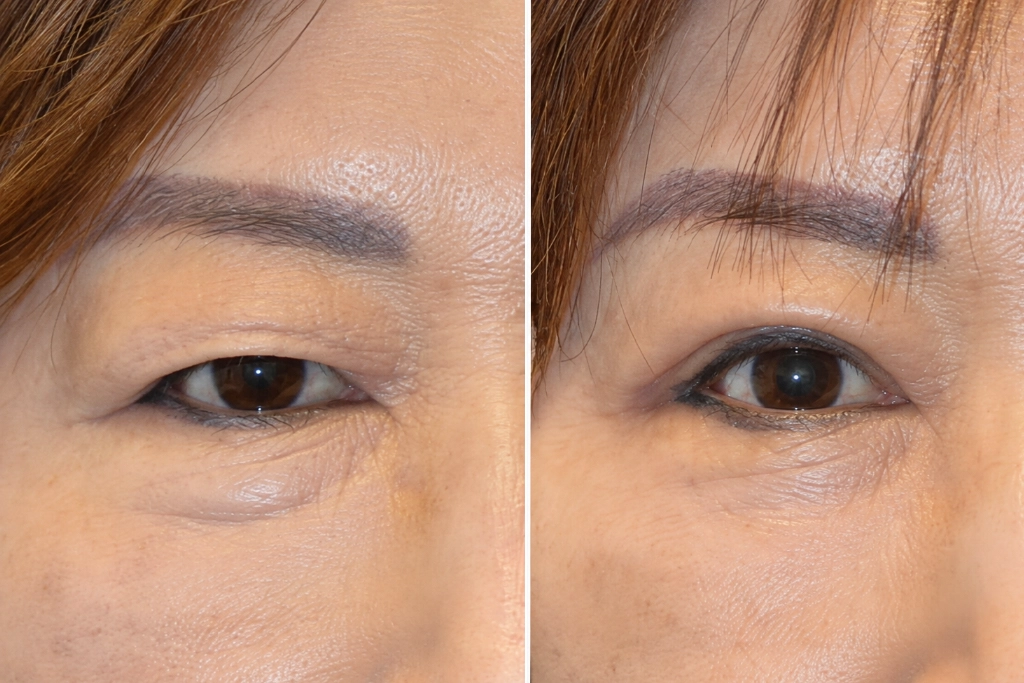
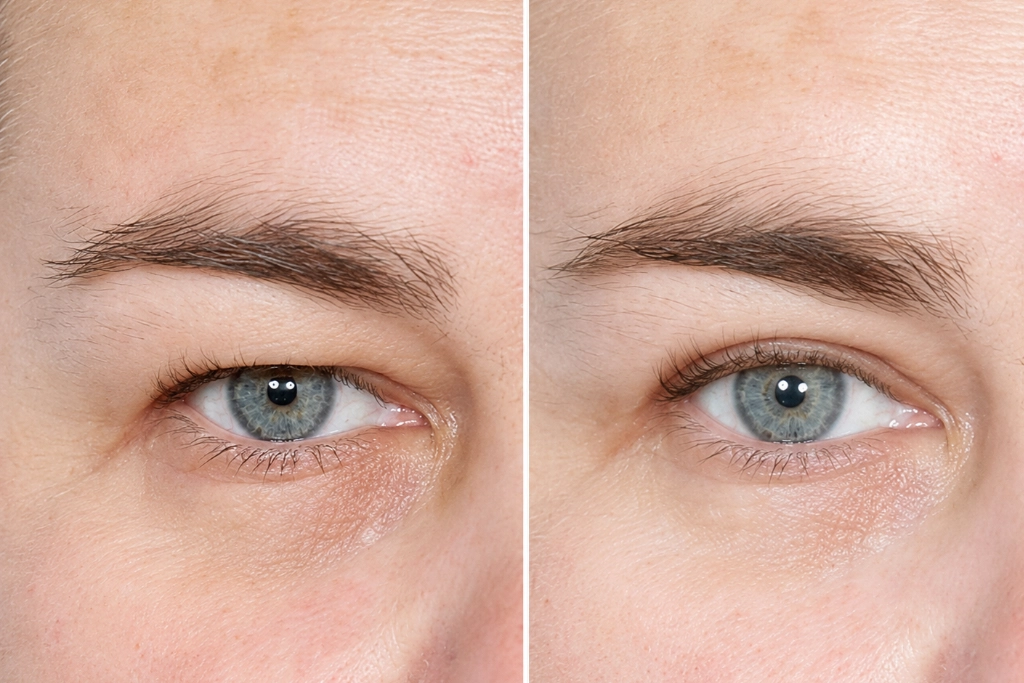

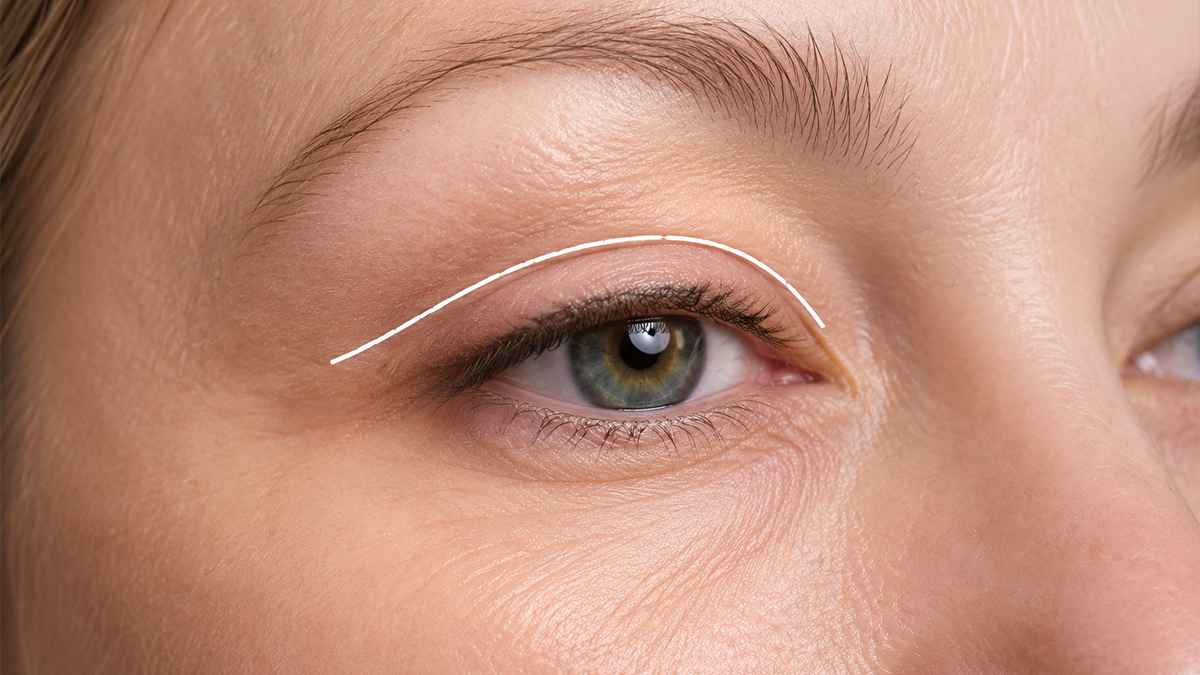



The question under our heading usually comes from women who've noticed it in a very practical way. Their eyeshadow vanishes into a fold, or ends up on the brow bone before lunch. Men describe it differently, as lids that feel heavy by the evening. Upper blepharoplasty in Turkey, sometimes called an upper eyelid lift, takes away that extra fold so there's visible lid again when your eyes are open.
The eyelid surgery overview covers how this compares with lower lid surgery and other options. This page is about the upper lids only, and about what to expect from upper blepharoplasty in Turkey specifically.
What's actually causing the heaviness
In most people it's plain loose skin over a normally placed lid edge, called dermatochalasis, and that's what upper eyelid surgery is for. If the fold reaches the lashes, removing it frees up the top of your sight too.
Two other things can look the same in a photo. Your brow may have dropped, or the lid edge itself may sit low, which is ptosis. Skin removal alone helps neither, so the lid edge is checked against your pupil, and your brow lifted by hand, before anything else.
Say you've been told it's your brow
That happens a lot. If gently lifting your brow with a finger makes most of the hooding disappear, the brow is doing much of the work. In that case a brow lift may be needed instead, or alongside. Just trimming the lid would help a bit, but the heaviness would stay, and the brow might even sit lower afterwards.
Many people have some of each. Your photos are a starting point; the final call is made when we see you.
Ptosis surgery at the same time
If the lid edge sits low, the lifting muscle can be tightened during the same operation. This is often called ptosis surgery or levator repair. It's priced after examination, since it adds to the operation, but it's done under the same anaesthetic.
One lid heavier than the other
It's common for one upper lid to hang lower than the other. Sometimes the brow on that side sits lower; sometimes there's a mild ptosis on one side only. A straight-on photo with your face relaxed shows it best. The plan may take a slightly different amount of skin from each lid, and it'll say so.
Recent Botox
Had forehead Botox lately? Let us know the date. Depending on where it went, it can raise or lower the brow, which changes how much lid skin should go. Ideally the plan is made once it has worn off, so we're measuring your real brow position.
When the lids already look hollow
Some people have the opposite issue: a sunken upper lid with a loose fold of skin below it. Removing fat there would make things worse. So we keep the fat there, and sometimes move a little to fill the hollow.
Thyroid problems and dry eyes
If you have, or have had, a thyroid condition, tell us. It can change the position of the lids, and surgery is usually planned once things have been stable for some time. A letter from your eye doctor, if you have one, is useful. Dry eyes matter too, as removing skin can make them feel drier for a while, so the surgeon may be more cautious with how much comes off.
How much skin is removed
The skin is marked with you sitting up, and enough is left for the lid to close easily. Too much removal leaves a hollow, startled look, and that's the mistake we plan around.
Sometimes a thin strip of muscle comes out as well, and a little fat near the nose if it bulges. In a lot of people, especially older patients, fat is left alone or even preserved, as a hollow upper lid ages a face.
The crease and the scar
The cut follows the natural crease of your lid and runs out a little towards the outer corner. When your eyes are open the line folds away inside the crease. The stitches are very fine and come out after a few days, before you fly home.
For the first weeks the line looks pink. By around three months most people struggle to find it. If you have very thin or very fair skin it may stay faintly visible a little longer, but it's still in the fold.
Crease height and eye shape
Crease height has to suit your face, or the result looks either startled or barely changed. A slightly more visible lid suits most women, since that's where eyeshadow sits, while a lower, softer crease keeps a man's eye from looking done.
Most people's lids differ a little, and each side is measured on its own to even them out as far as possible.
Make-up and contact lenses afterwards
Leave eye make-up off for roughly two weeks, until the stitches are out and the line has closed. Contacts can go back in whenever the lids feel comfortable, usually within a couple of weeks.
Upper blepharoplasty recovery
Most people stay five to seven nights for upper blepharoplasty in Istanbul after a short spell on the ward. The lids are tight and puffy for a few days, so ice packs and sleeping a little propped up help, along with eye drops. Stitches are out within days. Bruising takes a week or two to fade, and the crease takes around three months to soften.
Older patients
In your sixties or seventies, thinner skin, a lower brow and drier eyes are all common. They make us more careful, not less willing, and bruising may simply take a little longer to clear.
Do people notice?
Usually they notice you look rested rather than that you've had anything done. The eye shape stays the same; there's just more lid on show. Many people say the biggest reaction comes from those who see them every day, often weeks later, when the last of the swelling has gone.
Glasses and screens
Glasses are fine from the first days, as long as the frames don't rest on the lids. Swap heavy frames for light ones for a few weeks. On screens, take regular breaks and keep the drops handy, because they dry the eyes. Most people who work at a computer find the first week easier with the brightness turned down.
Doing upper and lower lids together
If under-eye bags bother you as well, the lower lids can be done in the same session. All four lids together cost €2,900, against €2,400 for the upper pair on its own, and you only recover once. Some people start with the upper lids and come back for the lower ones later, which works too. The lower blepharoplasty page explains what's involved underneath.
Adding a lifted outer corner
Some people want more than a lighter lid. They're after a slightly lifted, almond-shaped outer corner. That's a separate operation, the fox eye lift, and it can be combined with upper blepharoplasty in one trip. We'll tell you honestly whether the combination suits your face.
Can it be a quick trip?
Not really, even though the operation itself is fairly short. The stitches need to come out and the lids need checking before you fly, so upper blepharoplasty in Turkey means planning for five to seven nights. Many people use the later days to rest at the hotel or walk around the city with sunglasses on.
Planning around an event
The lids usually look presentable after about two weeks, with a little make-up over any last yellow bruising. For something with lots of photos, like a wedding, give yourself three months so the crease has fully settled and your before and after looks its best. A beach holiday soon after is fine, as long as you keep the scars out of strong sun.
A second upper lid operation
Some people come to us after upper lid surgery elsewhere because the hooding has come back. Often the brow has dropped since, and the lid itself is fine. Others had too much skin taken and now find the lids tight or hard to close. That's harder to put right, since skin can't easily be added back. Send photos and any notes from the first operation, and we'll tell you honestly what's possible, even if the answer is to leave things as they are.
What upper blepharoplasty before and after photos should show
With the eyes relaxed and open, there should be a clear strip of lid between lashes and crease, where before there was a fold. The eye shape should look the same, just less heavy, and the brow shouldn't have dropped.
Look at the timing too. Photos taken at a week still show swelling and a slightly high crease. At three months you see the settled result, and that's the before and after worth comparing. Patients who only had their upper lids done often mention in reviews how soon they went back to make-up. Your own before and after, taken in the same light, will show more than any gallery.
Upper blepharoplasty cost in Turkey
Both upper lids cost €2,400 with us. Anaesthesia and the hospital stay are included, and so is a year of video follow-up. Transfers and an interpreter come with it too. Ptosis repair or a brow lift are extra, and are priced once the examination shows they're needed.
The table above lists prices abroad. Before comparing any upper blepharoplasty price, make sure it's for both lids, and that someone checked your brow and lid edge.
How long the result lasts
Removed skin doesn't grow back, so the improvement lasts many years. Skin carries on ageing, though, and the brow can drop with time. Some people come back in ten or fifteen years for a small tidy-up, often under local anaesthetic. Most find one upper blepharoplasty in Turkey is enough, and if a tidy-up is ever wanted, it's a much smaller procedure than the first, with a correspondingly lower price.