
 English
 Italiano
 Español
 Français
 Deutsch
 Português
 Русский
 Български



-1-1280x720.webp?v=mv1dodem)
-1280x720.webp?v=mv1dxkcr)
-1280x720.webp?v=mv1dxmxq)
-1280x720.webp?v=mv1dxpnk)
-1280x720.webp?v=mv1dxrzy)
-1280x720.webp?v=mv1dxuk2)

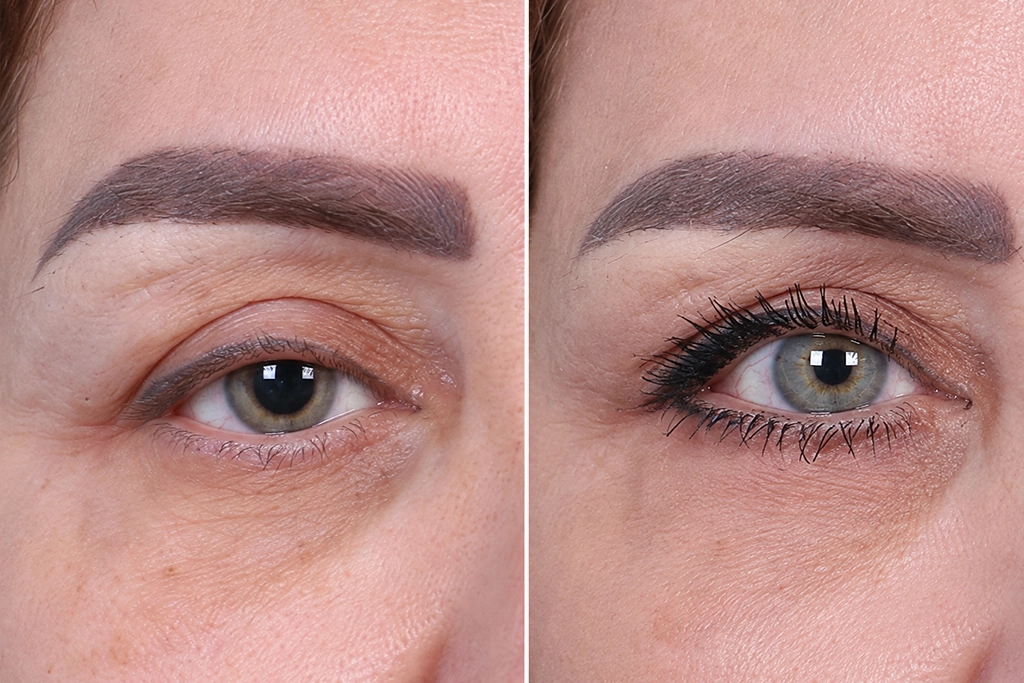
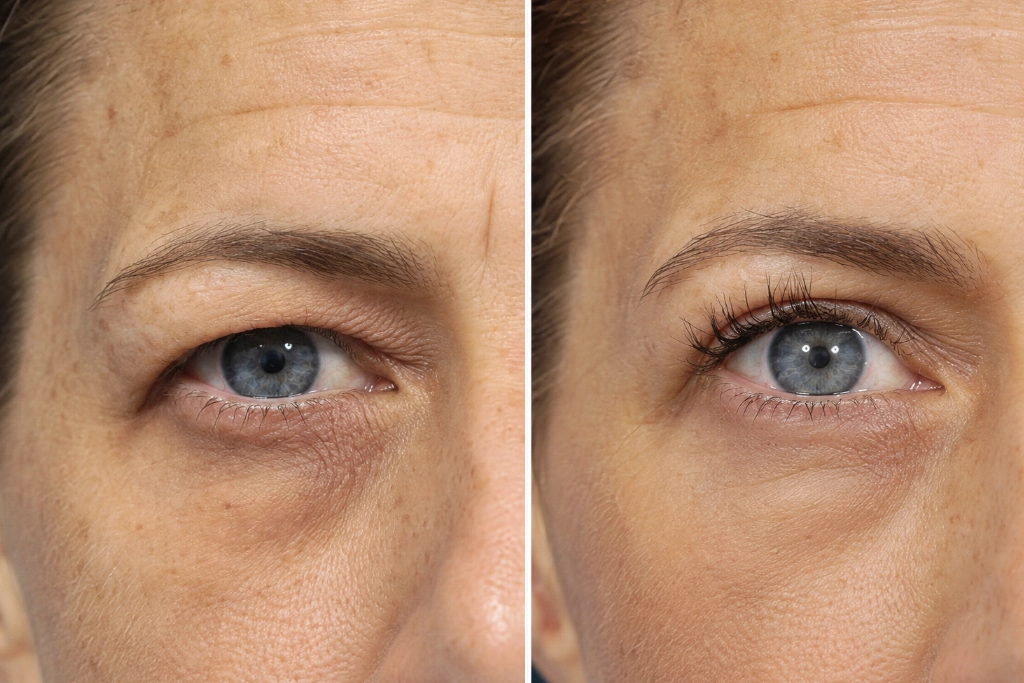
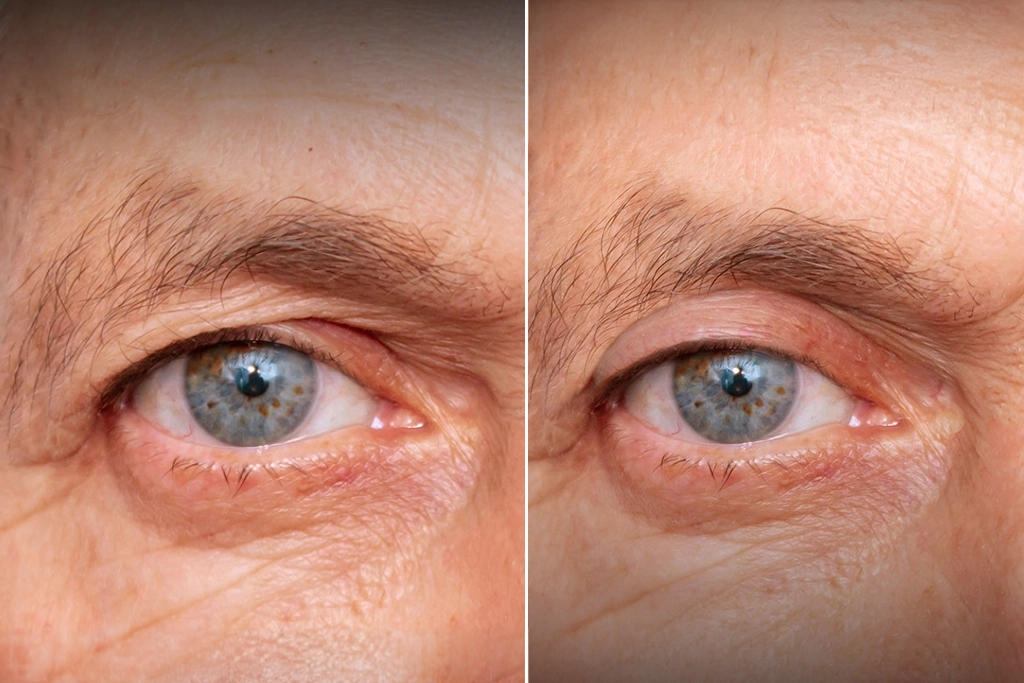
Most people who ask the question under our heading have already tried the obvious things. More sleep, less salt, cold spoons, expensive creams. Bags that are there every single morning are usually fat that has slipped forward, and creams can't move fat. Lower blepharoplasty in Turkey, the surgery behind proper under eye bag removal, either takes that fat out or moves it into the hollow below.
For an overview of both upper and lower lid surgery, see the eyelid surgery guide. This page is about the lower lids, and what lower blepharoplasty in Turkey involves for them.
Puffiness that comes and goes
Not all puffiness is fat. If your under-eye area changes a lot from day to day, worse after salty food, poor sleep or a cold, it's more likely to be fluid. Allergies can do it too. That kind of swelling doesn't respond well to surgery, and it's worth checking with your own doctor first. Fat bags look much the same every day, and that's what eye bag surgery treats. Photos taken at different times of day can help us tell the two apart.
Can you remove bags without surgery?
Only partly. Filler hides a hollow for a few months. Laser firms skin a little. The fat stays where it is.
Removing fat or moving it
Which is better depends on what's under the bag. With a smooth slope from lid to cheek, the extra fat simply comes out. If there's a dip below the bulge (the tear trough), though, taking the fat away can leave the eye looking sunken, so the surgeon slides it down into the dip to fill it.
Plenty of people get a mix of the two, at the same price. Your plan names the technique.
No visible scar: the inside approach
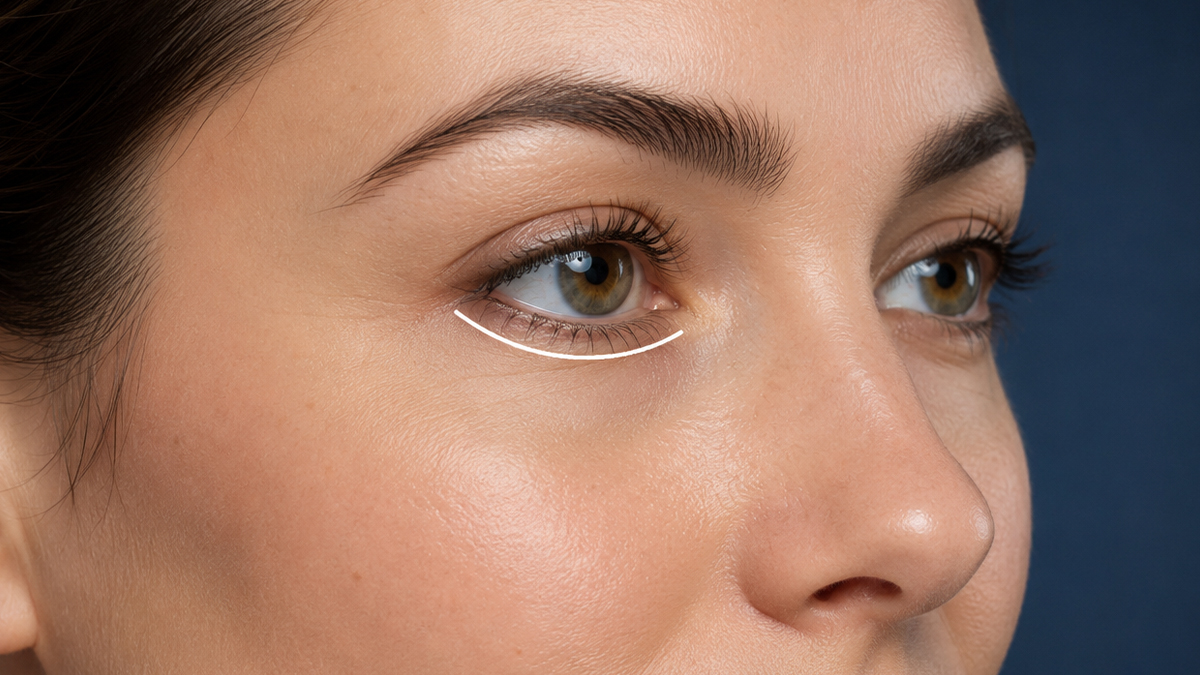
If your skin is in decent shape, the cut goes on the inside of the lower lid, a technique known as transconjunctival blepharoplasty. There's no scar on the face at all, and the lid's support isn't disturbed, which suits younger patients and anyone with firm skin.
If there's loose skin to remove as well, a fine cut is made just under the lashes instead. Tucked under the lashes, that line is hard to spot after a few months.
The snap-back test
Lower lid surgery is fussier than upper because the lid must stay snug against the eye. A gentle pull and release shows how well it's supported; if it creeps back slowly, taking skin without adding support could drag it down.
When support is weak, the outer corner of the lid is tightened during the operation. This is called canthopexy. It isn't the same as a fox eye lift, which changes the shape of the outer corner for looks; canthopexy simply keeps the lid in place.
How your eye sits against your cheekbone
In profile, some people's eyes sit further forward than the cheekbone below them. With less underneath to rest on, the lid needs more care, so less skin is removed and support is added more often. Surgery is still possible. A proper side-on photo shows it clearly. People with this shape have often noticed that their eyes look prominent in photos.
Say you've had filler under your eyes
That's common. Filler in the tear trough can soften a hollow for a while, and some people have it for years before deciding on surgery. If you've had it, tell us when and what product. Hyaluronic filler can be dissolved before the operation if it's in the way, and sometimes it has migrated and is part of the puffiness. Dissolving it a few weeks before travel lets the area settle, so the surgeon sees the true shape.
Bags in your twenties and thirties
Under-eye bags aren't only an age thing. Plenty of younger people inherit them from a parent and have had them since their teens. In that case the skin is usually fine, and the operation is often done from the inside alone, with no skin removed. The recovery is a little quicker too, and many younger patients are back at their desks after about a week. Many have spent years being asked whether they're tired.
What surgery can't fix
Swelling that lies on the cheekbone, below the lid, is a different thing. Festoons, or malar bags as they're called, don't behave like eye bags. Lower blepharoplasty may help them a little but usually won't clear them. Dark circles caused by pigment or veins showing through thin skin also won't change. Fine wrinkles and sun damage usually stay as well; skincare or laser treat those better. We'll tell you if part of what bothers you falls into one of these groups.
Keeping the lower lid in place
Eye shape matters most on the lower lid. Even a slight pull downwards can make an eye look round or sad, which is why we're cautious with skin and check support before anything else. The aim is the same eyes, just without the bags. Lying face-up at night during the first week also helps the lid settle where it should.
After big weight loss
If you've lost a lot of weight, the area under your eyes may look hollow and tired rather than puffy. In that case removing fat is the wrong move. Keeping it, and moving it into the hollow, usually gives a fresher look, and the skin may need a light tidy at the same time.
Bags left after surgery elsewhere
Some people come to us because their bags were treated somewhere else and haven't fully gone. Often one of the small fat pockets was left behind, which a second, smaller operation can deal with. Others have the opposite problem, a lid that now sits a little low, which calls for support, not more removal. Send us your before and after photos from the first operation along with any notes, and you'll get a straight answer on what's realistic.
Make-up and concealer afterwards
If the operation was done from the inside, light concealer can often go on within a week or so to cover any bruising. With a cut under the lashes, wait until it has healed and the stitches are out. Mascara on the lower lashes usually waits about two weeks, and a regular one is easier than waterproof, which takes more rubbing to remove. Many people find they need much less concealer than before, which is often the first thing they mention at follow-up, along with their before and after photos.
Lower lids with a facelift
When the cheeks have dropped too, the hollow under the eye is partly a cheek problem. In that case lower blepharoplasty is sometimes combined with a facelift, which lifts the midface and supports the lower lid from below. We'll tell you if that combination would give a better result than the eyelids alone. If a facelift is on your mind for the next few years, mention it now so the timing can be planned together.
Lower blepharoplasty recovery
After a short ward stay, plan on five to seven nights for lower blepharoplasty in Istanbul. Swelling is heavier down here than on the upper lids and fades more slowly. A pink, puffy white of the eye in the early days is normal.
Any stitches under the lashes are removed before your flight. Two weeks off work is usually enough. Some puffiness, especially in the mornings, can take a few months to go completely.
Risks with lower lid surgery
Bruising, swelling and dry or watery eyes are expected for a while. Less often, the lid can sit slightly lower than before, showing a little white under the iris. That's the main thing careful planning, canthopexy and conservative skin removal are designed to prevent. Under-correction is possible too, where a little fullness remains. Damage to eyesight itself is extremely uncommon.
Lower eyelid surgery for men
In men, bags tend to be heavier and more often inherited, with thicker skin. Most want them gone without any change to the eye's shape, so we often work from the inside, partly because there's then no visible line to explain at work. A gentle result looks best on most men, rather than a perfectly flat under-eye area.
Upper and lower lids in one session
Many people with under-eye bags also have heavier upper lids. Doing both together costs €2,900 in total, where either pair on its own is €2,400, with one anaesthetic and one recovery. The upper blepharoplasty page explains the upper side.
Your lower blepharoplasty before and after
Look at the lid–cheek junction. It should be smooth, and the lid should still sit snugly with no extra white below the iris. Leave it three months before deciding, because at two weeks there's still swelling. Your own daylight photos, taken in the same spot each month, make the best before and after of all.
What to ask any clinic
Whichever clinic you're weighing up for lower blepharoplasty in Turkey, find out whether moving fat is routine for them or a rarity. If all they do is remove it, a hollow under your bag can go untreated. It's also fair to ask how they check lid support before surgery, and what they do when it's weak.
Lower blepharoplasty cost in Turkey
Both lower lids cost €2,400 with us, whether the fat is removed or repositioned. The price covers your anaesthetic and time on the ward. Transfers from the airport are included, as is a translator, and our team stays in touch by video through the first year. Canthopexy, if your lids need support, is part of the same operation.
The table above shows typical lower lid prices abroad. Check that any lower blepharoplasty price you're quoted covers fat repositioning and lid support rather than adding them on.
Is it permanent?
Removed or moved fat seldom returns. Skin keeps ageing slowly, so a little looseness may appear again over many years. For most people, lower blepharoplasty in Turkey is a one-off operation. If a small adjustment is ever needed, it's quoted at its own price.