
 English
 Italiano
 Español
 Français
 Deutsch
 Português
 Русский
 Български
 العربية
 فارسی
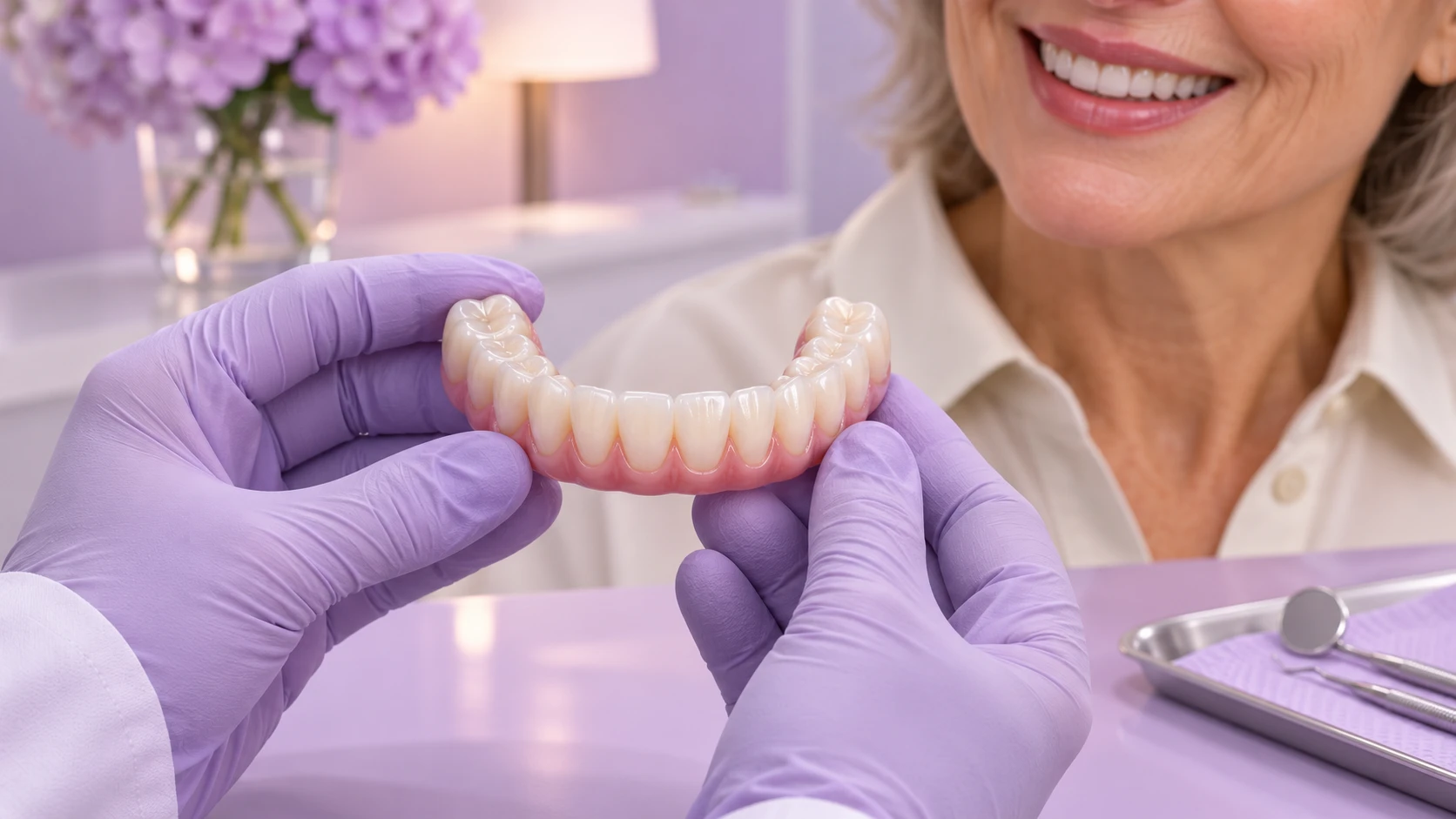
Dentures that clack every time you laugh. A back tooth that snapped on a crust of bread last month, and another the month before. Sound familiar? Then you've probably already googled your way to All-on-4 and All-on-6. Only two implants apart, so how different can they really be?
More than you'd think, as it happens, and less than some clinics make out. The number matters, but mostly because of what it says about your jawbone, your bite and how much support the new teeth will get over the next twenty years.
We'll keep the dental jargon to a minimum. Read to the bottom and you'll have a pretty good guess at which one a dentist would put in front of you.
So What Is a Full-Arch Implant, Exactly?
Picture your whole top row of teeth, or the bottom row, or both, replaced by one solid piece that's screwed in and never comes out for the night. Doing it tooth by tooth would take twelve-plus implants a jaw. The shortcut is to anchor a long bridge on just a few dental implants placed where the bone is strongest.
There's no popping it out at the sink. It feels much closer to having your own teeth than a denture does, there's no plastic plate across the roof of your mouth, and nothing slips when you laugh. That's why so many denture wearers describe it as getting their life back.
The difference between the two is simply how many posts hold that bridge up.
How All-on-4 Works
With All-on-4, four implants hold the whole arch. The two at the front go in straight. The two at the back are the clever bit: they're angled, often by up to around 45 degrees, so they can reach further along the jaw and grip denser bone.
The reason for the angle is bone, or rather the lack of it. Lose a tooth and the bone around it starts shrinking, quietly, year after year, and it's usually worst at the back. Up top, the sinuses sit just above. Down below, there's a nerve running through. Tilting the rear implants steers them clear of both, and that's often why people having All-on-4 can skip the bone graft. For a lot of people that's a big deal, because a graft can add months to treatment.
In many cases you also leave the clinic with a fixed temporary bridge on the same day the implants go in. Hence the "teeth in a day" tagline you'll see in adverts. Soup and scrambled eggs will be your friends for a while, but at least you're never toothless.
The trade-off is that four is the minimum. Each implant carries quite a lot of load, and if one of them ever fails, the bridge usually can't be worn properly until that implant is replaced.
All-on-6: Two Extra Implants, Explained
All-on-6 is the six-post version. The implants usually go in closer to vertical and are spaced out more evenly from one side of the jaw to the other.
Two more might not sound like a lot. What it changes is how the pressure of chewing gets split up. A garden table on four legs is fine, but give it six and it stops rocking when someone leans on the edge. With six implants, each one takes less strain, the bridge can sometimes extend a little further back for more chewing teeth, and if one implant ever runs into trouble, the other five can usually keep things stable while it's sorted out.
The catch is bone. You need enough healthy jawbone in six places, not four, and that's not always there. Some patients need a bone graft or a sinus lift first, which adds time to the whole process. It's also a longer operation and generally costs more, since there are two more implants and more parts to make.
All-on-4 vs All-on-6: The Main Differences in a Table
These are the points patients tend to ask us about. Your own plan could look a little different depending on your scans.
Feature | All-on-4 | All-on-6 |
|---|---|---|
Implants per jaw | 4 | 6 |
Implant angle | Back two tilted | Mostly upright |
Bone needed | Less; often no graft | More; graft sometimes needed |
Load per implant | Higher | Lower, spread more evenly |
If one implant fails | Bridge usually can't be used until it's fixed | Bridge can often stay in use |
Teeth on the bridge | Usually 10 to 12 | Usually 12 to 14 |
Surgery time | Shorter | Longer |
Cost | Lower | Higher |
Success rates for both are high in published studies, typically well above 90 percent over many years, so this isn't really a choice between "works" and "doesn't work". It's about which fits your mouth better.
So Which One Would Suit You?
Most of the answer is hiding in a 3D scan. Looking in your mouth tells a dentist very little about how much bone sits under the gum. That said, certain types of patient do tend to end up with one or the other.
Four is usually the pick when a lot of bone has gone and grafting is something you'd like to dodge. Long-term denture wearers often fall into this group, because years of a plate pressing on the gums is exactly what thins out the back of the jaw. It's also the more straightforward choice if fewer procedures and a smaller bill are high on your list.
Six comes into its own when there's still plenty of bone left. A larger jaw, a powerful bite or a habit of clenching at night are all good reasons to spread the load across more implants. The upper jaw is worth a special mention too. Its bone is naturally softer than the lower jaw's, so some dentists prefer six implants on top even if four would be enough below.
And if the upper jaw has very little bone left, neither might be possible on its own. That's where zygomatic implants, which anchor into the cheekbone, can come into the conversation.
One more thing. If you smoke, or your diabetes isn't well controlled, your implants are more likely to fail, four or six. Tell your dentist straight, even if you'd rather not. It changes the plan.
From First Scan to Final Smile: How Treatment Works
Four implants or six, there are normally two main phases.
The first is the big one. After a CT scan and planning, any remaining teeth that can't be saved are removed, the implants go in, and a temporary bridge is fitted, often within a day or two. It's done under local anaesthetic, and many clinics offer sedation if you're nervous. Expect swelling and some soreness for the first few days, a bit like after having wisdom teeth out, and a soft diet for a good while afterwards.
Then comes the waiting. The implants need time to fuse with the bone, and that typically takes around three to six months. You get on with normal life in your temporary teeth.
The second stage is when your permanent bridge is made and fitted. It's tougher and more natural-looking than the temporary set, typically zirconia, or acrylic or porcelain built on a metal frame. You'll bite down on thin coloured paper more times than you can count while the dentist smooths off tiny high spots. One spot that hits too hard can overwork the implant underneath.
Nobody can give you real dates until they've seen the scans.
Living With Your New Teeth
The first thing most people notice is food. Apples, steak, crusty bread, corn on the cob: things you may have given up with dentures are usually back on the menu once the final bridge is in. You do lose a bit of feeling compared with real teeth. Most people stop noticing after a while.
Cleaning is where you'll need to change your routine a bit. Food can collect under the bridge where it meets the gum, and that area needs attention every day. A water flosser is a game changer here, along with small interdental brushes and a soft toothbrush. Get lazy about it and the gums around the implants can get inflamed and infected, and that's behind a lot of implant problems.
Book in with a dentist or hygienist every six to twelve months. Every so often they'll take the bridge off, give underneath a proper clean and make sure the screws haven't loosened. It sounds like a big deal. It takes less time than a haircut.
The implants can stay put for decades if you're good to them. The bridge gets the wear and tear, so somewhere around the 10 to 15 year mark it may need fixing or swapping, depending on what it's made of and how hard you chew.
All-on-4 vs All-on-6: Common Patient Questions
Is All-on-6 stronger than All-on-4?
It's stronger on paper, because the load is shared between more implants. That doesn't automatically make it right for you, though. If six would only fit after a graft, a carefully planned All-on-4 could be the wiser move.
I've been told my bone is too thin. Can I still have All-on-4?
Quite possibly. The angled back implants were designed for exactly that situation. When even that isn't enough in the upper jaw, zygomatic implants are another route.
Does getting full-arch implants hurt?
You won't feel pain during the surgery itself. The next few days are the tender bit. Puffy cheeks, a sore jaw, that kind of thing. Normal painkillers usually cope, and by the end of the week most people feel a lot more like themselves.
Can my top and bottom jaws have different options?
Yes. Having All-on-4 in one jaw and All-on-6 in the other is quite common. The top and bottom jaws are planned independently, each according to its own bone.
How long will the temporary teeth last?
Long enough to get you through healing, which is normally a few months, until the final bridge goes in. They aren't built for heavy chewing, so stick to the soft-food rules.
Can I take the bridge out myself?
No. It's fixed to the implants with screws, and only your dentist can remove it. That's what makes it feel so different from a denture.
Find Out What Your Jaw Can Support
The question "four or six?" almost always comes down to a scan. Until someone has seen how much bone you have and where it is, any answer is a guess.
Got an X-ray already? Send us a recent panoramic or CT scan. If not, a few photos of your teeth are enough to start with. Our dental team will take a look and let you know what they'd go for, whether it's All-on-4, All-on-6 or another kind of full mouth implant plan.