
 English
 Italiano
 Español
 Français
 Deutsch
 Português
 Русский
 Български
 العربية
 فارسی
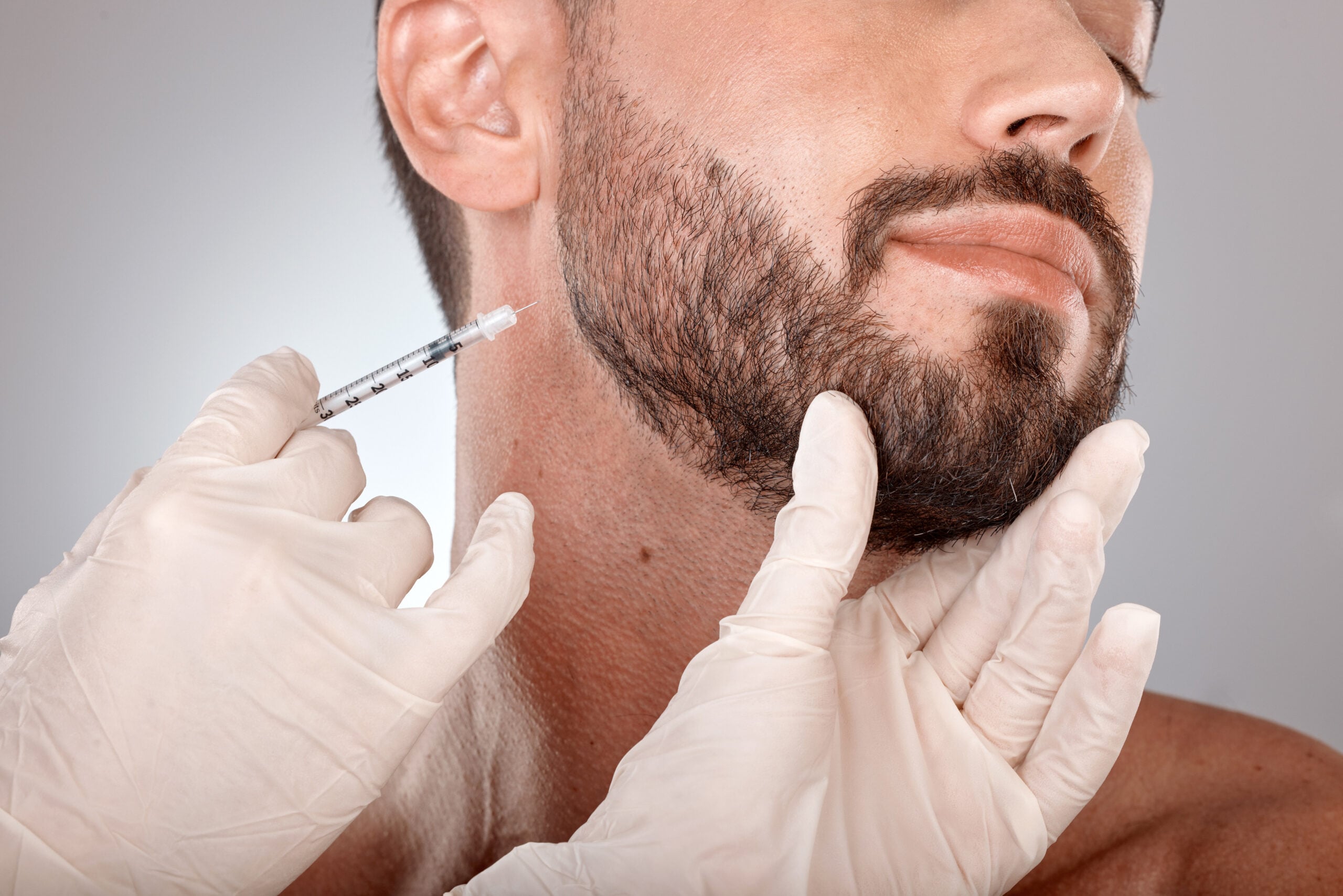
Recovery after a beard transplant follows a predictable pattern, from small scabs in the first week to new growth around months three to four and a fuller beard at about a year.
What Is a Beard Transplant?
A beard transplant involves extracting healthy hair follicles from the donor area — usually the back of the scalp — and implanting them into areas with thin, uneven, or missing facial hair.
The procedure is commonly preferred by patients who experience:
- Patchy beard growth
- Uneven beard density
- Beard scars
- Thin mustache areas
- Weak sideburn growth
- Naturally sparse facial hair
Using modern implantation techniques, transplanted hairs are placed according to the natural direction and angle of beard growth to achieve realistic results.
Beard Transplant Before and After Results
Before and after photos are only a fair comparison at about a year, so see the dated cases on our beard transplant page.
How Does a Beard Transplant Procedure Work?
Grafts are taken from the back of the scalp and placed at the flat angle facial hair grows at; the technique and design are explained on our beard transplant in Turkey page.
How Many Grafts Are Needed for a Beard Transplant?
The number of grafts depends on your beard goals and current facial hair density.
Typical graft ranges:
Beard Area | Estimated Grafts |
|---|---|
Mustache | 300–700 |
Goatee | 400–800 |
Sideburns | 200–500 |
Partial Beard | 800–1,500 |
Full Beard | 2,000–3,500 |
During your consultation, our specialists create a personalized graft plan for natural and balanced results.

Beard Transplant Recovery Timeline
First 7 Days
Mild redness and tiny scabs appear around transplanted follicles. This is a normal part of healing.
Weeks 2–4
Temporary shedding may occur. This phase is expected and indicates follicles are entering the growth cycle.
Months 3–4
New beard hairs begin growing gradually.
Months 6–12
Density improves significantly and final beard transplant results become visible.
Is Beard Transplant Permanent?
Yes. Once transplanted follicles successfully adapt to the beard area, they continue growing permanently like natural facial hair.
Patients can:
- Trim their beard
- Shave normally
- Style facial hair freely
- Maintain long-term beard density
Beard Transplant Cost in Turkey
A beard transplant is quoted by graft count after a photo assessment; see the price section of our beard transplant page.
Beard Transplant Myths vs Facts
Myth: Beard transplants look unnatural
Fact: Modern implantation techniques create highly natural beard density and direction.
Myth: Only men with no beard can get treatment
Fact: Beard transplants are commonly used to fill patchy or uneven areas.
Myth: Transplanted hairs fall out permanently
Fact: Initial shedding is temporary. New permanent growth follows after a few months.
Myth: Recovery takes several months
Fact: Most patients return to daily activities within a few days.
Frequently Asked Questions
Is beard transplant painful?
The procedure is performed under local anesthesia, making discomfort minimal.
When can I shave after a beard transplant?
Most patients can carefully shave after 3–4 weeks, depending on healing progress.
How long does a beard transplant take?
The procedure usually takes between 4–8 hours.
Can I get a beard transplant for patchy beard areas?
Yes. Patchy beard correction is one of the most common reasons patients seek treatment.
Does transplanted beard hair grow naturally?
Yes. Transplanted follicles continue growing naturally and permanently.
Am I a good candidate for beard transplant?
Patients with sufficient donor hair and realistic expectations are generally suitable candidates.
Start Your Beard Transformation Journey
If you are weighing a beard transplant, our beard transplant page explains how the design and graft count are planned.