
 English
 Italiano
 Español
 Français
 Deutsch
 Português
 Русский
 Български
 العربية
 فارسی
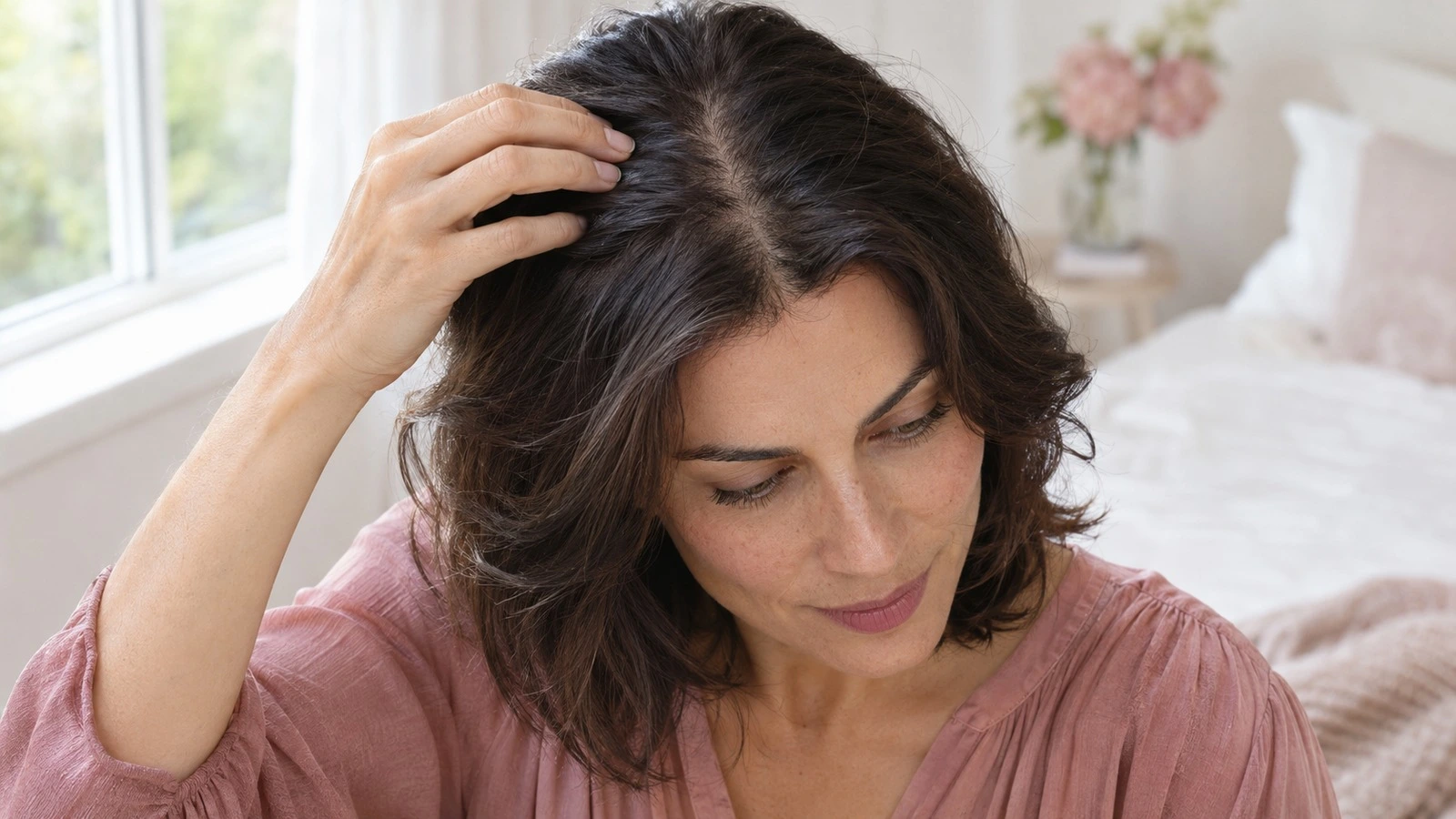
You notice it in odd places first. The hairbrush. The shower drain. A photo from a friend's wedding where, under the flash, your scalp shows through more than you remember. Then you start parting your hair differently and hoping nobody else has spotted it.
Sound like you? Honestly, you're far from alone. Going by some estimates, nearly 40 percent of women have noticeable thinning by their fiftieth birthday, and still it barely gets mentioned, even between friends. It tends to get filed under "men's problems", which leaves a lot of women googling in private.
Here's the encouraging part. In most cases something specific is driving it. Find that something and, quite often, you can do a lot about it. So we've pulled the useful stuff together here: what usually causes it, which blood tests are worth requesting and the treatments that hold up in studies (as opposed to on Instagram).
Is Losing Hair Every Day Normal?
Everybody sheds. Your scalp is constantly swapping old hairs for new, and losing somewhere around 50 to 100 a day is part of that. We get messages from women worried about the clump in the drain after a shampoo, but if you'd gone three days without washing, that's three days' worth coming out at once. Not a problem in itself.
Real hair loss is more about a trend than a single day. Maybe your parting is broader than in last summer's photos, or your hair tie now wraps round three times instead of two. Bright bathroom lighting suddenly shows more scalp on top. Or, in a different pattern, you shed in handfuls for weeks on end.
A trick we often suggest: once a month, photograph your parting from the same spot in the same light. Line the pictures up after three or four months and you'll know whether anything's changing. The mirror just isn't reliable for this.
Common Reasons Women Lose Hair
It's often more than one thing. A bit of low iron on top of a stressful year on top of family genes, for example. Here's what tends to come up.
Female pattern hair loss
This is the type our doctors see most. Look at the women in your family. If your mum's or your aunt's hair got thin on top, yours may well follow, since this kind of loss is mostly inherited and tied to how sensitive your follicles are to hormones. It almost never leads to full baldness in women, and the front hairline normally holds on. It's a slower, subtler thing. New hairs on top come through slightly thinner each cycle. You don't see it month to month. You see it in photos a few years apart, when the parting suddenly looks wider. Some women spot it at 25, most nearer 50.
Shedding after a big shock to your system
Doctors call it telogen effluvium, which is a mouthful for something fairly simple. Your body gets a shock, maybe a high fever, an operation, a crash diet or a really rough few months, and lots of hairs stop growing at once. Two or three months later, out they come together. It's frightening while it lasts, but it normally calms down within about six months once whatever caused it has passed.
After a baby
Pregnancy hormones hang on to hair you'd normally have shed. Once the baby arrives and those hormone levels drop, all of it lets go, typically peaking three or four months after the birth. Most mums find things are back to normal by the first birthday.
Thyroid, PCOS and other hormone changes
Thyroid problems work both ways: too little hormone or too much can each make hair thinner all over. PCOS is another common one. Raised male-type hormones can shrink the hairs on your head and, unfairly, make them thicker on your face. Menopause and coming off the pill can set things off too.
Running low on iron or vitamins
This one gets missed a lot. When women with thinning hair get their bloods done, low iron comes up again and again, particularly with heavy periods or a mostly vegetarian diet. The upside: iron is easy to top up. Ask your doctor to look at vitamin D and zinc in the same blood test. And be honest with yourself about protein; plenty of us eat less of it than we think.
Can tight hairstyles cause hair loss?
They can. Your follicles don't like being pulled on all day, every day. A slicked-back ponytail, cornrows, a top knot or heavy extensions can, over the years, wear out the roots along your hairline and temples; doctors call it traction alopecia. Change to gentler styles early and most women see regrowth. Wait too long and that hair may be gone for good.
Sudden bald patches
If you suddenly find a perfectly round, smooth bald spot, alopecia areata is the usual explanation. It's autoimmune, so your immune system is targeting the follicles. Rarer conditions can also inflame and scar the scalp and destroy follicles permanently. Anything quick, patchy or painful needs a doctor, not a home remedy from the internet.
Hair Loss Symptoms You Shouldn't Ignore
You never need a special reason to get thinning checked. Some things, though, mean you should book an appointment sooner rather than later:
- hair suddenly coming out in clumps or very large amounts
- round bald spots, or areas that are red, flaky or sore
- a scalp that itches, burns or feels tender
- hair loss alongside other changes, like constant tiredness, weight going up or down, irregular periods, acne or new facial hair
- thinning that keeps getting worse month after month
Your GP or a dermatologist is the first stop. Plenty of these causes are picked up by basic tests. Finding out early really does improve the odds of getting your hair back.
Finding Out Why You're Losing Hair
First, you'll talk. You'll be asked when things changed and whether you're seeing hair fall out or just get thinner over time. Recent illness, pregnancy, diets, stress and any new tablets all come up, along with whether thin hair runs in the family. The answers often point straight to the cause.
Then comes the scalp check. A dermatoscope (a small, lit magnifier) lets the doctor see each hair's width and any irritation around the roots. Some will also gently tug a few strands to check how loosely they're held.
Blood tests are pretty routine. The standard panel looks at ferritin, which measures your iron reserves, plus thyroid levels and vitamin D. If PCOS is a possibility, hormones get checked too. And if the picture's still murky or the loss is patchy, the doctor may take a very small sample of scalp skin.
Treatments for Thinning Hair in Women
What helps one woman may do nothing for another, because it all comes back to the cause. That's why the tests come first. These are the options that come up most.
Fixing what's behind it
Sometimes treating the cause is the whole job. Get iron back to normal, treat a thyroid problem, manage PCOS or change a medicine that's behind it, and hair often grows back unaided. After an illness or having a baby, patience usually does most of the work.
Scalp treatments you apply at home
Several scalp lotions and foams have been studied extensively for pattern thinning, and many can be bought over the counter. They lengthen the growth phase of each follicle. Don't expect quick results: it's a matter of months, and some women shed a little more in the first few weeks before things improve. Stop using them and the benefit fades. There's a tablet form too, usually prescribed at a low dose and only with a doctor keeping an eye on things.
Prescription options when hormones are involved
If hormones are the main driver, a doctor may suggest tablets that stop androgens from acting on the hair follicles. They're not safe in pregnancy, or if you're hoping to get pregnant, so you'd only ever start them with medical advice.
PRP
PRP hair treatment uses your own blood. A small sample is spun to concentrate the platelets, which are then injected into the thinning areas to help nourish the follicles. It's normally a course of several sessions. Results differ quite a bit between patients. It's usually combined with other treatments, not used alone.
Laser devices for hair growth
You can buy caps, helmets and combs that emit low-level red light, designed to give follicles a nudge. The research shows a small but real benefit for pattern thinning, as long as you stick with them for months.
Camouflage while you wait
Treatment is slow, and nobody expects you to just put up with it in the meantime. Fibres, a root touch-up spray, a zig-zag parting, a layered cut or a clip-in topper can all buy you time.
Is a Hair Transplant Right for Women?
For some women, very much so. For others it's not the right step, and our team will be honest with you about which applies.
A female hair transplant is a good fit when the thin area is limited: a wider parting, receding temples, a forehead that's always been high, or a spot damaged by tight styles or an old scar. The hair at the back and sides also has to be thick and healthy, as that's what we move.
When thinning is spread right across the scalp, back and sides included, there simply isn't a healthy donor area to take from, so surgery isn't the answer. It's also not the right move while hair loss is still active from a fixable cause, or with conditions like alopecia areata. Those need medical treatment first.
Lots of women choose DHI because the grafts can slip in between existing hairs with very little disruption, and it can often be done as an unshaven hair transplant, so there's no need to shave. Many keep up medical treatment afterwards to protect the hair they still have.
Small Everyday Changes That Help
These won't undo genetic thinning by themselves. What they do is give your hair the best possible chance.
Food matters. Skipping meals or crash dieting can catch up with your hair months later, so eat properly and get protein in most meals. Heavy periods? Then red meat, lentils and spinach deserve a regular place on your plate.
Styling-wise, be a bit kinder. Wear it loose or down more, give your scalp a rest between braids or extensions, and keep tools on a lower heat. And comb wet hair slowly, ends first, with a wide-tooth comb.
Sleep and stress are worth some attention as well. Months of running on empty can show up as extra shedding.
And treat bold promises with suspicion. Few of the supplements and serums claiming fast regrowth have good evidence, and loading up on vitamins you don't lack can sometimes cause problems of its own. A blood test first will show whether you actually need anything.
Hair Loss in Women: Quick Answers
Will thin hair grow back?
In a lot of cases it does. Stress, illness or pregnancy-related shedding typically recovers fully. Thinning from low iron or the thyroid tends to get better once that's treated. Pattern thinning won't simply vanish, but with consistent treatment it can slow down and some hair can return.
Can a stressful time trigger shedding?
It can. A very stressful event can set off heavy shedding a couple of months later. Thankfully, it's normally temporary.
Why do women lose hair after having a baby?
High hormone levels in pregnancy hold on to hair you'd normally shed. Once the baby's born, all that saved-up hair lets go at once. It usually starts a few months in and settles within a year. If it's still going after that, ask for your iron and thyroid to be checked.
Can the pill cause hair loss?
For some women, yes, especially when starting or stopping certain types. If you've noticed a change since switching, tell your doctor.
Could I be a candidate for a hair transplant?
Possibly, if the thinning is in one particular area and the hair at the back of your head is still thick. A consultation with photos, ideally after a recent medical check-up, is the way to find out.
What's the best treatment for thinning hair in women?
There's no single best treatment for everyone. Deal with any underlying cause first. Once that's sorted, scalp treatments that support regrowth are the most common choice, often combined with others depending on the type of thinning.
Get Advice From a Hair Loss Team
Thinning hair can chip away at your confidence, and the people around you may not quite get it. That's fine. You don't need to sort this out by yourself.
For a professional opinion, send our team a few photos of your parting, the top of your head and the back, plus any recent blood test results if you've got them. We'll tell you honestly whether something like PRP, a hair transplant or a trip to your own doctor first is the most sensible next step.
Book your free consultation and get advice that's about your hair.