
 English
 Italiano
 Español
 Français
 Deutsch
 Português
 Русский
 Български
 العربية
 فارسی
Nobody wakes up one morning and books weight loss surgery out of nowhere. There's usually years of trying first. Diets that worked for three months. A gym card that hasn't been swiped since March. Maybe injections, maybe tablets. And after all the late-night googling, it tends to come down to two options. Sleeve, or bypass.
Which is better? Honestly, it depends on you, and we know that's an annoying answer. But if a clinic picks one for you before they've even asked about heartburn, blood sugar or past surgeries, that's a red flag.
Both operations are done through small keyhole cuts. They've been around for decades, with good results behind them. The differences are in how your insides get rearranged, what happens to reflux and diabetes, and what daily life looks like after. That's what we're covering here, in plain words, so you've got your questions sorted before your consultation.
Gastric Sleeve: What the Surgeon Actually Does
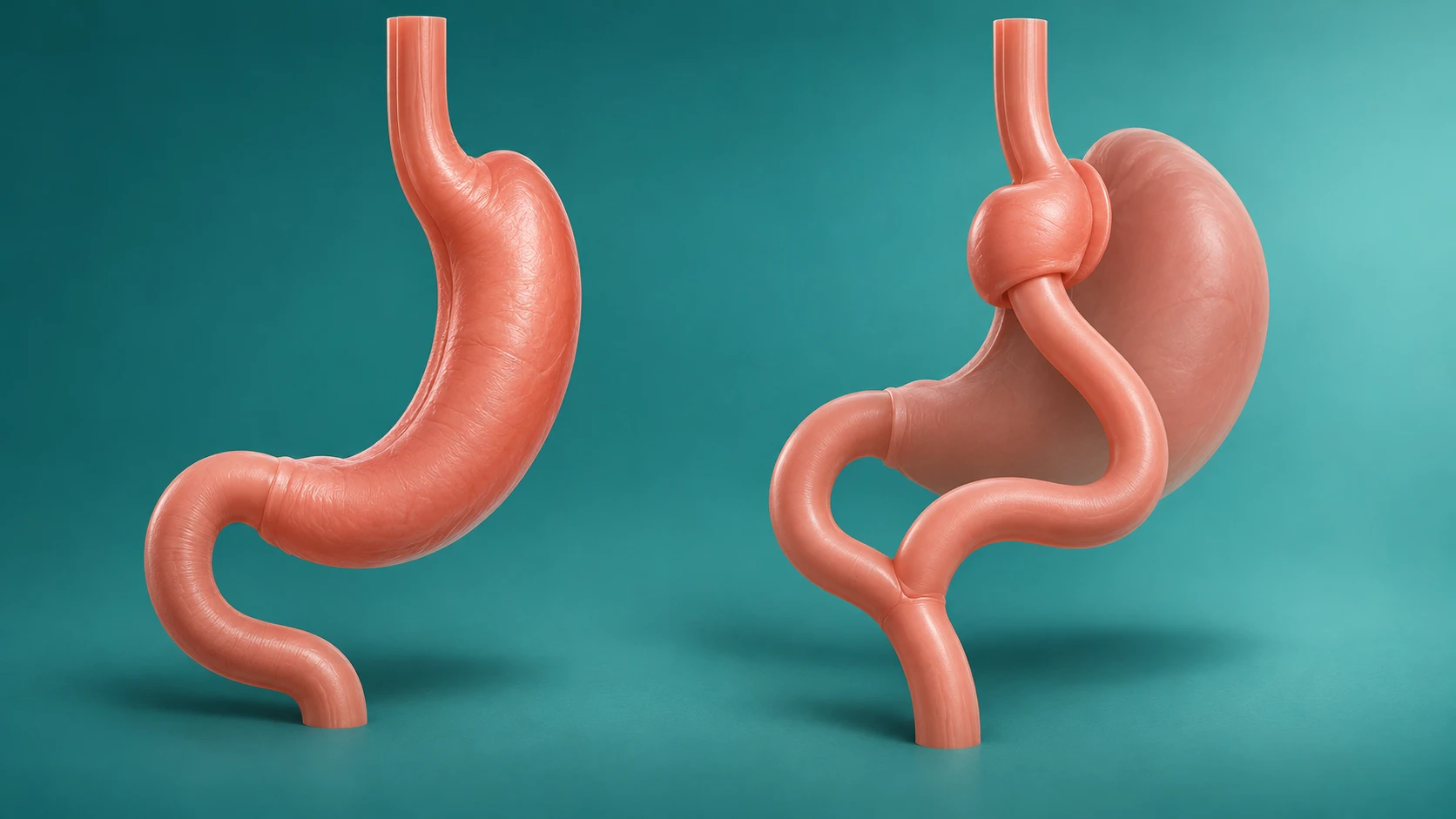
Normally your stomach is a stretchy J-shaped bag, and it can hold a lot. In a gastric sleeve, most of it goes. About 75 to 80 percent, mainly the big outer curve, is stapled off and taken out, and what's left is a long thin tube, not much wider than a banana. Food still takes its normal route into the small intestine. Nothing gets rerouted.
Why does that make you lose weight? Size is part of it. A few forkfuls and you're full. But there's a sneakier reason too. The bit of stomach that's removed makes most of your ghrelin (the "feed me" hormone), and many sleeve patients describe the background hunger they'd lived with for years just... stopping.
On the operating table it usually takes an hour or a bit more. It's the simpler of the two operations, which goes some way to explaining why it's now the most popular weight loss surgery worldwide. Just know going in that it's permanent. The removed stomach can't be put back.
How Gastric Bypass Works
A gastric bypass is a different animal. With the most common type, the Roux-en-Y, the surgeon doesn't take any stomach out at all. They make a little pouch at the very top, around egg-sized, and plug it straight into the small intestine a bit further along. The rest of the stomach just stays put. It still makes its juices, but food never goes through it again.
So there are two things going on. The pouch is tiny, so you physically can't eat big meals anymore. And since food skips the first part of the intestine, you take in fewer calories, plus your gut hormones (the ones that handle hunger and insulin) change quite a bit. That's why some people with type 2 diabetes see their sugar readings fall in the first week or so, before they've lost much weight at all.
The operation's longer too, usually two to three hours. The new route also changes, permanently, how certain vitamins and minerals are absorbed. Reversal is possible on paper, although surgeons almost never do it.
Gastric Sleeve and Gastric Bypass Compared in One Table
The table pulls the main differences together. These are rough ranges taken from research and surgeons' experience, not guarantees, and your own numbers could land either side of them.
Feature | Gastric sleeve | Gastric bypass |
|---|---|---|
What's done | About 75 to 80% of the stomach removed | Small pouch made, intestine rerouted |
Food path | Normal | Skips part of the stomach and intestine |
Operation time | Around 1 to 1.5 hours | Around 2 to 3 hours |
Typical excess weight loss | Around 60 to 70% | Around 70 to 80% |
Acid reflux | Can get worse or start new | Usually improves |
Type 2 diabetes | Often improves | Often improves more, and faster |
Vitamin supplements | Needed long term | Needed for life, usually more of them |
Dumping syndrome | Uncommon | More common |
Reversible | No | Technically yes, rarely done |
One thing on the weight loss row. "Excess weight" is only the part above a healthy weight for your height. It's not your total weight, and adverts sometimes blur the two.
How Much Weight Could You Lose?
Bypass generally wins, though not by a landslide. Sleeve patients often shed around 60 to 70% of their excess weight; for bypass it's more like 70 to 80%. Say you're 50 kilos over a healthy weight. A sleeve might take off 30-odd of those. A bypass, maybe 35 to 40. The gap tends to widen a little over the years.
Most of it comes off in the first year to year and a half. Fast at first, then slower. That year matters for another reason: it's when your new habits either stick or don't. And here's the bit nobody puts on a billboard. If you snack all day, or drink a lot of your calories in fizzy drinks, juice and big milky coffees, either operation can slowly stop working. The surgery helps a huge amount, but you still have to meet it halfway.
If your BMI is above 50 or so, surgeons don't all agree. Some go straight for a bypass. Others like to do a sleeve first and a second operation later, once some of the weight has come off. It really depends on the person.
Reflux, Diabetes and Other Conditions: Where Sleeve and Bypass Differ
Everyone looks at the weight loss figures first. But for a lot of people, it's their other health problems that end up deciding it.
If heartburn is already part of your life
Anyone who keeps antacids in their bag should read this bit twice. Here's why. A sleeve turns the stomach into a narrow tube with more pressure inside, and that pressure can push acid back up into your throat. If you've got heartburn already, it can get worse. Some people get it for the first time after the operation. A bypass usually does the opposite. Hardly any of the acid-producing stomach is left where the food goes, so the burning tends to settle down, and that's the main reason surgeons often point reflux sufferers towards a bypass. Got a hiatal hernia too? That normally gets fixed during the same operation, whichever one you have.
Living with type 2 diabetes?
Here both procedures do well. Sugar control frequently improves a great deal and many patients reduce their tablets or stop them altogether. The bypass has a measurable edge, though, and it's most noticeable in people who've been diabetic for a long time or who already inject insulin.
What about blood pressure, cholesterol and sleep apnoea?
These generally improve as the weight drops, with either procedure. There isn't much between the two here.
Risks, Side Effects and the Long-Term Commitment
"It's very safe" isn't really an answer, so let's be specific. With an experienced bariatric team, serious complications are uncommon after both operations. Uncommon isn't never, though.
The early worry with a sleeve is a leak from the long line of staples down the stomach. It's rare, but serious if it happens. Further down the road, reflux is the thing sleeve patients mention most.
Bypass has two new joins in the gut, one where the pouch meets the intestine and one lower down, so there are a few more spots where problems can start. Ulcers at the pouch join are one. Smoking and painkillers like ibuprofen make them far more likely, which is why your surgeon will ask you to give up both. Then there's dumping syndrome. Eat something very sweet or greasy and it rushes into the intestine, leaving you crampy, sweaty, shaky, sometimes running for the loo. Not fun. Some people, oddly, say it's the best sugar deterrent they've ever had.
Vitamins, every day, for good
No way around this one. With much smaller meals, plus reduced absorption in bypass patients, your body can't get everything it needs from food alone. In practice that means a multivitamin plus B12, iron, calcium and vitamin D every single day, and blood tests at least once a year. Bypass patients usually take a bit more and get checked more often. Stop taking them and you might not notice anything for a while, but anaemia, weak bones or nerve problems can show up years later. So be honest with yourself. Will you actually keep it up?
Can You Have Weight Loss Surgery, and Which Type?
Under the latest guidelines from the big bariatric surgery societies, weight loss surgery is an option for adults with a BMI of 35 or more, whether or not they have other health problems. People with type 2 diabetes or a similar metabolic problem that other treatments haven't fixed can be considered from a BMI of 30. Age, medical history, past surgery and how ready you feel for the change afterwards all get weighed up too.
If you do qualify, it usually comes down to a handful of things. How bad is your reflux? Do you have diabetes, and for how long? What's your BMI? Can you see yourself taking vitamins every day and having bloods done every year, maybe forever? Does a shorter, simpler operation matter to you?
Very roughly: no real reflux, wanting a more straightforward operation, happy with fewer long-term demands? The sleeve often fits. But if reflux is a real problem for you, you've had diabetes for years or you're on insulin, your BMI is very high and you don't mind more check-ups, then a bypass is usually the better fit.
BMI on the lower side, or just not ready for surgery? A gastric balloon or gastric botox could be worth talking about. You'll lose less, though, and it often doesn't stay off as well.
Recovery, and Life After Sleeve or Bypass Surgery
Recovery is pretty similar either way. A few hours after you wake up, a nurse will get you out of bed for a little walk round the ward, which helps stop blood clots. You'll stay in hospital for a short while so they can keep an eye on you. Coming from another country? Don't fly home the day after you leave hospital. Give it a few days so the team can check on you first.
Getting back to normal food takes about six weeks. First it's clear drinks, then smooth purées, then soft food, and only after that proper meals in small portions. Your dietitian will tell you when to move on to each stage. Try not to rush. Moving on too fast is one of the main reasons people feel sick or uncomfortable in the early weeks. If you work at a desk, you'll probably be back in two or three weeks. If your job is physical, it'll be longer.
After that, it just becomes your routine. Small portions, eaten slowly. Protein first. No drinking while you eat. A vitamin every morning and check-ups now and then. It looks like a lot written down, but most people say it feels normal within a few months. Loose skin is common once the weight settles, and if it bothers you, a tummy tuck is usually done at least a year after the weight loss operation.
Sleeve or Bypass? Questions People Ask Us
Which is safer, gastric sleeve or gastric bypass?
Both are low-risk with an experienced team. The sleeve is quicker and a little less likely to cause problems early on. The bypass has a bit more long-term risk, mostly ulcers and vitamin problems. But those are averages. Your own health is what really matters here.
Which one loses more weight?
On average the bypass does, by a modest margin that becomes clearer several years on. For most people, keeping up the new habits counts for more than the type of operation.
Can a gastric sleeve be converted to a bypass later?
It can, and this is among the most frequent revision procedures, typically done when severe reflux appears or weight loss stops short of the goal.
Will I be able to eat normally again?
Yes, you'll eat normal food again, just a lot less of it. Bread, rice and dry meat can feel heavy for the first few months. And many bypass patients end up avoiding sweets, because sugar can set off dumping.
Can I get pregnant after weight loss surgery?
Often fertility gets better once the weight comes off. The usual advice is to hold off for around 12 to 18 months after the operation, until your weight is stable, before trying to conceive.
Is the operation done with keyhole surgery?
Yes, nearly every time. Both are done laparoscopically, which just means through a few small cuts instead of one big one. Less pain, and you're back on your feet sooner.
Get a Surgeon's View on Your Own Case
No article, this one included, can make the call for you, since the deciding factors are in your own medical records: how bad your reflux is, which diabetes medicines you take, any previous surgery and even your eating patterns.
Send our team a few basics, like your height, weight, any health conditions and the medication you take. They'll tell you which operation they think suits you, and why. That first chat is free, and you're not signing up to anything.