
 English
 Italiano
 Español
 Français
-1.webp?v=muntnu4r)
.webp?v=muntpqgj)
-1.webp?v=munt1m3b)
.webp?v=mumcymz7)


.webp?v=mtgwxxws)


















That little question under the title is the one that matters. Forget the ceramic and the price tag for a moment. A dental bridge in Turkey, or anywhere, lives or dies on the two teeth holding it up. Everything else on this page follows from that.
It also helps to know what a bridge actually is, piece by piece. Most people picture a false tooth glued into a gap. In reality it's three different parts doing three different jobs, and any of them can be where things go well or badly.
Three parts, one piece
Every conventional bridge has retainers, a pontic and connectors.
The retainers are crowns fitted over the teeth either side of the gap. They're the anchors. The pontic is the fake tooth in the middle. It has no root; it just sits on the gum. And the connectors are the joins holding it to the crowns, the skinniest bit of the whole thing and, unsurprisingly, where the strain piles up.
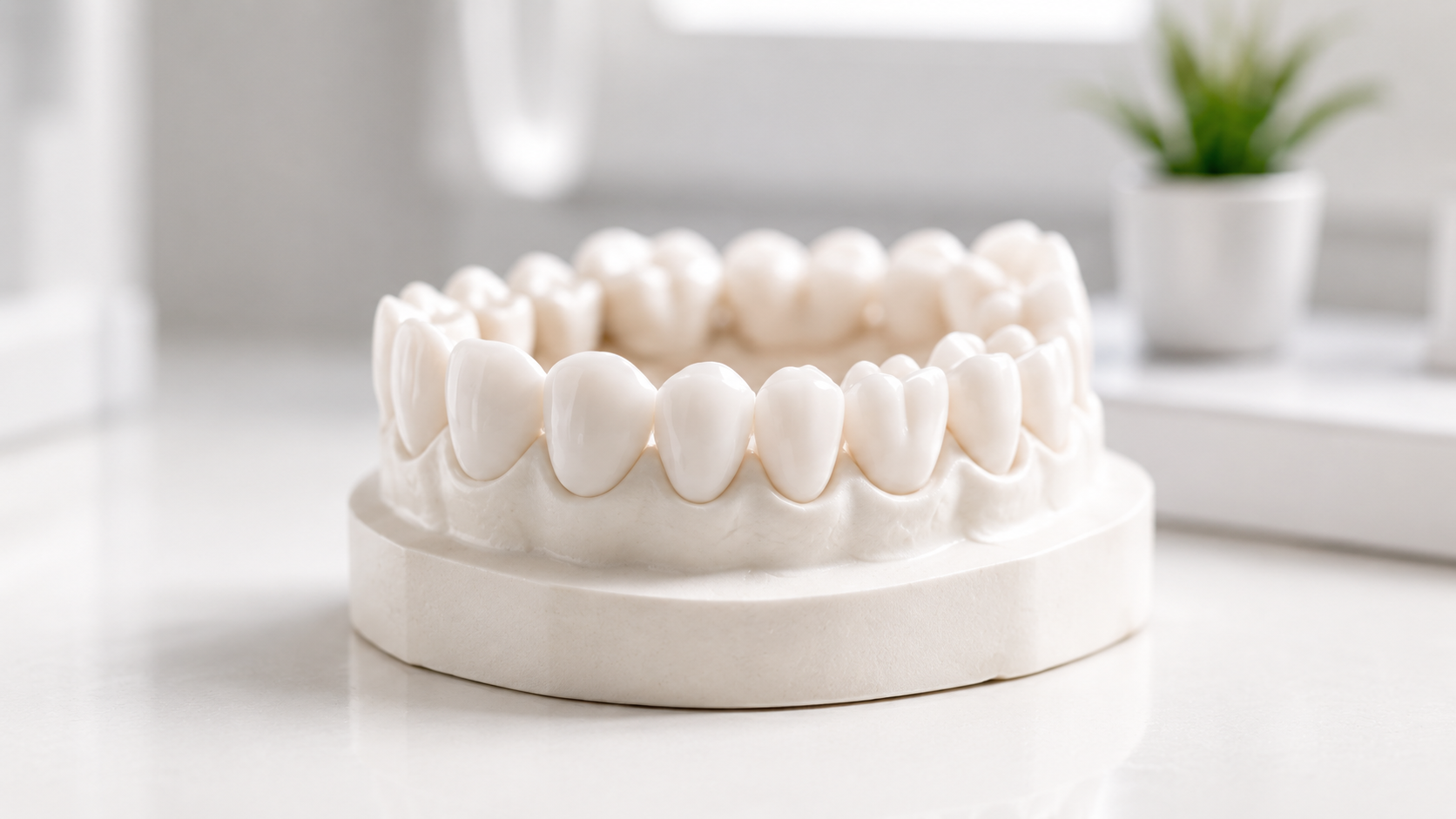
All three are made as a single piece in the lab, which is why the page above describes the bridge as one fixed piece of ceramic. It goes in as one and, if it ever has to come out, it comes out as one.
The retainers: borrowing two teeth
A bridge works by asking two teeth to do the work of three. Before anyone agrees to that, those two teeth need a proper look, which is the "checking the anchors" step in the pathway above.
On an X-ray, the dentist looks at how long the roots are, how much bone surrounds them and whether there's any decay or infection hiding under old fillings. A tooth with short roots, bone loss from gum disease or a doubtful old root canal is a weak anchor. There's an old rule of thumb in dentistry that the roots of the supporting teeth should, together, be at least as substantial as the roots of the teeth being replaced. It isn't a strict law, but it's a sensible way to think about load.
Then there's the question the page above keeps coming back to. Where those two teeth are already heavily filled or crowned, shaping them for a bridge costs very little. If they're healthy and untouched, it costs real enamel that will never come back. That trade is the heart of the bridge-or-implant decision.
The pontic: the tooth that isn't there
Nobody asks about the pontic, which is a shame, because the spot where it touches your gum decides two things: whether it looks real, and whether you can clean under it.
On a back tooth, looks come second. The underside is usually kept small and smooth, sometimes with a sliver of space beneath, so a brush or floss slips through without a fight. At the front, it's shaped to look as though it's growing out of the gum, with a gently rounded base that sits into a shallow hollow in the tissue. That gives a much more natural result, but it needs the gum to be the right shape first.
That's why planning for a front bridge sometimes starts at the extraction. When a tooth is taken out, the bone and gum where it stood tend to shrink over the following months, leaving a dip. A small graft placed in the socket at the time of extraction can help preserve that shape, so the pontic has something to sit against later. If the ridge has already collapsed, the gum may need building up before a front bridge will look right.
The connectors, and the trouble with long spans
The page above suggests that longer spans lean harder on the same two supports, and the connectors are where you see it. A short three-unit bridge has two connectors doing modest work. A longer span has more of them, each carrying more force and flexing a little every time you chew.
Over years, that flexing can crack ceramic at a connector or gradually loosen the cement on one retainer. Loosening on one side is particularly sneaky, because the bridge stays in place, held by the other retainer, while decay starts underneath the loose one. For longer gaps, putting implants under the bridge takes the load off your natural teeth altogether. The multiple dental implants page explains how that works.
Four kinds of dental bridge
Conventional. Crowns on the teeth either side, the pontic between them. It's the strongest tooth-supported design and the one most people mean when they say "bridge".
Cantilever. Supported from one side only, with the pontic extending out from a single retainer. It removes the need to prepare a second tooth, but it puts more leverage on the one that's left. It suits a few specific situations, usually small front teeth with light biting forces.
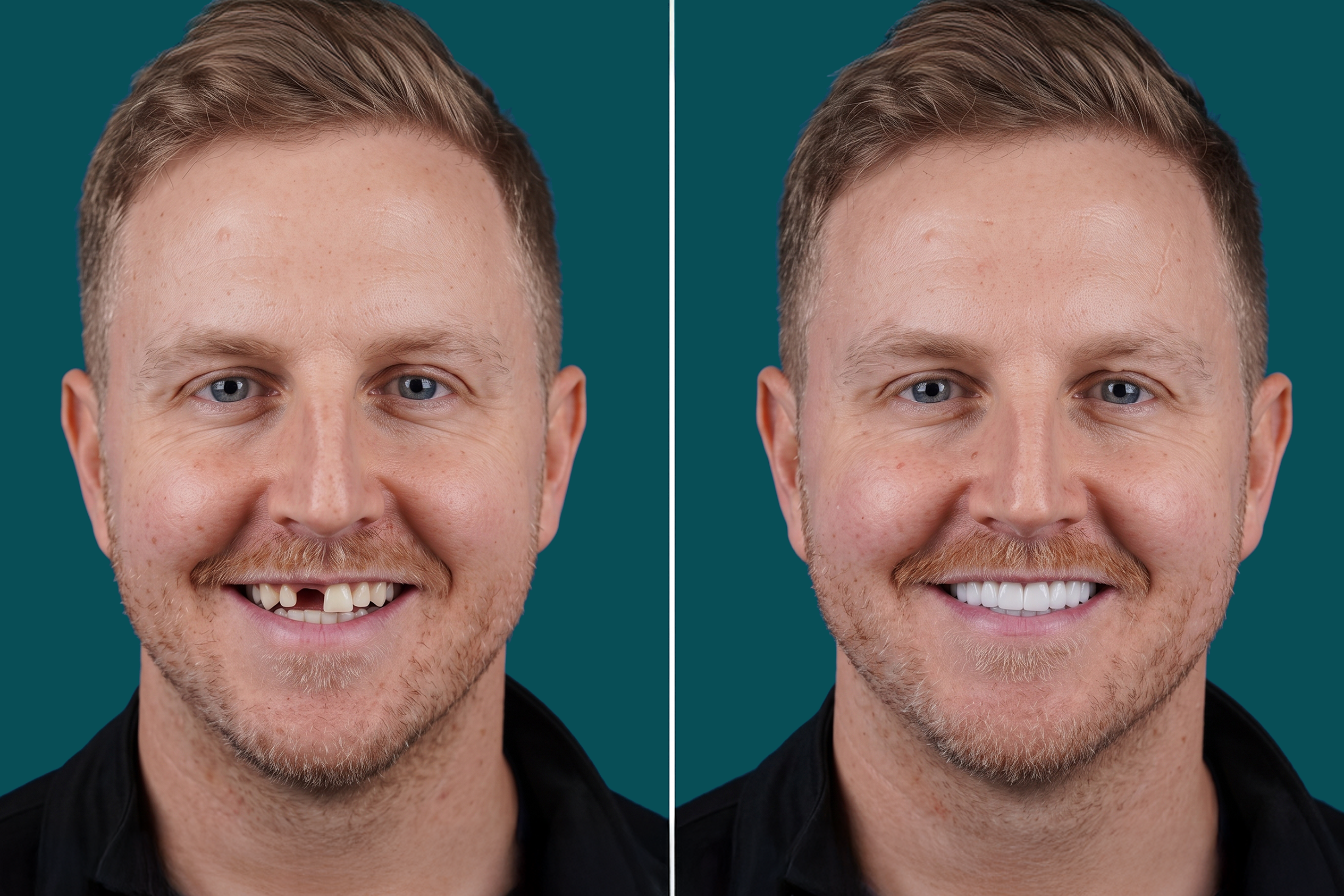
Resin-bonded. Often called a Maryland bridge. Instead of full crowns, the pontic has a thin wing that's bonded to the back of a neighbouring tooth, with little or no drilling. Modern versions often use a single wing on one tooth rather than two, which tends to hold better because the teeth can move independently. It's especially useful for a single missing front tooth, and for young people who've been born without a side incisor and are waiting until their jaw has finished growing before an implant. The page above lists it as an option where the case allows.
Implant-supported. The bridge sits on implants instead of natural teeth. No healthy tooth is touched, and the load goes into the bone. It takes longer and costs more, but for long gaps it's usually the most durable answer.
Timing after an extraction
If the tooth that's missing hasn't been taken out yet, the plan has to account for healing. The gum and bone change shape most in the weeks and months after an extraction, so a final bridge made too early can end up with a visible gap under the pontic as the gum settles.
The usual approach is a temporary bridge during that period, which the pathway above describes as an acrylic provisional so you're never left with an open space. Once the area has settled, the definitive bridge is made to fit the healed gum. For a back tooth this may not matter much. At the front, it's often what separates a bridge nobody notices from one everybody does.
Replacing an old bridge
Redoing an old metal bridge, as in one of the photos above, is a very common request. Old bridges rarely fail because the bridge itself breaks. Much more often, decay creeps in under one of the retainers, or the gum recedes enough to expose a dark metal edge.
The frustrating part is that a bridge can't usually be repaired on one side. If one supporting tooth develops decay, the whole bridge generally comes off. What happens next depends on that tooth. If it can be treated and rebuilt, a new bridge can go back on. If it can't, the gap is now longer, and implants often become the better way forward. The dentist should look at this before your trip, using X-rays, because it changes both the plan and the time you'll need in Istanbul.
Dental bridge vs implant: the long view
The FAQ above sets out the basic trade: an implant leaves the neighbours untouched but takes months, while a bridge is quicker but relies on them. There's one more angle worth adding.
A bridge ties three teeth together for the rest of their lives. If any one of them develops a problem years from now, all three are affected. An implant stands alone; if it ever needs attention, the teeth either side don't. The bone under a pontic also slowly shrinks, because nothing is loading it, whereas an implant keeps that bone in use. None of this makes a bridge the wrong choice, particularly when the neighbours already need crowns. It just means the first invoice isn't the whole story. For the implant side of the comparison, see replacing a single tooth with an implant in Istanbul.
How much does a dental bridge cost in Turkey?
As the page above explains, bridges are priced per unit: each retainer crown and each replacement tooth counts once. One missing tooth usually means three units, from €450. Two missing teeth side by side, four units, from €600. A single unit on its own starts at €150, whichever material you go for.
Anything the supporting teeth need first, like an extraction, a root canal or some grafting, sits on a separate line. Got two quotes in front of you? Count the units on each. See whether the material is named. And look for any sign that someone actually checked those anchor teeth on an X-ray.
How long does a dental bridge last?
Ten to fifteen years is a fair expectation for a good bridge on sound teeth, and plenty go longer; eligible work here is covered by the 15-year written guarantee mentioned above. Bridges very rarely give out because the ceramic cracks. They give out because decay sneaks in at a retainer edge, the gum around a support gets unhealthy, or an anchor tooth turns out to have been weaker than anyone realised.
In other words, the X-ray before and the cleaning after do more for its lifespan than anything in the lab.
Cleaning under a bridge
Because a bridge is one piece, you can't slide floss down between the pontic and the retainers the way you would between normal teeth. The pathway above mentions floss threaders and interdental brushes, and after fitting you'll be shown how to use them.
The idea is simple once you've seen it. A threader works like a large plastic needle: you pass floss through it, push it under the pontic from the cheek side, pull the floss through, and then slide it back and forth along the gum under the false tooth and around each retainer. Small interdental brushes do a similar job at the edges of the retainers. Some people find a water flosser easier for the space under the pontic, particularly at the back. Whatever you use, the aim is the same: keep the gum edges of the two supporting teeth clean, because that's where a bridge is most likely to fail.
Three to five days in Istanbul
Expect three to five days for a dental bridge in Istanbul, as the card above says. The first day covers the X-ray check, preparation of the supporting teeth and a 3D scan, with a temporary fitted before you leave. The bridge is then made in the lab in the same building. The try-in comes next, with the bridge checked unfixed for fit, bite, shade and how the pontic meets the gum. Once you're happy, it's cemented.
If a supporting tooth turns out to need a root canal or a build-up, that can add a day. Your coordinator should tell you as soon as that's known.
What to send first
For a dental bridge in Turkey, the page above asks for an X-ray and a photograph of the gap, and both are genuinely useful. Then scribble a few lines about the history. When did the tooth come out? What's been done to the neighbours: fillings, crowns, a root canal? Has either one ever ached? Honestly, that note plus one X-ray is often all a dentist needs to tell you whether to bridge the gap, which type to use, or whether to skip the bridge and go for an implant.