 English
 Italiano
 Español
 Français
.webp?v=mumq2n9y)
Dental Crowns
Istanbul, Turkey — Zirconia, E-max, Porcelain & Temporary Crowns
Zirconia, E-max, Temporary and Porcelain — and a Straight Answer About Which One Your Tooth Needs
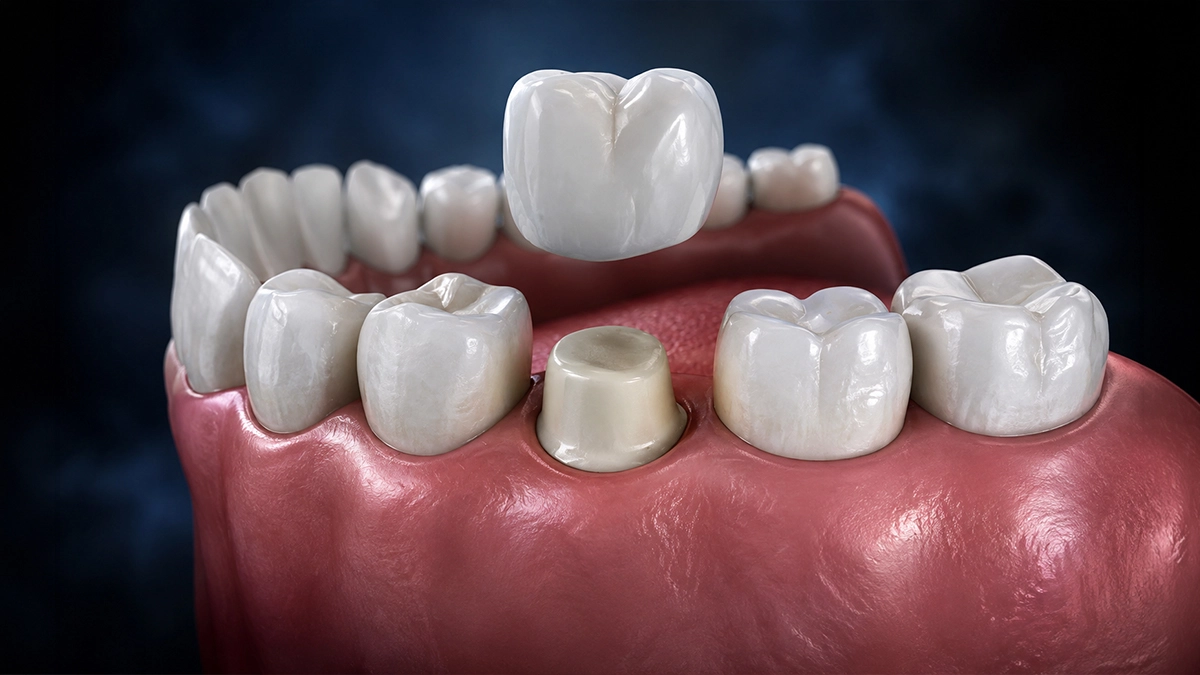
A crown covers the whole tooth, protecting what a large filling can no longer hold together. Monolithic zirconia starts at €150 for strength at the back of the mouth, and E.max costs €200 for translucency at the front.
Our dental crowns before and after cases show cracked, worn or heavily filled teeth restored in zirconia and E.max. Notice the edge at the gum line, where a well-fitted crown leaves no dark margin.
-1.webp?v=mumpuq5b)
Dental Crowns
-1.webp?v=mumpyqqr)
Dental Crowns
Dental Crowns
Front tooth or back molar, the material question comes up in almost every dental crowns review. These patients describe how that choice was made before a single tooth was shaped.
Natural Clinic brings several specialist fields together under one roof: hair transplantation, dentistry, facial, body and breast aesthetics, bariatric surgery and reconstructive treatments. Cross-disciplinary medical teams, multilingual coordination and internationally recognised safety standards carry each patient from consultation and treatment planning through to recovery and aftercare.
Advanced treatments across multiple medical specialties
Experienced specialists working across disciplines
Consultation, treatment, recovery and aftercare coordinated under one roof
Large-scale medical infrastructure in Istanbul
The material is not a taste decision — it follows the tooth. Strength at the back, translucency at the front, budget where neither is critical. Most plans use more than one, and a dentist will tell you which goes where before you travel, free of charge.
.webp?v=mtgx0g8a)
Strength & aesthetics
Milled from a solid block of zirconium dioxide — the strongest ceramic in dentistry. Monolithic takes the heaviest bite forces at the back; layered adds a porcelain surface for translucency where the crown will be seen.
Back teeth, heavy bite forces, grinding, and full-arch cases.
One visit, 3–4 days in Istanbul.
Front-tooth realism
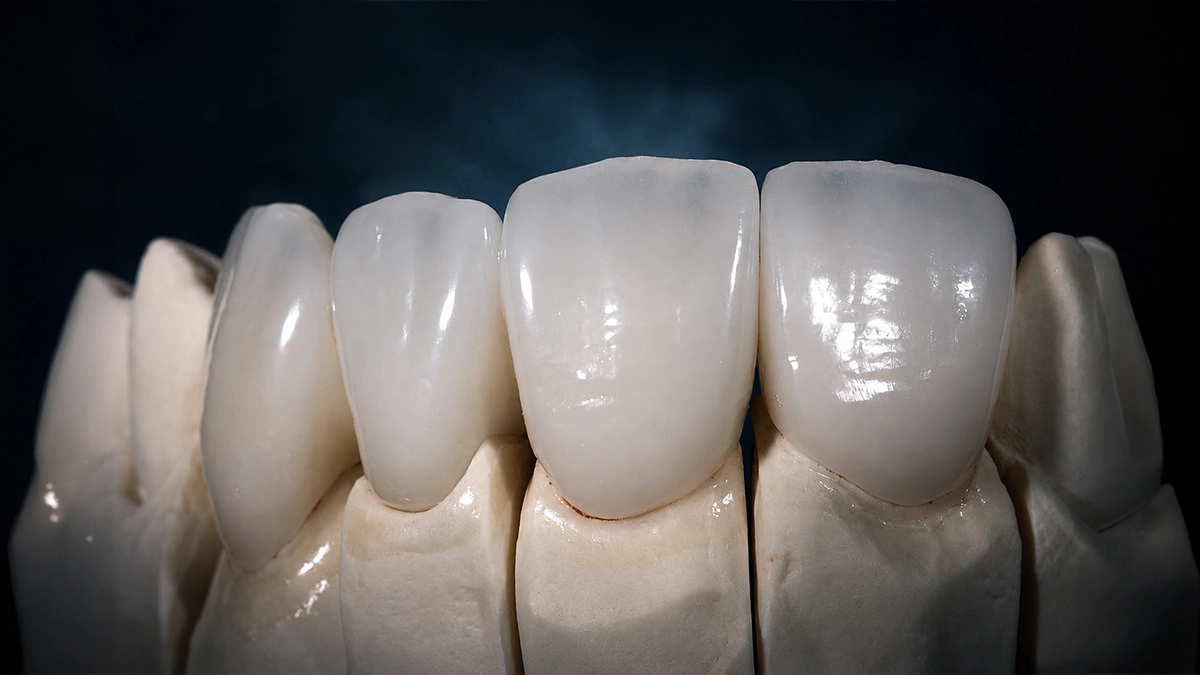
Lithium disilicate, pressed rather than milled. It transmits light the way natural enamel does, which is why E-max is the usual choice for the front six teeth — translucency is what decides whether a crown reads as a real tooth or as dental work.
Front teeth and the smile line, where appearance matters more than raw load.
One visit, 3–4 days in Istanbul.
Proven & economical
Decades of clinical data and the lowest price of the three. The surface is slightly less lifelike, and a metal substructure can darken at the gum over time — which is why we use it where the crown will not be on show.
Cases where budget matters more than the last few percent of realism.
One visit, 3–4 days in Istanbul.
Between preparation & fitting
Protects the prepared tooth, holds the gum in shape and lets you eat normally while the permanent crown is made — and it is the rehearsal: shape, length and bite are approved before the final ceramic is milled.
Every crown case. It is a step in the treatment, not an alternative to it.
Fitted the same day the tooth is prepared.
Implant Dentistry
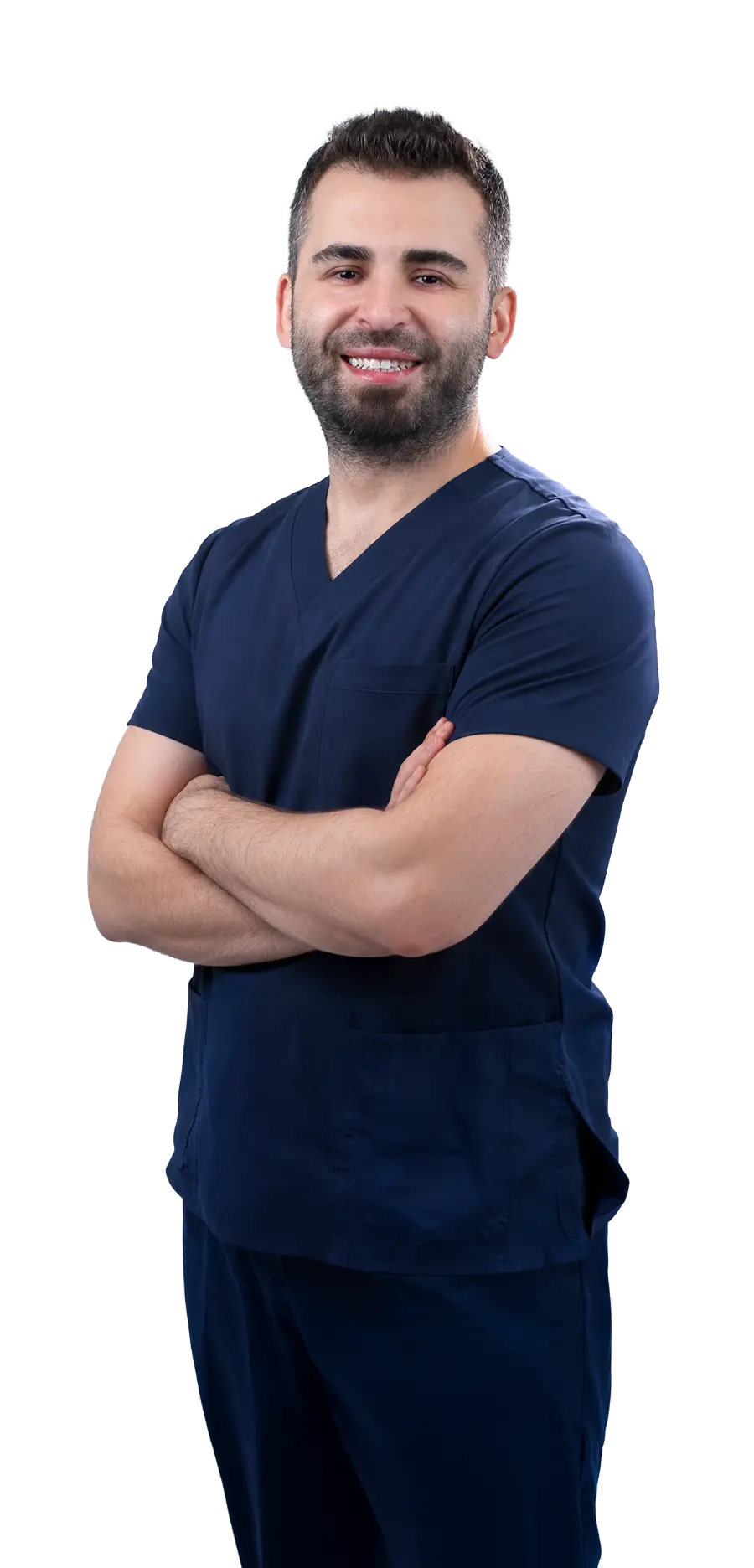
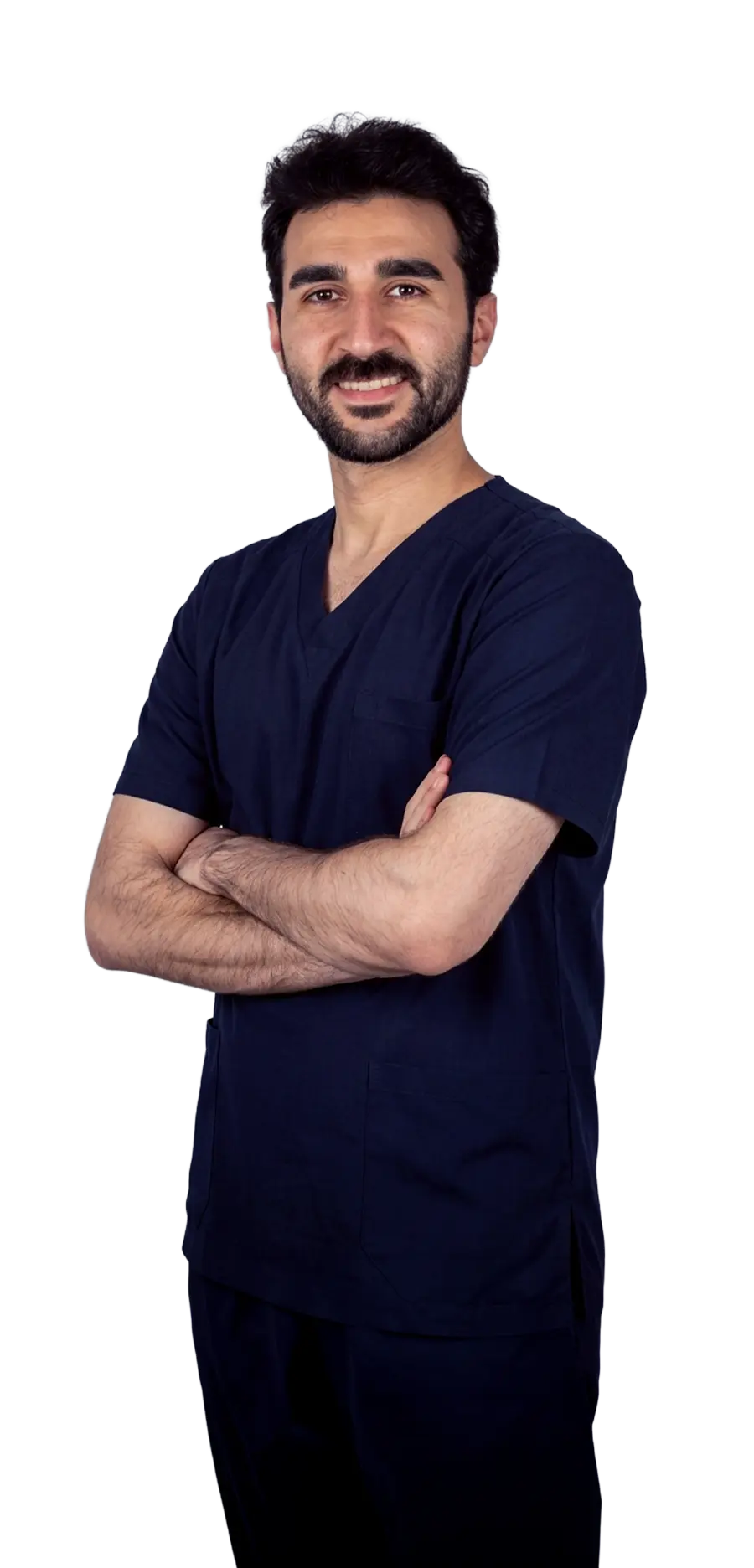
Born in Bandırma in 1995, Dr Ömer Reşat Gültek studied at İnegöl Mediha Hayri Çelik Science High School before turning to dentistry — and he still thinks like a materials scientist. Which ceramic, which technique, which protocol for this particular tooth: those are the questions he takes seriously, and they are why his root canal treatments hold. What patients mention, though, is the manner. He explains as he works, he does not rush, and a single filling gets the same attention as a full arch.
Certificates
Prosthetic Dentistry
After successfully completing her primary and secondary education, Özaydın studied at Bezmialem Vakıf University and then at Istanbul University Faculty of Dentistry, Department of Prosthetics. She has worked in the field of prosthetics at various important institutions. In addition to her professional career, Dr. Özaydın has also made various contributions to academic literature and has been working as a Dental Prosthetics Specialist at the Natural Medical Center Dental Department for a long.
Certificates
General Dentistry
Dr Nur Karakaya graduated from Istanbul University Faculty of Dentistry in 2025 — which means she was taught the current protocols, not the ones that were current twenty years ago, and that she works inside a team of specialists rather than alone. Patients tend to remark on how much she explains: what she found, what she recommends, and what she would leave alone. She reads the new literature because she is still close enough to it to know how fast it moves.
Seminars and Trainings:
Prosthetic Dental Treatments
Dr Helin Ağırtıcı trained in International Dentistry at Medipol University and works in prosthetic and aesthetic restorative dentistry, planning cases digitally rather than by impression alone. For patients travelling from abroad she is often the one who reads the photographs, builds the plan and answers the questions before the flight is booked — in English, which is why the plan you receive and the treatment you get are the same thing. She has been at Natural Clinic since 2024.
Seminars and Trainings:
General Dentist
Born in 1999, Dr Enes Tuluk graduated from Istanbul University Faculty of Dentistry in 2023 and went straight into aesthetic work: Hollywood Smile cases, laminate veneers, E.max and zirconia crowns, implant-supported prostheses. What he watches for is what patients notice a year later rather than on the day — how the ceramic meets the gum, how the shade holds, whether the smile still looks like yours. He plans tooth by tooth, and will tell you which teeth to leave alone.
Seminars and Trainings:
Prosthetic Dentistry.
Dr. Diler Özkan İrem graduated from Istanbul University Faculty of Dentistry in 2014 and stayed for a doctorate in prosthodontics, earning her PhD in 2020 with a thesis on how all-ceramic bridges fit and where they fracture. It is an unusually specific question, and the useful kind: knowing why ceramic fails is what stops it failing. At Natural Clinic since 2020, she works on crowns, bridges and full smile design — the aesthetic side, decided on functional grounds.
Seminars and Trainings:
Aesthetic Dentistry and Implantology
Dr Ali Haydar Çapuk graduated from Ege University Faculty of Dentistry in 2012 and spent the years since in private practice, training in aesthetic dentistry, implantology and smile design in Turkey and abroad. Thirteen years of that work is a long time to watch restorations age, and it shows in what he recommends: implants where a tooth is gone, veneers where the tooth is sound, whitening where nothing needs covering at all. He joined Natural Clinic in 2025.
Seminars and Trainings:
Oral, Dental and Maxillofacial Surgery
Born in Çanakkale on July 14, 1995, she graduated from Near East University Faculty of Dentistry in 2021. Immediately after graduation, she began working intensely at a private clinic in Çanakkale with a high patient potential. During this time, she increased her clinical experience and knowledge. After working there for about two years, she decided to pursue a doctorate in Oral and Maxillofacial Surgery at Istanbul Aydın University.
General Dentistry
Dr Beliz Kerime Dede studied at Bahçeşehir University Faculty of Dentistry, graduating in 2025 from its fully English-taught programme — which is why she reads the international literature first-hand and why patients from abroad talk to her without an interpreter in the room. Her clinical focus is restorative work, endodontics and prosthetics, with congress and workshop training in implantology and aesthetic restorations. She works within a team of specialists, and says so plainly.
Seminars and Trainings:
Prosthetic Dentistry
Dr Aslı Betim Şahin graduated from Ankara University Faculty of Dentistry in 2014 and began a PhD in prosthodontics at Istanbul University in 2016 — the discipline that decides how a restoration meets the gum, the bite and the face. She has practised across several institutions and presented at national and international meetings, and she has been at Natural Clinic since 2020. Consultations are held in English, so the plan you agree to is the one you discussed.
Seminars and Trainings:
Endodontist
Endodontics is where Dr Salih Muhammed does most of his work — root canals, including the ones another clinic has already attempted. Urgent cases are the real test: a tooth that hurts today cannot wait for a plan next week, and knowing which of those teeth can still be saved is judgement built case by case. He treats local and international patients alike, works to the clock without rushing the tooth, and will say when an extraction is the honest answer.
Certificates
Specialist Prosthodontist
Dr Mehmet Anıl Tütüncüler works in prosthodontics — the discipline that decides how a restoration meets the gum, the bite and the face. His cases are planned digitally and judged against the evidence rather than the trend: a design is only worth approving if the result can be predicted, and only worth fitting if it will still be working in ten years. Appearance matters, but it is the second question. The first is whether the mouth will function.
Certificates
Oral Surgery & Implantology
Spec. Dr. Oğuzhan Sunar is a Periodontology Specialist and implant surgeon with over a decade of clinical practice. A graduate of the Hacettepe University Faculty of Dentistry, he completed his specialization at Ordu University, publishing in national and international journals and developing the "Discision" technique. He specializes in advanced and zygomatic implant surgery and lectures at professional courses. Since 2023, he has served as the Head of Dental Surgery at Natural Medical Center.
Clinical Expertise
Short answer: yes — and not because it is cheap. The zirconia and E-max used here are the same ceramics used in London and Berlin, milled on German equipment, by teams that make more crowns in a month than most practices make in a year — and backed by a written guarantee.
High case volume means dental teams refine crown, veneer, implant and full-arch protocols at scale, not occasionally.
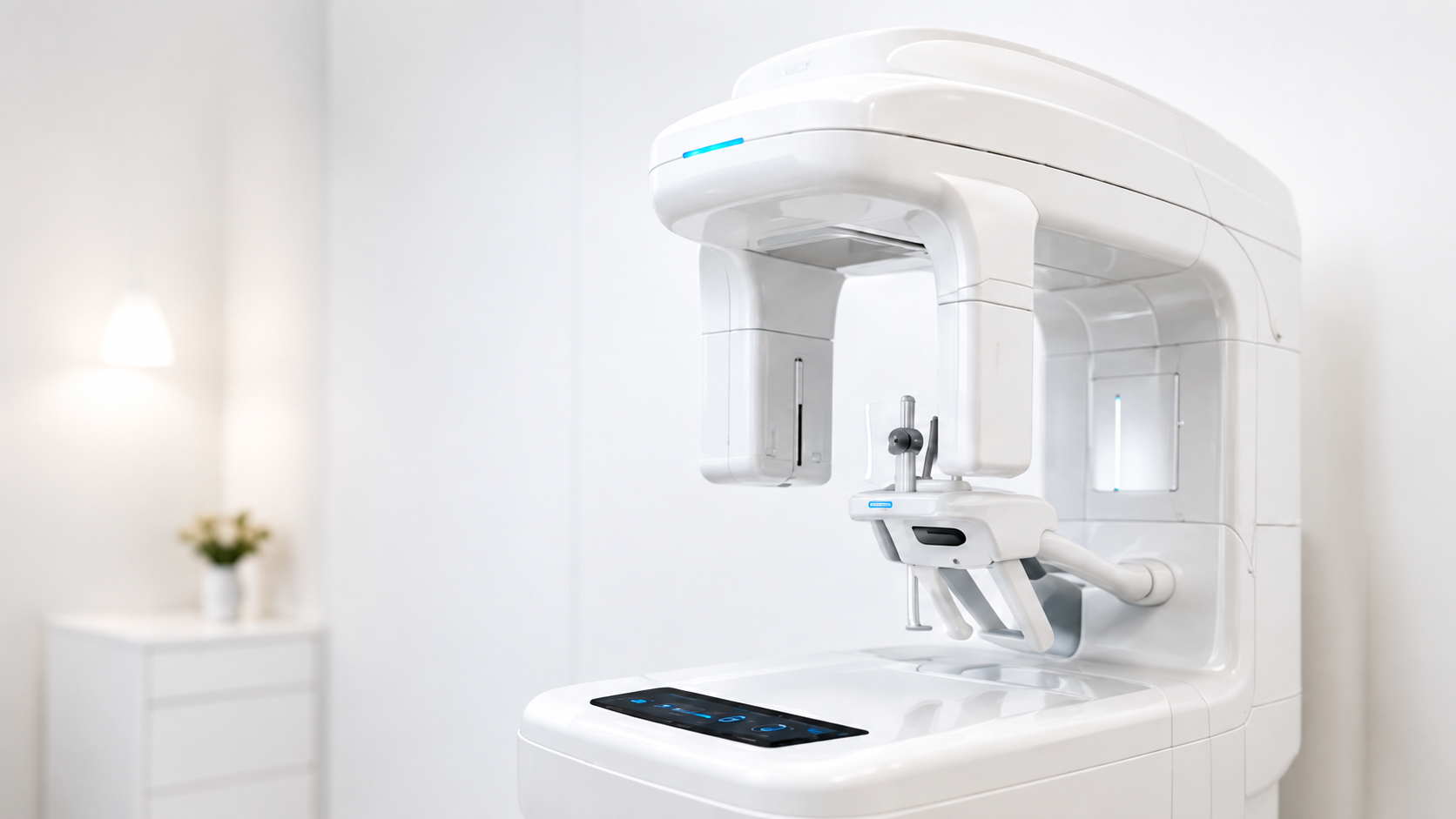
CBCT scanning, intraoral scanning and in-house CAD/CAM milling are standard tools here, not premium extras.
Lower laboratory, property and staffing costs reduce the price without requiring lower-grade materials.

Istanbul is connected to hundreds of international destinations, which makes a two-visit plan easy to schedule.

An interpreter and a dedicated coordinator handle communication, planning and aftercare from the first message to the final check.
Reputable clinics name the material used on every tooth and record the dates.
A crown covers every surface, so the tooth underneath must be worth saving.
Broken, heavily filled or root-treated teeth get crowns; others may need less.
X-rays confirm the root; a root canal or build-up happens before preparation if needed.
A uniform shell of about one to one-and-a-half millimetres is shaved from every wall, creating a stump the lab can cap without a bulky result.
Once reduced, the tooth is sensitive and exposed, so an acrylic cover goes on before you leave the chair.
The final crown is tried in, adjusted, then cemented or bonded.
When a tooth needs full coverage, a crown is the answer. Here is how dental crowns are planned in Istanbul.
Dental crowns are caps that cover the entire visible part of a tooth, restoring its shape, strength and appearance. They are used when a tooth is too damaged for a filling or veneer, such as after a large fracture, extensive decay or root canal treatment, and are made from materials including E.max, zirconia and porcelain.
A veneer covers only the front surface and mainly improves appearance, while a crown covers every surface and holds a weakened tooth together. Crowns are chosen for teeth that are broken, heavily filled or root-treated; for healthy teeth with a purely cosmetic problem, a veneer usually preserves more natural structure.
It depends on the tooth. E.max offers lifelike translucency for front teeth, zirconia provides very high strength for molars, bridges and people who grind, and porcelain gives a natural finish where appearance is the priority. Your dentist recommends a material tooth by tooth after assessing your bite.
Three things shape a dental crowns quote: the material selected for each tooth, how many crowns are needed, and whether any tooth first requires a root canal or core build-up. At Natural Clinic each of these appears as a separate line in your written plan, so the total is clear before you travel.
No, root canal treatment is only added when an X-ray shows the nerve is infected or damaged. If it is needed, it appears as a separate line in your plan and is usually completed during the same stay, before the crown is prepared and fitted.
Crowns involve more tooth preparation and cover the whole tooth, so they are generally a more extensive treatment than veneers. Your plan compares the options for each tooth, so you only pay for crowns where the tooth genuinely needs full coverage.
To make space for the crown material, the tooth is usually reduced by about 1 to 1.5 mm on all sides. This is considerably more than for a veneer, which is why crowns are reserved for teeth that already need structural protection rather than purely cosmetic change.
Local anaesthetic numbs the tooth before any shaping begins, so most people feel only vibration and pressure. Once it wears off, the prepared tooth may react to hot or cold while the temporary crown is in place, and this usually disappears after the permanent crown is fitted and sealed.
Crowns can occasionally loosen if the cement breaks down or if decay develops at the edge where crown meets tooth. Good oral hygiene, regular check-ups and treating grinding reduce these risks, and eligible restorations at Natural Clinic are covered by a written guarantee.
Crowns made in Natural Clinic's in-house laboratory are usually completed within a single stay. The process covers X-rays and any foundation work, tooth preparation and a digital scan, a temporary crown, laboratory fabrication, a try-in and final cementation or bonding.
Yes. Once a tooth has been reduced for a crown, its exposed surface is sensitive and can shift or chip if left uncovered. A provisional cap is therefore fitted at the same appointment, holding the space and your bite in place for the few days the laboratory needs to finish the permanent crown.
The permanent crown is placed on the tooth without cement so the dentist can check how the margins fit, whether the colour matches your other teeth and how your bite meets it. Any adjustments are made before the crown is permanently fixed.
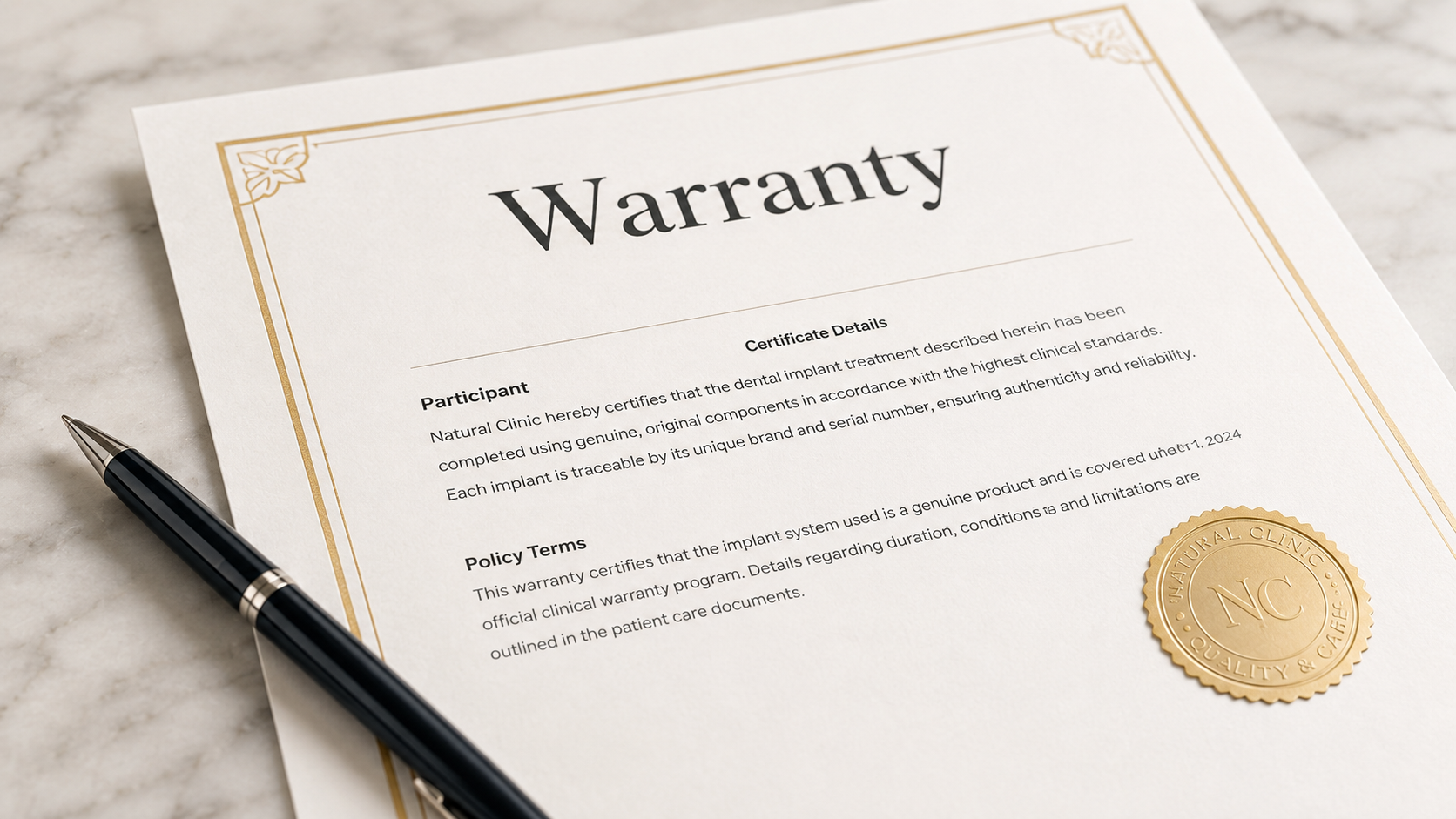
Well-made crowns commonly serve for many years, and eligible crowns at Natural Clinic carry a 15-year written guarantee. How long yours last depends on the material chosen, the condition of the tooth and gum beneath, your bite and whether grinding is controlled, so regular check-ups remain important after treatment.
The crown itself cannot decay, but the natural tooth underneath can, especially at the margin where the crown meets the gum. Brushing along the gum line, flossing and regular check-ups help detect and prevent decay before it affects the crown.
Care for crowned teeth as you would natural teeth: brush twice daily, clean between teeth, avoid chewing ice or hard objects, and wear a night guard if you grind. Regular dental visits allow the margins and bite to be checked over time.
Each crown type has its own page, with the material, the timeline and the price set out in full. Read as much as you like — or skip it and let one of our dentists tell you which material each of your teeth actually needs.
Personalised Care, Just for You
Send a few photos of your teeth, plus any X-ray you already have. One of our dentists reviews your case and replies with a realistic, itemised plan — which teeth actually need crowning, which material each one calls for, how many units, what it costs with hotel and transfers included, and how many days you’ll be in Istanbul. No obligation, no pressure, no cost.
Get My Free Treatment PlanThe short version is above. This section goes deeper for readers who want to understand how crowns are selected, prepared, fitted and maintained over the long term.

Very few crowns start life as a plan. Most start as a filling. A small cavity gets filled, and years later the filling is replaced with a slightly bigger one. Then a corner of the tooth breaks off around it. Then someone mentions a crack. By the time a crown comes up in conversation, the tooth has often been patched three or four times, and there isn't a great deal of the original left.
That history matters, because the real question with a crown is rarely "which material?". It's "what's left of this tooth, and what will hold it together best?". This section works through that question the way a dentist would, from the teeth that need very little to the ones that need more than a crown can give. It's the same question whether you're having dental crowns in Turkey or closer to home, and it's the first thing our dentists in Istanbul look at when your photos arrive.
It helps to think of tooth repairs as a ladder. Each step up covers more of the tooth, and each step removes a little more healthy structure to make room. The aim is to stop on the lowest rung that will actually do the job.
On the bottom rung is a filling. If most of the tooth is intact and the damage is contained, a well-placed filling is still the most conservative repair there is.
One step up is what dentists call an onlay, or a partial crown. It's a ceramic piece made in the lab that covers the biting surface and replaces one or more of the pointed corners, called cusps, without wrapping all the way round the tooth. When a back tooth has lost a cusp but its walls are otherwise sound, an onlay can protect it while keeping more of the natural tooth.
Next comes the full crown, which covers every surface. As the pathway above describes, that means taking about 1 to 1.5 mm from every wall so the crown can fit over the top without looking bulky. It's the right choice when the tooth is so broken down, heavily filled or weakened that partial coverage won't hold it together.
A tooth that has had root canal treatment is not dead in the sense of being useless, but it has changed. The nerve and blood supply have gone, the tooth has lost the structure removed to reach the canals, and many root-filled teeth have already lost a lot of structure to decay before treatment started.
On a back tooth, that combination is risky. Molars and premolars take heavy chewing forces, and their cusps can act like wedges, splitting a weakened tooth from the top down. A crown or onlay that covers those cusps holds them together and spreads the load. That's why many dentists recommend covering a root-filled back tooth fairly soon after the root canal, rather than waiting for it to break. If a root canal is needed first, it appears as its own line in your plan, as the price section above explains.
Front teeth are different. They take less direct biting force, and a front tooth whose root canal was reached from behind, leaving the rest of it intact, may be fine with a filling, or with a veneer if its colour has changed. Not every root-filled tooth needs a crown. Every root-filled back tooth deserves a proper look.
A crown is only as secure as what it's sitting on. When a lot of the tooth is missing, the dentist first rebuilds a solid core, usually from a strong filling material, so the crown has something of the right shape to hold on to. This is the "build-up" you may see listed separately on a quote.
In a root-filled tooth with very little left above the gum, the core sometimes needs extra anchorage from a post placed a short way into the root canal. Posts don't strengthen the tooth itself; they simply help keep the core in place. Placing one also means removing a little more from inside the root, so dentists use them only when they're genuinely needed.
The most important factor in whether a crown lasts on a badly broken tooth is something patients rarely hear about. A crown needs to grip a band of real tooth all the way round, just above the gum. Dentists sometimes call this the ferrule, borrowing the word for the metal collar at the end of a walking stick. Without that band, even a well-made crown on a well-made core is more likely to come loose or allow the root to fracture. If there isn't enough tooth above the gum to provide it, the options are to reshape the gum and bone slightly to expose more tooth, or to accept that the tooth is not a good candidate for a crown.
Cracks send a lot of people towards crowns, and they're notoriously hard to pin down. The classic symptom is a sharp twinge when you bite on something, often felt at the moment you release rather than when you bite down. Cold can set it off too. The tooth may look perfectly normal.
If the crack runs across the crown of the tooth and stops above the gum, a crown can hold the two sides together and often settles the symptoms. If the crack runs down into the root, a crown usually can't save it, and the tooth may need to be removed. Before shaping a cracked tooth, a good dentist will want to know which kind of crack they're dealing with, sometimes by removing an old filling to look underneath first.
At the top of the ladder sits the tooth that's been broken down to the gum line, split into the root or badly weakened by repeated treatment. Crowning it would mean building almost everything from scratch on a foundation that may not hold.
Sometimes the kindest thing to say is: let this one go. Take it out and replace it. For one tooth on its own, that usually means an implant with its own crown. Where the teeth either side already need crowns, a dental bridge can be another option. Neither is a failure of the crown plan. They're what the plan should recommend when a crown would be a short-term fix on a tooth that won't last.
Once a tooth has been judged ready for a crown, the material follows its position and its workload. You'll find the three materials above, and each one gets a page of its own.
Very roughly: molars, and anyone who grinds, tend to end up with zirconia crowns, because that's where sheer strength pays off. Front teeth, and the premolars you flash when you smile, more often get E.max crowns, because there it's how the tooth catches the light that people notice. Porcelain crowns cover a wider range of constructions, and that page explains what the word actually means on a quote. Many plans use two materials in the same mouth, and that's usually a sign the plan was made tooth by tooth.
Most well-made crowns last somewhere between ten and twenty years, and where yours lands in that range depends less on the ceramic than you'd think. Ceramic can't get a cavity. The bit of tooth it's sitting on can. And ask any dentist what usually brings an old crown back into the chair, and it's rarely the crown breaking. It's decay creeping in along the join, often just under the gum, where a toothbrush struggles to reach.
Other trouble is rarer. Now and then a crown works loose, or a corner chips. Gums can shrink back until the edge peeks out. On teeth that were in poor shape to begin with, the root occasionally cracks. You usually get some warning, though: a nasty taste that keeps coming back, a rough edge your tongue won't leave alone, a sore spot at the gum, a bite that suddenly feels different. Bring it up at your next check-up. Don't wait for the crown to land in your hand.
Plenty of people who ask about crowns already have some. They might be twenty years old, with a grey line showing at the gum, a slightly wrong colour, or an edge that catches floss. The grey line usually comes from an older crown with a metal inner layer, and the porcelain crowns page linked above explains why that happens.
Swapping an old crown for a new one sounds simple, and often it is. There's one catch, though. Until the old crown is off, nobody really knows what's underneath. You might find a perfectly healthy stump. You might find decay, a core that's crumbling, or a root that now needs treating. We'd rather tell you that up front, along with what the plan would look like if the tooth needs more than expected. It's one reason X-rays of existing crowns are so useful before you travel.
The cost of dental crowns in Turkey is one of the main reasons people travel, and the per-tooth prices above are genuinely lower than in the UK, Germany or the US. Still, a crown price on its own tells you the cost of the ceramic cap. It doesn't tell you what the tooth needs underneath it. That's why the prices above list root canals, build-ups, extractions and temporaries as separate items.
Lay two quotes side by side and look for the same things in each: every tooth listed, a material next to it, and a note of anything that has to happen before the crown goes on. Say one quote shows three crowns and nothing else, and the other shows three crowns, two build-ups and a root canal. Either those are two very different mouths, or somebody hasn't looked closely yet.
Most crown treatment in Istanbul fits into one trip, as shown on the page above. Between preparation and fitting you'll wear a temporary cover, and the temporary crowns page covers what that stage involves and what to do if one comes loose.
After the permanent crown goes on, a few days of twinges with cold drinks are common, especially on teeth that haven't had a root canal. What you shouldn't ignore is a crown that hits first when you close your teeth together. A high crown can make the tooth ache and puts extra strain on the ceramic, and it takes minutes to adjust. Get it checked before you fly home.
All the risk sits at that thin seam where crown meets tooth, so that's where your toothbrush should spend its time. Angle it into the gum line. Then get between the teeth every day, with floss if your gaps are tight or little interdental brushes if they're not. A crowned tooth that's cleaned well at the margin can last for many years.
Grind at night? Then wear the guard. It saves the crowns and the teeth next to them. Don't skip the X-rays at check-ups either: decay tucked under a crown edge tends to show up on film well before it hurts. Last point, and it catches a lot of people out. If you want whiter teeth, sort that out first; the crowns get matched to the new shade. Ceramic won't bleach, so doing it the other way round leaves the crowns looking darker than their neighbours.

© 2026 Natural Clinic. All rights reserved.
.webp?v=mumq3x2o)



.webp?v=mth1gwjb)