
 English
 Italiano
 Español
 Français
%20(1).webp?v=mumm9rpk)
%20(1).webp?v=mummaetx)
%20(1).webp?v=mumm8rx9)


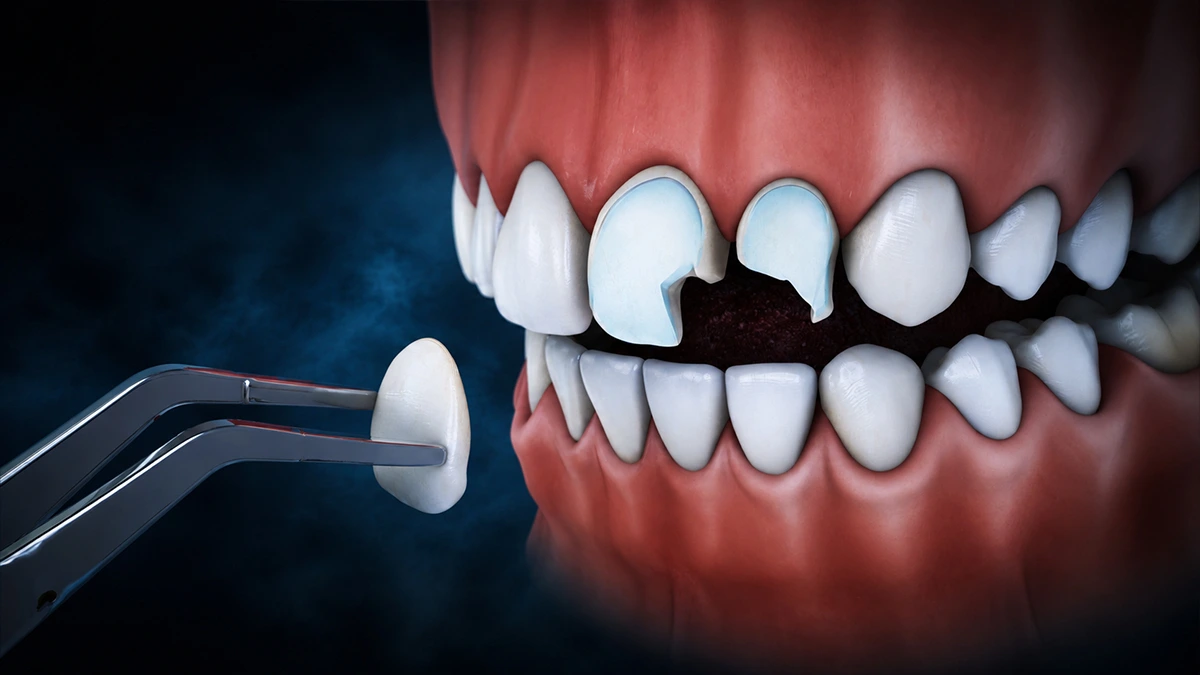

















You get to watch composite veneers being made. That's not true of any other type. The resin goes onto your tooth as a soft putty, the dentist shapes it while you're lying there, and you sit up with the finished teeth. Composite also changes more than any other veneer as the years go by, because resin isn't fired ceramic and doesn't behave like it.
So instead of a dry list of pros and cons, we'll follow one set of composite veneers from start to finish. Planning, the appointment, the first week, then year one, year three and year five. Knowing how the story usually goes makes it much easier to tell if composite suits you.
Planning composite veneers: before anyone picks up an instrument
Composite is shaped by hand. That means the result depends heavily on the person doing it, and you want to pin down the shape before the day if you can.
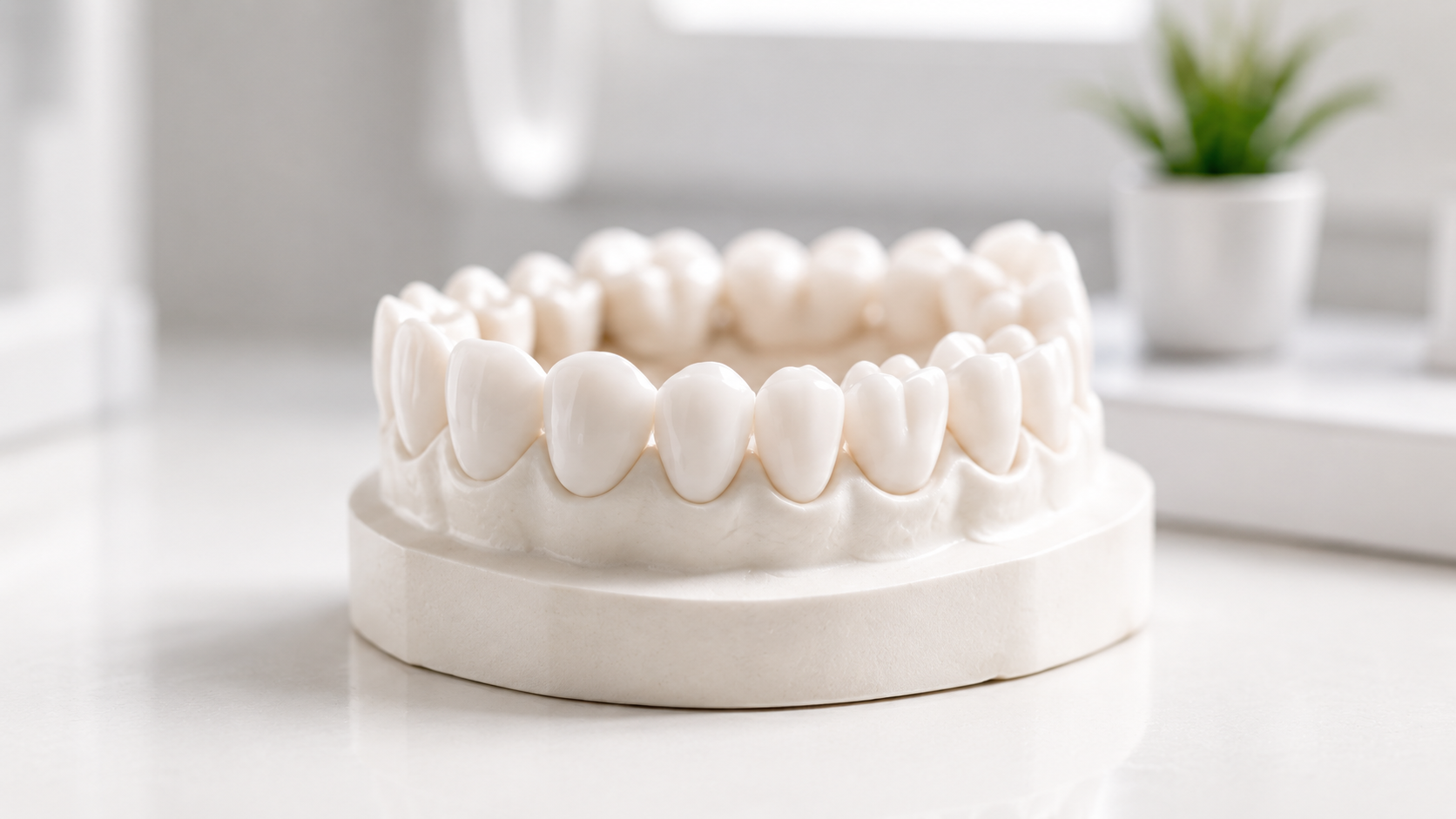
Normally that starts with photos and a digital smile design. From the design, the lab often builds your new teeth in wax on a model, then makes a clear silicone key from it. On the day, the dentist presses the first layer of resin into that key on your tooth, so the length and back surface are already where you agreed. Everything else is built up by eye.
Ask to see the dentist's own composite cases too. Not stock pictures. Two dentists with the same material in their hands can turn out very different teeth.
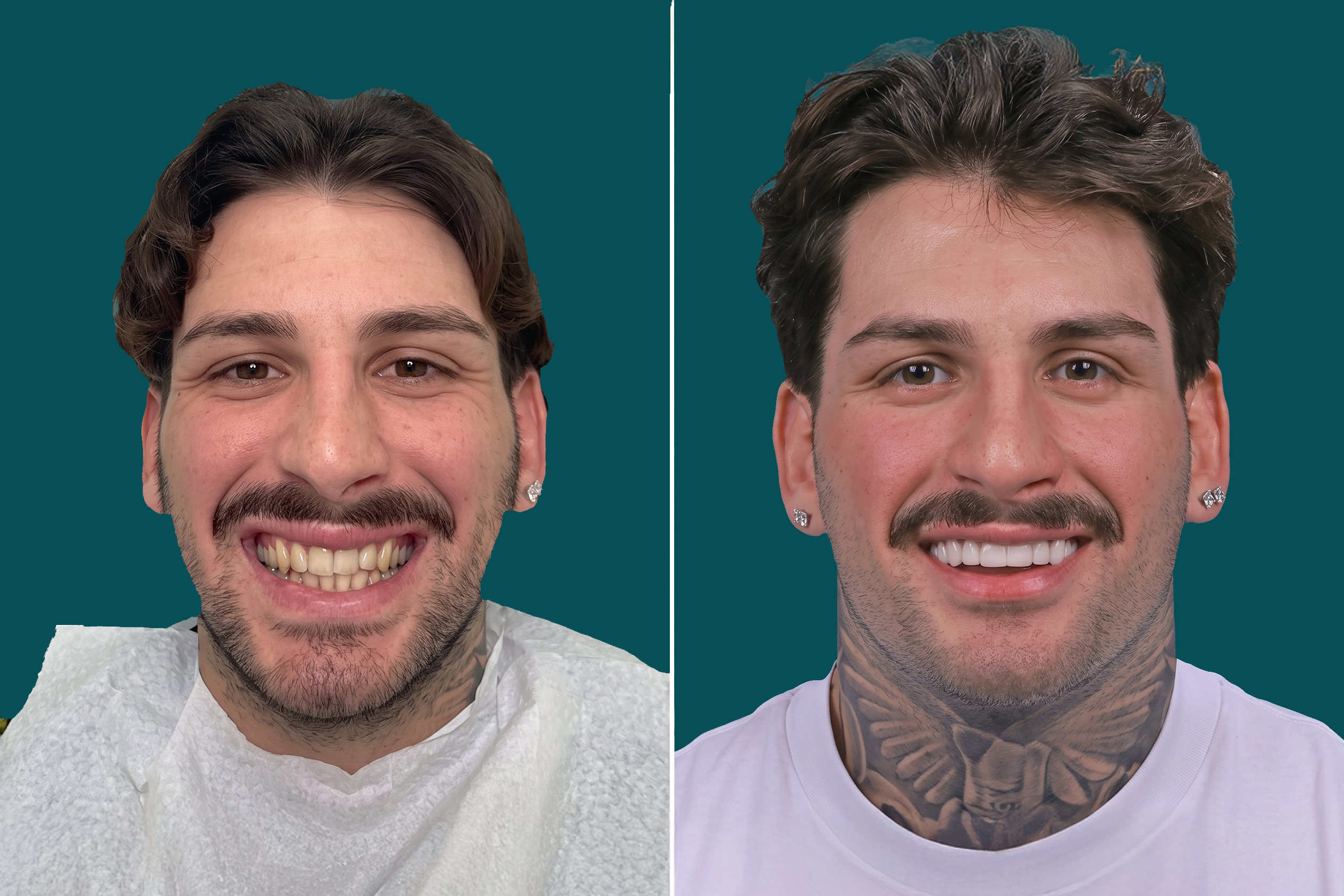
A word on photos generally. Composite veneers before and after pictures are nearly always taken the day they're finished, gleaming. Nice, but that's year one. If you can, ask to see the same person a couple of years later. Reviews from people who've had theirs a while tell you more too.
Whitening before composite bonding
This one trips people up. Resin won't bleach. Whiten your teeth after the composite goes on and your own enamel gets lighter, the composite doesn't.
So if you want a brighter smile overall, do the whitening first. Give the colour a week or two to settle, then the composite gets matched to it. Do it the other way round and you're left with veneers a shade darker than their neighbours, and the only fix is redoing them.
The composite veneers appointment in Istanbul
As the page above says, six composite veneers usually take one long appointment. Long, but quieter than people expect. Most composite work removes little or no enamel, hence the name no-prep veneers, so plenty of patients don't need an injection.
Each tooth gets a quick wash of mild acid so the resin has something to hold on to. Then the veneer is built up layer by layer, each one set hard with a blue light. The deeper layers carry the colour. The outer ones are clearer, especially at the biting edge.
Shaping is the bit everyone remembers. Out come little discs and polishing burs. The dentist takes a bit off, leans back, looks from the side, takes a bit more, then passes you a mirror. Edge too long? One tooth a touch wider than its twin? Say so, and it's changed on the spot. Not many treatments let you have that kind of say in real time.
To finish, everything's polished and your bite is checked. Any spot that touches first gets smoothed down.
Recovery: the first week
Your tongue will be on it straight away. The front teeth can feel a fraction thicker, and biting into a sandwich feels different at first. It settles quickly.
For a day or two, some dentists will ask you to lay off strongly coloured food and drink. Think curry, red wine, strong coffee, beetroot. Better safe than sorry, really.
A wonky bite is different. Close your teeth together. If one lands first, tell us before your flight home. Two minutes to fix now. A chipped edge later if you leave it.
Months one to twelve
Year one is usually composite at its best. Shiny, perfectly matched, and most people forget they've had anything done.
It's also when little niggles show up, if they're going to. A thin front edge might chip on a hard crust. A tiny step at the edge might pick up a bit of stain. Composite's big advantage is that it's easy to patch. The spot is roughened, fresh resin goes on, and it's polished back, often in under an hour, as the page above mentions.
When you're next at the dentist, a quick polish and a glance at the edges is all it needs.
Years two to four
Now composite starts to show what it's made of. Resin has microscopic pores that glazed ceramic doesn't have, and slowly the surface goes from glossy to more of a satin finish. It still looks like a tooth. Just a slightly less shiny one, and that happens faster if you get through a lot of coffee or tea, or smoke.
Look at the edges in the mirror now and then. That fine join between resin and tooth is where a brownish or greyish line tends to appear first. Your dentist or hygienist can polish most of it away, and the gloss comes back with it. That's why composite does best with a check-up about every six months, not whenever you happen to think of it.
How long do composite veneers last?
The page above says four to eight years, and that's about right in real life. Somewhere in that window, most sets need either a full refinish or replacing.
When that time comes, you get to choose again. New composite can go on the same teeth, usually with hardly any effect on the enamel underneath. Or you switch to ceramic, now knowing exactly what shape and shade you like. Plenty of people do just that. Composite in their twenties, then porcelain veneers or E.max veneers a few years later, with a very clear brief.
Composite bonding for one tooth, or a few
Not every case is a whole smile. Some of the most satisfying are tiny. A corner lost to a bike crash at twelve. One side tooth that never grew as big as the rest. The gap between the front teeth that everyone at school had something to say about.
Composite is brilliant for these. It's quick, the teeth either side aren't touched, and it blends in because most of what people see is still your own tooth. Here the travel question comes up, and the page above is straight about it. One small repair on its own usually isn't worth the flight. Combine it with whitening or other planned treatment, though, and the trip makes more sense.
Why do composite veneers stain?
People tend to blame food. Food plays a part. The surface and the edges matter more.
Straight after polishing, the surface is glassy smooth and stain can't get much grip. Over time that polish wears thin. The surface roughens on a scale you couldn't see, and that gives coffee, wine and smoke something to stick to. The join with your enamel is the weakest spot of all. Polishing smooths it again and takes the first traces of stain with it, well before they'd show from across a room.
Composite as a rehearsal
Here's a use for composite that rarely gets talked about. It can be a trial run.
Fancy longer front teeth but can't picture yourself with them? Try them in composite. Wear them to work. See them in holiday snaps. Hear yourself on a video call. If you love them, keep them, or have them copied in ceramic later. If you don't, they can be reshaped or polished off.
That matters most for younger people. Enamel taken off for a ceramic veneer never comes back, and at 22 that's a long commitment. With composite, you get the new smile now and can leave that decision for years.
Composite or porcelain veneers? How they compare on looks and price
On day one, good composite and good ceramic can look almost identical. The gap opens up later.
After a few years ceramic looks better. It keeps its gloss and colour, and coffee just slides off. But it needs a lab, several days in Istanbul and, usually, some enamel taken off. Composite needs no lab, often no drilling, and can be done in a day or two. It's much easier to repair or tweak, too. The trade-off is more upkeep and a refresh within a few years. To compare all five materials, see our dental veneers page.
The money works the same way. Composite is cheaper up front, as the price list above shows, and composite veneers in Turkey cost a fraction of UK prices. Over ten years, though, with polishing visits and at least one redo, the gap shrinks more than the first bill suggests. So the question isn't really which is cheaper. It's whether you'd prefer something a bit high-maintenance that spares your enamel, or something you can mostly forget about at the price of some drilling.
Composite veneers price in Turkey
You pay per tooth, and composite is the cheapest veneer on our list, as the table above shows. Set the cost against composite bonding at a UK practice and the total here usually comes out well below. For just one or two teeth, though, the saving may not cover the flight.
Where composite struggles
Want a big change across ten teeth and then not think about them for a decade? Ceramic usually suits you better. Composite can do it, but it'll need looking after along the way.
Grinders, take care. Resin edges break more readily than ceramic ones, so wear the night guard every night. If you drink a lot of coffee or smoke, the shine will dull sooner, and you'll want polishing more often.
Very dark teeth are another story. Opaque layers of composite can hide some discolouration, but a front tooth that's gone grey after a root canal often needs the heavier cover of zirconium veneers. And a tooth that's cracked or mostly filling needs a crown to hold it together, not a layer of resin over the top.
Before you fly home
A few small things make life easier later. Find out which composite brand and shades were used, and write them down. If a veneer chips next year, a dentist at home can repair it much more neatly knowing exactly what to match.
Keep the photos from the day. They show the teeth freshly polished, which is handy to compare against at future check-ups.
And line up a dentist at home who's happy to polish and repair composite. Most are, but it's better to ask before you need one