
 English
 Italiano
 Español
 Français
.webp?v=muntss88)

.webp?v=mtgxedec)














That line under the title isn't just a slogan. Teeth keep a record. Morning coffee, the builder's tea at eleven, a glass of red with dinner: each one leaves a faint mark. Twenty years of that and you get the yellowish cast people usually spot in a holiday photo before they ever see it in the bathroom mirror.
Teeth whitening in Turkey, or anywhere else, is really just erasing as much of that record as possible and leaving the tooth itself alone. It's also, as the page above says, the treatment worth trying before almost anything else cosmetic, because it takes nothing away. This section explains what's actually happening inside the tooth, what to expect, and how to get the most out of a single appointment in Istanbul.
Why teeth get darker
Tooth colour comes from two layers. Enamel on the outside is semi see-through, rather like a steamed-up window. Behind it sits dentine, and dentine is yellow by nature. What you see is mostly the dentine, filtered through the enamel.
Staining builds up in both. Surface stain comes from pigments in food and drink sticking to the enamel, and a professional clean removes much of it. Deeper stain comes from pigments that have soaked through the enamel into the dentine over time. That's the part brushing can never reach, and the part whitening gel is designed for.
Age adds its own change. Over the decades the enamel wears a little thinner and the dentine underneath grows thicker and darker. Which is why even a lifelong tea-avoider has yellower teeth at fifty than at twenty. Smoking, certain medications and some childhood illnesses or antibiotics add further layers of colour, and those don't all behave the same way.
What the gel actually does
The page above explains the principle: peroxide passes through the enamel into the dentine and breaks down the pigment collected there. In practice, the gel releases oxygen that attacks the large, coloured molecules responsible for staining and splits them into smaller ones that reflect less colour. The tooth's structure stays the same.
There's one effect people rarely hear about. During a whitening session, and for a while afterwards, teeth are also slightly dehydrated. Dry teeth look whiter than they really are. Over the next few days, as they take up moisture again, the colour settles back a little. That's completely normal, and it's why the final shade is best judged a week or so later rather than the moment you leave the chair.
What to realistically expect
Nobody can promise you a number of shades. The same gel on two people gives two different outcomes, because stain type, age and enamel thickness all get a vote.
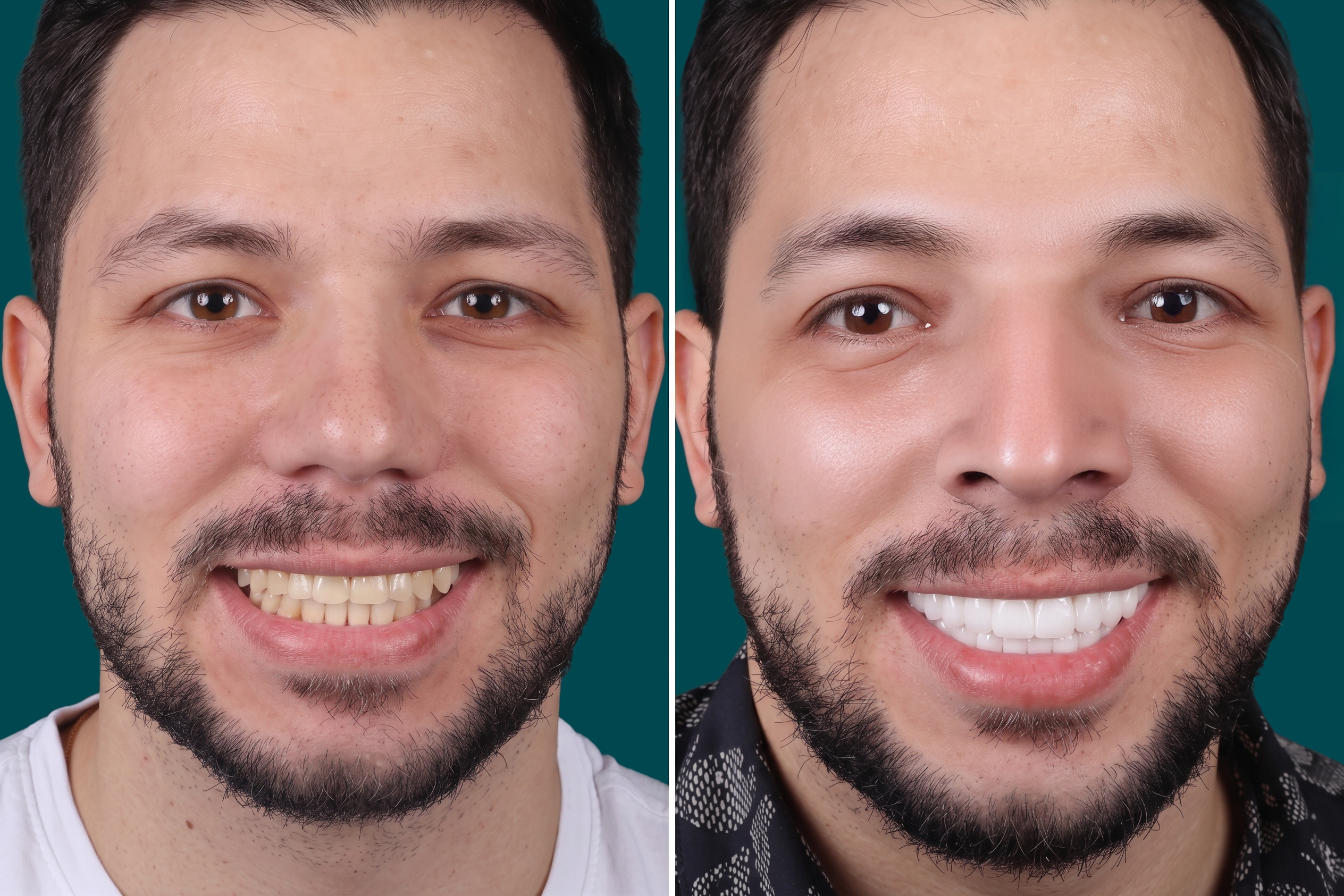
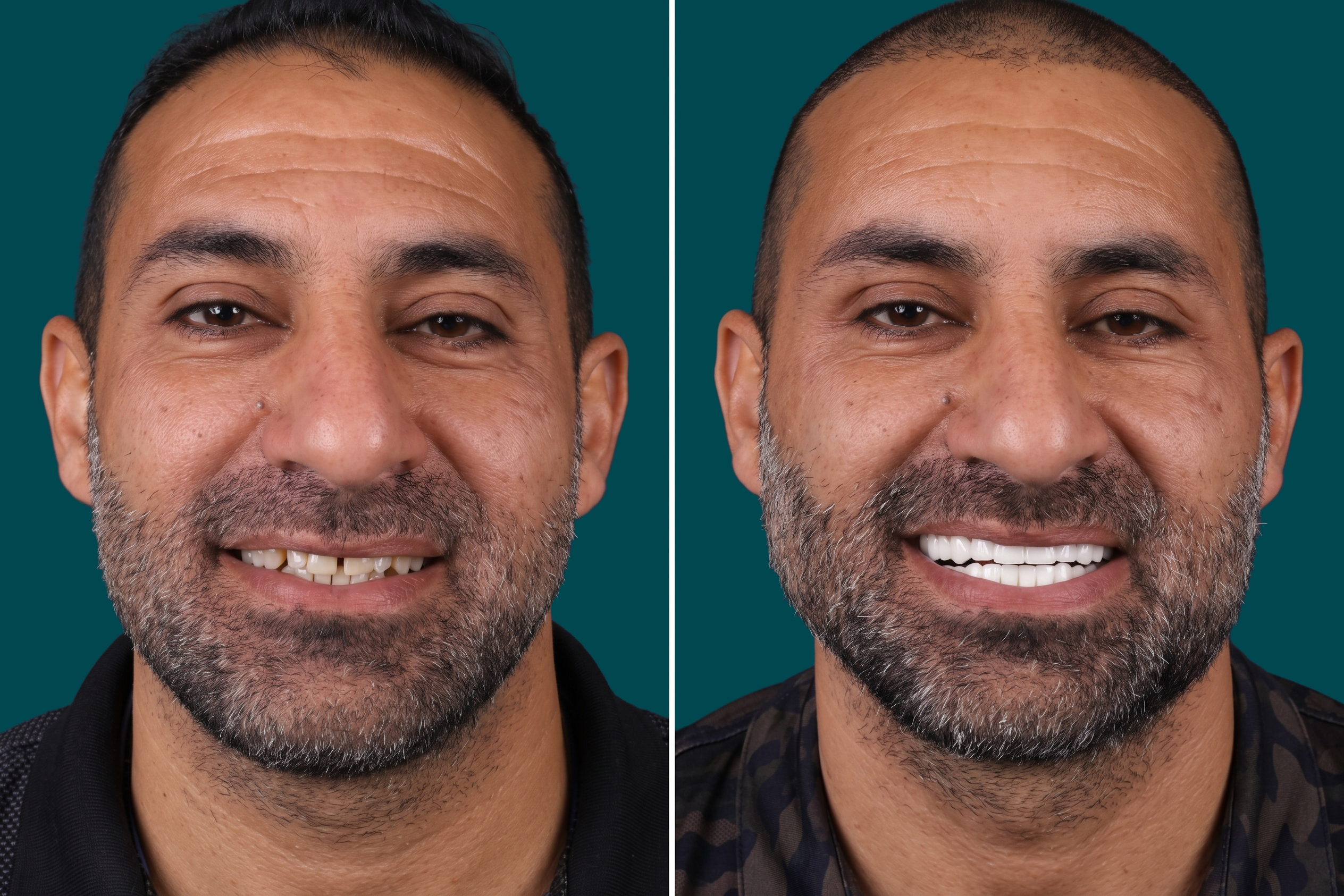
Yellow and brown tones from food, drink and age usually respond well, often dramatically. Grey tones respond more slowly and less completely. Deep banding from childhood antibiotics, which the page above mentions as a partial responder, may lighten a little but rarely disappears. And no amount of whitening makes naturally ivory teeth look like porcelain.
It's also common for teeth not to lighten perfectly evenly. The areas nearest the gum often stay slightly warmer, and thin edges can look a little translucent or bluish against a brighter middle. On most people that looks perfectly natural. Better to hear it now than wonder about it afterwards.
White spots and patchy colour
Some people have small chalky white spots on their front teeth, often left over from braces or from fluoride exposure while the teeth were forming. Whitening can make those spots less obvious over time, as the rest of the tooth catches up with them. In the first few days, though, they sometimes look more noticeable, because the dehydrated enamel around them turns chalky too.
If white spots bother you more than overall colour, mention them at the assessment. There are gentle ways to treat them directly, and for more stubborn marks, a thin layer of tooth-coloured composite can be used to blend them in. The composite veneers page covers that kind of small repair.
Why the check comes before the gel
The pathway above begins with a check of cracks and old fillings, and there are good reasons for it. Peroxide travels into the tooth. If there's untreated decay, a cracked tooth or a leaking filling, it can reach the nerve far more easily than it would through healthy enamel, and that's when whitening becomes genuinely painful.
Receding gums are another thing the dentist looks for. Exposed root surfaces have no enamel covering, so they tend to be sensitive and don't whiten the way the crown of the tooth does. Gum inflammation needs settling first too, because gel near sore, bleeding gums is uncomfortable.
Whitening is also usually postponed during pregnancy and breastfeeding, as a precaution rather than because of a known risk, and it's generally not offered to children and younger teenagers.
Sensitivity, and how to keep it down
Short, sharp twinges, especially with cold drinks, are the most common side effect of professional whitening. Expect them during the session or that evening, and expect them gone in a day or two. Peroxide briefly widens the microscopic tubes in the dentine that carry signals to the nerve, and cold rushes straight down them.
A few simple things help. If you already have sensitive teeth, start using a sensitivity toothpaste a couple of weeks before your appointment. Stick to lukewarm drinks for the first day. If the twinges are uncomfortable, an ordinary painkiller as advised by the dentist usually settles them. What shouldn't happen is pain that lasts for weeks; that's a sign something else is going on, which is exactly what the check beforehand is there to prevent.
The 48-hour white diet
For two days after the session, the page above asks you to stick to a "white diet". Why two days? Your teeth normally wear an invisible protein film. Whitening strips it off, and until it grows back the enamel soaks up colour like a sponge.
Here's the easy test: would it stain a white shirt? Then it waits for two days. So no espresso, builder's tea, cola, Merlot, soy sauce, curry, bolognese, blueberries or beetroot. Chicken and rice, white fish, pasta with butter, scrambled eggs, a banana, a glass of milk: all fine. Can't face two days without coffee? Drink it through a straw, well past your front teeth. And if you smoke, those two days are a good time to try going without.
Clinic, kit or toothpaste?
Here's something the kit adverts don't mention. UK and EU rules cap the peroxide in anything you can buy over the counter at a very low level. Stronger products can only be supplied through a dentist. That's the main reason home kits often produce disappointing results, and why some people end up leaving them on far longer than intended.
In-clinic whitening, as the page above describes, uses a professional-strength gel for controlled periods, with the gums protected by a barrier and a dentist watching how each tooth responds. The difference isn't only strength. It's that the teeth are checked first and the result is measured against a recorded starting shade.
Whitening toothpastes are a different thing again. Mostly they're just a bit grittier, so they polish off surface stain and leave the colour underneath untouched. Charcoal pastes are grittier still, and scrubbing with one twice a day isn't kind to enamel. Use them now and then to keep things fresh, by all means. Just don't expect them to whiten.
One dark tooth: internal whitening
Sometimes the problem is a single tooth that has darkened from the inside, usually after an injury or a root canal. Ordinary whitening from the outside won't reach that colour. The price table above lists internal whitening for exactly this situation, quoted after the tooth has been seen.
Before it's considered, the dentist needs to be sure the root filling is sound, which usually means an X-ray and sometimes attention from a root canal specialist; the root canal treatment page explains that side of things. When internal whitening isn't enough, a more opaque veneer or a crown can cover the colour instead.
Crowns, fillings and veneers you already have
As the page above points out, ceramic and composite don't change colour. If you have a crown or white fillings on your front teeth, they'll stay exactly as they are while the natural teeth around them get lighter. Sometimes that's barely noticeable. Sometimes a filling that matched perfectly suddenly looks darker than its neighbours.
You should hear about these before the gel goes on, not after. The usual fix is straightforward: whiten, wait for the colour to settle, then swap out whichever one or two fillings or crowns now stand out.
Planning veneers or crowns later?
If ceramic work is on the cards, whitening comes first. The shade is recorded once it has settled, and anything made afterwards is matched to that. The dental veneers page explains how this fits into a wider plan, and why whitening sometimes reduces the number of veneers needed to none at all.
How much does teeth whitening cost in Turkey?
Professional teeth whitening in Turkey costs €160 for a session here in Istanbul, as shown in the price section above. For comparison, the same page gives typical ranges of €290 to €520 in the UK, €300 to €600 in Germany and €460 to €930 in the US. Internal whitening, for one dark tooth, is priced once someone has actually looked at it.
How long does teeth whitening last?
Give it two or three years and some colour will creep back; that's normal. Heavy coffee, tea or wine drinkers, and smokers, will see it sooner. A swig of water after a dark drink, decent brushing and a professional clean now and then all buy you more time.
Because nothing has been removed from the tooth, a top-up later is simple. That's one of the quiet advantages of whitening over any treatment that covers the teeth.
Is it worth coming to Istanbul just for whitening?
The page above answers this honestly: usually not on its own. You can get whitened in most towns. Teeth whitening in Turkey earns its place when you're already coming for other dental work, or when it's step one of a bigger plan and its shade becomes the target every crown or veneer is matched to.
Sending a photo for assessment
The page above offers a free assessment from a photograph. To make it useful, take the photo by a window in daylight, with the flash off and no filter. One shot with a normal smile. A second with your lips pulled back a touch, so the gum edges show. Then a line or two in the message: any crowns, veneers or white fillings up front? Teeth already sensitive? With that, a dentist can usually give you a straight answer on how much lighter you'll get, and whether whitening alone will do the job.