 English
 Italiano
 Español
 Français
Breast Lifting
Breast Lift in Istanbul · From €3,500
Does your nipple sit below the fold under your breast? That's the sign a lift is needed.
A breast lift raises and reshapes the breast without necessarily changing its size. It costs €3,500, or €4,500 with round implants and €4,900 with teardrop implants if you also want more volume.
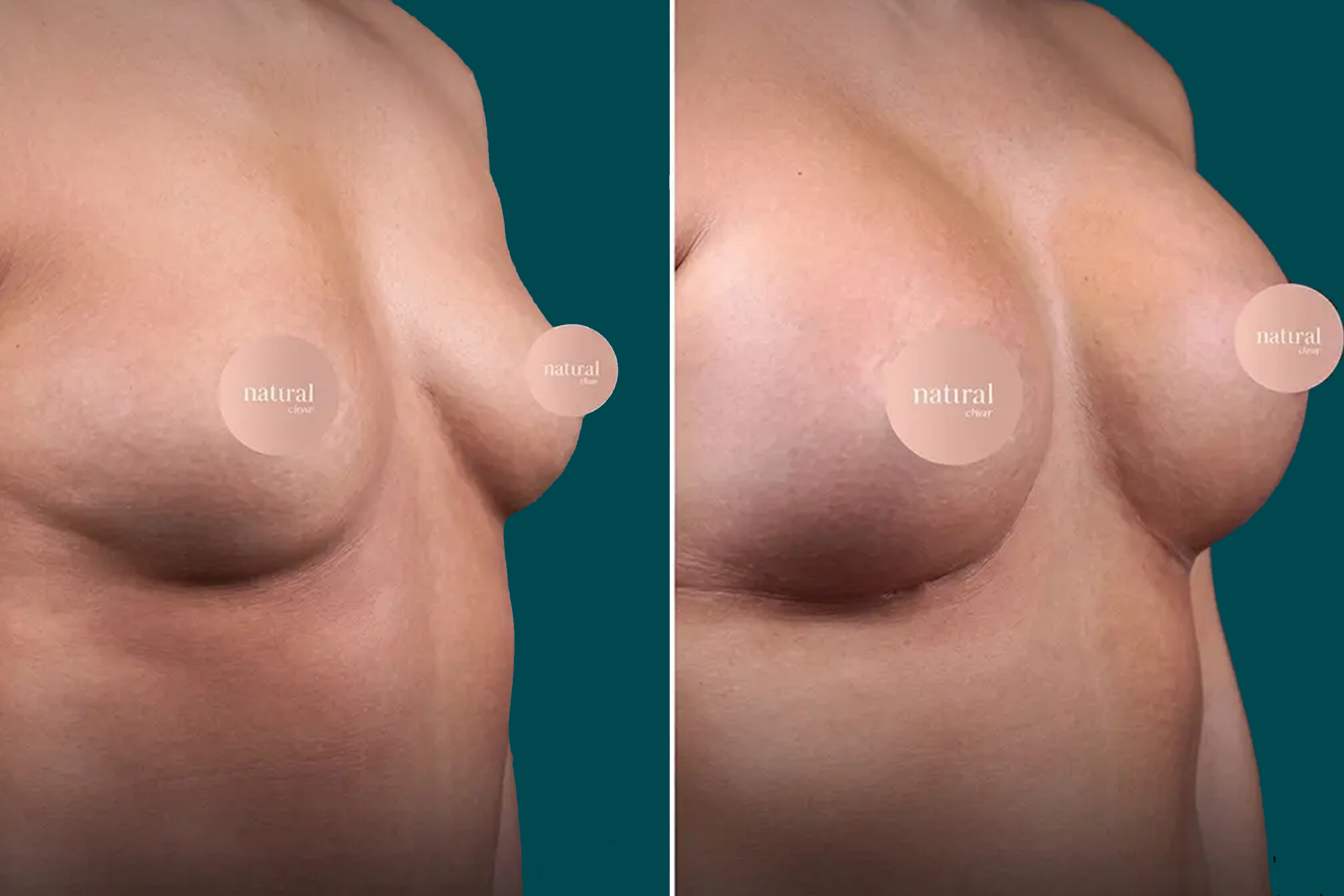
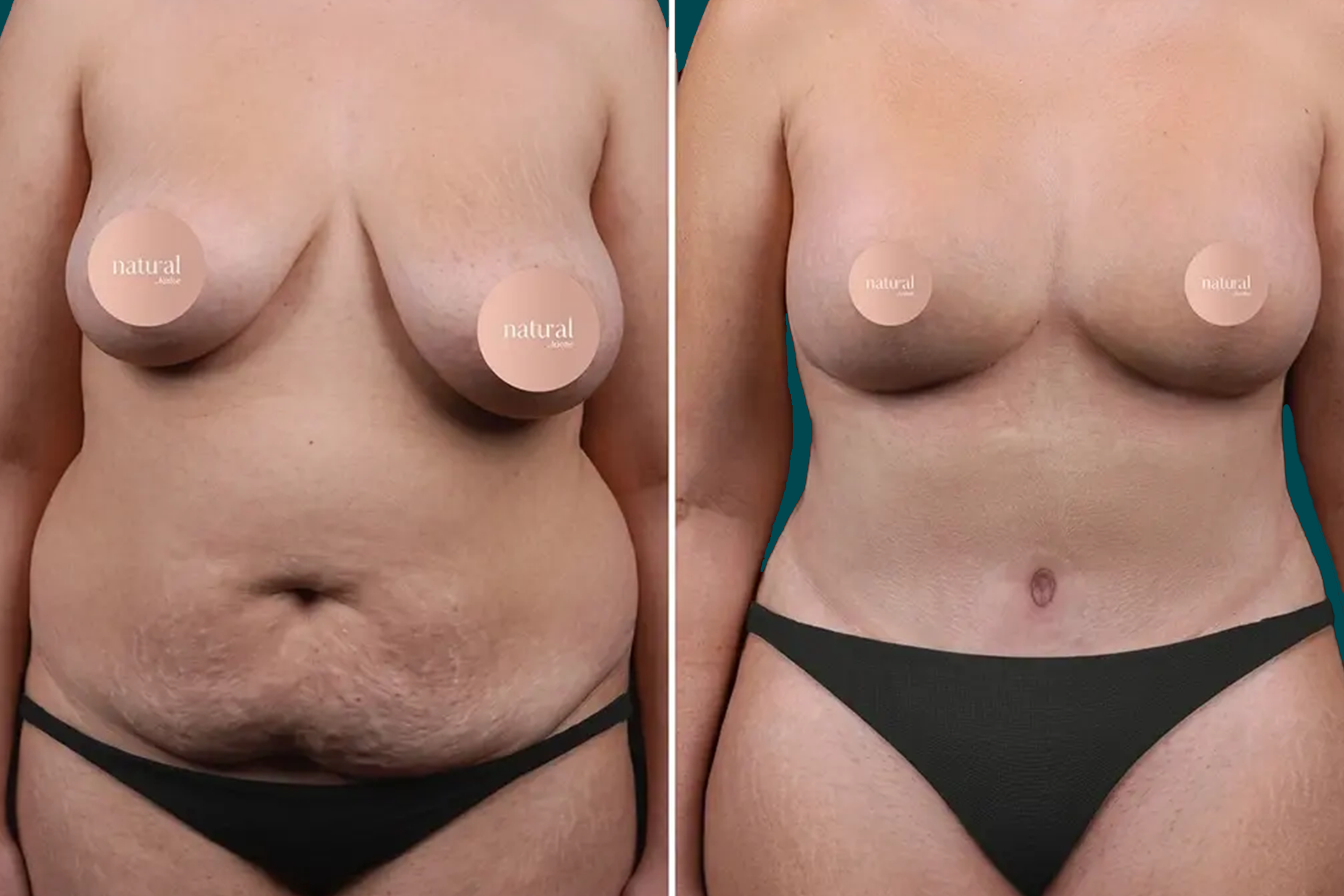
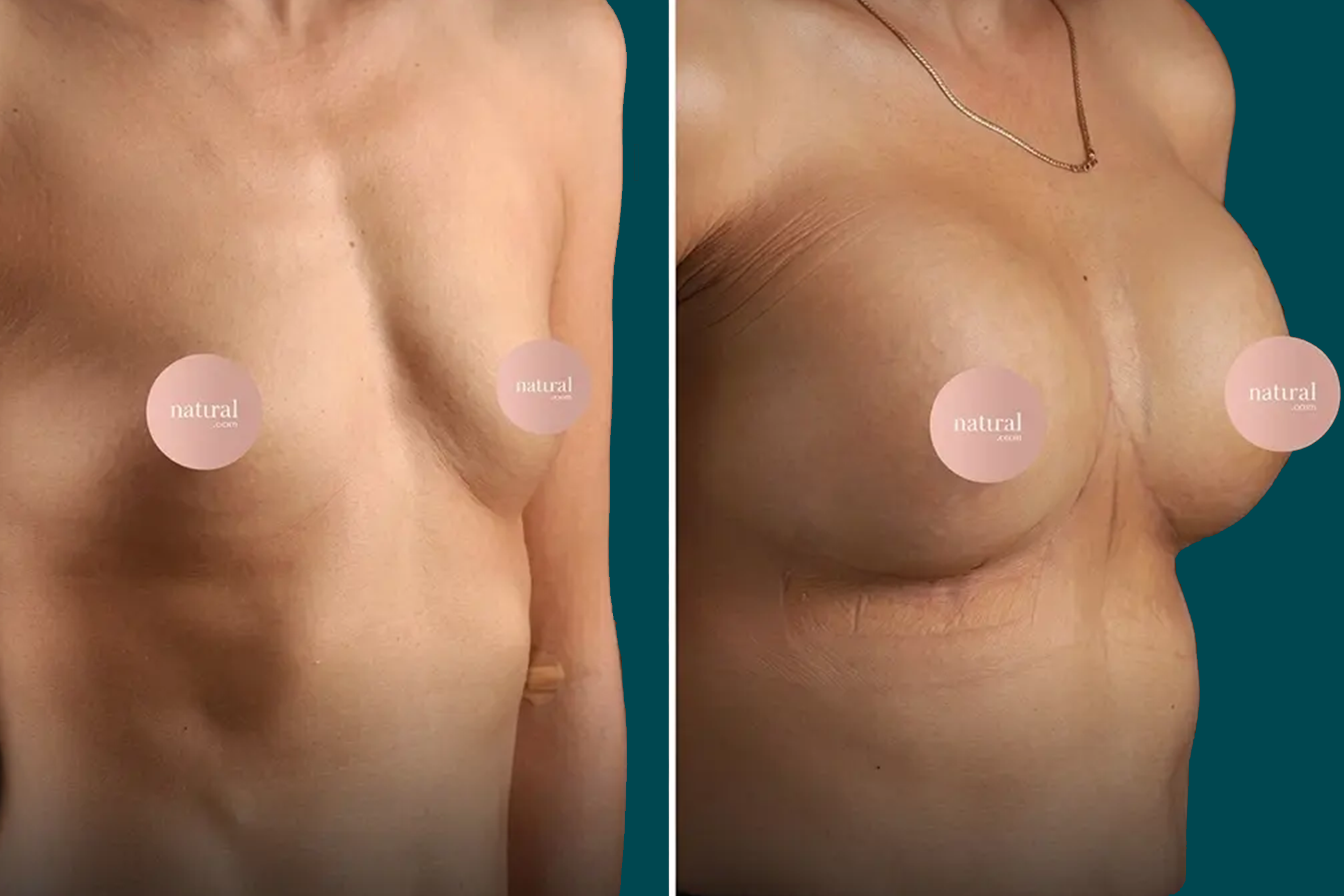
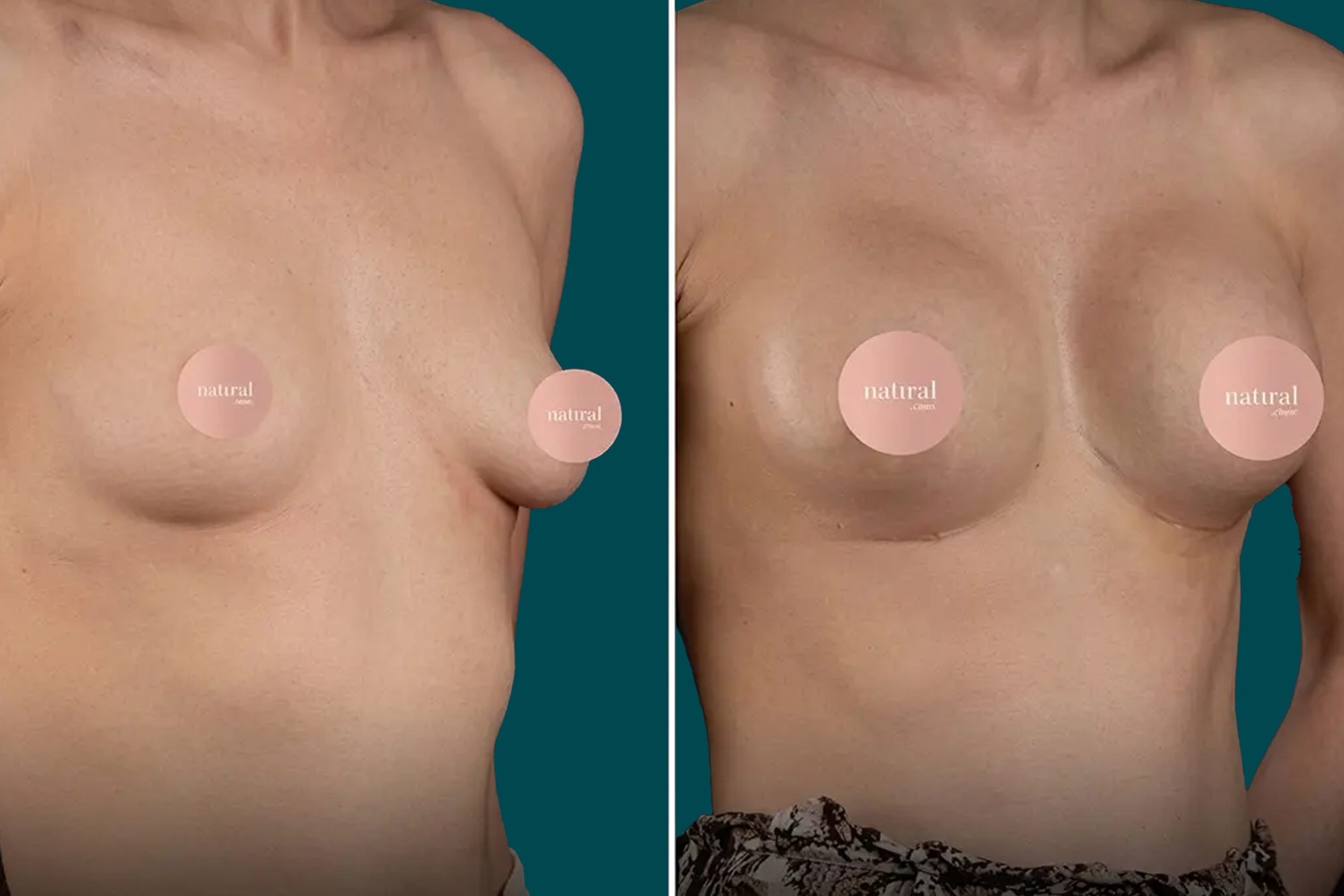
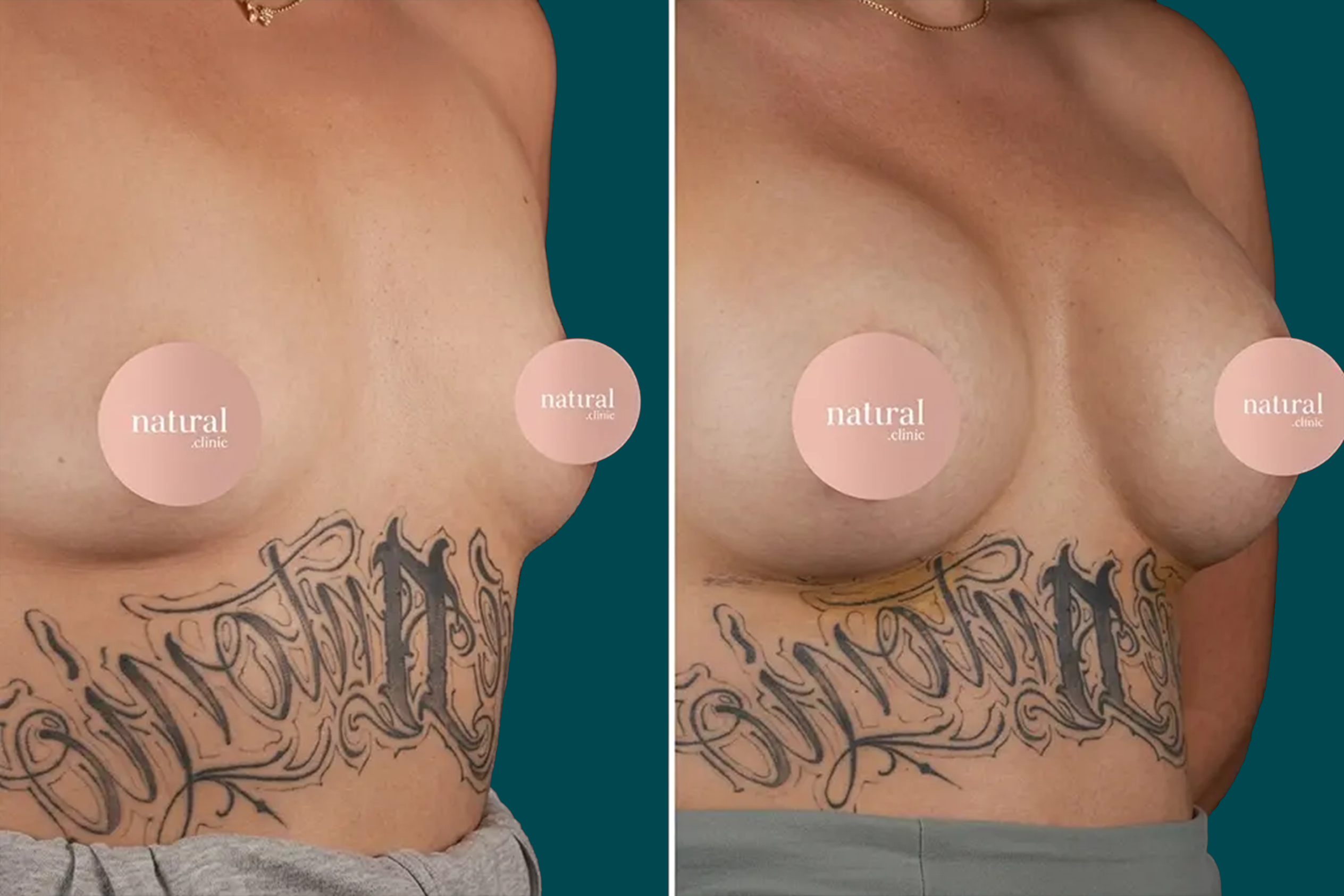
Nipple position above the breast fold is the clearest marker in breast lift before and after comparisons. Cases where implants were added for volume are labelled separately from lift-only results.
Breast Lifting
Breast Lifting
Breast Lifting
Natural Clinic brings multiple fields of specialised healthcare together under one roof, combining medical expertise, advanced technology and patient-focused care. From hair transplantation and dentistry to facial, body and breast aesthetics, bariatric surgery and reconstructive treatments, every patient journey is managed by experienced medical teams working across disciplines.
Advanced treatments across multiple medical specialties
Experienced specialists working across disciplines
Consultation, treatment, recovery and aftercare coordinated under one roof
Large-scale medical infrastructure in Istanbul
One operation closed in one of three patterns: a circle around the areola, that circle with a vertical line beneath it, or the anchor that adds a line along the crease. How far the breast has descended picks the pattern, and all three are priced the same here.
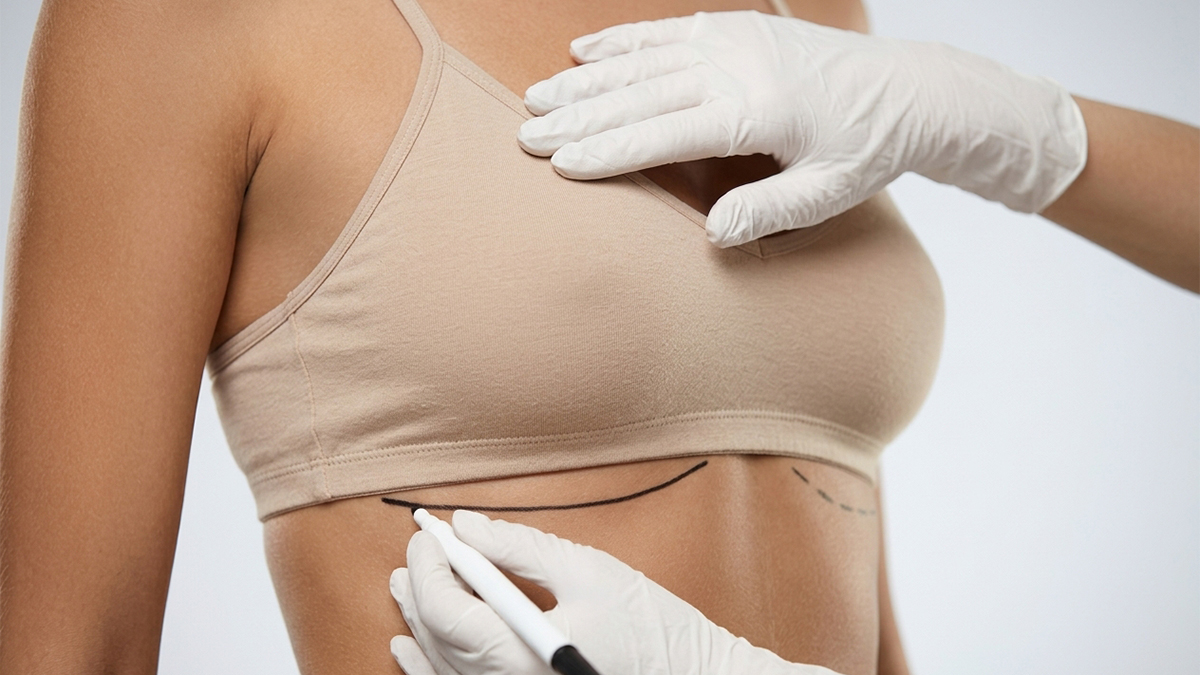
One price, whichever line it takes
The nipple and areola stay attached to a pedicle of breast tissue that carries their blood supply, and are moved up on it. Surplus skin is removed to a pattern marked on you standing, and the lower pole is reshaped so that it holds rather than sliding back down.
A breast that has descended but still has volume enough, with the nipple sitting at or below the crease beneath it.
One night in hospital, six nights in Istanbul. Desk work at about a week; the scars look their worst at three months.

Plastic Aesthetic and Reconstructive Surgery
Dr Emre G. qualified in medicine at Uludağ University in 2007 and completed his specialist training in plastic, reconstructive and aesthetic surgery at Bezmialem Vakıf University between 2008 and 2014, with a research post at the University of Wisconsin School of Medicine and Public Health. He has worked in both public hospitals and private practice, and the reconstructive half of that training shows in how he plans an aesthetic case. He practises at Natural Clinic in Istanbul.
Education
Yes, with a qualification that has nothing to do with money. Before you fly, check that someone measured your nipple-to-fold distance and named the closure that grade actually requires.
.png?v=mttw3gcd)
Istanbul performs this operation constantly. Ask how often the surgeon converted a short closure into a long one.
.png?v=mttw3ztq)
Your plan should give the nipple-to-fold distance in millimetres and name the closure it requires.
Lower operating and staffing costs, plus the exchange rate. That says nothing on its own about surgical quality.
.png?v=mttw4t31)
One night in hospital and six in Istanbul. You fly home in the surgical bra fitted in theatre.
.png?v=mttw54v6)
An international team coordinates every appointment in English. Your interpreter is free and stays with you throughout.
.png?v=mttw5ilm)
Ministry of Health licence, board registration, logged sterilisation cycles, your standing markings photographed and kept. All documented beforehand.
A lift is €500 cheaper than an implant and starts no device sequence. Here is how it is planned.
When the nipple rests level with or beneath the fold, the problem is position rather than volume, so your plan is built around lifting it.
Your own tissue may give enough upper fullness at €3,500; if not, the plan shows the €4,500 and €4,900 lift-with-implant alternatives side by side.
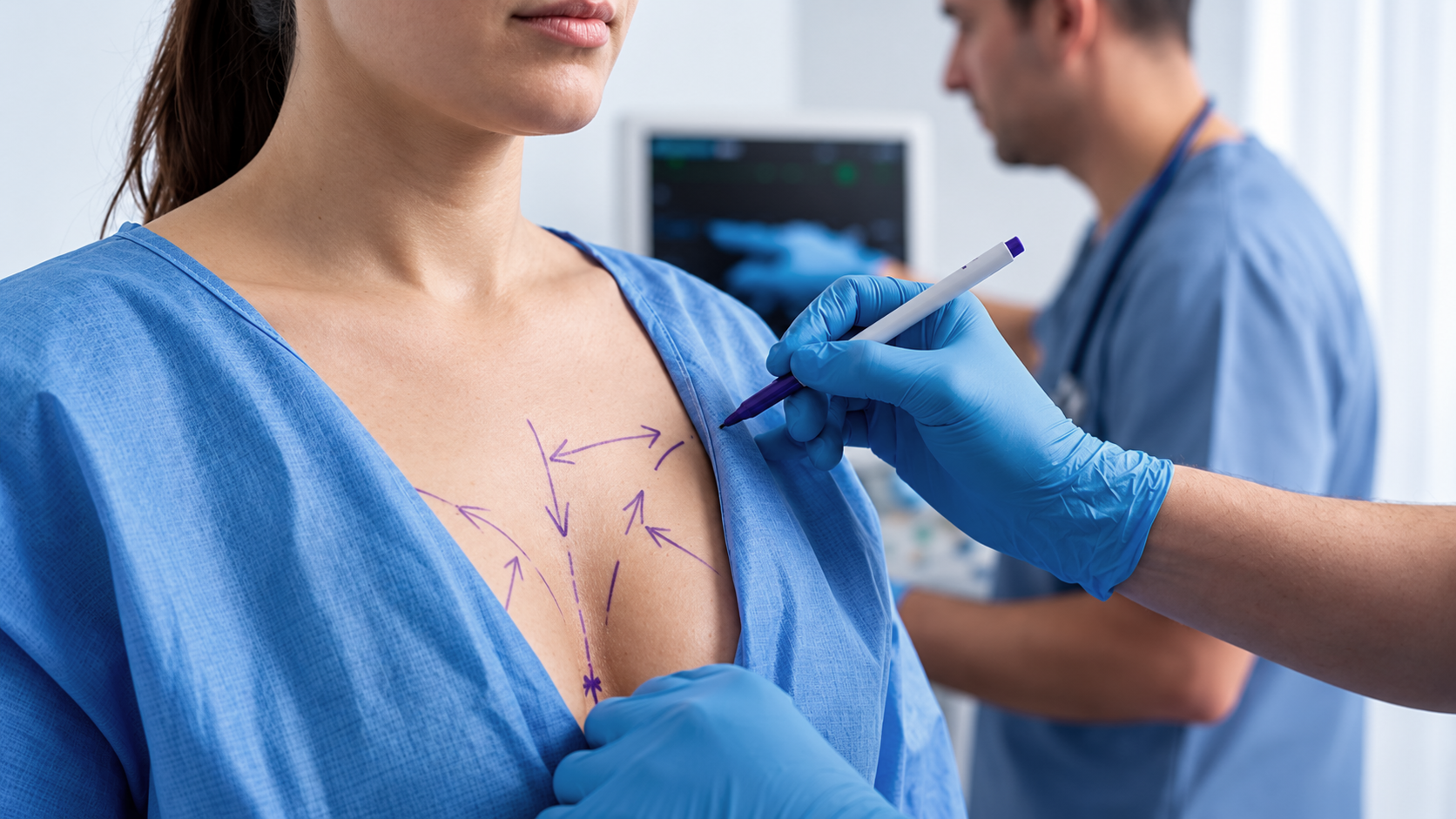
The future nipple position is drawn while you stand, because a breast marked lying down sits in the wrong place once you get up.
Depending on how far the nipple must travel, the scar runs around the areola only, down to the crease, or along it as well.
The surgical bra stays on and arms stay below shoulder height until the surgeon says otherwise; desk work is usually fine after a week.
Why a breast lift is often the answer for people asking about implants, and what recovery involves.
A breast lift, or mastopexy, raises and reshapes breasts that have sagged, repositions the nipple and areola higher on the breast and removes excess stretched skin. It restores a more youthful position using your own tissue, without necessarily changing breast size.
A common sign is a nipple that sits at or below the fold beneath the breast when you stand, or points downward. Other signs include stretched skin, enlarged areolas and breasts that look deflated after pregnancy, breastfeeding or weight loss. A surgeon confirms this with measurements.
A breast lift improves position and shape but does not add volume. Some patients find the breasts look fuller because tissue is raised and reshaped. If more upper-pole fullness or size is wanted, a lift can be combined with an implant or fat transfer.
Natural Clinic lists a breast lift at €3,500, covering general anaesthesia, one night on the ward, a surgical bra and twelve months of follow-up. UK clinics often charge between €6,450 and €10,800 for mastopexy, sometimes before garments and aftercare, so the difference is substantial for most patients.
A breast lift combined with implants costs €4,500 with round implants or €4,900 with teardrop implants at Natural Clinic. Combining both addresses sagging and volume loss in one operation, and your plan names the implant model, profile and volume before surgery.
A breast lift uses only your own tissue, so there is no implant to purchase. It also avoids the long-term costs associated with implants, such as future exchange or removal, which is why the lift alone is priced €500 lower than augmentation.
The scar pattern depends on how much lift is needed. A small lift may leave a scar only around the areola, a moderate lift adds a vertical scar down to the fold, and a larger lift adds a horizontal scar in the fold. Scars fade over twelve months.
Breasts change shape and position when you lie down, so the new nipple position and incision lines are drawn while you stand or sit upright. This ensures the result looks natural in everyday life rather than only when lying on your back.
Changes in nipple sensation are common after a breast lift, including numbness or increased sensitivity, and are occasionally permanent. Because the nipple is usually kept attached to underlying tissue, breastfeeding may still be possible, but this cannot be guaranteed. This is discussed openly before surgery, especially if you plan future pregnancies.
The length is the same, six nights with the first in hospital, but the focus differs. After a lift, the team pays particular attention to the vertical and crease incisions and to nipple circulation, so wound checks are the main purpose of the reviews before you are cleared to fly.
Stretching your arms above your head pulls on the vertical and crease incisions of a lift, so reaching up to shelves, lifting luggage into overhead bins and similar movements are avoided for several weeks. Gentle movement at shoulder height is encouraged to prevent stiffness while the wounds heal.
Most surgeons recommend sleeping on your back with your upper body slightly raised for the first weeks after a breast lift. Side sleeping is usually allowed once initial healing is complete, and your surgeon confirms when it is comfortable and safe.
A breast lift resets the position of the breasts, but it does not stop natural ageing. Gravity, weight changes, pregnancy and breastfeeding can cause some sagging again over time, so maintaining a stable weight and wearing supportive bras help preserve the result.
If you plan to have children, it is often better to wait, because pregnancy and breastfeeding can stretch the breasts again and reduce the benefit of a lift. Your surgeon can discuss timing so the result lasts as long as possible.
Swelling decreases over the first weeks, but lifted breasts can look high and slightly flat at the bottom at first. Over three to six months they soften and fill out into a more natural shape, while the scars keep flattening and fading for about a year. Follow-up continues throughout this period.
Breast augmentation comes first because it is the operation this page keeps pointing at — where the problem is lost volume rather than lost position, a lift alone will not fix it. The breast surgery hub sets every item on our breast list side by side, including the exchange and removal figures a lift never generates. Breast reduction is where a lift is performed as part of making a heavy breast smaller. And the mommy makeover page is where a lift, an implant and abdominal work are discussed as one plan.
Personalised Care, Just for You
Send photographs standing relaxed, front and both sides, arms down, in a non-padded bra and then without one. A breast surgeon replies with the grade of descent your photographs show, which of the three closures it requires, and whether a lift alone will give you what you are picturing. All three closures are €3,500, so the answer is a clinical one rather than a quotation. No obligation, no pressure, no cost.
Get My Free Surgical Plan100% Confidential & Secure
Reply Within 24 Hours
Reviewed by Board-Certified Surgeons
One price for all three closures and no device inside you, which makes this the cheapest shape operation on our breast list. What is left to decide is the length of the line.
You take your bra off at night and catch yourself in the mirror. They're lower than you remember. For a lot of women it happened after children and the months of feeding that came with them. For others it was losing a lot of weight. Sometimes it just crept in with the years. Whatever the cause, it's the reason most people start looking into a breast lift in Turkey.
Higher up the page you'll find how the operation moves the nipple and removes surplus skin. Down here we've gathered the questions that come before and after the surgery itself. We start with how a surgeon decides how far your breast has dropped. Timing comes next, along with what a lift can do to feeling and breastfeeding. After that it's recovery, how to read breast lift before and after photos, and finally the price.
Surgeons don't go by "a bit saggy". They measure where the nipple sits compared with the crease under your breast, standing up, in millimetres. Roughly speaking, there are three grades. In a mild drop the nipple is still just above the crease and pointing forward. Once the nipple has come down level with the crease, surgeons call that moderate. Below the crease is the most advanced stage, and by then the breast usually hangs forward over the fold.
One version catches people out. The nipple hasn't really moved, yet the bulk of the breast has slipped down underneath it. That's usually a sign of lost volume, and a lift on its own may not be the right answer.
Posture changes all of this. Lean forward, pull your shoulders back or lift your arms, and the breast seems to move a whole grade. It's one reason a photo is a starting point for us and nothing more.
Three patterns are used, and the grade picks between them. A circle around the areola suits a mild drop. A circle with a line running down to the crease, often called a lollipop, handles a moderate one. The anchor adds a third line hidden in the fold, for breasts with surplus skin both lengthways and across.
The smallest scar is what nearly everyone wants, and we understand why. A circle of stitches around the areola can only hold so much, though. Ask it to lift a breast that really needed a longer line and the areola gets pulled wider. Within a year or two the bottom of the breast usually slips back down. Putting that right means the bigger scar anyway, on tissue that's already been operated on. Since all three patterns cost the same here, the choice can be made purely on what your breast needs.
Some of the women who write to us about a lift end up on another page entirely. A breast that's emptied out, with flat upper fullness but a nipple still well placed, usually needs volume more than position. That's breast augmentation territory. A breast that's heavy enough to cause neck and shoulder pain calls for a breast reduction, which has a lift built in.
And if you're having implants taken out, a lift is often what stops the breast looking deflated afterwards. Our breast implant removal page covers that combination.
A lift raises what's there. It doesn't add any. After pregnancy or weight loss, many women find a lift makes the breast neater while the top stays flat. If upper fullness is what you're after, the lift can be combined with an implant in one operation.
That changes the long-term picture, though. Adding an implant brings something into your life with a shelf life. You'd need scans from time to time, and at some point it's likely to come out again, maybe sooner, maybe much later. Keep the lift on its own and there's nothing in there to check. Plenty of women decide that's worth a flatter top.
Plan around your family first. A pregnancy after the lift will stretch everything again, so if another baby is on the cards, most women hold off. Once you've finished feeding, give it at least six months. The breast keeps changing for a while, and we'd rather operate on the shape you'll actually keep.
Weight works the same way. If you're still losing, or planning to, get your weight steady first. After a large loss, for example following a gastric sleeve, the skin can be very loose, and the anchor pattern is often the one that does the job.
The nipple stays attached to its own blood and nerve supply while it's moved up. Even so, changes in nipple feeling are common for the first months. Most of it comes back. For some people sensitivity stays lower, or occasionally higher, for good. Distance matters here. A nipple that only moves up a little is less likely to stay numb than one that has to go a long way.
In a standard lift the milk ducts stay connected, and many women breastfeed afterwards. Some find their supply is lower, or that it doesn't work. No surgeon can promise either way.
Smokers and vapers will need to give it up for a while, before the operation and right through healing. That includes patches and gum. Think of the nipple as sitting at the end of a long, thin supply line. Nicotine pinches that line, and tissue that's short of blood heals slowly, or in the worst cases doesn't survive. We check, rather than simply asking.
After a breast lift in Turkey, the first night is spent on the ward. You move to your hotel the next day. For the first few days your chest will feel tight, more of a pull and an ache than real pain. By around day five most women notice it easing off. The surgical bra stays on round the clock. For a while, anything kept on a high shelf will have to come down with someone else's help. Most people manage desk work after about a week.
Here's the part that surprises people. The shape usually looks best around three weeks after surgery. The scars, meanwhile, look their worst at about three months, when they're red, raised and firm. They flatten and fade over the months after that. With an anchor scar, watch the spot under the breast where the lines meet. Healing there is often slowest, and we'll be checking it at your follow-ups.
Beyond that, problems are uncommon, but you should hear about them before you sign. Fluid or blood can gather under the skin and may need draining. Infection happens occasionally. Now and then a small firm lump of fat forms where tissue was moved. The nipples can also end up at slightly different heights. Some unevenness between the sides is often there before surgery, and it may stay.
Nobody's breasts stop ageing after surgery. Some degree of drop comes back over the years for everyone. Weight is the big factor. Larger breasts drag on the new shape every day, and they tend to drop again sooner than small ones. Having another baby and feeding it does the same, and so does a big change on the scales in either direction.
Done at the right time, breast lift results usually hold well for many years. It also leaves you with nothing that needs scans or replacing, which is a real difference from an implant.
Check when any breast lift before and after photo was taken. A picture at three weeks shows the shape at its best and the scars before they've had time to look their worst. Twelve months tells you much more. Our gallery labels lift-only cases separately from those where an implant was added, and that's worth checking anywhere you look, because the two give very different results.
Breast lift reviews are useful in the same way, especially those with a before and after photo taken at around the same time. A review written a year on tells you how the scars settled and whether the results held.
Our breast lift price in Turkey is €3,500, whichever of the three scar patterns you need. With a round implant it's €4,500, and with a teardrop implant €4,900. Surgeon, anaesthetic, the night in hospital and your surgical garment are all part of that. So are transfers, an interpreter and a full year of check-ins. We'll book a hotel for you too, though that's paid on top, from €75 a night.
For comparison, a mastopexy is commonly quoted at around €6,450 to €10,800 in the UK. When you weigh up any breast lift cost, check one thing first. Does the price change with the scar pattern? If it does, the clinic has a reason to steer you towards one. Ours stays the same.
Take photos standing relaxed, front on and from both sides, with your arms down. Take one set wearing a non-padded bra, then repeat them without. If you've had children, let us know how many. It matters whether you're planning more. Say if your weight has been steady lately, too. Our surgeons in Istanbul will reply with the grade, the scar that grade calls for, and a straight answer on whether a breast lift in Turkey alone will give you the shape you have in mind.

© 2026 Natural Clinic. All rights reserved.