 English
 Italiano
 Español
 Français
Breast Revision
Breast Revision in Istanbul · €4,000
Unhappy with an earlier result? The first question is what went wrong.
Revision corrects problems from a previous augmentation, such as position, size, rippling or capsular contracture, often by exchanging the implants. A round implant exchange is €4,000, and your surgeon reviews your earlier operation notes before planning.
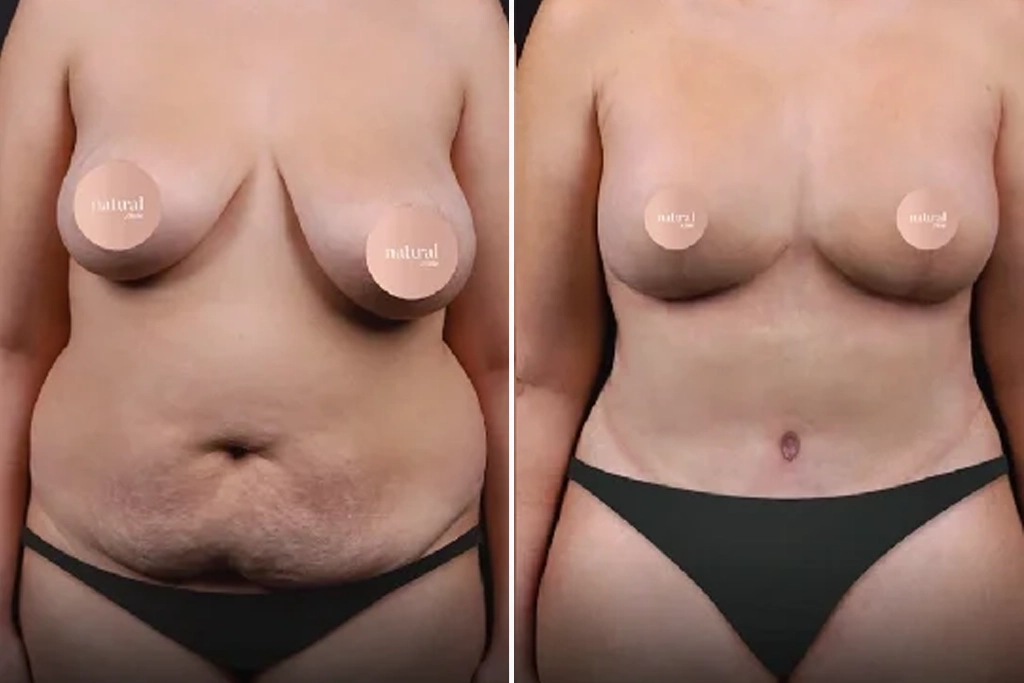
Implants that slipped, rippled or hardened are corrected in these breast revision before and after cases. Symmetry and implant position are the details to compare, and each outcome depends partly on the original surgery.
Breast Revision
Natural Clinic has treated more than 100,000 happy patients from over 80 countries, breast revision surgery among them, with operating theatres, hospitalisation and aftercare in the same building rather than subcontracted to a partner hospital you meet on the morning of surgery. For someone flying in that is not a detail — it decides who is responsible for you at two in the morning on the first night, and who you see when something needs checking on day four.
Advanced treatments across multiple medical specialties
Experienced specialists working across disciplines
Consultation, treatment, recovery and aftercare coordinated under one roof
Large-scale medical infrastructure in Istanbul
Revision is two operations wearing one name. Either the implants come out and stay out, or they come out and new ones go back in during the same session. Sitting inside both is a third decision, about the scar capsule, and that one changes the operation more than anything else.
From €4,000, one night in hospital
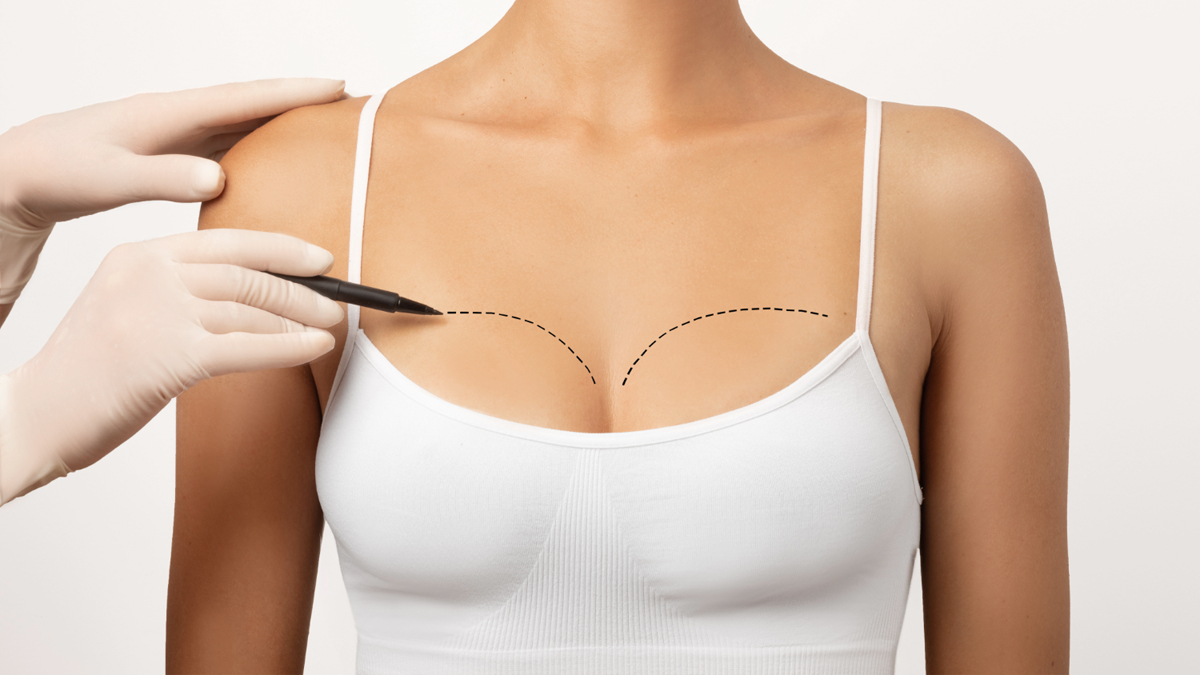
The old implants are removed through your original scar. New round prostheses go in during the same session, or nothing does. What happens to the scar capsule is decided on the indication rather than on request. If the tissue has descended, a lift is planned with it as one combined operation rather than two.
Capsular contracture, rupture, malposition, rippling, tissue descent around long-standing implants, or a wish to have them out altogether.
One night in hospital, five nights in Istanbul. Light activity at about a week; the shape is not reliably assessable before six months.
Plastic Aesthetic and Reconstructive Surgery
Dr Emre G. qualified in medicine at Uludağ University in 2007 and completed his specialist training in plastic, reconstructive and aesthetic surgery at Bezmialem Vakıf University between 2008 and 2014, with a research post at the University of Wisconsin School of Medicine and Public Health. He has worked in both public hospitals and private practice, and the reconstructive half of that training shows in how he plans an aesthetic case. He practises at Natural Clinic in Istanbul.
Education
Surgery carries risk wherever it is performed. For this one the decision that changes both your operation and, almost everywhere, your bill is **what happens to the scar capsule**. In London it moves a quote by £1,500 to £3,500. So ask any clinic, ours included, a single question — is capsule removal inside the figure you have quoted me, and under what circumstances would you do it? Ask that before you ask what it costs.
.png?v=mttw3gcd)
Theatres, hospitalisation and aftercare in the same building, not a subcontracted hospital.
.png?v=mttw3ztq)
Revision is routine work here rather than occasional, and both routes — taking them out and swapping them — are performed weekly.
Lower operating costs, not lower standards. Ask what the price includes and compare like with like.
.png?v=mttw4t31)
Hundreds of routes, which matters when you are flying home five nights after an operation.
.png?v=mttw54v6)
Consent, risks and aftercare explained in your own language — and there is no version of this consultation worth having through a phrase you half understand.
.png?v=mttw5ilm)
Twelve months is included — and if you keep implants, the FDA recommends imaging at five to six years and every two to three years after that. Ask who is doing that, and where.
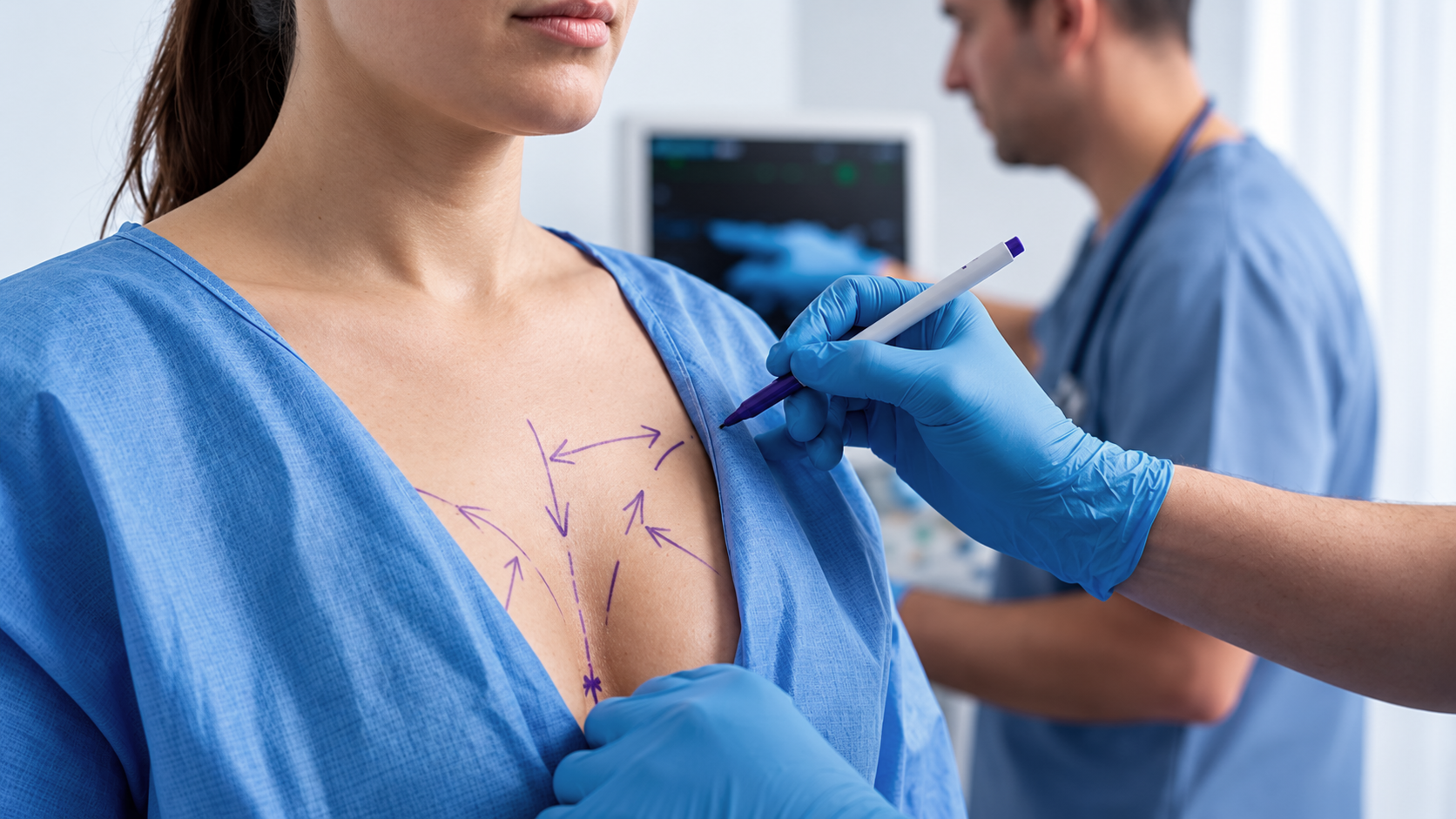
A revision is planned around your existing implant — its make, its pocket and the capsule your body built around it.
Your implant card or operative note tells us the manufacturer, volume and placement. Without it, imaging fills the gap.
A hardening breast suggests capsular contracture; a shifted one, a pocket problem; a rippled one, too little tissue cover. Each leads to a different operation.
Both prices sit on the plan together, so you choose knowing what either path costs.
Once the old device is out, the scar capsule is scored, trimmed or removed as planned, and the space is reshaped before any replacement goes in.
After five nights you leave with the card for any new implant — store it with your passport.
Exchange, capsule treatment or removal — how a breast revision is planned from your history.
Breast revision is surgery to correct problems that develop after a previous breast operation, most often involving implants. It may include replacing implants, treating a hardened scar capsule, adjusting the implant pocket, correcting asymmetry or combining an implant exchange with a lift.
Breast revision may be needed if implants become firm or painful, move out of position, ripple, rupture or no longer suit your body after weight change, pregnancy or ageing. Some patients also choose revision simply because they want a different size or shape.
Your implant card or operative notes showing the manufacturer, model, size and placement are very helpful, along with current photographs and any recent scans. If you do not have these records, imaging can help identify the implant and its condition.
Implant exchange revision is €4,000 at Natural Clinic, whereas UK prices for revision surgery commonly range from €6,200 to €16,350 depending on complexity. Your quote shows whether capsule treatment or a lift is part of the plan, alongside the new implant details.
Exchanging implants during a revision is listed at €4,000, whereas taking them out altogether is €4,500, because the capsule and a stretched breast often need more work. Both figures appear side by side in your plan, so you can weigh whether replacing or removing your implants suits you better before travelling.
If new implants are part of your revision, the plan names the manufacturer, model, profile and volume and confirms that they are included in the price. This allows you to see exactly what will be placed before surgery. Implant type and size are chosen with you during planning.
Capsular contracture occurs when the scar tissue that naturally forms around an implant tightens, making the breast feel firm, look distorted or become painful. During revision, the capsule may be released or removed and the implant replaced, sometimes in a new pocket.
Revision is often more complex, because the surgeon must work with existing scar tissue, a capsule and breast tissue that may have thinned or stretched. Careful planning based on your history and imaging helps address these challenges. Surgeons with revision experience plan for these factors in advance.
Yes. If new implants are placed during breast revision, you receive a new implant card listing the manufacturer, model, size and serial numbers. It should be kept permanently, as future doctors may need this information. These details are also important if a manufacturer issues safety information in future.
Revision patients normally stay five nights, including the first on the ward. During that time the team watches for fluid collecting in the reshaped pocket, checks drains or dressings if they were used and confirms that the new implants are sitting symmetrically before you are cleared to fly.
In many cases, yes. Surgeons often use the scar from your original augmentation to remove and replace implants, which avoids creating a new visible line. A different incision may be needed if a lift is added or if the capsule must be removed completely, and this is agreed during planning.
Desk work is often possible after about a week, provided you avoid lifting and reaching overhead. Downtime can be longer if the capsule was removed, the pocket was changed or a lift was performed, because these add to the internal healing that needs protecting in the first weeks.
After breast revision, swelling reduces over the first weeks, but new implants can take several months to settle into their final position and soften. Scar tissue also continues to mature, so the final result is usually assessed after three to six months.
Breast implants are not lifetime devices, and even new implants placed during revision may need attention in the future. Regular check-ups and monitoring, including imaging where advised, help detect problems early. Periodic imaging may be recommended to check for silent rupture.
Revision patients receive a year of scheduled reviews focused on how the new implants are sitting, whether the breasts feel soft and whether any capsule tightening is returning. Your surgeon also explains what long-term implant monitoring to arrange at home once the follow-up period ends.
Revision borrows from every other operation on the breast list. A removal that needs a lift is a mastopexy. An exchange that needs more volume without a larger implant is a fat transfer. And the operation that brought most people to this page in the first place — augmentation — is where the sentence about implants not being lifetime devices belongs, rather than here, years later.
Personalised Care, Just for You
Send photographs and whatever you still have on the original implants rather than naming an operation. One of our surgeons reviews your case and replies with a realistic assessment — whether removal, exchange or something combined is the answer, what your breast is likely to look like afterwards, how many days you would need in Istanbul and what it costs. Including when the answer is that imaging should come before any decision at all. No obligation, no pressure, no cost.
Get a Surgeon's Opinion100% Confidential & Secure
Reply Within 24 Hours
Reviewed by Our Surgeons
Breast implant revision is two operations under one name: removal of existing implants without replacement, and removal with simultaneous replacement. The United States Food and Drug Administration states that breast implants are not lifetime devices and that the longer they are in place, the greater the likelihood of further surgery. Whether either is appropriate depends on an individual clinical assessment.

By the time someone asks us about a revision, they've usually been living with a problem for a while. One breast has gone hard. An implant seems to have slipped sideways, or down. There's a ripple along the edge you can see in certain tops. Sometimes nothing is wrong exactly, and the size simply doesn't suit the person you are fifteen years on. Each of those leads to a different operation, which is why breast revision in Turkey starts with a diagnosis and only then turns to a price.
Up the page you'll find the two basic routes, a swap or taking the implants out, plus the paperwork we'll want. This part goes problem by problem, with what a surgeon usually does about each one. A second operation heals differently from the first, so recovery has a section of its own. Then come breast revision before and after photos, and the cost.
You'll hear that implants have to come out after ten years. Friends say it, forums say it, even some clinics do. There's some truth in it, but not much. No implant comes stamped with a date. The FDA in America puts it differently. It says implants aren't meant to last a lifetime, and that the odds of needing more surgery go up the longer you've had them. Plenty of women keep theirs for twenty years without trouble. Others need surgery within five.
So the honest rule is to replace them when there's a reason. A problem you can feel or see is one. A scan showing a rupture is another. Changing your mind about size counts too. Age alone usually doesn't.
Your body builds a thin layer of scar tissue round every implant. That's normal and usually soft. In some people the layer thickens and tightens, squeezing the implant. The medical name is capsular contracture. Of all the reasons people come back for a second operation, it's the one we see most.
Surgeons sort it into stages, mostly by feel. At first it's simply a little firmer than it should be. Then it becomes visibly rounder and higher, sitting like a tennis ball under the skin. In the worst grade it's hard, distorted and often sore.
Nobody knows the full cause. Bacteria living in a thin film on the implant surface seem to play a part. Bleeding after the first operation has been linked to it as well, and radiotherapy to the chest raises the risk considerably. Treatment means removing or releasing the tight capsule, and usually putting in a new implant. Moving the implant to a fresh pocket, for example from above the muscle to beneath it, can lower the chance of it happening again. It can't remove that chance completely, and we'll say so before you sign anything.
Silicone implants can tear and give no sign at all. The gel usually stays trapped in that scar layer, so nothing changes in the mirror or under your fingers. Doctors call this a silent rupture. Only a scan will pick it up. MRI is best. Ultrasound is a reasonable alternative.
PIP implants are a special case. The French maker was shut down in 2010 when it turned out they'd been filled with industrial-grade silicone. If yours are PIP, let us know. We'll want a scan first, and plenty of women with them opt for removal.
Implants don't always stay where they were put. One may have sunk too far, leaving the nipple pointing up at the ceiling. Surgeons call that bottoming out. Another pattern, the double bubble, shows as a ridge across the lower breast where the implant has dropped below the old crease. And now and then both implants wander inwards until there's no gap left between them.
The common thread is the pocket. A surgeon can narrow it from the inside with stitches. Sometimes a brand new pocket is made in another layer instead, and sometimes it takes both. Whether you also get a different implant depends on the case.
Ripples show up where there isn't much tissue between the implant and the skin. You see them along the side of the breast or at the cleavage, especially when you lean forward. They're commonest in slim women with large implants placed above the muscle.
Every fix works by thickening that cover. Usually the surgeon starts by putting the implant under the muscle, where there's more padding. A size down might go in at the same time. Some women also have a little of their own fat, taken from the tummy or thighs, injected along the edges. Going bigger rarely helps, whatever instinct says. It usually makes things worse.
Changing size is a perfectly good reason for revision. You can't go any size you like, though, up or down. Your chest width and the thickness of your tissue cap how large an implant can safely be, and going past that cap tends to bring rippling and thinning later. That's the breast augmentation logic all over again.
Going smaller has its own catch. Skin that was stretched over a large implant won't shrink straight back. Swap a big implant for a modest one and the breast can look empty or droop. In those cases a breast lift is planned into the same operation, and we'll show you that before you decide.
Some people come in for a fix and leave having decided they'd rather have no implants at all. That's a fair choice. Removal is a bigger decision than it looks, since the breast underneath may be smaller, softer or lower than you remember. Our page on breast implant removal covers what that looks like and when a lift goes with it.
One thing to sort out before either route: new, one-sided swelling that appears years after surgery, or signs of infection, should be checked by a doctor where you live first. Those aren't problems to fly with.
A revision often feels harder than the first operation. That's especially true if the capsule comes out or the pocket is rebuilt, since there's more internal work. After breast revision in Turkey, expect five nights in Istanbul, one of them on the ward. Light activity usually comes back at about a week. Chest training and heavy lifting wait for six weeks.
Swelling lasts longer the second time round, and shape can't be judged properly before around six months. If you've moved down a size, or had the implants removed, the skin will keep tightening over that period. Patience matters more than in a first augmentation, because the final results take longer to show.
How good a revision can be depends partly on the first operation. Thin tissue limits what can be rebuilt, and so does a pocket that's been stretched by a very large implant. That's worth knowing when you look at breast revision before and after photos. The starting point in each picture matters as much as the finish.
In any before and after gallery, look for two things. Symmetry between the sides tells you the pocket work held. A photo taken six months or more after surgery shows the swelling has gone. Breast revision reviews written a year on are worth more than ones from the first month, especially from women whose problem matches yours.
Our breast revision price in Turkey is €4,000 for an exchange with round implants. Removal without replacement is €4,500. Teardrop exchange isn't on our list as a single line, so that figure is quoted for your case. Where a lift is needed, it's planned and priced with the revision as one operation. The €4,000 already pays for your night in hospital and the anaesthetic. Airport transfers and an interpreter are covered too, as is a year of follow-up.
UK clinics tend to start at about £4,000 just to take implants out. Add capsule removal and it's often £5,500 or more. A straight swap usually begins somewhere near £6,500. When you compare any breast revision cost, ask whether capsule work is inside the figure. It's the line that moves most quotes.
If you still have your implant card, or the notes from the first operation, send them. They tell us the brand, the size and where the implants were placed. A recent scan is a big help. Photos help too, taken standing, from the front and each side. And let us know what's changed, and roughly when you first noticed. Our surgeons in Istanbul will come back with their view of what's happened, the route that fits, and what a breast revision in Turkey would cost for your case.

© 2026 Natural Clinic. All rights reserved.