
 English
 Italiano
 Español
 Français
.webp?v=muplorb4)


.jpg?v=mu2qzn8n)
-1.jpg?v=mu2thn3t)
.png?v=mttw3gcd)
.png?v=mttw3ztq)
.png?v=mttw4ecu)
.png?v=mttw4t31)
.png?v=mttw54v6)
.png?v=mttw5ilm)
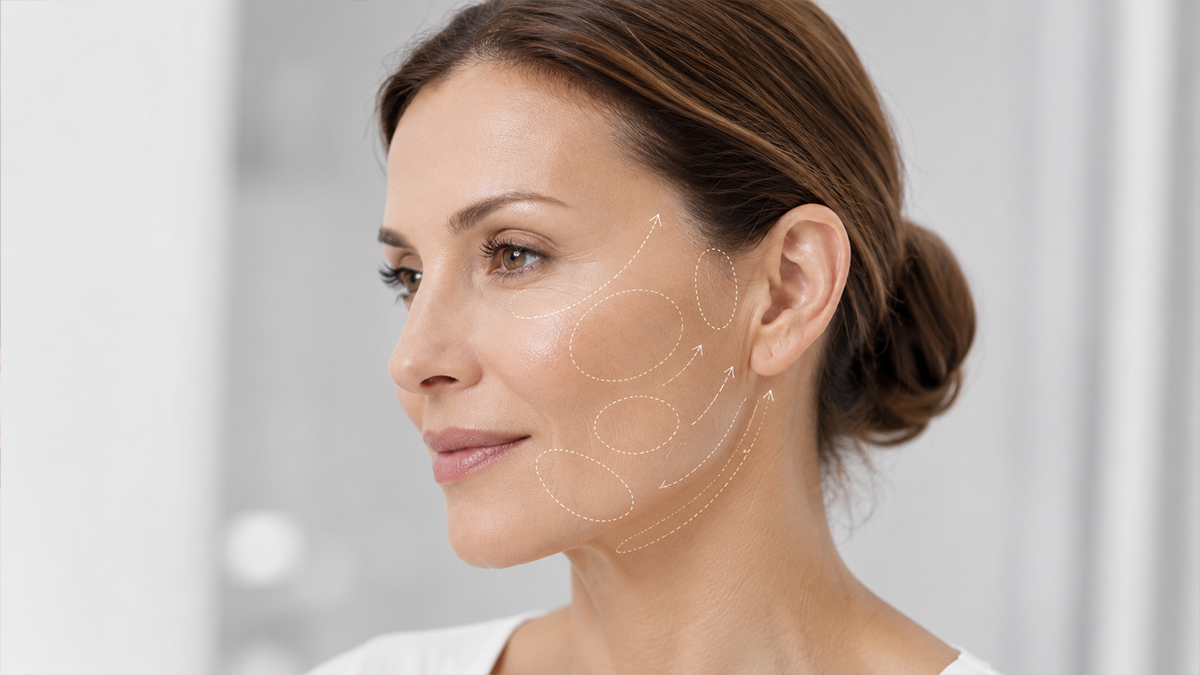
Try the thing the question under our heading suggests. Fingertips on cheekbones. Small push, upwards and back towards your ears. Then hold it there longer than feels comfortable (most people manage about a second before they feel daft) and look properly. Maybe only your jawline tidies itself up. Maybe the creases running down from your nose soften as well. Or maybe your neck comes along for the ride.
Whatever moved is the clue. Our surgeons do a version of the same test when they first look at you for a facelift in Turkey, just with proper lighting and many years of looking at faces behind it.
What a facelift fixes, and what it can't
Think of it as an operation for things that have slipped. The jowl that now hangs over your jaw. A jawline that used to be crisp and isn't. The deep groove from nose to mouth, the slack bit under the chin. The surgeon goes underneath the skin, lifts the supporting layer back up towards where it lived ten or fifteen years ago, and lets the skin settle over it.
Now the disappointing bit. Fine lines stay. Sun spots aren't going anywhere either, nor is the papery, crepey feel older skin develops. Cheeks that have hollowed out because their fat pads shrank won't be refilled by lifting them. Eyelids and forehead? Outside the operation altogether. Most unhappy facelift patients we hear about didn't have a bad operation. They had the right operation for the wrong problem, and nobody told them beforehand.
Where's the sag? Mini, SMAS or deep plane
Jawline only, with jowls just starting? That's the sort of face a mini facelift was invented for. Lower face and neck both shifted when you pushed? A SMAS facelift tends to be the fit. If your whole cheek rose up under your fingers, though, the descent has happened at a deeper level, and a deep plane facelift is usually where the conversation goes.
Each has its own page. One thing worth holding onto, though: ask for the shallowest lift that actually reaches your problem, and no deeper. Deeper than that buys you a longer recovery and nothing else. Shallower, and you'll be back in a few years wondering where it went.
Why all three cost the same here
There's one facelift price on our list, €5,000, and it doesn't change with the technique. If a deep plane cost more than a mini, whoever examined you would have a reason, however subtle, to nudge you deeper. A temple lift is done at the same time and isn't charged on top.
What is the best age for a facelift?
People hope for a number. There isn't one. Some patients turn up at forty-six with cheeks that have already dropped a long way and genuinely need a deep plane lift. Others are sixty-eight, with a bit of softness along the jaw, and a mini would do them nicely.
So we'd rather you asked a different question. Is there real sagging yet, or mostly lines and volume loss? And can you take a few weeks out?
Facelift for men
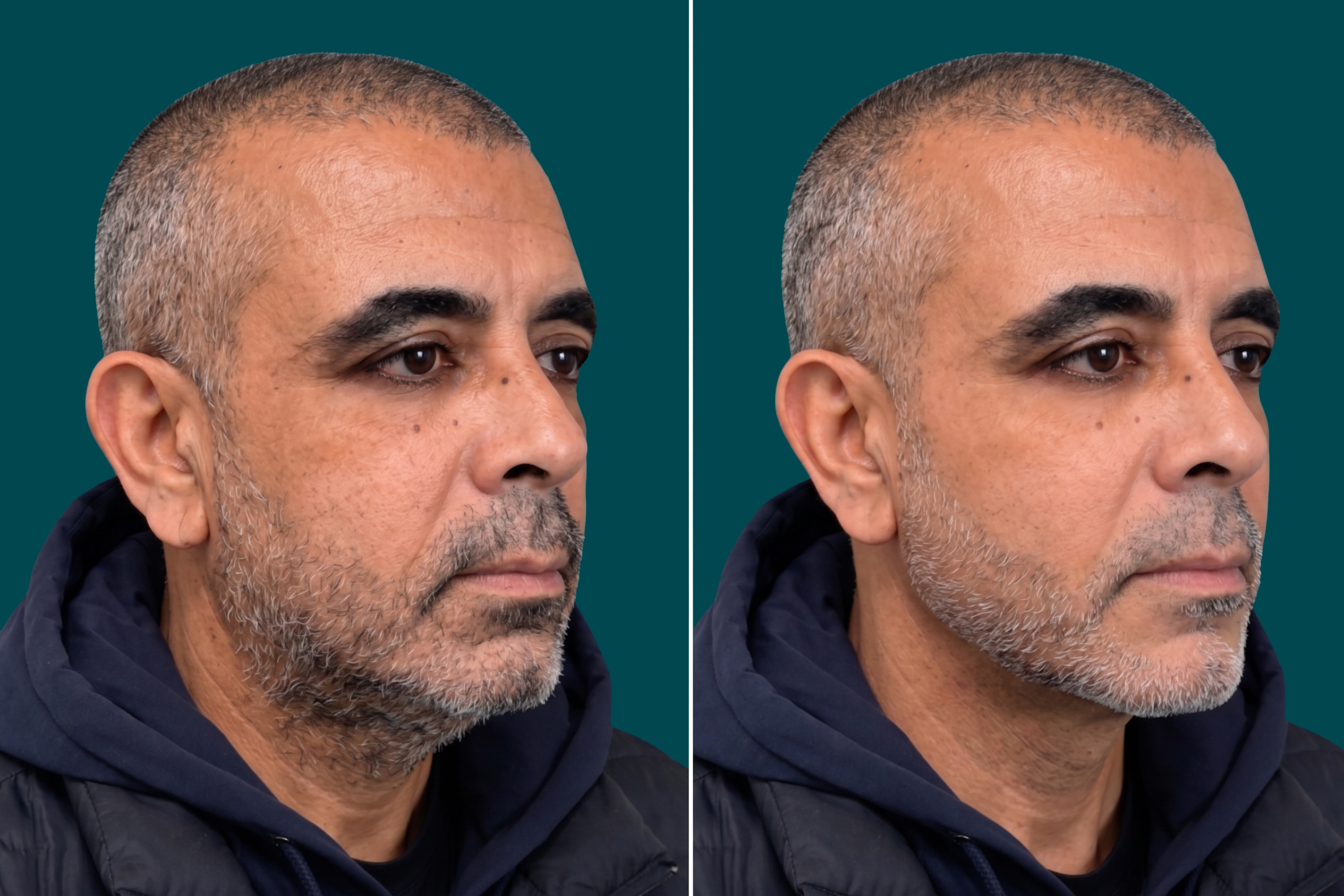
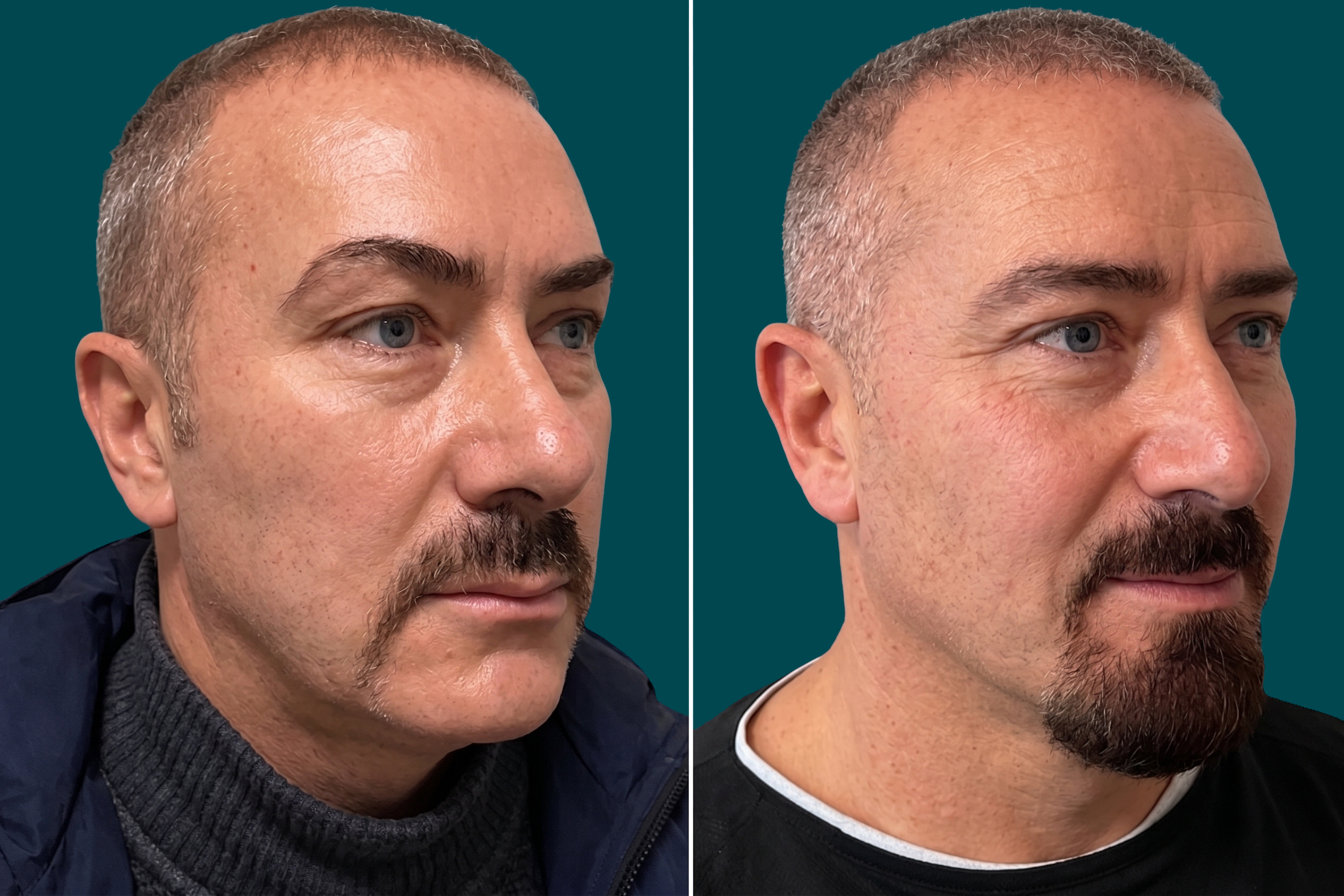
Male facelift patients make up a fair share of our list, often in their fifties and quite often after losing a lot of weight. The surgery underneath is identical. The planning on the surface isn't. Beard skin mustn't end up hauled up in front of the ear, and sideburns have a habit of disappearing upwards if the incision isn't designed with them in mind. Men also bleed a little more readily after a facelift, so we're even stricter about blood pressure in those first two days.
Fillers, threads or a facelift?
Plenty of people in their late thirties or early forties, with changes that are still slight, leave our consultation with advice for a non-surgical facelift alternative rather than a date for theatre. Filler can soften a fold. Threads can give a small lift for a season or two. Where they fall short is moving a jowl that has properly dropped back up to the cheekbone and keeping it there. When the sag is real, surgery is the only thing that repositions it. If you're unsure which side of that line you're on, the photo assessment for a facelift in Turkey will tell you.
Facelift scars: where the lines actually go
Yes, there's a scar. What you're paying a good surgeon for is putting it where nobody reads it. Typically it begins up in the temple hair, runs down in the little crease just in front of your ear (sometimes tucked just inside the ear's edge), curls under the lobe and disappears behind the ear, now and then continuing into the hairline at the back.
Before the marker comes out, talk to us about your hair. Thin at the temples? Going back at the front? Always in a high, tight ponytail? Any of those moves the line. For the first few months the scar looks pink. Somewhere around the one-year mark it's normally a faint pale line you'd have to hunt for. Colouring your hair is fine again once the wounds have fully closed.
Facelift with a neck lift, eyelids or brow
You'd think a sharper jaw would make the whole face look younger. Funny thing is, it often makes tired eyes more obvious. A facelift only covers the lower two thirds of the face, so the top third can start to stand out.
That's the reason so many people combine procedures, and why our face surgery in Istanbul overview sets them side by side. Neck and jaw tend to drop together, so a neck lift is a frequent partner. Heavy lids or a low brow might call for eyelid surgery or a brow lift as well. We have a combined package, facelift with neck lift, temple lift and all four eyelids, listed at €8,950. Long operations carry their own risks, and the anaesthetist has the final say on how much fits into one day.
Facelift risks: the honest version
Bleeding under the skin, called a haematoma, is the one we watch for hardest, and it nearly always shows up in the first day or two if it's going to. That's why your blood pressure is kept down, you're told to take it easy, and the nurses check on you often during that stretch.
The other one people worry about is the facial nerve. Fine branches of it run close to where the surgeon is working, more so the deeper the lift goes. Occasionally someone wakes up with a slightly crooked smile or one brow that won't lift properly; in most cases it sorts itself out over weeks. Lasting damage is uncommon, and how uncommon depends heavily on the surgeon's experience at that depth, so put the question to them in person.
Numb patches around the ears and cheeks, swelling and bruising that slides down towards the collarbone are all normal and fade with time.
Before you book: smoking and medication
If you smoke or vape, you'll need to stop, properly, for the stretch your surgeon sets either side of the operation. The lifted skin depends on a good blood supply and nicotine throttles it, which is how wound problems start. We'll also ask for a complete list of what you take, down to the daily aspirin, fish oil or herbal pills, because a surprising number of them make you bleed more.
Facelift recovery, week by week
How quickly you bounce back depends on how deep the lift went. A mini is the quickest: most people are pottering about normally within a week and a half or so, and fully recovered in four to six weeks. SMAS takes a little longer, with light activity somewhere around the two-week mark and the full picture after six to eight weeks. Deep plane is the slow one. Allow up to three weeks before you feel ready for light activity, and eight to ten weeks before you feel completely yourself.
Days two and three are usually the puffiest. Prop yourself up on pillows at night; you'll feel tight and strange more than sore. Around the second week, most people are happy to nip to the shops with a bit of concealer over the yellowing bruises, and nobody gives them a second glance. Don't pass judgement at week three; the face keeps changing for months.
How long does a facelift last?
There's no single figure for how long a facelift lasts, and anyone who gives you one confidently is guessing. Our rough rule: think five to seven years from a mini, closer to eight or ten from SMAS, and up to fifteen-odd from deep plane. Your habits nudge that up or down. A stable weight helps. So does staying off cigarettes and actually wearing the sunscreen. The reset is real, though. Ten years down the line, the face in the mirror is usually still ahead of the one you'd have had.
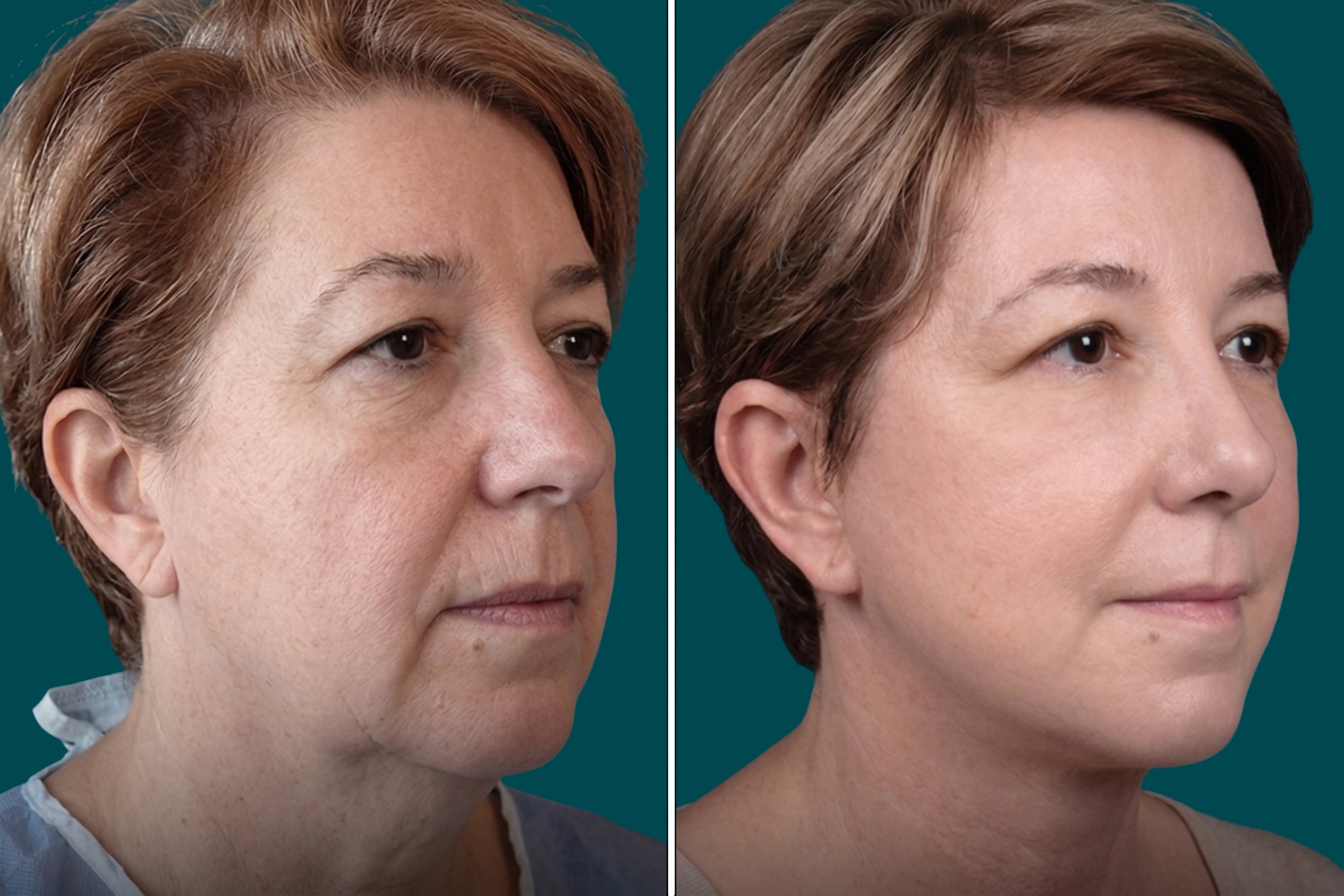
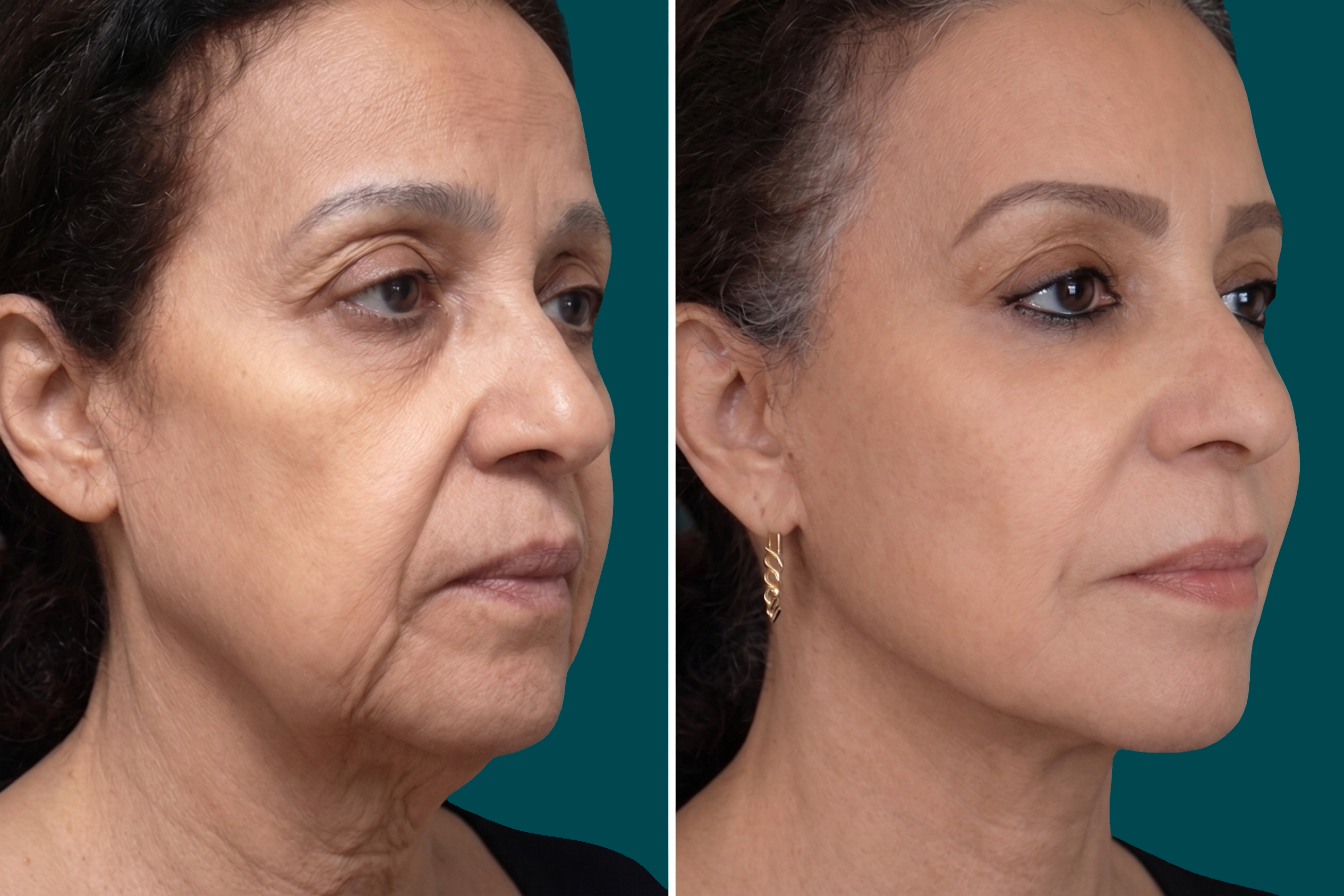
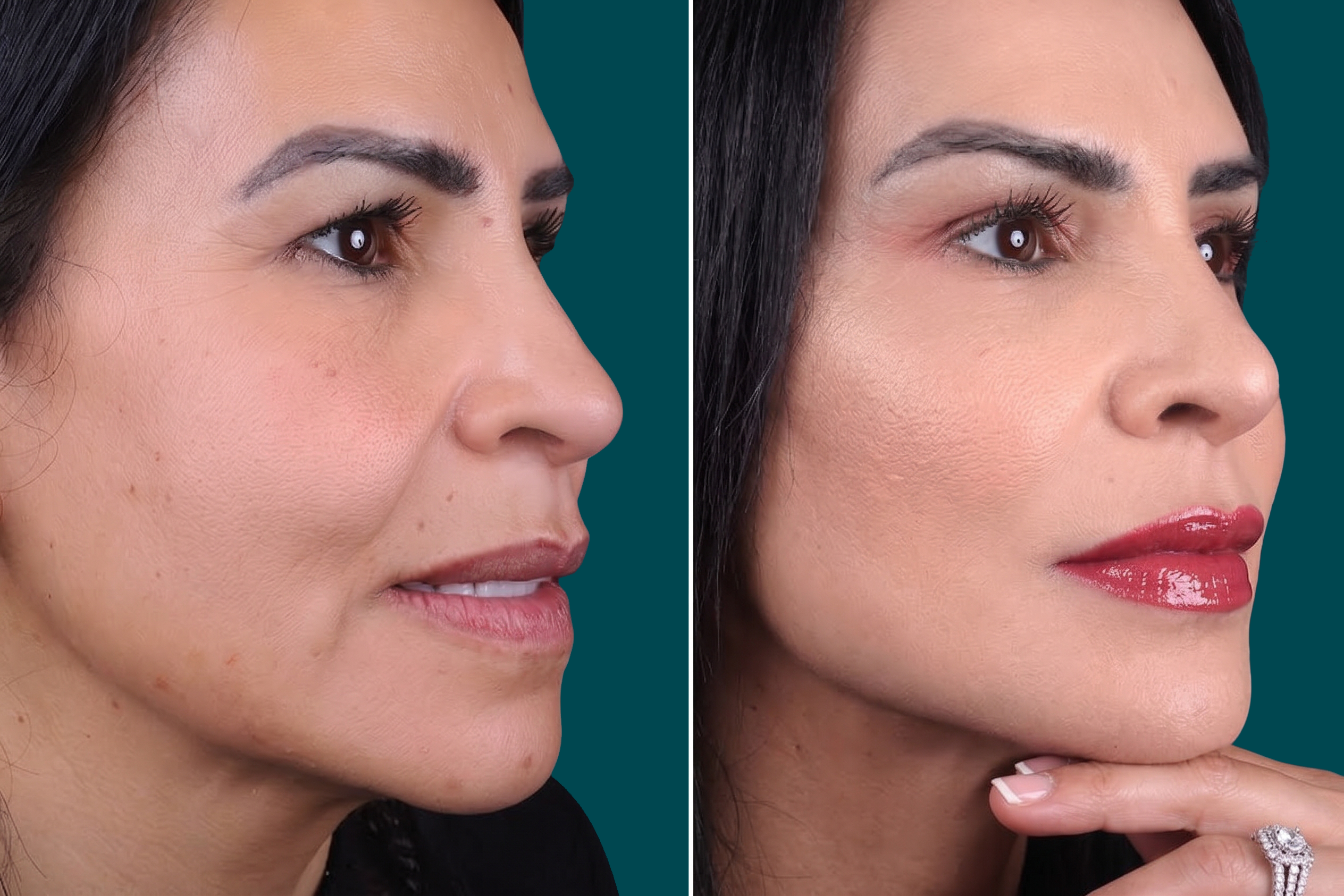
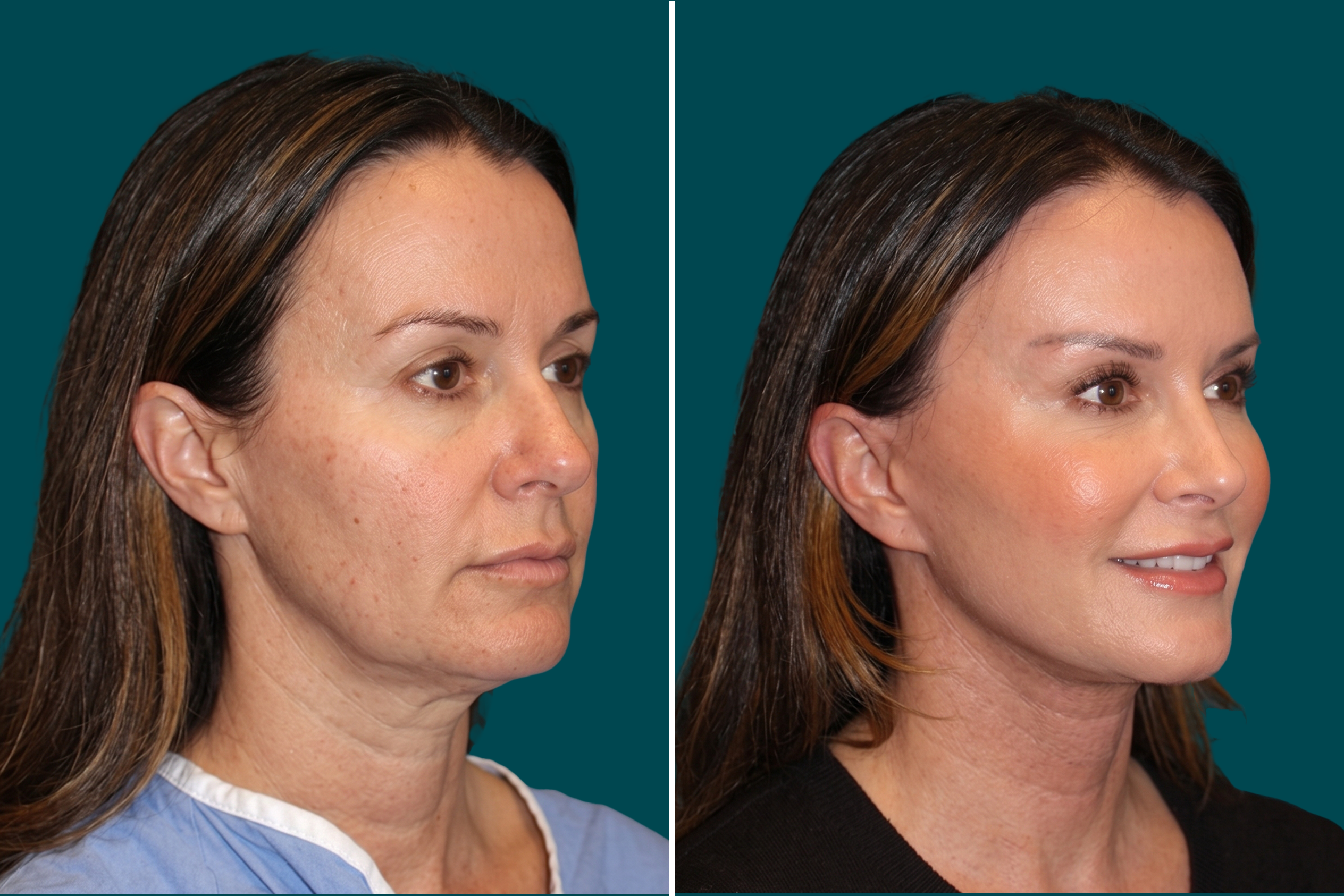
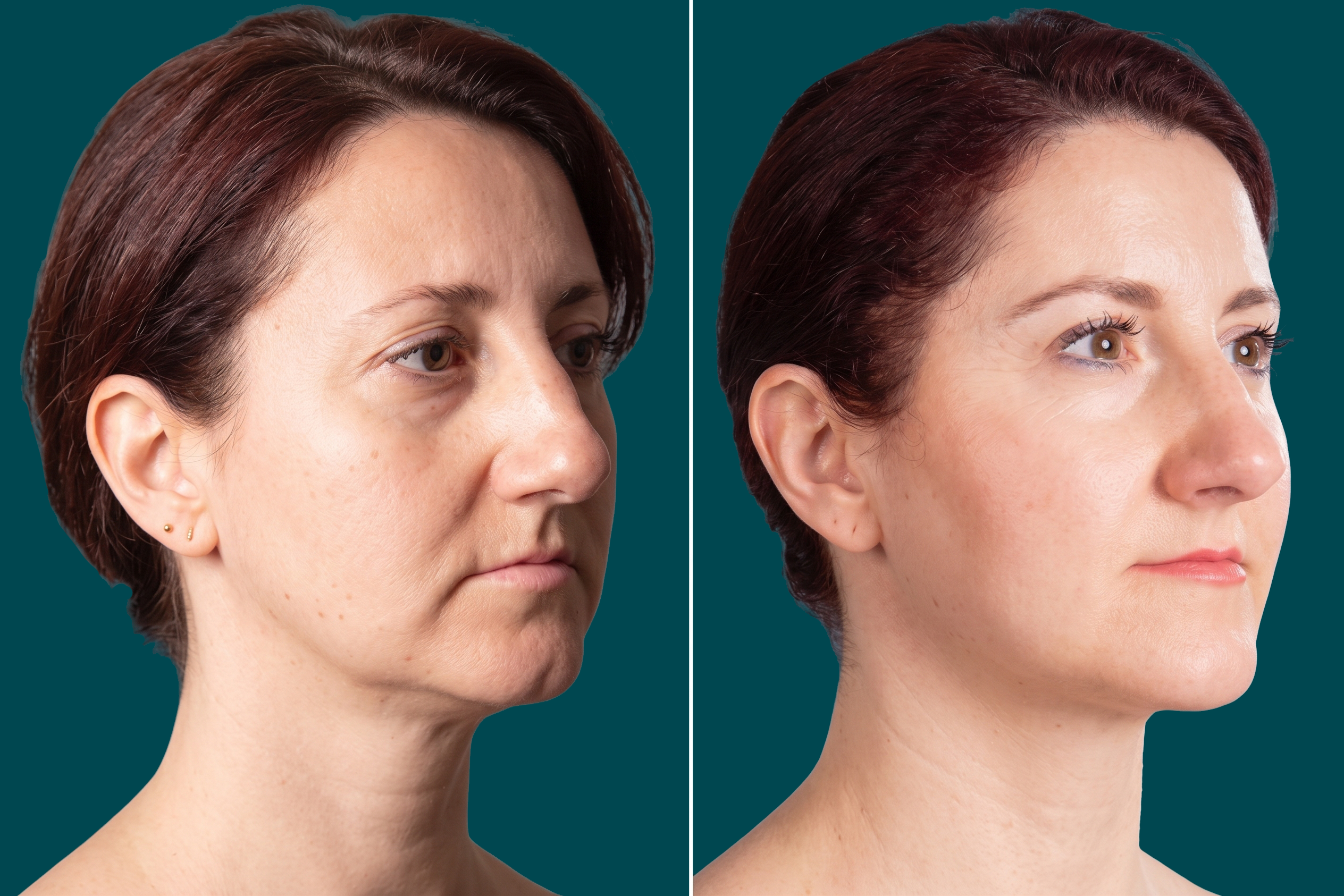
Facelift before and after: what to look for
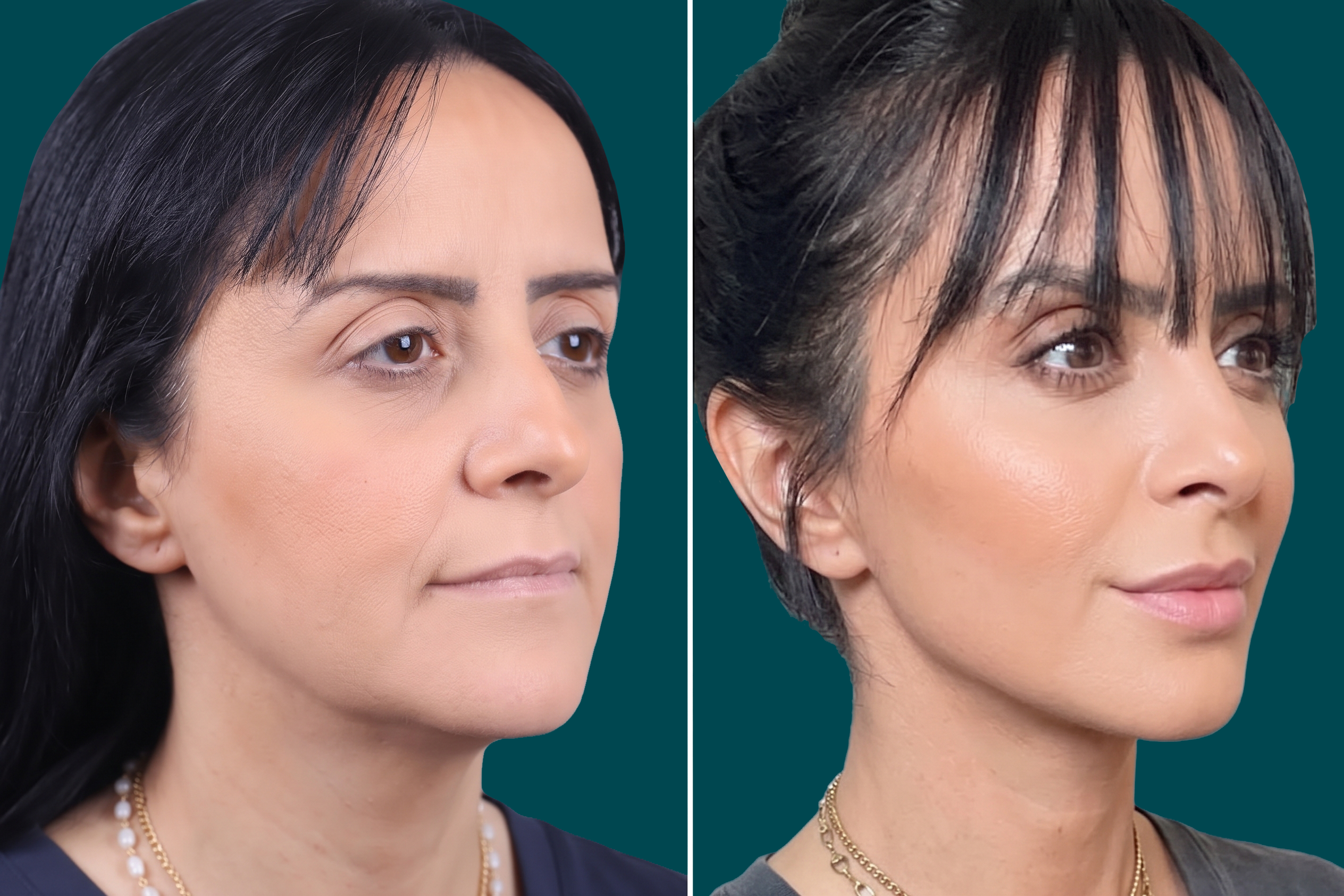
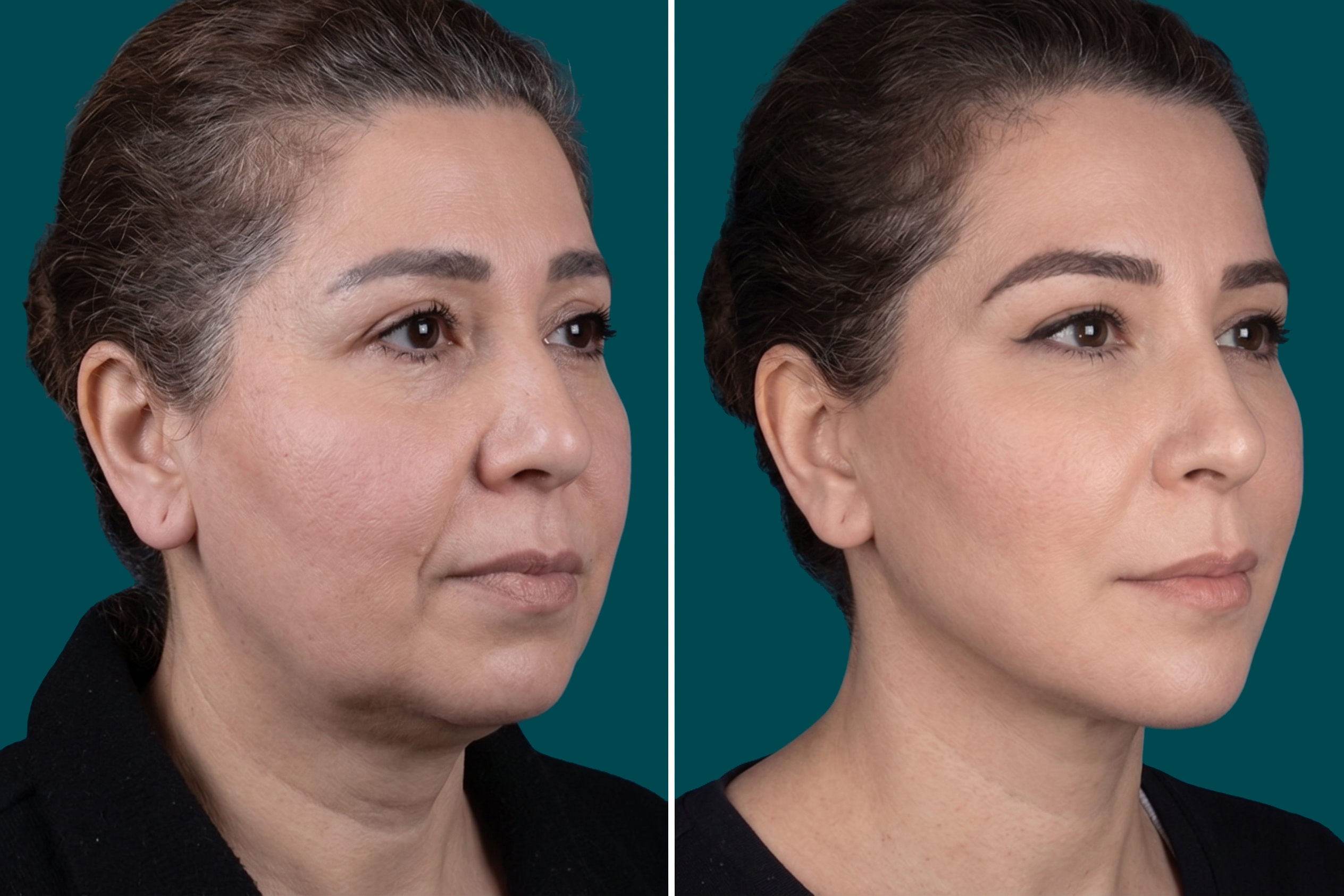
Shortlisting usually happens on a phone, thumbing through before and after photos from clinics offering a facelift in Turkey. Fine, but scroll like a surgeon. Skip straight to the side view, because a jawline hides less in profile. Then look at the ear. A lobe that hangs naturally is good news, while one that looks tugged down and glued to the cheek gives the surgery away. Have the sideburns crept upwards? Does the face look rested, or does it look like it's facing into a strong wind?
Timing matters too: a before and after shot at six weeks still has swelling in it, and the honest comparison is at a year. Patient reviews add the bit pictures leave out, namely what those first fortnights were really like, and the video above is a good place to start.
Facelift price in Turkey: what €5,000 covers
The facelift price here is €5,000 whichever technique you need, as listed above, including the surgeon, anaesthesia, the hospital night, transfers, an interpreter and twelve months of follow-up. The hotel is arranged for you separately, from €75 a night. For comparison, the same table shows deep plane facelifts at roughly €14,000 to €17,500 in the UK and an average of about €23,450 in the US.
A lower facelift price is only good value if the technique matches your face. Compare quotes on what's being done, and why, before you compare the number.
Is it worth going to Turkey for a facelift?
For most people the honest reason to have facelift surgery in Turkey isn't the price. It's experience. A surgeon who works near the facial nerve every week is, quite simply, safer there than one who does it now and again, and a facelift in Istanbul is often in hands like that. So ask the person who'll actually be operating. How many deep plane lifts did you do last year? Would something lighter be enough for me?
Photos for your facelift plan
Front, both sides and both three-quarter views, in soft, even daylight, with your hair pulled back and no make-up. Add one of you doing the finger test from the front. Keep those shots; one day they'll be the first half of your own before and after. Along with them, jot down your age, anything you've had done already (surgery, filler, threads), the tablets you take and whether you smoke. We'll reply from Istanbul with the depth of lift your face needs, any extras worth doing at the same time, how many nights to book and the price of your facelift in Turkey.