
 English
 Italiano
 Español
 Français
-1.webp?v=mtha708z)


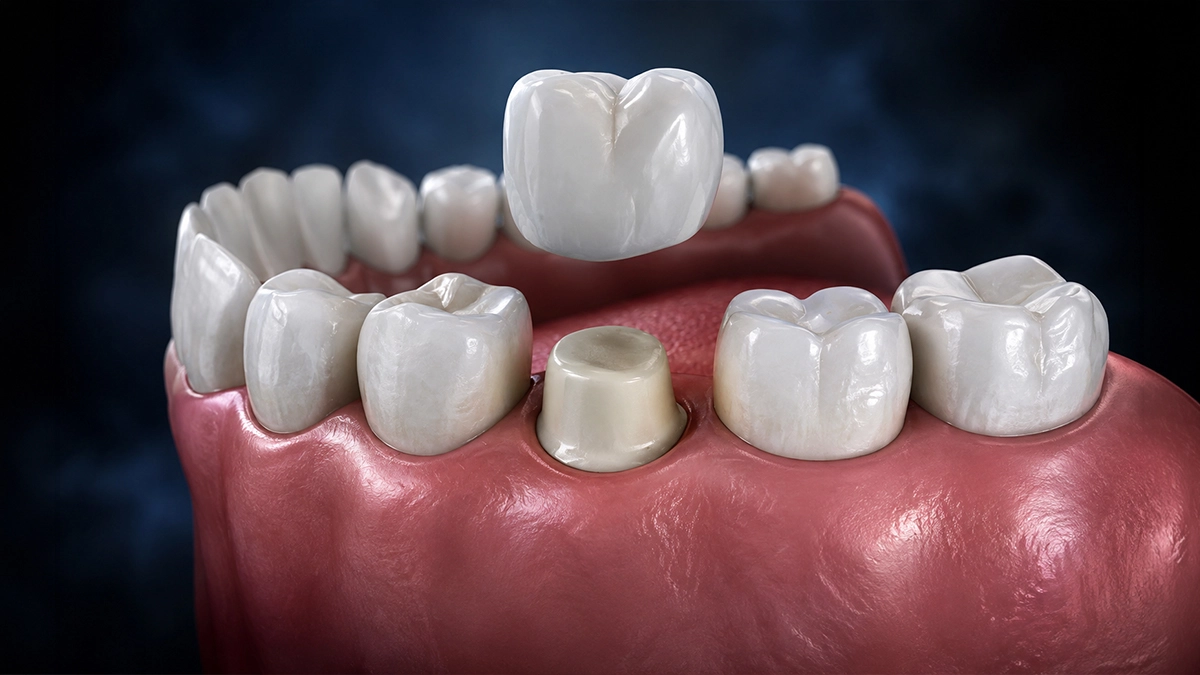













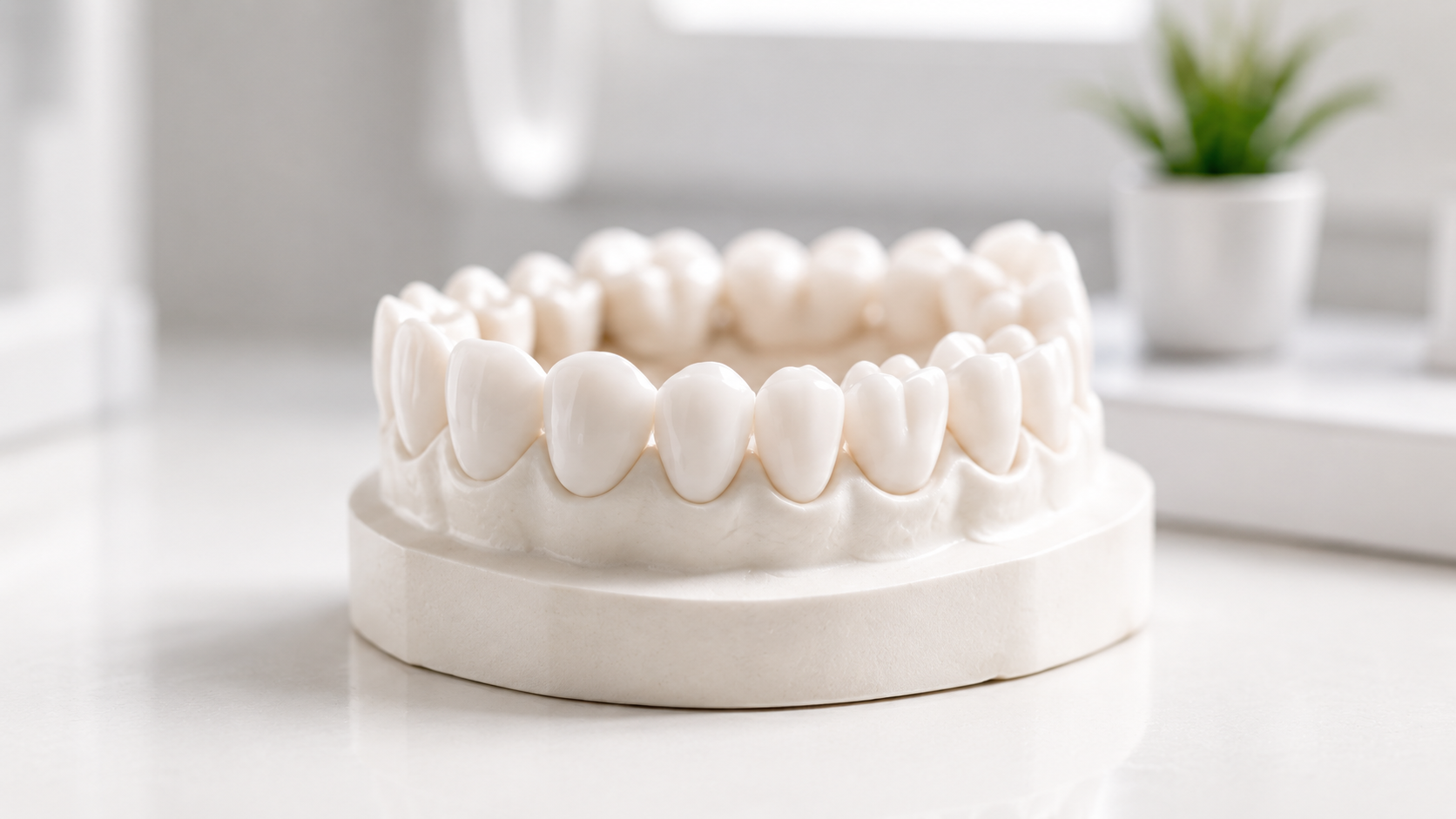



Nearly every crown consultation, someone asks the same thing. Will I be walking around with filed-down teeth? People picture little exposed stumps, and imagine eating, talking and even flying home with them on show. That doesn't happen. As the page above says, a temporary goes on before you get out of the chair.
Temporary crowns are part of almost every crown plan in Istanbul, ours included. What people hear less about is what those few days feel like, what's normal and what isn't, and how to make the most of them. So that's what this section covers.
The first evening
Expect the numbness to fade within a few hours. Then the prepared teeth may ache a little. If the dentist worked near the gum, that bit can be sore too, and you might see a spot of blood on the brush for a day or two.
All expected. Ordinary painkillers, the sort you'd take for a headache, are usually plenty. Ask the dentist which. Warm salty water swished round gently after meals still works well on sore gums. And while one side is numb, chew on the other. People bite their own cheek more often than you'd think, and only notice later.
Cold can twinge for a few days too. The temporary material doesn't insulate as well as the final crown, and it's deliberately not stuck on as firmly. Room-temperature drinks are kinder than iced ones for now.
What they'll look like
Don't judge the finished result by these. A temporary covers the tooth and gives you a first look at the shape, and that's its whole job.
It's made of a plastic-type material, so it's more solid-looking than ceramic, it isn't glazed, and the shade is only roughly right. On back teeth nobody will notice. At the front they'll look like teeth, just a bit flatter and duller than your own. The final crown is made in the lab to a shade taken separately, so the temporary's colour tells you nothing about the end result.
They might also feel a little chunky, especially on the tongue side. By tomorrow you probably won't notice.
Eating with temporary crowns: what to skip
The page above puts it simply: lighter cement, gentler eating. In real life that means two kinds of food to avoid.
Chewy and sticky foods are the worst. Toffee, caramel, gum or a chewy bagel can lift a temporary right off, since the cement is meant to release when tugged upward. Nuts, boiled sweets and hard crusts are the other problem, because they can crack the material.
Beyond that, eat normally but with a little thought. Smaller bites, the other side of your mouth if possible, and no biting into an apple with your front teeth. Most people barely notice the restriction.
Cleaning around a temporary crown
Lots of people are scared to touch their temporaries and stop cleaning near them altogether. Please don't. The gum is adapting to the edge of each temporary as you read this. If it gets inflamed, the final crown sits in less healthy tissue.
A soft brush, used lightly where tooth meets gum, does the job. For flossing, go down between the teeth like always, but draw the floss out sideways at the end. Don't pull it back up. (Same advice as the page above.) Lifting can catch the edge and loosen the temporary. Small interdental brushes are fine too, used gently.
Several teeth at once
If four or six teeth in a row are prepared, the temporaries usually come as one joined strip. It's sturdier and much less likely to come off. The catch is cleaning. Floss won't go down between joined teeth, so you thread it in underneath from the side, using a floss threader or a little interdental brush. Fiddly the first night. Easy after that.
A joined set also shows you the new smile better, because you see the whole group together. If you're having several front crowns, these days are even more worth paying attention to.
After a root canal
If the tooth has had a root canal before its crown, the temporary is often more comfortable than people expect. The nerve has already been dealt with, so there's usually little or no cold sensitivity. The temporary's job here is mainly protection. Until it has its permanent crown, a root-filled tooth can crack more easily, so chew carefully on that side.
Using the time to judge the shape
The pathway above calls the temporary a preview. Easy to skim past, but it's genuinely useful, because the shape you're wearing is close to the one the lab will copy.
In the clinic you get a quick look in a mirror. With temporaries you get to live with the shape for a few days. How does your bite feel when you close, and when you chew? Does any tooth seem too long when you talk, or catch on your lower lip? Look at them in the hotel bathroom and by a window. With front crowns, take a few photos of yourself talking and laughing.
Bring all that to your next appointment. Right now, changing the length or outline of a tooth is quick and free. Once the ceramic is made, it isn't.
What to do if a temporary crown falls off
It happens now and then, and it's not an emergency. The weak cement that makes a temporary easy to take off later is exactly what lets it come loose now.
If it falls off, keep it. Rinse it, put it somewhere safe, and message your coordinator. If you're still in Istanbul, it can usually be stuck back the same day in a few minutes. Whatever you do, don't reach for superglue. It can damage the tooth and leaves a residue that gets in the way of the proper crown.
While it's off, the tooth may be sensitive, so skip ice-cold water and hot coffee for a few hours and chew elsewhere. Most chemists sell small tubes of temporary dental cement that will hold for a day or so. Check with your coordinator before using one, and make sure you've got the temporary the right way round before pressing it on.
How long do temporary crowns last?
For standard crowns in Istanbul, the page above gives two to four days. That's how long the temporary crowns stay on while the permanent ones are made, and you fly home with the finished crowns, not the temporaries. Nothing special to worry about on the plane.
The big exception is implant work. While an implant heals, a temporary tooth can stay in for months, until your return trip for the final crown. More on that below.
Long-term temporaries on implants
Wearing a temporary for half a week isn't the same as wearing one for half a year. Implant cases can mean three to six months, according to the page above. Over that time the temporary protects the healing site, stops the gap closing, and gradually moulds the gum around where the final crown will come through.
So long-term temporaries are made with more care, often milled in the lab from your digital design and polished smoother. They still aren't ceramic, though. Over several months they can pick up stains from coffee, tea or smoking, and they can chip if you bite hard on them. Both are normal and neither harms the implant.
Same rules, just for longer. Don't bite straight into hard food with an implant temporary, keep the area very clean, and tell us if anything feels loose. If you're having implant treatment, our single dental implant page explains what happens during those healing months.
Temporary crown pain: what's normal, and what isn't
A bit of cold sensitivity, sore gums for the first day or two, a temporary that feels chunky, even one that comes off once. All normal.
What isn't normal is a sharp pain every time you bite. That usually means the temporary is a fraction too high and your bite lands on it first. It's a quick tweak. Don't put up with it, because a high bite can leave the tooth aching for days.
Throbbing pain that keeps you up at night, pain that's getting worse instead of better, or swelling in the gum or face should be reported the same day. These can mean the nerve inside the tooth is inflamed, and sorting it now is far simpler than sorting it once ceramic is cemented on top.
Temporary crown cost in Turkey
The price section above lists immediate temporary crowns in Turkey at €120 per jaw, and notes that in many plans they're already included in the crown or implant treatment. What matters is that your written plan says clearly which applies to you.
There's a good reason to check. When a low headline price turns into a higher bill, temporaries are one of the usual extras that appear. A clear plan either lists them or says they're included, before you book. Reviews that mention surprise extras are worth reading for exactly this.
The day they come off
At the fitting appointment the temporaries are lifted off, usually in a moment thanks to the lighter cement. The teeth are cleaned, and the permanent crowns are tried in for fit, colour and bite before they're fixed.
That's when the days in temporaries pay off. Anything you noticed about the shape or bite should already be built into the crowns you're trying on. For the materials those crowns can be made from, start with our dental crowns overview. The E.max crowns and zirconia crowns pages go into each in more detail.