
 English
 Italiano
 Español
 Français
-2.webp?v=muns3ka2)
-1.webp?v=muns2io1)


-1.webp?v=mtgxjvm2)
.webp?v=mth5lgwp)

















Try the exercise under this page's heading, and do it properly. Hand over your mouth. Count to three. Drop the hand and look. Whatever your eye goes to first, that's your answer. Colour, for a lot of people. For others it's a chipped corner, a gap, too much gum, or a missing tooth near the back that only they ever seem to spot.
Keep going and you'll probably find two or three things, not one. Which is fine, because a smile makeover is really just that: a handful of treatments, planned as one job. The treatments themselves are familiar. What makes a makeover work, or go wrong, is the order they're done in.
Start with your own list
Grab a pen before you talk to anyone about veneers. Write down what you'd change, worst first. You'll notice the pathway above opens with the same step, and for good reason: the plan should be built around your priorities, not around what a clinic finds easiest to sell.
A real list tends to be messy. "Front teeth yellow. One side tooth darker than the rest. Too much gum when I laugh. Gap on the left since that extraction." Every line needs its own fix, and a few of them pull on each other. It's the reason a smile makeover in Turkey, or wherever you have it done, should be planned as a whole before the first appointment rather than tooth by tooth as you go.
Health before appearance
It's the least glamorous part of any makeover, and the part that decides whether the result lasts. Gum disease, active decay, leaking old fillings and infected root canals all need dealing with before any cosmetic work goes on top.
The reason is practical. Ceramic placed over a tooth that is still decaying, or next to gum that is inflamed, tends to fail at the edges, and when it fails it usually takes some of the tooth with it. A clean, stable mouth is the foundation everything else sits on. If a dentist wants to start on your front teeth before looking at your gums, that's worth questioning.
This stage often includes a professional clean. Do it early. Once the tartar and surface stain are off, teeth often look a shade or two brighter and the gums calm down, and now and then that alone knocks an item off your list.
Move first, or cover?
Got crooked or crowded teeth? Then you'll face a fork in the road. Straighten them first, or hide the unevenness under ceramic?
Straightening is slow. We're talking months in clear aligners, not a week in Istanbul. What it gives back is often worth it. Teeth moved into a better position may need no ceramic at all, or thinner shells with far less drilling. A tooth that sits forward, disguised without being moved, has to be shaved back much more.
Which way to go depends on you. A slightly uneven smile and a busy diary? Veneers on their own might be the sensible call. Properly crowded teeth and some patience? Moving them first usually wins, both on looks and on how much of your own tooth survives. A good plan sets out both options so you can weigh time against tooth.
The gum line is part of the smile
People tend to think of a smile as teeth. In practice, the gum around them does a lot of the work. If the gum sits lower on one front tooth than the other, the teeth look uneven even when they're identical. If a lot of gum shows when you laugh, the teeth can look short and small. And if the gum has crept down over the teeth, they can look square and stubby.
Gum contouring, listed above from €50, reshapes the gum line so the visible part of each tooth has better proportions. It's usually quick and done under local anaesthetic. The gum needs a short time to settle afterwards, which is why it's scheduled before any ceramic is made: the lab needs to know where the new gum line will sit.
It has limits. Sometimes the gum isn't really the problem. If your upper lip lifts unusually high, or the jaw itself grew long, trimming a millimetre of gum won't make much difference, and you should hear that before you pay for it.
Colour gets decided early
Whitening sits near the start of the pathway above for a simple reason. Ceramic can't be bleached later, so any teeth you're keeping need to reach their final shade before the lab starts work. Everything made afterwards is matched to that colour.
In a makeover this matters more than usual, because the finished smile is often a mix: some teeth covered, some whitened and left alone. If the order slips, the covered teeth end up matched to a shade the natural ones no longer have.
Missing teeth and the bite
Makeovers are often thought of as purely cosmetic, but a missing tooth or a bite that has collapsed changes the plan completely. Leave a gap at the side for long enough and the teeth around it start to lean into it. A bite that has worn down over the years can leave front teeth short and crowded together.
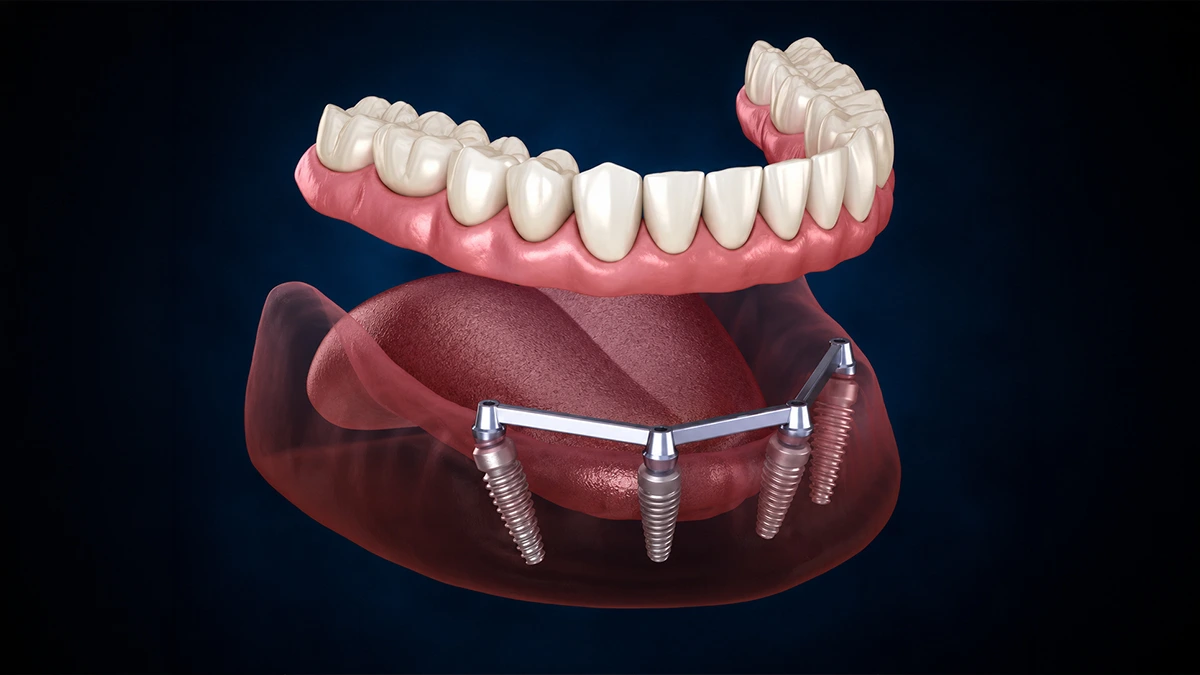
Those problems are dealt with before the front teeth are made beautiful. A missing tooth may need an implant, which takes months to heal and can shape the timing of the whole plan; the dental implants section covers that side. A worn bite may need rebuilding across many teeth, which is a different kind of treatment altogether and is explained on the full mouth restoration page mentioned below.
What real makeovers tend to look like
It can help to see how varied the finished plans are. These are typical shapes rather than real patients.
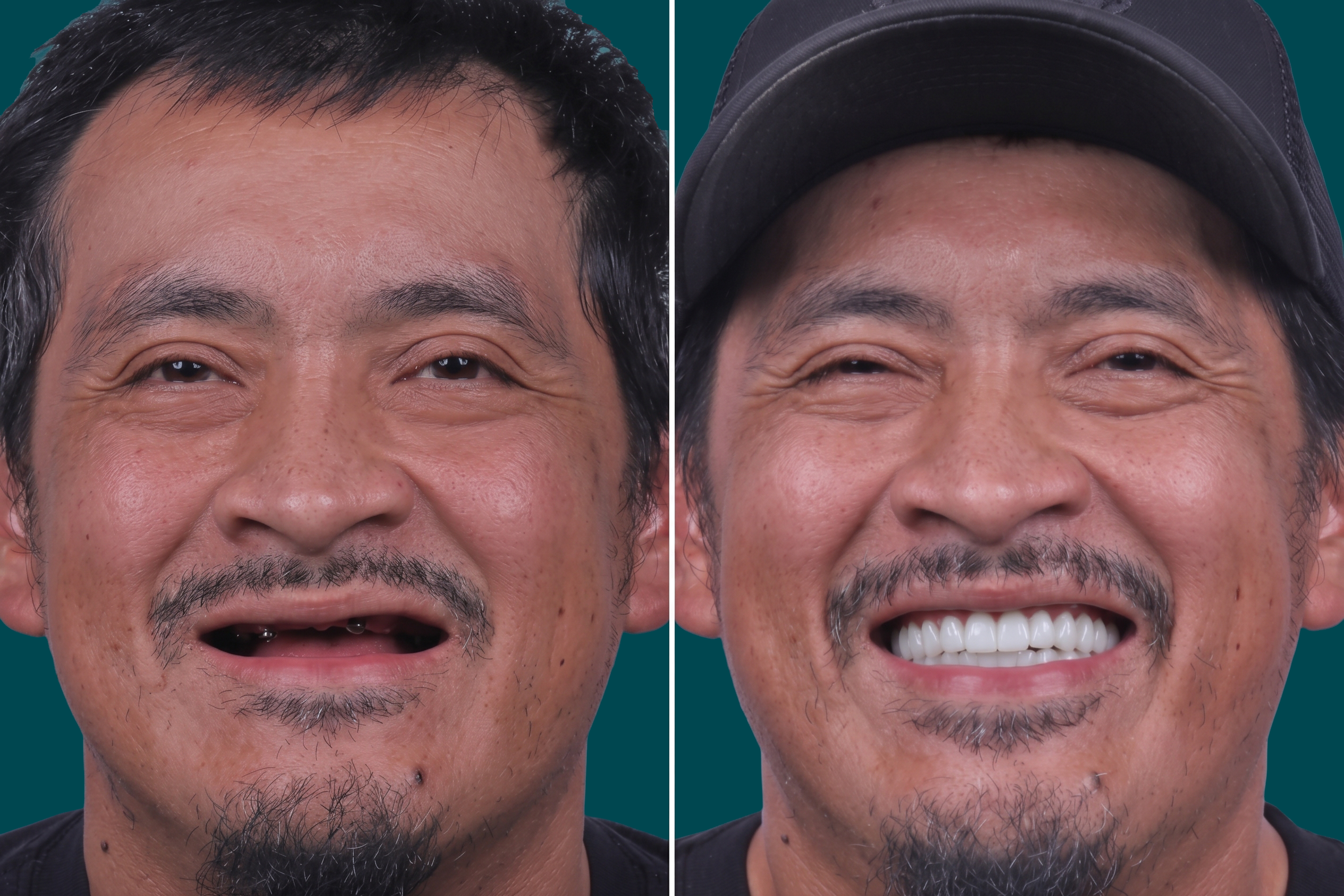
A woman in her thirties is unhappy with yellowing and one chipped front tooth. Her plan: a clean, whitening, and a single veneer on the chipped tooth, matched to the new shade. Nothing else is touched.
A man in his fifties has a gummy smile, short front teeth and an old crown with a grey edge. His plan: gum contouring to lengthen the visible teeth, a new metal-free crown, and veneers on the four front teeth that show most. The back teeth are whitened and left alone.
Someone else has lost a side tooth, has several failing fillings and wants a brighter smile overall. Their plan starts with an implant and fillings during an initial Istanbul visit, and finishes with whitening and ceramic on the second, once the implant has healed.
All three are smile makeovers. None of them looks like a package.
Three routes into a makeover
The section above describes three ways patients usually arrive at a smile makeover in Istanbul, and each has its own page.
If your teeth are basically healthy and you want a complete change in colour and shape across the smile, a Hollywood smile is the route most people search for. If you're not sure yet what you want, or want to see it before committing, digital smile design lets you do the design work first and decide afterwards. And if your teeth are worn, broken or failing across the mouth, full mouth restoration rebuilds them from the bite up.
Many plans borrow from more than one. A design session comes first in almost every case.
How much does a smile makeover cost in Turkey?
There's no single price, because there's no single treatment. As the page above sets out, the cost of a smile makeover in Turkey is built from individual items: whitening from €160, composite veneers from €130, ceramic veneers from €200, zirconia crowns from €150, gum contouring from €50 and implants from €230. Your design decides which of those appear on your quote and how many times.
What moves the total most is the number of teeth treated with ceramic. That's also the part worth questioning hardest. A plan that whitens most of your teeth and covers only the ones that genuinely need it will usually cost less and keep more of your own enamel than one that covers everything. The dental veneers page goes into how that number is decided.
Doing it in stages
Not everyone can, or wants to, do everything at once. Budget, time off work or a healing implant can all mean spreading a makeover over two or more trips.
That works well as long as the whole design is agreed at the beginning. If the final shape and colour are decided up front, the first stage can deal with health, gums, whitening and any implants, and the second can add the ceramic, knowing exactly what it needs to match. Where staging goes wrong is when each trip is planned separately and the pieces don't quite fit together at the end.
If you do stage it, ask which parts could safely wait and which shouldn't. Gum treatment and decay usually can't. Cosmetic work on teeth that are healthy often can.
How the days in Istanbul are used
For a single-trip makeover, the pathway above describes several specialists coordinated by one person. In practice the order usually follows the same logic as the plan: cleaning and any fillings or root canals first, then whitening and gum work, then the design session and preview, then preparation, then fitting. The Hollywood smile route, for example, is shown above as about seven days.
Because each step leans on the last, the timetable isn't set in stone. Say an old filling comes out and the tooth underneath is worse than the X-ray showed. That can nudge everything back a day. Your coordinator should flag it straight away and tell you what moves.
Getting your smile makeover plan started
Remember that list from the start? Send it, exactly as you wrote it. Then a couple of daylight photos, one with a relaxed face and one mid-laugh, plus any X-rays lying around from your own dentist. Old crowns, root canals, braces as a teenager: jot those down too, with rough dates.
That list shapes the plan more than any photo. It tells the dentist what you're trying to change, and it gives them a way to explain which of those things need treatment and which can be left well alone.