
 English
 Italiano
 Español
 Français
%20(1)-1.webp?v=munxoavd)
%20(1).webp?v=munxp07i)
.webp?v=munxkae8)
.webp?v=munxkqh9)
.webp?v=munxl9jd)
.webp?v=munxm4m4)
%20(1).webp?v=munxn7zw)




.png?v=mtn37ore)
.png?v=mtn382cn)
.png?v=mtn38kn8)
.png?v=mtn3922l)
.png?v=mtn39jxs)
.png?v=mtn39vgz)

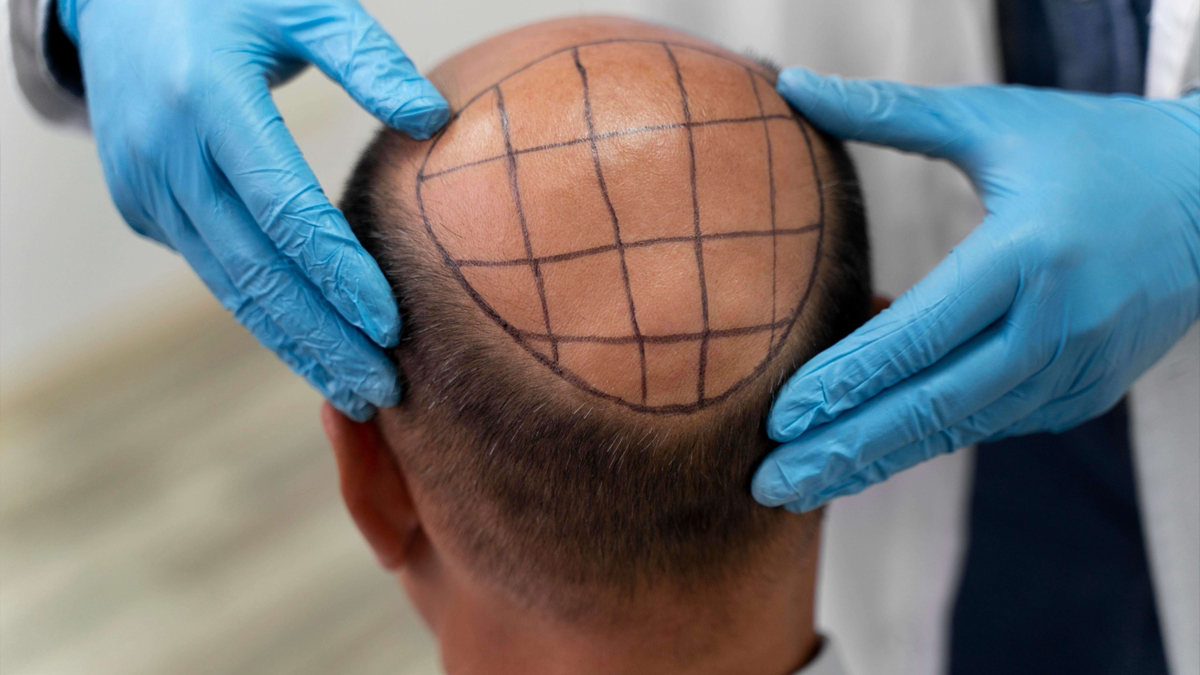
The question under the title gets to the heart of it: density at the front and coverage at the crown are two different jobs, and one technique rarely does both best. A hybrid hair transplant is simply the plan that admits that. It divides your scalp into zones and gives each one the method that suits it.
That makes a hybrid hair transplant less of a technique and more of a map. So let's walk it, forehead to crown. Every patch of scalp has its own job, the handover between methods needs real care, and, as the page above admits with refreshing bluntness, most people don't need two methods at all.
Zone one: the hairline edge
The very front of a hairline is the most visible few millimetres of any transplant. Only one-hair grafts belong here, lying almost flat and pointing forward, and set a little unevenly so the edge looks grown rather than ruled. This is where DHI earns its place. With a Choi pen, each graft's angle and direction are set individually as it goes in, as the section above describes.
In a hybrid hair transplant in Turkey, this transition zone is almost always DHI territory. It's small in area but huge in impact, and precision matters more here than speed.
Zone two: the temples
The temple points, the small peaks of hair at each side of the forehead, are easy to get wrong. The hair there changes direction sharply, often growing downward and slightly backward. Recreating them, or deciding not to, has a big effect on how natural the whole frame of the face looks.
Temples usually fall into the DHI zone too, for the same reason as the hairline: every graft needs its own angle. They also use relatively few grafts, so the slower pace of DHI costs little.
Zone three: the front core
Just behind the hairline sits the part of the scalp that gives the front its fullness: the forelock area. This zone carries more weight visually than the mid-scalp behind it, because it frames the face and it's where hair is usually styled.
Depending on the case, the border between methods may fall at the front of this zone or partway through it. If a good amount of your own hair survives here, it can pay to keep the pen going a bit further back, since it slips new grafts in among old ones with little disturbance. If the area is bare, sapphire FUE channels can take over sooner.
Zone four: the mid-scalp
Behind the front core, the job changes from precision to volume. The mid-scalp is often a large area with little native hair left, and the goal is to cover it evenly with a sensible density. This is where sapphire FUE comes in. The channels are opened ahead of time with fine sapphire blades, and the bigger, multi-hair grafts are dropped into them, which is much faster across a wide area than placing each one with a pen.
Zone five: the crown
The crown is the last and usually the hardest zone to fill convincingly. It keeps widening as hair loss continues, its whorl means channels have to follow a spiral, and it can soak up thousands of grafts without looking dramatically different. In a hybrid plan the crown normally sits in the sapphire zone.
Because of all that, many plans treat the crown lightly, or leave it for a later session, so that the donor budget is spent where it shows most. The hair transplant overview explains why the front usually takes priority.
Where the two methods meet
Patients rarely give the border between the DHI zone and the sapphire zone a second thought. It deserves one. As the FAQ above explains, the line is drawn on your scalp during planning, and you approve both the hairline and the zone layout before anything begins.
A good plan doesn't treat that line as a wall. Density, graft size and angle change gradually across it, so there's no visible step between the front and the area behind. Singles at the edge give way to two-hair grafts, then to larger grafts further back, and the angle slowly rises as you move towards the top of the head. Done well, nobody could ever tell where one technique stopped and the other began.
Ask for the split in writing
The page above gives a simple, useful piece of advice: ask for the graft split, not just the total. A plan that says "4,000 grafts, hybrid" tells you very little. A plan that says how many go into the hairline and temples with DHI, how many into the mid-scalp and crown with sapphire FUE, and roughly where the border sits, tells you whether the plan has really been designed around your scalp.
It also lets you check the numbers against your donor. The total still has to come from what your back and sides can safely give, whichever method places the grafts.
Is a hybrid hair transplant worth it?
For the right case, yes. For most cases, the page above says plainly, it isn't needed, and one technique on its own will do the same job.
A hybrid makes sense when the front and back genuinely need different things, as the FAQ describes: a receded hairline that needs a natural, irregular edge, plus real thinning behind it that needs broad coverage. Someone with only a receding hairline and good hair behind it may be better served by DHI alone. Someone with a largely bald top and no particular hairline concerns may be well served by sapphire FUE alone. The honest question to ask any clinic is why your case needs two methods.
Hybrid vs DHI vs sapphire FUE
It helps to think of it this way. DHI on its own gives the finest control but is slow, so it suits smaller areas and hairlines. Sapphire FUE on its own covers large areas efficiently but needs shaving and offers slightly less graft-by-graft control at the very edge. A hybrid borrows the strengths of each, at the cost of a longer, more complex day and the need for a team skilled in both.
Extraction is identical in all three. As the section above notes, it happens once for the whole session, using the same punch described on the FUE hair transplant page.
Does a hybrid mean shaving?
Partly. Sapphire FUE channels are opened in a shaved area, and extraction usually means trimming the donor too. The DHI zone at the front, though, can sometimes be worked among existing hair.
So a hybrid is rarely a fully unshaven procedure, but the amount of shaving depends on how large the sapphire zone is. If avoiding a shaved head matters a lot to you, say so early. It may change where the border is drawn, or point you towards the unshaven hair transplant route instead.
Who shouldn't have a hybrid?
Anyone whose donor can't support the graft numbers a two-zone plan implies. A hybrid is usually a bigger case, and a bigger case spends more of a limited supply. It's also a poor fit for younger men whose loss is still moving quickly, because a full front-to-crown plan at twenty-five may leave little in reserve for the changes that come at forty. In both situations, a smaller, front-focused plan first is often wiser.
A longer day in the chair
Two methods take more time than one, and the pathway above is upfront about it: a longer day, with planned breaks. For most people that means an early start, extraction in the morning, then the two placement stages through the afternoon.
It helps to prepare for it. Eat a proper breakfast, bring headphones, and keep that evening in Istanbul free. If you have any health conditions, tell the team in advance, because the health checks before surgery take the longer session into account.
When the plan is split into two stages
Sometimes the full hybrid plan would make for too long a sitting. In that case the pathway above offers a staged alternative. That might mean treating the hairline and front core in one session and the crown in another, or doing the larger sapphire area first and refining the hairline later.
Splitting isn't a failure of the plan. It's often the safer and more comfortable option, and it gives a chance to see how the first stage grows before deciding exactly how to finish.
Hybrid hair transplant before and after: front and crown together
A hybrid is judged on two areas at once, so a convincing before and after set has to show both. A great hairline shot on its own tells you only half of it. Look for a top-down view of the crown, a side view of the hairline, and, ideally, the area where the two methods meet, which should show no visible change in density or direction. Reviews that describe the longer day in the chair give a useful sense of what to expect.
What a hybrid hair transplant costs in Turkey: price and packages
No surcharge for mixing methods, the price section above makes clear. A hybrid session is €1,600, same as either technique on its own; add three hotel nights and it's €1,800; add fibroblast therapy as well and it's €2,100. The zone map decides where the grafts go, not how much you pay.
That's worth knowing, because elsewhere "hybrid" is sometimes sold as a premium tier. Here, the question isn't whether you can afford a hybrid. It's whether your scalp needs one.
Healing: one timeline for both zones
Even though two methods are used, recovery follows a single clock, as the pathway above notes. The DHI and sapphire areas crust, shed and regrow on roughly the same schedule, which the hair transplant overview explains month by month. You'll have one set of aftercare instructions, one first wash at the clinic and one twelve-month follow-up. Hybrid hair transplant results are judged at that same twelve-month point, with the crown often trailing the front by a little.
Photos for a hybrid plan
A hybrid plan is a map, so the photos need to cover the whole territory. That means your forehead with the hair swept back, each temple up close, a bird's-eye view of the top, the crown shot after a shower when the hair is flat, plus the back and both sides. With that complete picture, our Istanbul team can draw a realistic zone map, suggest where the border between DHI and sapphire FUE should fall, and tell you honestly whether a hybrid hair transplant in Turkey is the right plan for you, or whether one technique would do.