 English
 Italiano
 Español
 Français

- Dental Treatments
- Hair Treatments
- Plastic Surgery
- Weight Loss Surgery
Ethnic Rhinoplasty in Istanbul · €4,000
Refine your nose without erasing your heritage.
Ethnic rhinoplasty refines the tip, bridge or nostrils while respecting the features that connect your face to your background. Thicker skin and softer structure often call for cartilage grafting, so this is priced as a complex case at €4,000.
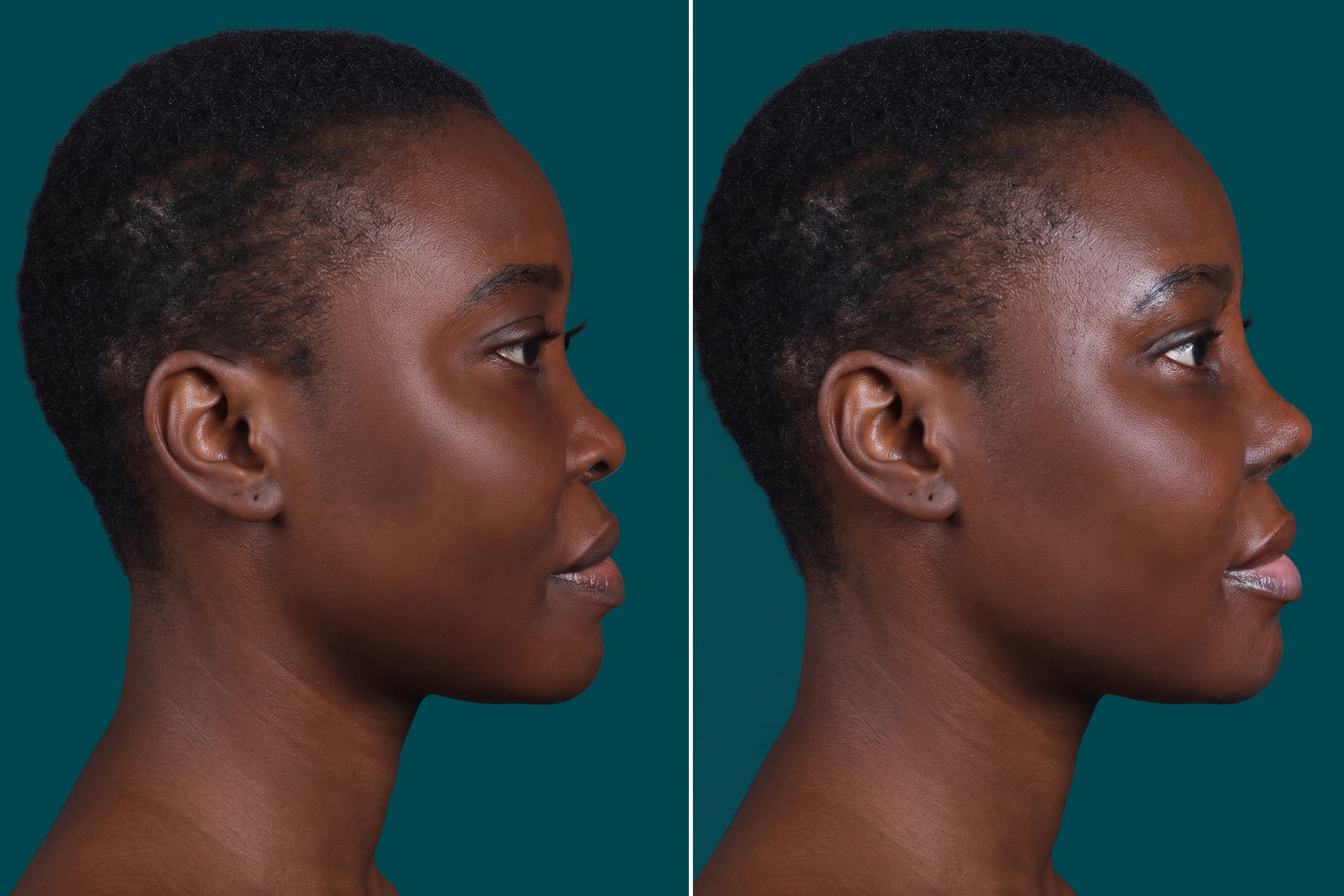
Refined, yet still recognisably their own: that is the brief behind our ethnic rhinoplasty before and after results. Tip definition and bridge height are clearest in profile after a year.
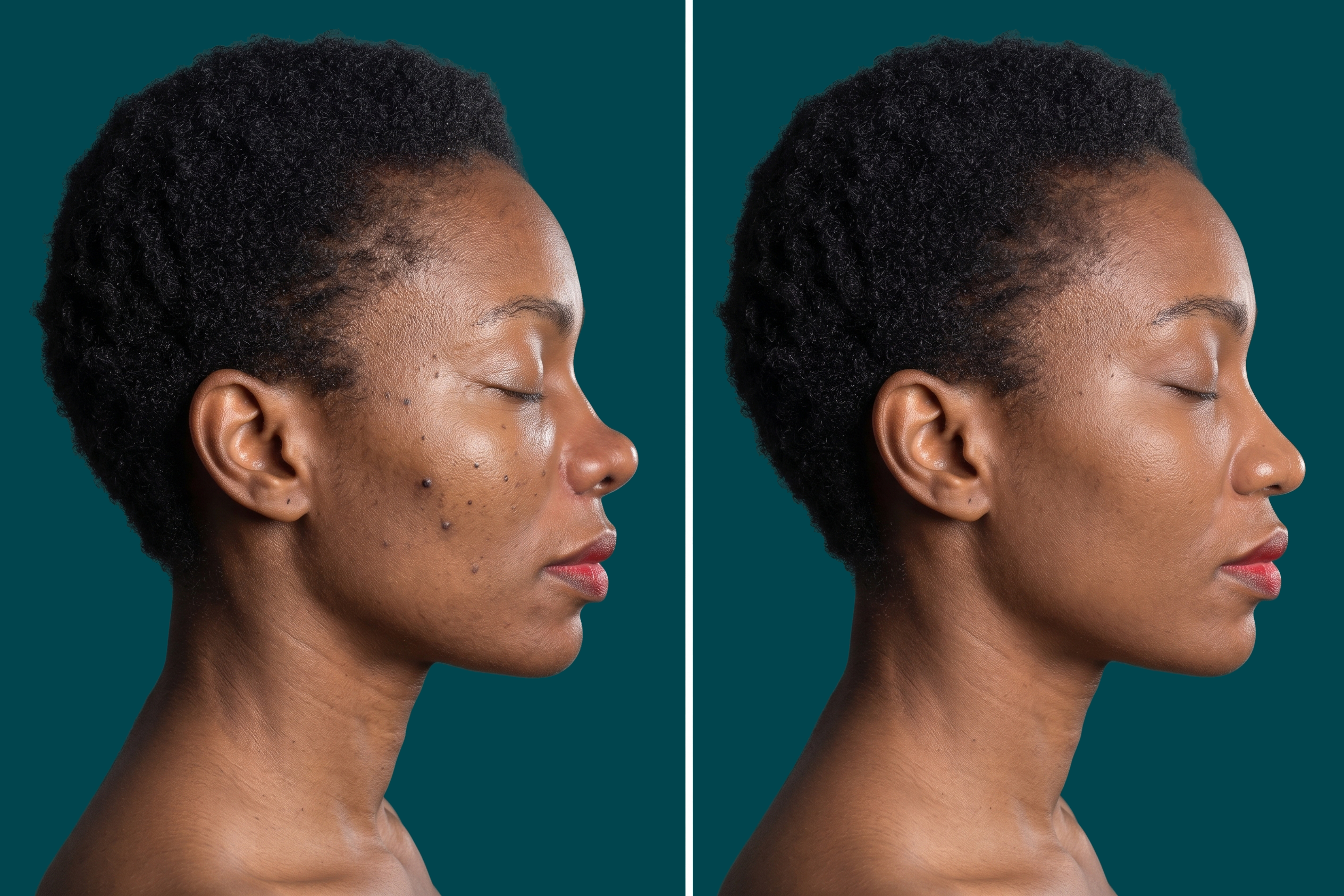
Natural Clinic brings multiple fields of specialised healthcare together under one roof, combining medical expertise, advanced technology and patient-focused care. From hair transplantation and dentistry to facial, body and breast aesthetics, bariatric surgery and reconstructive treatments, every patient journey is managed by experienced medical teams working across disciplines.
1200+ — Advanced treatments across multiple medical specialties
50+ — Experienced specialists working across disciplines
360° — Consultation, treatment, recovery and aftercare coordinated under one roof
150+ — Large-scale medical infrastructure in Istanbul
Rhinoplasty was historically developed and taught around thinner skin and firmer cartilage than many patients naturally have. That is not a small footnote — it is the single most common reason ethnic rhinoplasty results disappoint. Not because the goal was wrong, but because the technique was never genuinely adapted to the person in front of the surgeon.
.jpg?v=mu2r8ryj)
€4,000 on our current list
Ethnic rhinoplasty is not about conforming to one universal aesthetic. It is about refining specific concerns — excess dorsal height, tip definition, nostril width — while preserving the broader proportions and character that fit naturally with the rest of your face and background. A good result looks like a more refined version of you, not like a different person's nose.
Thicker skin, softer cartilage, or a wider alar base — anatomy that a generic plan tends to under-serve.
Thicker skin can take longer to show final definition, which your plan accounts for.
Short answer: yes — and not because it is cheaper. What ethnic rhinoplasty needs most is a surgeon who has operated on skin and cartilage like yours many times before, and Istanbul draws patients from across the world in the volume that produces exactly that.
.png?v=mttw3gcd)
Istanbul's surgeons have adapted technique for every skin thickness and cartilage type, thousands of times over.
.png?v=mttw3ztq)
Skin and cartilage are assessed before you book. Your plan names what will be refined and what stays untouched.
.png?v=mttw4ecu)
Lower operating and staffing costs plus the exchange rate create a real 50–70% saving.
.png?v=mttw4t31)
Istanbul connects directly to hundreds of cities. One trip covers surgery, splint removal and a pre-flight check.
.png?v=mttw54v6)
Every appointment runs in English, with Dutch on request. Your interpreter is free throughout.
.png?v=mttw5ilm)
Ministry of Health licence, board registration, sterilisation logs and independent anaesthesia review.
Augmentation, not reduction, is often the core of this operation — and that changes where the cartilage comes from.
You tell us which features of your heritage should be kept, and the plan is built around them rather than a generic ideal.
Raising a low bridge often needs more cartilage than the septum holds. If rib is required, the €4,000 item applies and the chest scar is explained in advance.
Grafts lift the dorsum and support the tip so that definition can show through thicker skin.
Patients who donated rib cartilage have that chest wound inspected on the same visit as the nasal splint removal.
Thicker skin holds swelling longest, so many patients only see the final shape around month twelve.
Thicker skin, a lower bridge and graft planning — what ethnic rhinoplasty involves.
Ethnic rhinoplasty is nose surgery designed to refine the nose while respecting and preserving features associated with a patient's heritage. It is commonly requested by people of African, Asian, Middle Eastern and Latin descent, and the aim is balance rather than conformity to a single ideal.
Depending on the patient, ethnic rhinoplasty may raise a low bridge, add support and definition to the tip, or refine wide nostrils. The exact changes are agreed individually, based on what you want to improve and what you want to keep.
It should not. A well-planned ethnic rhinoplasty keeps the characteristics that make your face your own while improving the specific aspects that bother you. You are asked which features you want preserved before any design is finalised. Bringing reference photographs helps you explain the balance you want.
Ethnic rhinoplasty is priced at €4,000 at Natural Clinic when rib cartilage is required to build up the bridge or support the tip, and at €3,000 when enough cartilage can be taken from the septum or ear. UK prices for similar operations are typically €9,350 to €12,850.
Raising a low nasal bridge and strengthening the tip can require more cartilage than the septum provides, and septal cartilage may be thin in some patients. Rib cartilage offers a larger, stronger supply, which is why it is used more often in ethnic rhinoplasty.
Yes, if your septum or ear can provide enough cartilage for the planned changes. In that case the operation is priced at €3,000. The surgeon assesses the likely cartilage needs during planning and confirms the source before surgery. Your plan confirms the expected cartilage source and price before you travel.
Rib harvesting involves a small incision on the chest, which leaves a short scar, and carries a small risk of pneumothorax, where air enters the space around the lung. These risks are explained in advance, and the chest site is checked before you fly home.
Thicker nasal skin can limit how much fine definition is visible and tends to hold swelling for longer. Building a strong supporting framework underneath helps the new shape show through, while expectations about sharpness are discussed openly before surgery. Taping or other aftercare measures may be recommended to help reduce swelling.
People with darker skin tones may have a higher tendency toward raised scars or pigmentation changes. Any history of keloid scarring is discussed before surgery, as it can influence incision choices, including whether nostril narrowing is advisable. Sun protection on healing incisions also helps reduce the risk of darkening.
The stay follows the six-night rhinoplasty plan, with one night in hospital. If rib cartilage was used, the chest incision is reviewed alongside the nose, and you may feel some chest discomfort when moving or breathing deeply during the first days.
If only septal or ear cartilage was used, most people return to desk work after about two weeks. When rib cartilage was taken, the chest incision may make lifting, twisting or strenuous activity uncomfortable for longer, so physically demanding jobs often need additional recovery time.
Keep the chest incision clean and dry as instructed, avoid heavy lifting and vigorous exercise, and report any increasing pain, shortness of breath or signs of infection. The scar usually fades over the following months. Wearing loose clothing that does not rub the incision is also more comfortable.
Swelling often lasts longer after ethnic rhinoplasty, especially in thicker skin. While the main swelling improves over the first six weeks, fine definition at the tip can take up to twelve months or more to fully appear. Your surgeon may recommend taping in the early weeks to help it settle.
Cartilage grafts taken from your own septum, ear or rib are intended to remain stable long term, providing lasting structural support to the bridge and tip. They are placed and secured carefully to reduce the risk of shifting or warping.
The overall shape becomes clearer after a few months, but the final result of ethnic rhinoplasty is best assessed around twelve months after surgery, once swelling in thicker skin has resolved and the tip definition has settled. Comparing photographs taken at each stage makes gradual changes easier to see.
Ethnic rhinoplasty describes the goal and the adaptation, not the access method or the clinical situation. Those are independent choices, and each has its own guide — so you can read the one that actually describes your nose.
Personalised Care, Just for You
Send front, side and three-quarter photographs, plus any previous nasal imaging. A rhinoplasty surgeon assesses your own skin thickness and cartilage strength and replies with a realistic, itemised plan — what will be refined, what will deliberately be left alone, whether structural grafting is anticipated, what it costs with free transfers and the hotel arranged, and an honest date for your final result. No obligation, no pressure, no cost.
Get My Free Surgical Plan100% Confidential & Secure
Reply Within 24 Hours
Reviewed by Board-Certified Surgeons

© 2026 Natural Clinic. All rights reserved.