
 English
 Italiano
 Español
 Français
Root Canal Treatment


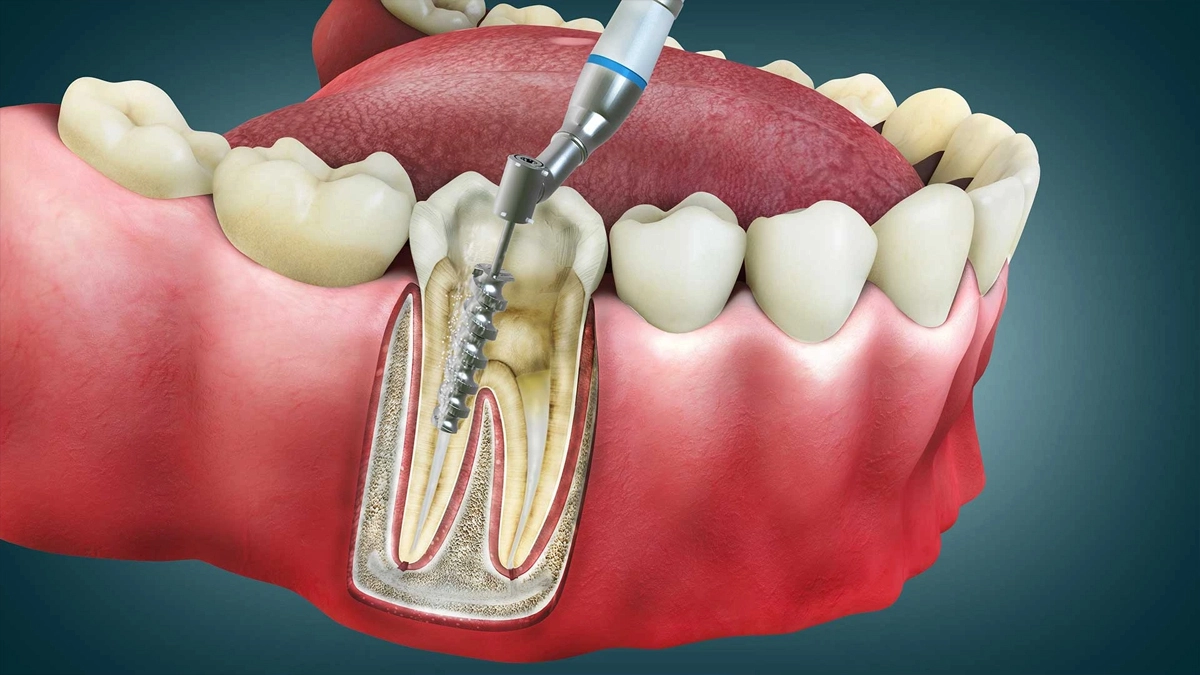

















Plenty of people land on this page after a conversation that ended with the word "extraction". A tooth has been aching, an X-ray shows a shadow, and the quickest fix on offer is to pull it and think about an implant later. The short line under the title is what we'd most like you to hear before agreeing: a throbbing tooth may still be saved.
That's what root canal treatment in Turkey, or anywhere, is for. The page above explains what the treatment is. This section covers the questions that tend to come next: what your symptoms mean, what the appointment's really like, when a tooth genuinely can't be kept, and how to get a straight second opinion before anything comes out.
What your symptoms are telling you
A tooth can't tell you what's wrong. How it hurts is a pretty good clue, though.
A quick zing from ice cream that's gone the moment you swallow? Annoying, but the nerve is usually alive and fine. A worn filling, a small crack or a bit of exposed root is often to blame, and a root canal normally isn't needed.
Pain that hangs around for a minute or more after something hot or cold, aches that wake you at night, or throbbing that starts all by itself suggest the nerve is inflamed past the point of recovery. That's when dentists start thinking root canal.
Then there's the strange one. A tooth that used to hate cold suddenly feels better with iced water and worse with anything warm. That often means the nerve has died and infection is building pressure inside the root.
Pain on biting, or a tooth that feels a bit "tall" and sore when tapped, points to inflammation at the root tip. And a little pimple on the gum that comes and goes is often an abscess draining itself. It may not hurt at all, but it's infection, and it needs treating.
Some teeth give no warning at all. The nerve quietly dies, and nobody knows until a routine X-ray shows a dark smudge at the end of the root. No pain doesn't mean no problem.
If it hurts badly right now
The page above says it plainly, and we'll say it again. Severe pain, swelling in your face, or feeling unwell? See a dentist near you today. Don't wait for your flight.
Any local dentist can open the tooth and let the pressure out, and people are often amazed how fast the throbbing stops. Antibiotics alone won't do that. They might hold a spreading infection back for a bit, but the bacteria are still sitting in the canal. Sort the emergency out at home first. After that there's no rush: send us the X-ray and decide calmly where to have the rest done.
Flying with an untreated abscess is a bad idea anyway. Cabin pressure changes can make an already painful tooth much worse.
One visit or two?
Lots of root canals are done in a single appointment. Sometimes, as the pathway above mentions, a medicated paste goes inside the tooth for about a week before the canals are sealed.
That usually happens when there's a lot of infection, when the canals keep weeping, or when the tooth is so inflamed it's hard to numb fully. Very "hot" teeth can be surprisingly stubborn with anaesthetic, and a first visit that just removes the inflamed nerve and calms things down makes the second one far more comfortable. In between, the tooth has a temporary filling.
That's why we plan two to four days in Istanbul. It covers either route, plus a crown in the same stay.
Is a root canal painful? What the appointment feels like
Once the local anaesthetic has kicked in, you shouldn't feel pain. The word patients in Istanbul use most is "long", not "painful". Mouth open, a rubber sheet stretched round the tooth, the quiet buzz of tiny files. Need a break halfway? Raise a hand. Nobody minds.
Root canal recovery
When the numbness wears off, the tooth will probably feel bruised when you bite for a few days, more so if it was badly infected. That's the tissue around the root settling down, not the treatment failing. Everyday painkillers of the sort your dentist suggests usually cover it, and it gets better day by day. Swelling that keeps growing, or pain that's worse on day three than day one, is worth a phone call.
Why the price is per tooth
The page above quotes root canal treatment per tooth, and for good reason. Teeth aren't all the same inside.
A front incisor usually has one fairly straight canal. A premolar might have one or two. A molar typically has three or four, sometimes more, often curved and narrow. In older teeth the canals can partly fill in with mineral over the years, making them harder to find and follow. Treating one of those is a very different job from a simple front tooth, and it takes longer.
That's also why we need an X-ray before giving a firm quote. It shows how many roots there are and their shape, whether the canals look open or narrowed, and whether infection has reached the tips.
When an old root canal is the problem
Lots of people already have a root-filled tooth that's started hurting again, or shows a new shadow on an X-ray, sometimes years later. The answer isn't automatically extraction. It's usually retreatment, listed above at €90.
Retreatment means taking out the old filling material from inside the roots, finding whatever was missed or has become reinfected, cleaning again and resealing. If a crown or post is in the way, that may need to come off first, which adds work. Success rates are a little lower than for a first root canal, but many retreated teeth settle and last for years.
If retreatment from the top isn't possible, a small surgical procedure at the root tip is sometimes an option. Extraction comes after those have been considered, not before.
Protecting the tooth afterwards
A root canal stops the infection. It doesn't rebuild the tooth. As the page above says, back teeth that have had a root canal usually need a crown or onlay so they don't split under chewing, and that's normally done in the same stay. How dentists choose between an onlay, a crown and a build-up is covered on our dental crowns page.
Front teeth are different. Many just need a good filling afterwards. If a front tooth has gone darker after its root canal, bleaching from the inside may bring the colour back; our teeth whitening page explains how.
Root canal vs extraction and implant
Implants are a great replacement when a tooth really can't be kept. But they're still a replacement. A natural root sits in a thin ligament that cushions your bite and lets you feel how hard you're chewing, and it keeps the bone around it busy. Once a tooth comes out, the bone there starts to shrink, and an implant has neither the ligament nor the feel of a real tooth.
Time matters too. Keeping the tooth usually means a root canal and a crown within a few days. Replacing it means extraction, several months of healing, then the implant and crown, often over two trips. If that does turn out to be the right route, the single dental implant page walks through how that works in Istanbul.
Do root canals make you ill?
This comes up online surprisingly often. The idea goes back to a theory that was popular in the early twentieth century, based on research later work couldn't confirm. Modern research hasn't found that properly treated root-filled teeth make people ill elsewhere in the body.
The opposite risk is real, though. An infected tooth left alone keeps damaging the bone around it, and occasionally the infection spreads into the face or neck, which can be serious. If you've read something that worries you, bring it up with the dentist. It's a perfectly fair conversation to have.
How much does root canal treatment cost in Turkey?
As the price section above shows, root canal treatment in Turkey starts from €100 per tooth here in Istanbul, with retreatment of an older root canal from €90. A zirconia crown to protect the tooth afterwards starts from €150. For comparison, the same page shows UK private dentists charging €350–1,400 for a first root canal. Germany comes in at €300–1,000, and the US at €650–1,500. A post and core, if needed, is quoted separately.
How long does a root canal last?
A tooth that's been cleaned thoroughly, sealed well and properly protected afterwards can last many years, often for life. The weak spots are rarely the root filling itself. It's usually new decay getting in under the filling or crown on top, a crack in a tooth that was never covered, or bacteria sneaking back in through a leaky temporary.
The page above mentions a follow-up X-ray to confirm healing. If there was a shadow at the root tip, it usually shrinks over the following months as the bone repairs. Your dentist at home can take that X-ray; bring your before and after images so they have something to compare against. Patient reviews describing a tooth a year or more later are more useful than ones about the day itself.
Asking for a second opinion
Before any tooth comes out, use the free X-ray second opinion offered above. It costs nothing and can save a tooth. Send the X-ray you already have with a short note: which tooth it is, what symptoms you've had and for how long, what you've been told, and any previous root canal on it. From that, a dentist can usually tell whether the tooth looks savable, whether it's a first treatment or a retreatment, and whether keeping it is worth it. Sometimes the honest answer is that extraction really is better. At least you'll know why.