

Google Reviews|4.6/5

Laminate Veneers in Istanbul · €200 Per Tooth

Laminate Veneers Turkey

How much tooth would you keep? Laminates need only 0.3–0.5 mm of preparation.

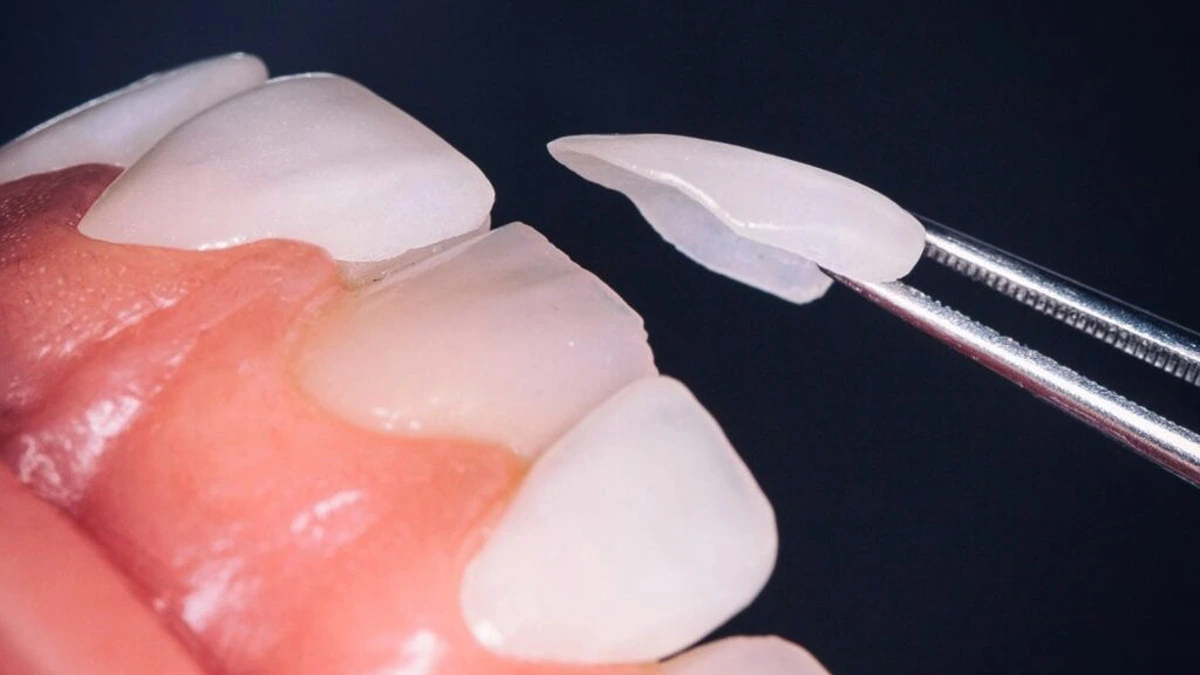
Laminate veneers are wafer-thin ceramic shells, so only a fraction of a millimetre of enamel is shaped before bonding. That makes them a fit for chips, small gaps and discolouration on otherwise healthy teeth. Each laminate is €200, and the tooth count is fixed in your plan. 

100,000+Happy Patients
80+Countries Served
One VisitNo Second Trip Needed
4.6Google Rating
Laminate Veneers Result

Laminate Veneers Before & After

Dental Veneers-Laminate Veneers 1

Laminate Veneers

Dental Veneers- LaminateVeneers 2

Laminate Veneers

Dental Veneers-LaminateVeneers 3

Laminate Veneers

Laminate Veneer Reviews

Laminate Veneer Patient Experiences

Chips and small gaps on otherwise healthy teeth brought these laminate veneer patients in. They explain what minimal preparation felt like and how the thin shells look up close.

No-Prep Veneers in Turkey | Natural Smile Transformation
Minimal-Prep Veneers With Almost No Shaving
No-Prep Veneers in 5 Days — Why This Smile Still Looks Natural
Low-Prep Veneers in 5 Days | A Natural Smile Without Aggressive Preparation

Free Consultation

Are you ready to start your journey to perfection today?

About Natural Clinic

A Multidisciplinary Medical & Aesthetic Hospital in the Heart of Istanbul

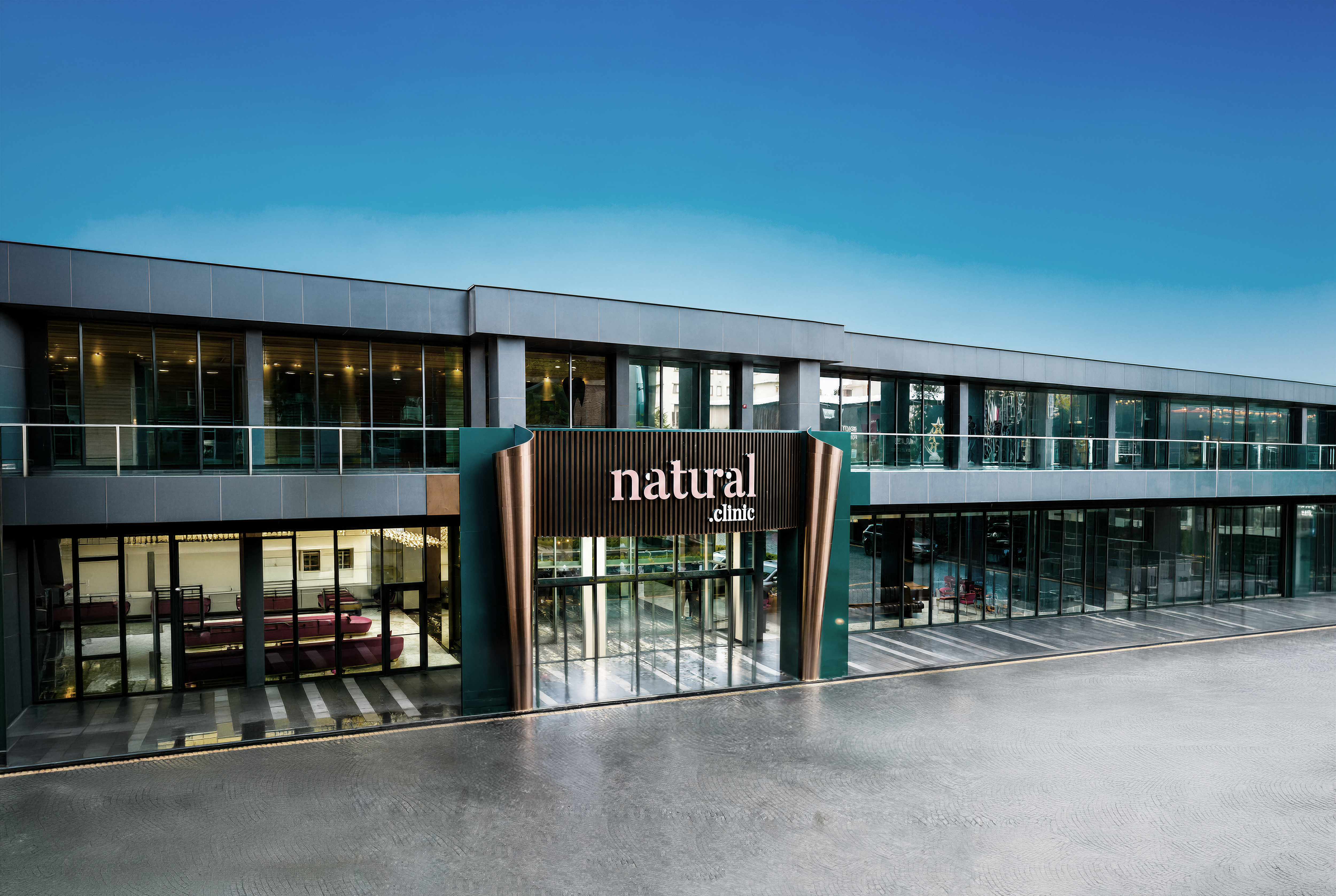
Natural Clinic brings several specialist fields together under one roof: hair transplantation, dentistry, facial, body and breast aesthetics, bariatric surgery and reconstructive treatments. Cross-disciplinary medical teams, multilingual coordination and internationally recognised safety standards carry each patient from consultation and treatment planning through to recovery and aftercare.

1200+ Operations Monthly

Advanced treatments across multiple medical specialties

50+ Medical Professionals

Experienced specialists working across disciplines

150+ Daily Operation Capacity

Large-scale medical infrastructure in Istanbul

360° Patient Care

Consultation, treatment, recovery and aftercare coordinated under one roof

The Treatment

What a Laminate Veneer Actually Is

A ceramic shell of three to five tenths of a millimetre — about the thickness of a contact lens — bonded to enamel with little or nothing removed from the tooth underneath. It is the most conservative veneer in dentistry, and the one with the narrowest range of cases it genuinely suits.

Laminate-Veneers

Minimal & no-prep

The Laminate Veneer

Made in hand-layered feldspathic porcelain or pressed lithium disilicate, taken to the thinnest section the material will hold. Because so little is removed, the preparation stays entirely in enamel — which is exactly where a bonded veneer is strongest. The catch is that a thin shell hides very little of what is underneath.

Best suited for

Teeth already close in shade and position: small gaps, worn edges, slightly small or retroclined teeth.

Typical timeline

One visit, 5–7 days in Istanbul: design, mock-up, minimal prep, try-in, bonding.

  • 0–0.3 mm removed — the preparation never leaves enamel
  • The strongest possible bond, because enamel is all the resin ever touches
  • Cannot mask a dark tooth, and cannot correct much shape — that is the trade
  • Shape approved in a trial mock-up, which on a laminate case is not optional
Meet the Dentists Who Will Treat You
Dt-Omer-Resat-Gultek

Dt. Ömer Reşat Gültek

Implant Dentistry

Born in Bandırma in 1995, Dr Ömer Reşat Gültek studied at İnegöl Mediha Hayri Çelik Science High School before turning to dentistry — and he still thinks like a materials scientist. Which ceramic, which technique, which protocol for this particular tooth: those are the questions he takes seriously, and they are why his root canal treatments hold. What patients mention, though, is the manner. He explains as he works, he does not rush, and a single filling gets the same attention as a full arch.


5+
Years experience
1,000+
Treatments

Certificates

  • 2022 TDB ACADEMY — Bruxism and its Treatment
  • 2022 TDB ACADEMY — Treatment of Teeth with Excessive Material Loss
  • 2022 TDB ACADEMY — Digital Approach
  • 2023 — Removable Implant-Supported Prostheses / Prof. Dr. Bülent Gökçe
  • 2023 — Anterior Aesthetic Applications
  • 2024 Erickson Institute of Istanbul — Basic Hypnotherapy
  • 2024 Erickson Institute of Istanbul — Intermediate Hypnotherapy
Cost Transparency

Laminate Veneer Cost in Turkey

Each laminate veneer costs €200, so a six-tooth front set comes to €1,200. The minimal preparation involved does not change the price; only the number of teeth does. See how laminate veneers are typically priced abroad, then confirm the final count and total in your written plan.

*Turkey figures are starting prices from our euro price list; multi-unit rows are unit price × units, not a package, and cover design, mock-up, temporaries and the bonded shell. Extras and the hotel (from €75 a night) are billed separately.

Expert Care in Istanbul

Hospital-grade facility with its own design laboratory.

Advanced Digital Workflow

Digital smile design, scanning and milling in-house.

All-Inclusive Patient Package

Hotel, private transfers, interpreter and 24/7 aftercare coordination.

First-Year Aftercare Included

Coordinator contact, photo reviews and follow-up for twelve months after fitting.

Free Consultation

Are you ready to start your journey to perfection today?

Why Turkey

Is It Worth Going to Turkey for Laminate Veneers?

Yes, with one condition: that you are treated by a clinic willing to tell you which teeth do not need a veneer. The materials and the technology are the same ones used in London and Berlin; the design happens in the same building, which is why a shape you are unsure about is changed at the try-in rather than after you have flown home.

why choose turkey for dental 1

Unmatched Case Volume

High case volume means shade matching, smile design and minimal preparation are refined at scale.

why choose turkey for dental 2

Technology Parity

Digital smile design, intraoral scanning and a wax-up trial are standard here, not premium extras.

why choose turkey for dental 3

A Genuine Cost Difference

Lower operating costs can reduce treatment prices without requiring lower-grade ceramics.

why choose turkey for dental 4

Direct Flights to Istanbul

Istanbul is connected to hundreds of international destinations, making treatment travel easier to plan.

why choose turkey for dental 5

English-Speaking Care

International patient teams coordinate the design discussion, try-ins and aftercare in multiple languages.

why choose turkey for dental 6

Documentation You Take Home

Reputable clinics name the material used on every tooth and record the dates.

Laminate Pathway

Keeping Almost All Your Enamel

At 0.3 to 0.5 mm, laminates are the most conservative shells we make — and the least able to hide dark teeth.

  1. Colour Check

    Is the Tooth Too Dark?

    Very dark teeth show through thin laminates, so another material may be advised for those.

  2. Whiten First

    Setting the Base Shade

    Shells this thin inherit the colour beneath them, so bleaching the natural teeth first gives the lab a brighter, even base to match.

  3. Prep

    Sometimes None at All

    Some teeth need barely any reduction, which keeps the treatment close to reversible.

  4. Care

    Front Teeth Aren't Tools

    Avoid biting nails, pens or packaging to protect the thin shells.

Laminate Veneer FAQs

Laminate Veneers: The Most Conservative Option

Ultra-thin shells that keep most of your enamel. Here is who laminate veneers suit.

Laminate veneers are ultra-thin ceramic shells, usually about 0.3 to 0.5 mm thick, bonded to the front surfaces of teeth. They are the most conservative veneer option, preserving almost all of the natural enamel, and are used to improve colour, shape and small imperfections on otherwise healthy teeth.

Laminate veneers are typically 0.3 to 0.5 mm thick, while standard veneer preparation ranges from about 0.3 to 0.7 mm. This thinness means some teeth need very little, or occasionally almost no, reduction, which is why laminates are often described as a minimal-preparation option.

Laminate veneers work best for mild discolouration, small chips, minor unevenness in shape or length and small gaps between healthy front teeth. They are not intended for heavily broken teeth, significant crowding or very dark teeth, where crowns, orthodontics or more opaque materials are more appropriate.

Free Consultation

Are you ready to start your journey to perfection today?

Keep Exploring

Compare Laminates With the Alternatives

Laminates are the most conservative of the five veneer options and the most limited in what they can change. Each alternative has its own page — along with the treatments that are sometimes better than a veneer altogether.

Personalised Care, Just for You

Get Your Laminate Veneer Plan — Free, in 24 Hours

Send a few photos of your teeth, plus any X-ray you already have. One of our dentists reviews your case and replies with a realistic, itemised plan — whether laminates will work on your teeth at all, which of them would need a standard preparation instead, what each costs with hotel and transfers included, and how many days you’ll be in Istanbul. No obligation, no pressure, no cost.

Get My Free Veneer Plan
The Full Picture

Laminate Veneers: A Thinner Shell for Fewer Smiles

Laminates are the only veneer treatment where the question is not which material to use, but whether your teeth allow it at all. Everything worth deciding here is decided before the ceramic is chosen — and quite often the honest answer is that a standard veneer will look better.

Laminate Veneers: A Thinner Shell for Fewer Smiles

8 min read

Few words in cosmetic dentistry cause as much confusion as "laminate". Talk to one dentist and it simply means a porcelain veneer, full stop. Talk to another and it means something far narrower: a shell so thin that the tooth under it has barely been touched, and sometimes not at all.
On this page, laminate means the second thing. That distinction matters, because it changes what you're actually buying. A laminate isn't a special material. It's an approach, and honestly, it fits fewer mouths than the adverts would have you believe.

Same ceramic, different thinking

The shell itself comes from the same ceramic families as other veneers: porcelain built up by hand in layers, or the pressed glass-ceramic most people know as E.max. You can read about those on the porcelain veneers and E.max veneers pages.
What makes it a laminate is the thickness and the thinking behind it. A conventional veneer is planned so that the new shell replaces roughly the enamel that was removed. The tooth ends up about the same size it started. A laminate is planned the other way round. Little or nothing comes off, and the shell goes on over the top. You finish with a tooth that's very slightly bigger than before.
That one idea explains almost everything else on this page: who laminates suit, who they don't, and why the trial smile is so important.

A tooth that gets slightly bigger

On paper, half a millimetre is nothing. On a front tooth, you'd be surprised how visible it is.
For some teeth it's exactly the right amount. Think of front teeth ground short over the years, a side tooth that never quite grew to full width, or one that leans back behind its neighbours. On those, the extra thickness isn't a side effect. It's the whole point.
If your teeth are already a normal size and sit where they should, the same half millimetre works against you. The teeth start to look thick. Your upper lip rests a fraction further forward. In profile, the smile can look slightly puffy, as if something has been added rather than improved. This is by far the most common reason laminate cases disappoint, and the ceramic itself is rarely to blame.

Three people who might be well suited

It's easier to picture with examples.
The first is someone in her thirties whose upper side incisors never grew properly. They're narrow and a little pointed, and they leave small gaps on either side. Her other teeth are healthy and a good colour. Thin shells on those two teeth can widen them and close the gaps with almost no drilling.
The second is a man in his fifties whose front teeth have been ground shorter over the years. They're still sound, but they look flat and old. Laminates can add back the lost length. He'll have to wear a night guard, since the habit that flattened his teeth hasn't gone anywhere. His own enamel, though, stays where it is.
The third is the person with one front tooth set a millimetre or so behind its partner. She's noticed it in every group photo since her teens. Nobody else ever has. A laminate on that tooth brings it forward into the line of the arch without touching its neighbour, and because the tooth was set back to begin with, the added thickness is exactly the correction it needs.
What all three have in common is room. Each of them has space for the tooth to get slightly bigger without looking wrong.

And people who probably aren't

Teeth that already stick out are the clearest example. Adding thickness to a prominent tooth pushes it further forward, which is the opposite of what's needed. Those teeth either need moving with aligners first, or a conventional veneer with some reduction to keep them in line.
Dark teeth are the second. A shell as thin as a contact lens, as the page above describes it, lets most of the colour underneath show through. A tooth that has gone grey after a root canal will still look grey. For teeth like that, the opaque option on the zirconium veneers page is usually the realistic answer.
The third is anyone hoping for a big change in shape. Laminates refine. They can lengthen an edge, round off a corner or close a small gap. They can't turn crowded, overlapping teeth into a straight row.

What "no-prep" really means

"No-prep veneers" is one of the most appealing phrases in cosmetic dentistry, and one of the most stretched. So what does it look like when it's done properly?
Usually the enamel gets a light going-over first, just enough to take the glassy shine off so the bond grips. Now and then a sliver is smoothed at an edge to give the shell somewhere tidy to stop. The page above describes this as 0 to 0.3 mm, and that range is the honest picture: some teeth need nothing, some need a whisper, and occasionally one needs a little more.
What you should be wary of is a promise of "no drilling at all" for ten teeth, made from a few photographs. If a tooth genuinely doesn't have room, one of two things happens: the result looks bulky, or the tooth gets prepared anyway and nobody mentions it. A better question to ask is how much will come off each tooth, one by one. A careful plan can answer that.

The edge at the gum line

This is a detail most people never hear about, and it's one of the main differences between a good laminate and a poor one.
With a conventional veneer, the dentist shapes a small step at the gum line so the veneer can sit flush against it. With a laminate on an unprepared tooth, there's no step. The shell has to thin down to almost nothing at its edge so it blends smoothly into the tooth.
Make that edge even slightly too thick and you've built a tiny shelf right at the gum. You'd never spot it in the mirror. Plaque finds it within days, though, and the gum beside it gradually turns red and puffy. On a good laminate you can run a fingernail across the join and feel nothing at all. Ask how the edges will be finished. It's a fair question, and the answer tells you a lot about the lab.

Can they be removed?

Almost. And the "almost" matters.
With nothing drilled away, your tooth underneath is pretty much as it was. The shell is glued to it, though, not clipped on, and getting it off means grinding it away bit by bit. A little of the outer enamel usually goes with it. That makes a laminate the most tooth-friendly ceramic veneer there is, but it isn't something you can peel off and forget about.
If being able to undo the treatment is your top priority, composite veneers are the more honest answer. They can be added, adjusted and removed with even less impact on the tooth, although they won't last as long or keep their shine as well.

Getting the colour right

The pathway above explains why whitening comes before laminates. Because the shell is so thin, it takes on the colour of whatever sits beneath it. Brighter teeth underneath give the lab a better starting point.
There's a timing point that's easy to miss. Teeth often look a little whiter straight after bleaching than they will a week or two later, as they rehydrate and settle. The shade for your laminates should be taken once that has happened, not on the same day as the whitening.
Thin shells also give the dentist a small amount of control at the bonding stage. The resin used to attach them comes in slightly different tints, and on a laminate, that tint can shift the final colour by a small amount. During the try-in, the shells are often tested with different try-in pastes so you can see the effect before anything is permanent. It's fine-tuning, though, not a way of hiding a genuinely dark tooth.

Why the mock-up tells you almost everything

A trial smile is useful on every veneer case. With laminates it's close to a preview of the finished result.
Because a laminate adds thickness rather than replacing it, a mock-up placed over your unprepared teeth is very close in size to what you'll end up with. If the mock-up looks bulky under your lip, the laminates will too. If it looks natural in profile and you can speak comfortably, that's a strong sign the teeth have room.
So take the mock-up seriously. Look at it from the side. Smile in a photo. Read something aloud. If it feels too full, say so, because that's the moment to change the plan, perhaps to thinner shells on some teeth or a conventional preparation on one or two.

Living with thin shells

Once bonded, laminates are surprisingly tough. The bond to enamel is very strong, and because no dentine has been exposed, most people have little or no sensitivity afterwards.
They're most vulnerable before they're bonded, which is why the lab and the dentist handle them so carefully, and at their thinnest edges afterwards. The care advice on the page above is simple and worth taking literally: front teeth aren't tools. So no tearing open packets, no nail biting, no chewing the end of a biro. And if you grind at night, wear the guard. It looks after the laminates and the teeth they're stuck to.

When the assessment says no

A good laminate assessment sometimes ends with "not for your teeth", and that's a useful result, not a failure. It usually means one of a handful of alternatives will serve you better: whitening alone, a short course of aligners, conventional porcelain or E.max veneers with light preparation, an opaque shell on a dark tooth, or composite as a first step. How those options compare is laid out on the main dental veneers page.
The aim is the result you want with as little tooth removed as possible. Sometimes that's a laminate. Sometimes it's something else, and it's better to find that out from your photos than after you've flown in.


© 2026 Natural Clinic. All rights reserved.

Contact Us
Book Free ConsultationContact Us