
 English
 Italiano
 Español
 Français
 Deutsch
 Português
 Русский
 Български
 العربية
 فارسی
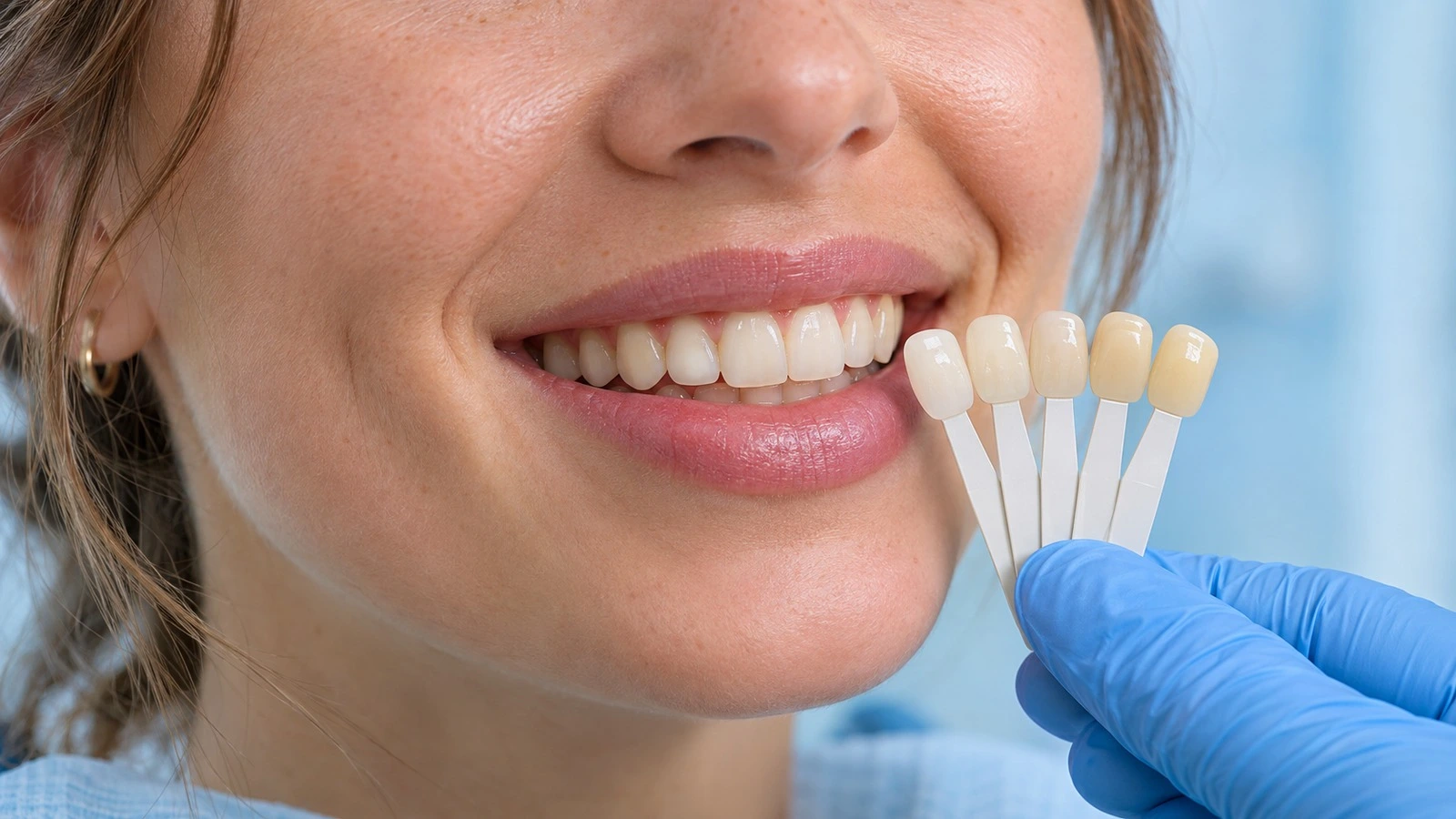
Here's a scene we see more often than you'd think. You've just had veneers done and they look lovely. A week later someone snaps a group photo at a restaurant, you zoom in, and there it is. The teeth next to the veneers are a little more yellow. Not dramatic. But now you'll spot it in every picture.
Whitening first is how you dodge that. For plenty of people it's worth doing before veneers. Not always, mind you. And when you do it makes a bigger difference than you'd expect.
Why Whiten Your Teeth Before Veneers?
One fact explains the whole thing: whitening doesn't work on veneers. The gel acts on natural enamel. Porcelain and ceramic just ignore it. So whatever colour your veneers are on day one, that's the colour they stay.
Your real teeth are another story. You can lighten them with bleach. Then your morning coffee starts undoing it. That's the problem. With only a few veneers, the lab has to copy the colour of your other teeth as they are that day, whatever that happens to be.
Do the whitening afterwards? Your own teeth get lighter. The veneers don't. Mismatch. Do it first and the lab builds the veneers around your lighter teeth. Done.
Who Should Whiten Before Getting Veneers?
Usually when veneers are going on some of your visible teeth but not all of them.
Say you're having the top six or eight front teeth done. A big laugh shows more than you think, including the teeth behind them and often the lower ones too. If they're on the yellow side and you're after bright veneers, lightening them first stops the veneers looking stuck on.
It's also a handy test drive. Not sure how white is too white? Brighten your own teeth first and live with it for a bit. Plenty of patients realise they'd rather go a shade or two softer than they first planned, which is good to know before committing to veneers that'll be around for ten years plus.
And now and then it changes the whole plan. If colour was really your only gripe, teeth whitening alone might be enough.
When You Can Skip Whitening
Every tooth in your smile getting a veneer or crown? Then nothing natural is left on show, and there's nothing to match. That's the usual story with a full Hollywood smile: the lab makes the whole set in whatever shade you pick.
It's also a bit pointless if your teeth are already pretty light, or if the teeth next to your new veneers are mostly old crowns or big fillings. Neither of those lightens with bleach, so whitening the teeth around them could make the difference stand out more, not less.
And some people shouldn't whiten at all, at least not yet. Any decay and gum disease get treated first. If your teeth already twinge with cold drinks, whitening may be too much for them, and during pregnancy it's best left until later.
Whitening Then Veneers: How Long Is the Gap?
Not a day or two. Dentists normally ask for about a fortnight. Here's why.
Right after bleaching, teeth look lighter than they'll end up. The enamel has dried out a little, and as it rehydrates the colour drifts back a touch. Pick a veneer shade in those first days and the veneers could end up a hair brighter than everything around them.
The other reason is glue. Bleach also leaves a bit of oxygen in the enamel for a while, which doesn't play nicely with veneer cement. A couple of weeks and that clears.
If you're flying to Istanbul for treatment, factor those two weeks in when you book. We'll help you work out dates that suit.
Should You Whiten at the Clinic or at Home?
Either works before veneers. Fast, or flexible? That's basically the choice.
Clinic whitening uses a more powerful gel with the dentist watching, so you'll often see a clear difference after just one session. Good if time's tight.
At home, you get custom trays made for your teeth and a gentler gel to use over a couple of weeks. Slower, but you decide when to stop, and some people find it's kinder on sensitivity.
What we'd skip are the strips from the supermarket and kits off the internet. Shade matching needs a steady, even base colour, and that's much more likely when a dentist is in charge.
Keeping Your Smile One Colour
Veneers don't really change colour. Your own teeth? They're a different matter. Give it a few years of coffee, tea or smoking and they'll have darkened a little. The veneers won't have.
Easy fix, though. Pop your whitening trays in for a few nights every so often and your natural teeth catch up again. Regular cleans at the hygienist help too, especially around the edges of the veneers.
Still choosing between materials? Have a look at our E-max vs zirconium veneers comparison, which covers how each handles colour and light.
Questions About Whitening Before Veneers
Can I whiten my veneers later?
No, sadly. Whitening gel does nothing to porcelain or ceramic, which is exactly why it's worth doing before your veneers are made.
How many days should there be between whitening and veneers?
About 14. That's long enough for the colour to stop shifting and for the enamel to be ready to bond.
What if all my visible teeth are getting veneers?
Then you can usually skip whitening. The lab will simply make the full set in whatever shade you pick.
Does whitening hurt?
It shouldn't. Some people get sensitive teeth for a few days, but it tends to be mild, and a weaker gel or a desensitising toothpaste usually sorts it.
What happens if my real teeth go darker again?
They probably will, gradually. A short top-up now and again keeps them in line.
Do I need a veneer or a crown?
Mainly it's about how much of the tooth is still healthy. Our guide to veneers vs crowns walks you through it.